エピソード

  • Four years, 18 sites, one mission: bringing Europe's freshwaters back to life
    2026/04/21

    In March 2026, MERLIN scientific coordinator Daniel Hering stood before a Brussels room full of European policymakers and set out what four years of freshwater restoration had found. The evidence is clear, the tools are ready, the Nature Restoration Regulation is now law. The question is whether the will – political, institutional, financial – can match the ambition.

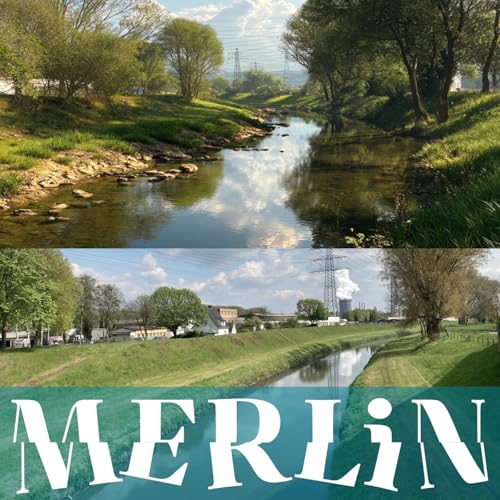
    A few days later, we joined MERLIN project coordinator Sebastian Birk and Ellis Penning – who coordinates the SpongeScapes project and helped moderate the Brussels event – on the banks of restored streams in Belgium's Scheldt catchment. Away from the conference rooms and presentation slides, the conversation took a different shape, rooted in a landscape that is slowly and visibly recovering.

    This final episode moves between those two worlds – the formal and the reflective, the policy stage and the riverbank. Between them, it captures something of what this landmark project has achieved, and what the freshwaters it set out to restore still need.

    続きを読む 一部表示
    34 分
  • How do you mainstream freshwater restoration across an entire continent?
    2026/04/07

    The Nature Restoration Regulation is now European law. National Restoration Plans are being written. The targets are set. So why does transformative, large-scale ecological restoration remain so stubbornly difficult to achieve, and what would it actually take to make it happen everywhere, not just in flagship protected areas?

    That question sat at the heart of a panel discussion held in Brussels in March 2026, at a joint event bringing together the EU Horizon projects MERLIN, WaterLANDS, SpongeScapes and SpongeWorks. Moderated by Ellis Penning of SpongeScapes, the panel brought together Anders Iversen and Willem Jan Goossen from the European Commission, Craig Bullock of WaterLANDS, and Sebastian Birk, coordinator of MERLIN, fresh from four years overseeing freshwater restoration work across 18 sites in very different corners of Europe.

    In this episode we tune into that conversation, ranging across governance, finance, agricultural and environmental policy, and the challenge of building the kind of shared ecological literacy that makes transformative change possible. It is a candid, reflective and ultimately hopeful discussion, held at a moment when the tools and evidence for restoration have never been better, and the pressure to act has never been greater.

    続きを読む 一部表示
    45 分
  • How can water-friendly farming be mainstreamed in Europe?
    2026/01/15

    Freshwater restoration should be at the heart of how farming is managed in Europe, according to new recommendations.

    Reshaping the Common Agricultural Policy (CAP) to support freshwater ecosystems by encouraging water-friendly farming practices is a key task, accoring to a team of researchers from the EU MERLIN project writing in a newly published policy brief. The researchers draw on cutting-edge science and fieldwork to outline a vision for water-resilient agricultural landscapes across Europe.

    Our guest is one of those researchers – Josselin Rouillard from ECOLOGIC – and in this podcast we’ll hear about how the futures of European freshwaters and farming are so closely linked, and what we can do to help them flourish.

    続きを読む 一部表示
    20 分
  • Sharing cutting-edge information on freshwater restoration in the MERLIN Academy
    2025/11/19

    In this podcast we take a tour of the MERLIN Academy, an online platform which offers free resources and training to support researchers, practitioners and policy makers in applying cutting-edge freshwater restoration concepts to their work.

    We hear from Academy coordinator Astrid Schmidt-Kloiber from BOKU, and module leaders Erica Zaja from CEH, Gerardo Andalzua from ECOLOGIC and Kerry Waylen from the James Hutton Institute, alongside reflections from Academy user Lars Kristian Selbekk.

    The interviewees emphasise the importance of sharing free, open-access information on freshwater restoration to wide audiences. They discuss the importance of nature-based solutions, financing and economics, stakeholder engagement and governance to contemporary restoration approaches.

    https://project-merlin.eu/academy.html

    続きを読む 一部表示
    30 分
  • How nature-based solutions can support people and nature in freshwater restoration
    2025/08/21

    Harnessing the potential of natural processes in freshwater restoration can create significant ecological, social and economic benefits, according to a major new report.

    Researchers from the MERLIN project analysed restoration monitoring data from eighteen rivers, streams and wetlands across Europe to assess the impacts of so-called ‘nature-based solutions’ on the environment and society. Such approaches aim to help amplify natural processes to benefit both people and nature. For example, a healthy wetland can help filter water pollution and buffer floodwaters, whilst planting so-called ‘riparian zones’ of trees and other vegetation along river banks can help provide valuable biodiversity habitat, keep water bodies cool, and lock up carbon to help mitigate climate change.

    The new report explores the impacts of a diverse range of European freshwater restoration strategies using nature-based solutions. These include peatland rewetting, beaver reintroduction, floodplain restoration and reconnection across a variety of landscapes. The results show that such restoration approaches can generate significant benefits for nature and society. In particular, many of the impacts support the goals of the European Green Deal, which aims to support climate neutrality, sustainable economies and healthy, diverse ecosystems across the continent.

    In this podcast, we hear from two MERLIN researchers behind the new report: Laura Pott from the University of Duisburg-Essen, and Axel Schwerk from the Warsaw University of Life Sciences. Laura and Axel cover a range of topics including how to monitor the impacts of nature-based solutions in complex landscapes across Europe, the importance of engaging stakeholder groups around an ecosystem, and the value of Theory of Change approaches in helping map how a restored landscape might develop over time.

    続きを読む 一部表示
    24 分
  • Communicating why freshwater restoration is vital
    2025/05/26

    Restoring our natural ecosystems is a task that is never really finished: science progresses; governments change; technology advances; society shifts; funding pots appear and disappear. And all the time, our rivers, lakes, streams and wetlands are a constant; their fate determined by the choices we make about them. In a time of rapid ecological loss and the ongoing climate emergency, it can be hard to think hopefully about the future of our ecosystems.

    In this podcast we hear from four inspirational young scientists who are helping restore Europe’s freshwaters, and with it, hope for the future of our natural world. The four scientists all work on the EU MERLIN project, but each have their own research focus. They are Miriam Colls Lozano from the University of the Basque Country, Andrea Schneider from the University of Duisburg-Essen, Viviane Cavalcanti from DELTARES and Joselyn Verónica Arreaga Espin from BOKU.

    We hear about the challenges of bringing disparate communities together through freshwater restoration, fostering exchange and collaboration between different communities, thinking creatively about funding restoration in the future, and strategies for bringing the public and policy makers on board with ambitious restoration programmes. The thread that runs through all these themes is the need for good communication in fostering positive change for the future.

    続きを読む 一部表示
    30 分
  • Restoring Europe's landscapes through the Green Deal and Nature Restoration Law
    2025/01/23

    In this podcast we take a behind the scenes look at environmental restoration in Europe on the cusp of what will likely prove to be a transformative year. First, we find out about the EU’s big environmental policy, the Green Deal, then about the ambitious new Nature Restoration Law adopted last year. We then hear from four EU restoration projects about the challenges of planning, financing and carrying out restoration on freshwaters, forests, wetlands and coastlines across the continent.

    Podcast host Rob St John speaks to Colombe Warin from the European Commission, Shane McGuinness from WaterLANDS, Agustín Sánchez-Arcilla from REST-COAST, Elisabeth Schatzdorfer from SUPERB and Sebastian Birk from MERLIN to get the inside story on restoring Europe's landscapes.

    Four key themes emerge around contemporary restoration in Europe: the use of nature-based solutions; the importance of bringing communities and stakeholders together; the challenges of financing ambitious restoration projects; and the need to upscale restoration activities from individual sites to entire landscapes and watersheds.

    続きを読む 一部表示
    44 分
  • Why community matters to freshwater restoration
    2024/10/28

    It's increasingly recognised that restoring damaged ecosystems is not only about improving habitats for wildlife, it is also vital to consider the needs of the people who live and work in a restoration landscape.

    In this podcast we hear stories about how community has been placed at the heart of freshwater restoration projects. We hear from Tal Marciano Ratner about how the restoration of the Tzipori watershed in Israel offers a meeting place for people from different religions and ethnicities to come together in a time of great unrest and conflict.

    Ruben Rocha from Dam Removal Europe talks about the challenges of communicating the benefits of dam removal to local communities, and describes how he is beginning to see the demand for removal projects coming from communities themselves. Roland Bischof and Julia von Gönner from iDiv in Germany tell us about the innovative citizen science work in the FLOW project, where the public can help scientists generate valuable data about the health of their streams.

    Robert Arlinghaus from IGB and Humboldt University in Germany describes his long-standing work with angling communities, outlining how a productive form of aquatic stewardship can emerge from their interactions with nature. Finally, María Sánchez from ECOLISE outlines how community-led initiatives across Europe are helping give people a stronger voice in shaping environmental restoration.

    続きを読む 一部表示
    58 分