エピソード

  • Rising, Not Setting — Benjamin Franklin and the Last Day of the Constitutional Convention
    2026/09/17

    Hey! I'd love to hear your thoughts, send me a voice note.

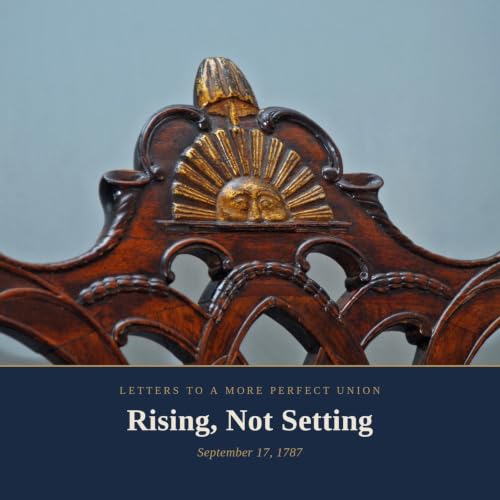
    September 17, 1787. On the last day of the Constitutional Convention, an eighty-one-year-old Benjamin Franklin asked the room for something harder than agreement.

    Sourced from the National Park Service's Independence National Historical Park, the National Archives, James Madison's notes on the Constitutional Convention, and the Avalon Project's transcription of the September 17, 1787 convention debates.

    Cover photograph: "Detail, crest rail of the Rising Sun Chair," National Park Service, Independence National Historical Park. Public domain.

    Narration is AI-generated using a voice model trained on the author's own voice.

    続きを読む 一部表示
    11 分
  • September 12th — Twenty-Five Years After 9/11
    2026/09/18

    Hey! I'd love to hear your thoughts, send me a voice note.

    September 11, 2001 is the day we remember. September 12th is the one we set down. For a stretch of days and weeks, ordinary Americans became the most generous version of themselves, and nobody had to be told to.

    This letter was written for September 11, 2026 and published that day. The recordings are being added to the archive as they are made.

    Sourced from the National September 11 Memorial and Museum, the 9/11 Commission Report, the Congressional Record, President George W. Bush's September 20, 2001 address to Congress, Thomas Paine's "The American Crisis," and contemporary reporting on the Montesi and Nedd families from FireRescue1, the New York Daily News, and amNewYork.

    Cover photograph: Military members render honors as fire and rescue workers unfurl an American flag over the side of the Pentagon, September 12, 2001. U.S. Navy photo by Michael W. Pendergrass. Public domain.

    Narration is AI-generated using a voice model trained on the author's own voice.

    続きを読む 一部表示
    14 分
  • The Whole of It — The Lincoln-Douglas Debates at Ottawa, 1858
    2026/09/18

    Hey! I'd love to hear your thoughts, send me a voice note.

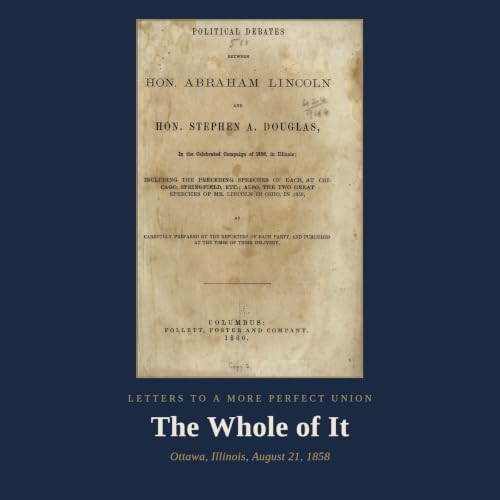
    August 21, 1858. Twelve thousand people stood in an open square with no shade and no chairs for three hours, listening to two men argue, including the parts that made their own man look worse. Two years later, one of those men published his opponent's arguments word for word alongside his own.

    This letter was written for August 21, 2026 and published that day. The recordings are being added to the archive as they are made.

    Sourced from the National Park Service's Lincoln Home National Historic Site, the Illinois State Archives, the Illinois State Historical Library's 1908 edition of the debate transcripts, the House Divided Project at Dickinson College, and Smithsonian Magazine's reporting on the debates.

    Cover image: Title page, "Political Debates between Hon. Abraham Lincoln and Hon. Stephen A. Douglas, in the Celebrated Campaign of 1858, in Illinois." Columbus: Follett, Foster and Company, 1860. Library of Congress.

    Narration is AI-generated using a voice model trained on the author's own voice.

    続きを読む 一部表示
    7 分
  • The Day They Signed — The Declaration of Independence, August 2, 1776
    2026/09/18

    Hey! I'd love to hear your thoughts, send me a voice note.

    August 2, 1776. Not the day they declared independence, but the day fifty-six men walked forward one at a time and signed their names to it, knowing exactly what it could cost them.

    This letter was written for August 2, 2026 and published that day. The recordings are being added to the archive as they are made.

    Sourced from the National Archives, the Library of Congress, Founders Online (Benjamin Rush's July 20, 1811 letter to John Adams), and the National Park Service's history of Independence Hall.

    Cover photograph: Syng inkstand, made by Philip Syng, 1752, used at the signing of the Declaration of Independence. Independence National Historical Park, National Park Service, catalog number INDE 11860.

    Narration is AI-generated using a voice model trained on the author's own voice.

    続きを読む 一部表示
    10 分
  • The Man Who Wouldn't — Elbridge Gerry and the Origin of the Gerrymander
    2026/09/18

    Hey! I'd love to hear your thoughts, send me a voice note.

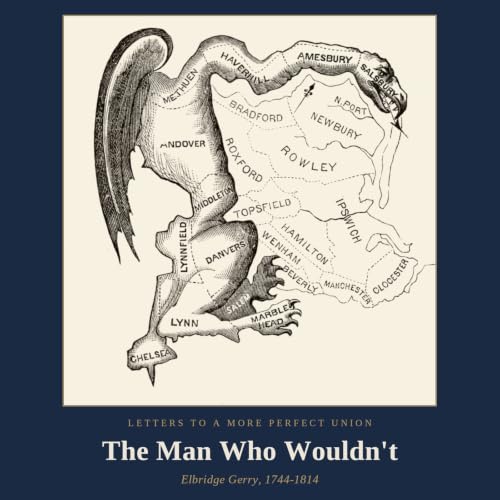
    July 17, 1744. He signed the Declaration and refused to sign the Constitution. He lost nearly every fight he picked in the First Congress and kept showing up. Then, twenty-three years later, he signed something that gave his name to the thing we still argue about.

    This letter was written for July 17, 2026 and published that day. The recordings are being added to the archive as they are made.

    Sourced from the National Archives, the Massachusetts Historical Society, the Library of Congress, the Bill of Rights Institute, the Annals of Congress, Gerry's own 1787 letter to the Massachusetts legislature, and a 2025 survey by Tufts University's CIRCLE and Protect Democracy.

    Cover image: Elkanah Tisdale, "The Gerry-Mander," Boston Gazette, March 26, 1812. Public domain.

    Narration is AI-generated using a voice model trained on the author's own voice.

    続きを読む 一部表示
    10 分
  • The American Experiment — Jefferson, the Declaration, and a Country Still Being Run
    2026/09/17

    Hey! I'd love to hear your thoughts, send me a voice note.

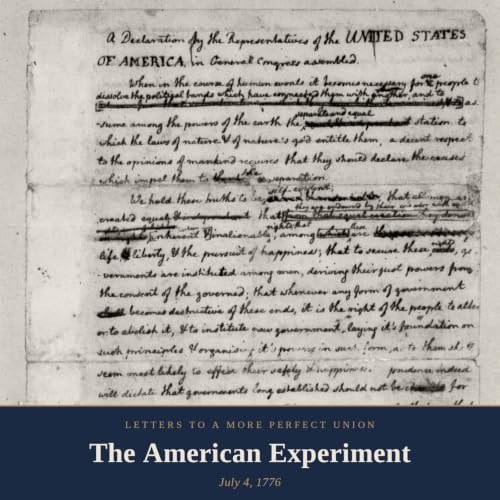
    July 4, 2026. Two hundred and fifty years after a room of ordinary, flawed men called it an experiment rather than a guarantee, one American asks whether we are still caring for the thing we were handed.

    This letter was written for July 4, 2026 and published that day. The recordings are being added to the archive as they are made.

    Sourced from the Declaration of Independence, Gallup's polling on national pride, and the words of Thomas Jefferson, John F. Kennedy, Margaret Mead, Abraham Lincoln, Frederick Douglass, Martin Luther King Jr., and Ronald Reagan.

    Cover image: Thomas Jefferson, "original Rough draught" of the Declaration of Independence, June 1776, page 1, with emendations in the hands of John Adams and Benjamin Franklin. Thomas Jefferson Papers, Manuscript Division, Library of Congress.

    Narration is AI-generated using a voice model trained on the author's own voice.

    続きを読む 一部表示
    13 分