エピソード

  • Why Old Tools Were Built Different with Ted Dawson Antique Tools
    2026/09/25

    In this episode:

    How Ted grew up in a family of collectors

    The unexpected $6 auction purchase that started his tool obsession

    More than 40 years of collecting antique tools

    Restoring thousands of vintage hand tools

    How buying and selling helped Ted build a higher-end collection

    Turning a lifelong hobby into Ted Dawson Antique Tools

    Why collectors love "the hunt"

    Leatherworking tools dating as far back as the 1830s

    Why old tools were often built for functionality and repairability

    Vintage C.S. Osborne, Gomph, Johnson and Barnsley tools

    Oversized vintage leather edgers

    A rare adjustable French edger

    Antique leather draw gauges and strap cutters

    A nineteenth-century Huber draw gauge

    Barnsley leather plows

    Brazilian rosewood tool handles

    The difference between modern and vintage tool ergonomics

    How decades of use physically wear into antique tools

    The craftsmanship and ornamentation of nineteenth-century tools

    Why high-quality modern hand tools still exist — but serve a smaller market

    Why a vintage Stanley can sometimes provide the same functionality as a much more expensive modern hand plane

    The surprisingly deep world of vintage vise collecting

    Using vises and custom jigs to make a shop more versatile

    Polish FPU and Bison vises with reverse-moving jaws

    What to inspect before buying a vintage tool

    Why rust and seized components aren't always dealbreakers

    Why broken or missing internal parts can be much bigger problems

    Ted's approach to restoration

    Where to find Ted's collection of user tools and collector pieces

    Find out more about our guest on his Website

    Follow the show: leathershoppod.com · @leathershoppod

    Support on Patreon for early episodes and bonus content.

    続きを読む 一部表示
    1 時間 10 分
  • Custom Cowboy Boots: Jake Houston on Bespoke Bootmaking & Exotic Leathers
    2026/08/19

    Guest

    Jake Houston
    Houston Boot Company

    What You'll Hear

    Jake's journey from professional musician to full-time cowboy bootmaker

    Learning bootmaking through repair work and independent study

    Why stingray leather sparked the entire business

    Working with kangaroo, horsehide, elephant, alligator, and crocodile

    Understanding CITES regulations and state-by-state restrictions

    Material costs and sourcing premium exotic leathers

    How cowboy boot sizing differs from sneakers

    Why arch length matters more than shoe size

    Choosing and modifying lasts for bespoke footwear

    Traditional cowboy boot construction and quality indicators

    Leather insoles, welts, stacked heels, and wood pegs

    Why custom boot fitting is far more involved than off-the-shelf sizing

    How Houston Boot Company Started

    Jake explains how leather carving began as a hobby while he was performing as a country musician. After searching unsuccessfully for a custom pair of stingray cowboy boots, he decided to learn bootmaking himself, eventually opening Houston Boot Company after studying repair work and traditional construction methods.

    Choosing Leather for Cowboy Boots

    The conversation compares several premium leathers, including kangaroo for its strength-to-weight ratio, horsehide for its appearance, elephant for durability, and the unique challenges of working with stingray and alligator. Material selection depends not only on appearance but also on workability, longevity, and intended use.

    Sizing Custom Boots

    Jake explains why proper cowboy boot fitting begins with arch length instead of overall foot length. The discussion covers Brannock measurements, width sizing, custom lasts, heel height, and how bespoke boots are built around an individual's foot rather than forcing the wearer into a standard size.

    Inside a Handmade Cowboy Boot

    From leather insoles and welt construction to stacked leather heels and wood-pegged shanks, Jake walks through many of the details that distinguish handmade boots from mass-produced footwear and explains why those traditional construction methods continue to matter today.

    Find out more about our guest on his Website

    Follow the show: leathershoppod.com · @leathershoppod

    Support on Patreon for early episodes and bonus content.

    続きを読む 一部表示
    1 時間 18 分
  • Starting a Leather Supply Business: The Leather Reserve
    2026/06/25

    dsfdGrant Anderson runs Uptown Common, a small handmade shop known for structured purses, briefcases, and bags with a distinctive double-color stitch line. This spring he launched a second venture, The Leather Reserve, importing MPG Industria hides from Italy after a discontinued leather nearly cost him a sale. Matt and Grant get into the making and the business in equal measure.

    Highlights:

    The used King Ranch F-150 whose saddle-leather interior sent Grant looking for a bag — and eventually into making his own.

    Why he wet-forms nearly everything, and how he builds gusset forms out of stacked acrylic (with a belt-strap molding idea to kill clamp marks).

    The two-color saddle stitch: four needles, two threads, and a "leapfrog" rhythm that skips every other hole.

    Switching from waxed linen to Tiger/Ritza polyester after breaking thread mid-stitch.

    The Barry King maul, and why a $90 hammer changed how the work felt.

    How one discontinued hide turned into a corporation and a wire transfer to Italy in about three weeks.

    Why a 50 sq-meter tannery minimum (~35 hides per color) keeps makers from buying direct.

    The MPG lines coming in: Apollo, Aragona (corrected grain), and Vakeda (tumbled), plus a custom deep-red veg tan.

    Episode Breakdown:

    0:00 – Welcome and guest intro

    1:02 – How Grant got into leather

    2:09 – The King Ranch truck that started it

    3:20 – Why leather longevity (and care) matters

    4:26 – Hobby to business: Uptown Common

    6:01 – Why most makers avoid bags

    8:59 – Wet-forming for structured bags

    12:15 – Acrylic forms, molds, and the strap trick

    19:10 – Tools that matter: the Barry King maul

    20:50 – Hand stitching vs. machine

    24:22 – The jig rabbit hole

    27:09 – The two-color saddle stitch

    29:47 – How the four-needle "leapfrog" stitch works

    36:19 – Stitching ponies and their frustrations

    42:54 – The Leather Reserve origin story

    47:17 – Why makers can't buy direct (minimums and shipping)

    49:46 – What makes MPG leather different

    55:12 – The Apollo, Aragona, and Vacchetta lines

    1:02:00 – Five-year plans for both brands

    1:08:18 – Leather weight and the splitting-machine question

    1:13:03 – Listener questions and where to find Grant


    💬 Join the Leather Shop Discord

    Support us on Patreon


    🧰 Check the Amazon Tool List

    👉 Follow on Instagram: @leathershoppod
    👉 More episodes: leathershoppod.com
    👉 All links & resources: Linktree

    続きを読む 一部表示
    1 時間 16 分
  • Alexis Saab on launching Back Home, expanding beyond custom sneakers, and building a leather goods brand
    2026/05/15

    Guest: Alexis Saab
    Sponsor: None
    Primary Topic: Building a small leather goods brand from a custom footwear background
    CTA: Listen to the full conversation on The Leather Shop Podcast at leathershoppod.com, Spotify, Apple Podcasts, and wherever you listen. Follow @leathershoppod for new episodes and clips.

    Discussed in this episode

    Alexis’s move from custom sneakers into small leather goods

    The early direction for his new brand, Back Home

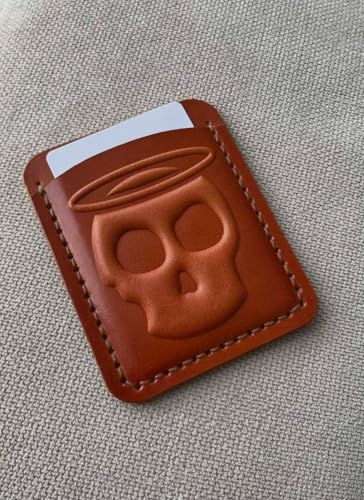
    Designing a logo that works when stamped into leather

    Why detailed artwork can fail when pressed into certain leather types

    The skull-and-halo concept behind the Back Home mark

    Learning leather through footwear, scrap leather, and experimentation

    Chrome tan versus veg tan from a maker’s point of view

    Why shoe patterns are harder than wallet patterns

    Sneakers, boots, and dress shoes as different craft disciplines

    Rush-order stress and the cost of mistakes in custom footwear

    Heat-activated glue and sole attachment

    Post-bed machines, roller feet, and stitching around curves

    Bell skivers, machine maintenance, and workshop space

    Leather community versus shoemaking community

    Selling through design instead of only selling material

    Alexis’s long-term goal of creating his own shoe silhouette

    続きを読む 一部表示
    1 時間 18 分
  • Inside Korea’s Leather Culture: Mike of BulSae Leather on Craft, Culture & Reinvention
    2026/02/24

    Mike from BulSae Leather joins Matt in this deep‑dive into Korea’s vibrant leathercraft culture. Starting with a single wallet and fueled by a passion to “make things that last longer than our lifetime,” Mike has built BulSae Leather into a small but mighty workshop known for its clean design, uncompromising hand‑work, and thoughtful storytelling. In this episode you’ll hear how a childhood fascination turned into a full‑time craft, why the name BulSae—Korean for “phoenix”—represents both heritage and reinvention, and how Mike balances tradition with modern tools in a world where “handmade” is often gate‑kept.

    💬 Join the Leather Shop Discord
    🧰 Check the Amazon Tool List

    👉 Follow on Instagram: @leathershoppod
    👉 More episodes: leathershoppod.com
    👉 All links & resources: Linktree

    Support us on Patreon

    続きを読む 一部表示
    1 時間 21 分
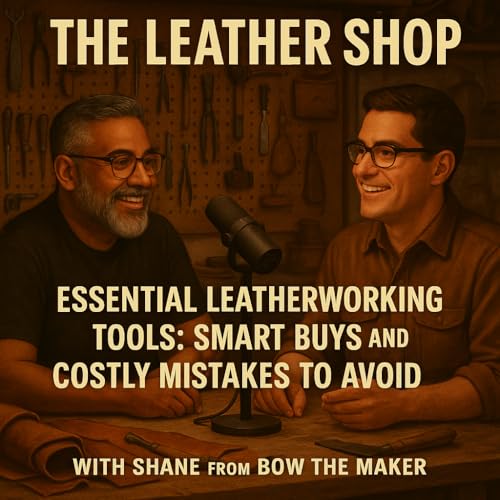
  • Essential Leatherworking Tools: Smart Buys and Costly Mistakes to Avoid
    2025/10/30

    IMatt sits down with Shane from Bow the Maker to talk about the tools every leatherworker thinks they need — and the ones that actually matter.

    From $12 Amazon pliers to top-shelf skiving knives, they break down which tools perform, which ones disappoint, and how to buy smarter without wasting money. The two also tackle social media “tool envy,” influencer reviews, and how to build a functional bench setup at any level.

    “You don’t need the prettiest tools — you need the ones that work for you.”

    💬 Join the Leather Shop Discord
    🧰 Check the Amazon Tool List

    👉 Follow on Instagram: @leathershoppod
    👉 More episodes: leathershoppod.com
    👉 All links & resources: Linktree

    Support us on Patreon

    続きを読む 一部表示
    1 時間 21 分
  • Fine Leatherwork & Exotic Leathers with Treve Cambridge
    2025/10/03

    In this episode, Matt talks with Will Hodges of Treve Cambridge about the art of fine leatherwork. They explore the tools and techniques behind luxury craftsmanship, from handling exotic skins to achieving precision with stitching and skiving.

    👉 Follow on Instagram: @leathershoppod
    👉 More episodes: leathershoppod.com
    👉 Recommended tools: Amazon Shop

    👉 All links & resources: Linktree

    Support us on Patreon

    続きを読む 一部表示
    1 時間 28 分
  • Inside Mack Provisions: Baseball Gloves, Canvas, and Craft
    2025/08/13

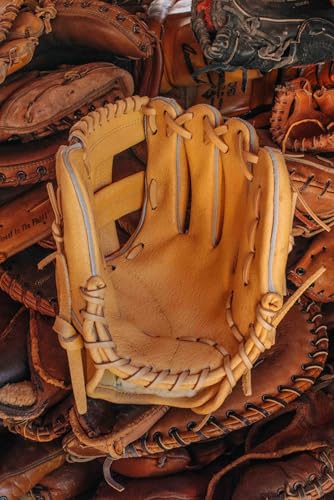
    Inside Mack Provisions: Craftsmanship Beyond the Field

    In this episode of The Leather Shop, Matt Roach is joined by KC of Mack Provisions, a handmade baseball glove company rooted in old-school leatherworking and modern craftsmanship. From glove relacing as a teenager to launching a full-time custom glove brand, KC shares his journey, philosophy, and what makes his gloves truly unique.

    Whether you're a leatherworker, player, or lover of timeless design, this is your behind-the-scenes pass into glove-making at its finest.

    🔍 Episode Highlights

    Why Chrome-Tanned Leather Reigns Supreme

    How KC Learned Craftsmanship in an Alaskan Tent Shop

    The Horween Leather Advantage

    Canvas vs. Leather: What You Need to Know

    The Great Glove Break-In Debate

    Tools of the Trade: Cylinder Arm Machines, Tex 135 Thread, and More

    Why Suede Welting is Making a Comeback

    About KC & Mack Provisions

    KC started relacing gloves for teammates at age 13. After stints in Alaska sewing canvas tents and marine gear, he transitioned into building premium handmade baseball gloves using materials like Horween’s Ball Glove X leather, real shearling padding, and custom welting techniques.

    His approach blends nostalgia with durability, favoring rugged, vintage aesthetics and minimal synthetic components. Each glove is made to order, emphasizing craftsmanship over mass production.

    📷 Follow KC on Instagram: @mackprovisions

    Craft Tips from the Episode

    The Truth About Glove Construction

    “Sewing a baseball glove is the hardest thing I’ve ever sewn—and I’ve worked on yachts, tents, and boat canvas.” – KC

    Why Thread and Machine Choice Matter

    Use UV-rated nylon thread like Tex 135, and invest in a cylinder arm machine for maximum control.

    Break-in Methods

    Skip the water dunk. Use a mallet and play catch for best results—especially when using wool padding.

    Related Episodes

    🎙️ How Scott Makes Gloves: The Deep Craft of Baseball Leather

    Follow & Subscribe

    Stay up to date with new episodes, behind-the-scenes posts, and leather drops:

    🎧 Subscribe on Apple Podcasts and Spotify

    📷 Follow us on Instagram & TikTok

    🌐 Visit leathershoppod.com for more

    📌 Know someone obsessed with baseball or handmade goods? Share this episode!

    Support us on Patreon

    続きを読む 一部表示
    1 時間 8 分