• 378 The 4 Dimensions of High-Performing Teams: a Leadership Guide to Productivity and Teamwork
    2026/11/05

    Take your self-assessment: https://letsleadchange.com/culture

    What do high-performing teams get right that keeps other talented teams drowning in drama, missing commitments, and falling short of their potential?

    When your people work hard but priorities clash, problems surface late, and agreements don’t stick, asking for more effort won’t close the gaps. Building an effective team starts with four dimensions: Connection, Clarity, Curiosity, and Commitment. In this episode, you’ll explore 12 leadership questions that help you identify what’s holding your team back and where to focus for stronger productivity and teamwork.

    After listening, you’ll be equipped to:

    • Build the trust and shared understanding successful teams need, including the often-overlooked question of whether everyone knows how to do what’s expected.
    • Strengthen problem solving by inviting different perspectives, spotting obstacles early, and uncovering opportunities for meaningful innovation.
    • Turn good intentions into the specific agreements and timely accountability that help high-performance teams follow through and celebrate progress.

    Play the episode to get 12 practical questions for building high-performing teams so you can address performance gaps, reduce unnecessary conflict, and turn shared goals into results.

    Listen for these moments to build a high-performing team:

    02:05 – Check whether trust goes both ways.

    You may trust your team, but do they trust you and one another? Explore the questions that reveal whether people feel known, supported, and valued beyond their job titles.

    05:28 – Ask the clarity question leaders often overlook.

    Your people may understand the goal without knowing how to achieve it. Discover the assumption that can leave even experienced employees struggling to meet expectations.

    09:00 – Catch obstacles before they derail your team.

    Hear three curiosity questions that help you uncover overlooked risks and fresh possibilities. Use them to strengthen problem solving and turn different perspectives into meaningful innovation.

    10:13 – Find out whether you have an agreement or just an intention.

    Everyone can leave a meeting nodding and still lack a commitment they can act on. Learn what your agreements need so you can follow up without confusion.

    13:49 – Make accountability everyone’s responsibility.

    When only managers address missed commitments, teamwork suffers. Hear how direct, timely conversations between colleagues help your team follow through and resolve problems sooner.

    Leadership Without Using Your Soul podcast offers insightful discussions on leadership and management, focusing on essential communication skills, productivity, teamwork, delegation, and feedback to help leaders navigate various leadership styles, management styles, conflict resolution, time management, and active listening while addressing challenges like overwhelm, burnout, work-life balance, and problem-solving in both online and in-person teams, all aimed at cultivating human-centered leadership qualities that promote growth and success.

    続きを読む 一部表示
    17 分
  • 376 9 Strategic AI Questions Every Leader Must Answer to Maintain Long Term Productivity and Teamwork
    2026/10/22

    Are you asking the strategic AI questions that protect your team’s future, or trading tomorrow’s expertise for today’s productivity gains?

    AI might help your team produce more in less time, but what happens to the time you save, the judgment your people need, and their willingness to challenge a polished answer? These questions about AI adoption directly affect your productivity, teamwork, and long-term success. In this episode, you’ll explore nine leadership decisions that help you avoid quick wins that create bigger problems later.

    After listening, you’ll be equipped to:

    • Use AI leadership questions to identify gaps in employee development, management expectations, and accountability before they undermine results.
    • Reinvest time saved through AI in meaningful problem solving and stronger teamwork instead of letting it disappear into more work.
    • Protect original thinking and honest feedback so your team can challenge AI output and surface mistakes without fear.

    Play the episode to work through nine strategic AI questions that help you protect human judgment, make better use of your team’s capacity, and build lasting productivity.

    Listen for these moments to sharpen your AI leadership decisions:

    01:05 – Watch for an expertise gap hiding behind efficiency gains.

    If AI takes over entry-level work, where will your future experts get their experience? Consider how today’s staffing decisions could affect your team’s ability to judge AI output tomorrow.

    03:29 – Decide where the time AI saves actually goes.

    Hours saved can quickly disappear into more meetings and higher workloads. Hear why deciding how to reinvest that capacity matters for lasting productivity and teamwork.

    06:18 – Find out what your team isn’t telling you about AI.

    Your people may hesitate to share how they use AI or where it has failed them. Explore what makes those conversations feel risky and how that silence can hide mistakes and useful practices.

    10:52 – Clarify who owns an AI-influenced decision.

    When AI recommends and a person approves, accountability can get blurry. Examine whether your review process supports thoughtful judgment or encourages a quick rubber stamp.

    14:50 – Stop rewarding more output at the expense of better work.

    The person catching AI’s mistakes may look less productive than someone generating unchecked output. Rethink what your performance measures encourage before volume overshadows quality.

    Leadership Without Using Your Soul podcast offers insightful discussions on leadership and management, focusing on essential communication skills, productivity, teamwork, delegation, and feedback to help leaders navigate various leadership styles, management styles, conflict resolution, time management, and active listening while addressing challenges like overwhelm, burnout, work-life balance, and problem-solving in both online and in-person teams, all aimed at cultivating human-centered leadership qualities that promote growth and success.

    続きを読む 一部表示
    19 分
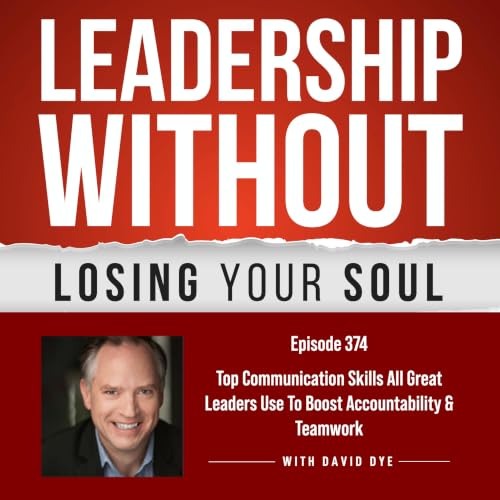
  • 374 Top Communication Skills All Great Leaders Use To Boost Accountability & Teamwork
    2026/10/08

    How do you boost accountability and teamwork when missed deadlines, finger-pointing, and broken commitments keep landing back on your desk?

    When you’re constantly chasing updates and resolving frustrations between coworkers, you have less time to lead. To increase team ownership, people need the skills and confidence to address problems directly. In this episode, you’ll discover eight practical communication tools to build a culture of accountability, starting with how you respond when your team holds you accountable.

    After listening, you’ll be equipped to:

    • Strengthen team accountability by modeling the follow-through you expect and making it safe for people to challenge you.
    • Improve teamwork by equipping people to have constructive feedback conversations and uncover hidden obstacles to productivity.
    • Improve team follow-through by celebrating successes and reinforcing the honest conversations that help people solve problems early.

    Play the episode to boost accountability and teamwork with eight practical tools that help your people keep commitments, address problems directly, and reduce the stress of unfinished work.

    Listen for these moments to strengthen team accountability:

    01:56 – Reset expectations by owning your part.

    If you’ve let unclear expectations or inconsistent follow-up slide, hear how to acknowledge it with your team. You can establish a stronger standard without pretending you’ve always met it.

    05:22 – Expect your team to hold you accountable.

    Discover why giving people permission to challenge you may not be enough. A stronger expectation can help your team see that accountability applies to everyone.

    09:24 – Help teammates address problems directly.

    When someone brings you a complaint about a coworker, your response can build team ownership. Hear how to coach constructive feedback conversations instead of becoming the go-between.

    11:02 – Turn your missed commitment into a coaching moment.

    What should you do when you drop the ball and nobody says anything? Hear how to use that uncomfortable moment to help your team practice speaking up.

    13:48 – Make honest feedback worth repeating.

    Your reaction when someone holds you accountable tells the whole team whether it’s safe to do so again. Discover how to reinforce that courage and improve team follow-through.

    Leadership Without Using Your Soul podcast offers insightful discussions on leadership and management, focusing on essential communication skills, productivity, teamwork, delegation, and feedback to help leaders navigate various leadership styles, management styles, conflict resolution, time management, and active listening while addressing challenges like overwhelm, burnout, work-life balance, and problem-solving in both online and in-person teams, all aimed at cultivating human-centered leadership qualities that promote growth and success.

    続きを読む 一部表示
    17 分
  • 377 Why Telling Managers the Staff Survey Results Will Never Fix Your Morale, Retention, or Employee Growth Problems
    2026/10/29

    https://letsleadchange.com/feedback

    Are you tired of sharing your staff survey results over and over again, but nothing ever changes?

    You’ve presented the employee survey findings, asked managers to give more feedback, and watched everyone agree it matters. Yet the same comments keep coming back, morale keeps slipping, and talented people keep leaving. Your managers may understand the problem without knowing how to change their behavior. In this episode, you’ll discover what turns employee engagement data into the everyday leadership habits your people need.

    After listening, you’ll be equipped to:

    • Recognize why engagement survey results alone don’t change behavior and challenge the assumption that awareness leads to action.
    • Connect repeated staff feedback to the growing costs of turnover, lost productivity, and declining trust.
    • Equip managers with the mindset, practical feedback tools, and reinforcement they need to make recognition and accountability everyday habits.

    Play the episode to discover the three-part system that helps you turn staff survey results into meaningful feedback, stronger retention, and employee growth.

    Listen for these moments to turn staff survey results into action:

    07:28 – Spot the turnover cycle that keeps getting worse.

    When strong performers leave, your remaining managers get stretched thinner and feedback becomes easier to postpone. See how that pattern can fuel the next resignation.

    08:18 – Recognize what another unanswered survey teaches employees.

    Your team notices when honest feedback produces no visible change. Discover why declining participation can signal a loss of trust that threatens your ability to see what’s happening.

    09:23 – Challenge the belief that knowing leads to doing.

    Your managers may agree that feedback matters and still avoid giving it. Hear what they may be missing before you prepare another reminder or action-planning template.

    10:15 – Give managers a system that makes new habits stick.

    Explore the three elements that help managers move from good intentions to regular recognition and accountability. You’ll see why a workshop alone may leave you facing the same results next year.

    11:23 – Make leadership a reason people stay.

    Hear how one company moved from repeated complaints about managers to employees naming leadership as a reason to stay. Consider what that shift could mean for your own retention challenges.

    Leadership Without Using Your Soul podcast offers insightful discussions on leadership and management, focusing on essential communication skills, productivity, teamwork, delegation, and feedback to help leaders navigate various leadership styles, management styles, conflict resolution, time management, and active listening while addressing challenges like overwhelm, burnout, work-life balance, and problem-solving in both online and in-person teams, all aimed at cultivating human-centered leadership qualities that promote growth and success.

    続きを読む 一部表示
    13 分
  • 375 Two Kinds of Chronic Complainers and the Leadership Communication Skills to Handle Each
    2026/10/15

    Are chronic complainers draining your team’s energy, or sounding an alarm you can’t afford to ignore?

    When every conversation turns into another complaint, it’s tempting to tune out or spend your day trying to make someone happy. But workplace complainers don’t all need the same response. Some have valuable concerns buried beneath their cynicism, while others have little interest in making things better. Knowing the difference helps you protect your time, strengthen teamwork, and uncover problems before they undermine productivity.

    After listening, you’ll be equipped to:

    • Distinguish caring cynics from habitual complainers so you can respond to useful feedback without getting trapped in endless negativity.
    • Use active listening and targeted questions to turn legitimate concerns into practical problem solving.
    • Set respectful boundaries with persistent complainers and close conversations with clear next steps.

    Play the episode to get practical phrases for handling chronic complainers so you can turn useful concerns into action and stop unproductive conversations from consuming your day.

    Listen for these moments to handle chronic complainers more effectively:

    03:13 – Find out whether they want things to improve.

    Hear the question that helps you distinguish a legitimate concern from an unproductive complaint. Their response can help you decide where to invest your time and energy.

    04:08 – Stop carrying a problem they won’t help solve.

    Discover how to step away respectfully when someone has no interest in making things better. You can acknowledge their frustration without letting it consume your day.

    05:40 – Look for the value beneath the cynicism.

    A skeptical teammate may be trying to prevent a problem everyone else has missed. Learn why dismissing them as negative can cost you valuable insight.

    07:19 – Interrupt the endless complaint loop with curiosity.

    Hear how a short follow-up question can shift a caring complainer from repeating frustrations to reflecting on the issue. You’ll give them room to feel heard while moving the conversation forward.

    09:15 – Get past “I don’t know” and uncover possibilities.

    When your complainer can’t imagine a solution, a creative coaching question can help them get unstuck. Use it to open a path toward practical action.

    Leadership Without Using Your Soul podcast offers insightful discussions on leadership and management, focusing on essential communication skills, productivity, teamwork, delegation, and feedback to help leaders navigate various leadership styles, management styles, conflict resolution, time management, and active listening while addressing challenges like overwhelm, burnout, work-life balance, and problem-solving in both online and in-person teams, all aimed at cultivating human-centered leadership qualities that promote growth and success.

    続きを読む 一部表示
    13 分
  • 371 Stop Planning Icebreakers, Start Planning Outcomes: End-of-Year Meeting Design Leadership, Communication Skills and Productivity
    2026/09/17

    How can you transform your end-of-year meeting from a forgettable event into a catalyst for meaningful action?

    A successful gathering should do more than entertain people or fill an agenda. With intentional end of year meeting design, you can strengthen teamwork, clarify priorities, gather valuable ideas, and inspire action that continues after everyone returns to work.

    After listening, you’ll be equipped to:

    • Design meaningful experiences that build connection and reinforce your organization’s purpose.
    • Clarify the most important message and connect it to each team’s daily work.
    • Transform employee ideas and event energy into practical, repeatable leadership habits.

    Play the episode to discover how leadership meeting design can move your team from temporary inspiration to meaningful action.

    02:35 – Plan the outcome before the agenda.

    Start by deciding what you want people to discuss, remember, and do differently after the event. This question helps every activity serve a clear purpose.

    07:54 – Give your meeting one clear priority.

    Identify the most important thing people need to understand, believe, or do. Then use that focus to shape presentations, conversations, recognition, and next steps.

    12:29 – Put your team’s collective wisdom to work.

    Replace broad requests for ideas with a specific question tied to a real strategic challenge. You’ll generate more useful insights and show employees where their expertise can make a difference.

    18:41 – Turn inspiration into a 30-day experiment.

    Choose one action that feels simple, measurable, and slightly uncomfortable. This approach converts event energy into a practical leadership habit you can sustain at work.

    Leadership Without Using Your Soul podcast offers insightful discussions on leadership and management, focusing on essential communication skills, productivity, teamwork, delegation, and feedback to help leaders navigate various leadership styles, management styles, conflict resolution, time management, and active listening while addressing challenges like overwhelm, burnout, work-life balance, and problem-solving in both online and in-person teams, all aimed at cultivating human-centered leadership qualities that promote growth and success

    続きを読む 一部表示
    21 分
  • 373 Boost Staff Morale & Deliver Stellar Business Results By Leading Organizational Change Like THIS
    2026/10/01

    Are you losing your team’s trust every time you’re leading organizational change, without knowing it?

    When you introduce a new system, reorganize a team, or shift priorities, your people want to know what it means for their work and whether you’ll take their concerns seriously. Managing organizational change takes communication skills that build trust, invite honest feedback, and turn uncertainty into clear action. In this episode, you’ll discover a practical four-part approach to leading change that strengthens teamwork and delivers the business results you need.

    After listening, you’ll be equipped to:

    • Build trust and protect staff morale by acknowledging what people worry about losing and clarifying what they can influence.

    • Use active listening to uncover risks and turn resistance into useful information for problem solving.

    • Turn new priorities into clear commitments while reducing overwhelm by deciding what your team can stop doing.

    Play the episode to get a four-part framework for leading organizational change that helps you catch costly problems early, build morale, and turn your change plan into lasting results.

    Be sure to pay attention to:

    02:58 – Recognize what even positive change can cost your team.

    Discover why a better system or promising reorganization can still leave people feeling unsettled. You’ll hear questions that help you uncover what your team worries about losing.

    04:54 – Clarify what your team can actually influence.

    Avoid a common trust-breaking mistake when inviting input on decisions that are already final. Learn how to give people clear direction while making room for meaningful participation.

    07:25 – Find the useful information hidden in resistance.

    Your team’s objections may reveal a customer risk or implementation barrier you haven’t spotted. Hear how curiosity can help you catch costly problems before they reach your customers.

    09:52 – Make room for change by asking what will stop.

    Adding a new priority without adjusting existing expectations can quickly create overwhelm. Discover the conversation that helps your team make realistic commitments and follow through.

    13:29 – Look beyond launch day to measure success.

    A completed rollout doesn’t tell you whether the change is working. Identify signs that your team is adopting new behaviors, solving problems, and delivering better business results.

    Leadership Without Using Your Soul podcast offers insightful discussions on leadership and management, focusing on essential communication skills, productivity, teamwork, delegation, and feedback to help leaders navigate various leadership styles, management styles, conflict resolution, time management, and active listening while addressing challenges like overwhelm, burnout, work-life balance, and problem-solving in both online and in-person teams, all aimed at cultivating human-centered leadership qualities that promote growth and success.

    続きを読む 一部表示
    16 分