エピソード

  • Imperialism Ain't What It Used to Be: Cuba, Venezuela, and the Return of the Colonial State w/ Andrew Smolski
    2026/09/19

    Andrew Smolski returns to the podcast to continue ouron going conversation on US imperialism and Cuba, recorded September 11, 2026. We discuss labor and neoliberalization in Mexico, the Cuban economy from the Special Period to the present, the new sanctions on Cuba and the US oil agreement with Venezuela, and the return of a nineteenth-century colonial politics in the hemisphere.

    Andrew Smolski is an assistant professor of rural sociology in the Department of Agricultural Economics, Sociology, and Education at the Pennsylvania State University and a coordinating editor of Latin American Perspectives. His research examines imperialism, development, and agrarian change in Cuba and Mexico.

    Links

    • Part 1: "US Imperialism and Cuban Development w/ Andrew Smolski" (July 2026)
    • Joana Salém Vasconcelos, Agrarian History of the Cuban Revolution (Brill 2023 / Haymarket 2024)
    • Hannah Garth, Food in Cuba: The Pursuit of a Decent Meal (Stanford University Press, 2020)
    • Anton Jäger, Hyperpolitics (2025)
    • Christopher Chase-Dunn et al. "Trade Globalization since 1795: Waves of Integration in the World-System" (2000)
    • Current issue of Latin American Perspectives
    • US State Department, "Further Sanctions on Cuba's Elites, Financial Channels, and Resource Exploitation Apparatus" (September 3, 2026)

    Subscribe to Latin American Perspectives: https://www.sagepub.com/shop/subscribe-to-a-journal/latin-american-perspectives-200875#subscribe

    続きを読む 一部表示
    1 時間 29 分
  • Political Ecology, Gender, and the Environment in Latin America (Parte 2): conversación con las autoras del número
    2026/08/03
    En esta segunda parte de nuestra conversación sobre el número de enero de 2026 de Latin American Perspectives, "Political Ecology, Gender and the Environment in Latin America", vamos directamente a la investigación junto a cuatro de las autoras del dossier. La discusión, facilitada por la coeditora del número Mayarí Castillo (socióloga de la Universidad Mayor), reúne a Evelyn Arriagada, Paula Contreras, Beatriz Cid y Paula Acuña para explorar cómo el género funciona como categoría crítica en la ecología política y los estudios ambientales en América Latina. A lo largo del episodio, las autoras conversan sobre el agua, el cuidado, la agroecología, la recolección de algas y la defensa de los territorios; sobre el diálogo del género con la interseccionalidad, los saberes locales e indígenas y la relación con la naturaleza; y sobre el protagonismo de las mujeres en las luchas socioambientales, desde el norte de Chile hasta la costa mapuche del Biobío. Si aún no la has escuchado, te recomendamos comenzar por la primera parte, nuestra conversación con Mayarí Castillo sobre los grandes ejes que estructuran el número. 🎧 Escucha la primera parte: https://sites.libsyn.com/456621/latinamericanperspectives/political-ecology-gender-and-the-environment-in-latin-america-con-mayar-castillo 📖 Explora el número de enero de 2026 aquí: https://journals.sagepub.com/toc/lapa/53/1 Invitadas y sus artículos Evelyn Arriagada — "A Feminist Political Ecology on Women's Environmental Activism from Latin America/Abya Yala" (acceso abierto). Propone una ecología política feminista situada para leer el activismo ambiental de las mujeres más allá del maternalismo y de una cercanía "esencial" con la naturaleza. https://journals.sagepub.com/doi/full/10.1177/0094582X251413512 Paula Contreras (con Mayarí Castillo, Camila Cuevas y Pablo González) — "Water Scarcity, Gender, and Community Organization in Coquimbo, Chile". Sobre la organización comunitaria frente a la escasez hídrica en la provincia del Limarí y el papel del género en esos procesos. https://journals.sagepub.com/doi/abs/10.1177/0094582X261419440 Beatriz Cid (con Magaly Mella Abalos y otros/as) — "Mapuche Lafkenche Women: Pursuing the Economic Revitalization of Kolloy and Caring for the Commons on the Tirúa Coast". Sobre las mujeres lafkenche, la recolección de kolloy y el cuidado de los bienes comunes en la costa de Tirúa. https://journals.sagepub.com/doi/abs/10.1177/0094582X251415402 Paula Acuña — "The Ethic of Care in the Practices of Chilean Campesinas: Agroecological Responses in the Face of Climate Uncertainty". Sobre la ética del cuidado en las prácticas agroecológicas de campesinas en Paine frente a la incertidumbre climática. https://journals.sagepub.com/doi/abs/10.1177/0094582X251414855 Introducción al dossier: Mayarí Castillo y Katy Jenkins, "Political Ecology, Gender, and the Environment in Latin America: An Introduction to the Field". https://journals.sagepub.com/doi/abs/10.1177/0094582X251411334 Sigue a Latin American Perspectives Síguenos en Facebook, Instagram y Twitter/X, y suscríbete y califica el podcast en Spotify, Apple Podcasts, YouTube o la aplicación de tu preferencia. Las suscripciones anuales impresas a la revista parten en US$ 74,00, con tarifas rebajadas para estudiantes y miembros de la Latin American Studies Association.
    続きを読む 一部表示
    1 時間 1 分
  • Editor's Choice Ep. 13: P FKN R: Bad Bunny and Puerto Rican Resistance w/ Vanessa Díaz and Petra R. Rivera-Rideau
    2026/07/09

    Hosts Alexander Scott and Tomás Crowder-Taraborrelli speak with Vanessa Díaz and Petra R. Rivera-Rideau about their new book P FKN R: How Bad Bunny Became the Global Voice of Puerto Rican Resistance (Duke University Press, 2026).

    Díaz and Rivera-Rideau — creators of the "Bad Bunny Syllabus" — situate Benito Antonio Martínez Ocasio within more than a century of Puerto Rican history and a much longer tradition of music as resistance. The conversation traces the political and economic conditions that shaped Bad Bunny's formative years: the end of Section 936, the debt crisis and the imposition of the fiscal oversight board Puerto Ricans call La Junta, the gentrification and displacement accelerated by Acts 20/22, and the devastation and abandonment of Hurricane María. Vanessa shares her family's own experience of the storm and its aftermath, and both authors discuss the summer 2019 uprising that forced Governor Ricardo Rosselló's resignation — with particular attention to the Black feminist organizing of Colectiva Feminista en Construcción and the deep genealogy connecting bomba and plena to reggaetón and perreo as forms of communal protest. They close with Bad Bunny's Super Bowl halftime performance, the politics of a Spanish-language anti-colonial statement on one of the most-watched stages in the world, and why, in Puerto Rico, the party is the protest.

    Vanessa Díaz is associate professor of Chicana/o and Latina/o Studies at Loyola Marymount University and author of Manufacturing Celebrity: Latino Paparazzi and Women Reporters in Hollywood (Duke University Press, 2020).

    Petra R. Rivera-Rideau is associate professor of American Studies at Wellesley College and author of Remixing Reggaetón: The Cultural Politics of Race in Puerto Rico (Duke University Press, 2015) and Fitness Fiesta!: Selling Latinx Culture through Zumba (Duke University Press, 2024).

    Get the book:
    P FKN R: How Bad Bunny Became the Global Voice of Puerto Rican Resistance is available now from Duke University Press: https://www.dukeupress.edu/p-fkn-r (also available in Spanish)

    Explore the Bad Bunny Syllabus: https://www.badbunnysyllabus.com/

    Support Latin American Perspectives:
    Follow us on Facebook, Instagram, Twitter/X, TikTok, and Bluesky to stay up to date on new issues, articles, and episodes. Subscribe and rate the podcast on Spotify, Apple Podcasts, YouTube, or your preferred listening app. Annual print subscriptions to the journal start at $74, with discounted rates for students and LASA members. Your subscription helps sustain a critical space for internationalist, anti-capitalist, and decolonial scholarship.

    続きを読む 一部表示
    59 分
  • US Imperialism and Cuban Development w/ Andrew Smolski
    2026/07/03

    Alexander Scott speaks with rural sociologist Andrew Smolski about U.S. imperialism and the long history of empire in Cuban development. Drawing on Smolski's archival research and his work on Cuban agriculture, the conversation traces how imperialism has shaped Cuba's capacity to develop across five centuries — from Spanish colonialism, the Haitian Revolution, and the rise of the sugar-slavery complex, through U.S. occupation and the Platt Amendment era, to a blockade now in its seventh decade — and asks what it would mean for development research to treat imperialism as a condition of development rather than mere background.

    Andrew Smolski is an assistant professor of rural sociology in the Department of Agricultural Economics, Sociology, and Education at The Pennsylvania State University, and a member of the Latin American Perspectives editorial collective.

    Further reading from our guest:

    "Interrogating Structural Conditions for Agricultural Production: A Comparative-Historical Study of Cuban Incorporation, Delinking, and Exile," Journal of World-Systems Research 28(2), 2022 (open access):
    https://jwsr.pitt.edu/ojs/jwsr/article/view/1117

    The Agrarian Question as an Ecological Question in Latin America, special issue of Latin American Perspectives (January 2024), co-edited with Daniela García Grandón and Joana Salém Vasconcelos:
    https://journals.sagepub.com/doi/10.1177/0094582X241252111

    Violence, Capital Accumulation, and Resistance in Contemporary Latin America, special issue of Latin American Perspectives (January 2021), co-edited with Matthew Lorenzen:
    https://doi.org/10.1177/0094582X20975005

    "Class Struggle and Violence in Latin American Cities," Latin American Perspectives 48(1):
    https://journals.sagepub.com/doi/10.1177/0094582X19860470

    For more information about Latin American Perspectives, our podcasts, and guests, please contact lap.outreach@gmail.com.

    Listen now on Spotify, Apple Podcasts, YouTube, or your preferred listening platform.

    続きを読む 一部表示
    1 時間 21 分
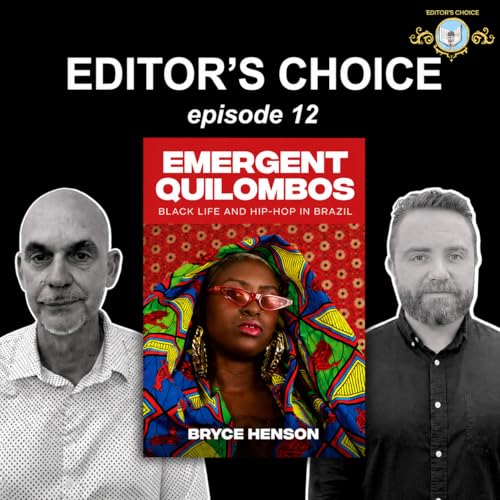
  • Editor's Choice Ep. 12: Emergent Quilombos: Black Life and Hip-Hop in Brazil w/ Bryce Henson
    2026/05/13

    Bryce Henson joins the pod to discuss his book Emergent Quilombos: Black Life and Hip Hop in Brazil (University of Texas Press, 2023). Drawing on ethnographic research in Salvador da Bahia, Henson explores Brazilian hip hop as a diasporic cultural and political movement rooted in Black radical traditions, anti-racist struggle, and collective community formation. Throughout the conversation, the group discusses the historical significance of quilombos in Brazil, the relationship between Blackness and political struggle, the role of hip hop as a form of "quilombismo," and the intersections of race, class, gender, and diaspora in contemporary Brazil.

    Bryce Henson is Associate Professor in the Department of Communication and Journalism at Texas A&M University, with affiliations in Africana Studies and the Race and Ethnic Studies Institute. He is also an affiliated researcher with the Pós-Afro Program at the Universidade Federal da Bahia and serves as Associate Editor for Transforming Anthropology.

    Emergent Quilombos: Black Life and Hip Hop in Brazil can be purchased here: https://utpress.utexas.edu/9781477327986/

    Spotify Playlist Curated by Bryce Henson:

    https://open.spotify.com/playlist/3KnR3IBULZ9aAesr8pY3Ov?si=wp_fX5SwSnigAXai5nWT6Q

    Subscribe to Latin American Perspectives

    A journal for discussion and debate on the political economy of capitalism, imperialism, and socialism in the Americas.

    https://latinamericanperspectives.com/

    続きを読む 一部表示
    57 分
  • U.S. Imperialism Enters a New Stage w/ Steve Ellner
    2026/05/08

    In this episode of the Latin American Perspectives Podcast, Alexander Scott speaks with historian and political scientist Steve Ellner about the changing nature of U.S. imperialism and the escalating political crisis in Venezuela.

    Drawing on Ellner's recent work, the conversation examines sanctions, economic warfare, "hyper-imperialism," the Venezuelan opposition, and the broader geopolitical tensions shaping Latin America today.

    Topics discussed include:

    • Sanctions as a form of warfare
    • Economic coercion and financial blockades
    • U.S. policy toward Venezuela
    • María Corina Machado and the Venezuelan far right
    • Debates on the left surrounding anti-imperialism and democracy
    • The global implications of a new phase of U.S. power

    Steve Ellner is a historian and political scientist who taught for over two decades at the Universidad de Oriente in Venezuela. He is Associate Managing Editor of Latin American Perspectives and the author of numerous books and articles on Venezuelan politics, the Latin American left, and the Chávez era.

    Further Reading from Steve Ellner
    • CounterPunch — "U.S. Imperialism Enters a New Stage"
      https://www.counterpunch.org/2026/04/21/u-s-imperialism-enters-a-new-stage/
    • Jacobin — "Trump, Latin America, and the Left Opposition"
      https://jacobin.com/2025/11/trump-latin-america-left-opposition
    • Venezuelanalysis Author Page
      https://venezuelanalysis.com/guest-author/steve-ellner/
    • Venezuela Solidarity Network — María Corina Machado & Venezuela
      https://www.venezuelasolidaritynetwork.org/mcm_venezuela

    続きを読む 一部表示
    1 時間 13 分
  • Political Ecology, Gender, and the Environment in Latin America con Mayarí Castillo
    2026/04/30

    En este episodio del podcast de Latin American Perspectives, conversamos con Mayarí Castillo, socióloga de la Universidad Mayor y coeditora del número de enero de 2026, sobre los principales ejes que estructuran este nuevo dossier.

    A lo largo de la conversación, abordamos la ecología política como un marco para comprender la relación entre sociedad, naturaleza y poder en América Latina, y exploramos las raíces históricas de los conflictos socioambientales contemporáneos—desde el colonialismo y la formación de los Estados hasta el extractivismo y las crisis climáticas actuales. También discutimos el papel central del género y de la ecología política feminista para repensar cómo estas luchas se viven, se disputan y se transforman.

    Este episodio ofrece una puerta de entrada accesible al número, al tiempo que destaca su relevancia para entender las dinámicas actuales de desigualdad, territorio y conflicto ambiental en la región.

    🎧 Escucha el episodio
    📖 Explora el número de enero de 2026 aquí: https://journals.sagepub.com/toc/lapa/53/1

    続きを読む 一部表示
    37 分
  • Amazon Rainforest and Socio-Ecological Alternatives in Latin America w/ Claudia Horn
    2026/04/23

    LAP coordinating editor Claudia Horn (King's College London) joins the pod to discuss the September 2025 issue: Amazon Rainforest and Socio-Ecological Alternatives in Latin America.

    What is the Amazon—and how should we understand it beyond dominant environmental, state-centered, or extractivist narratives? Our conversation explores the concept of multiplicity as a way of rethinking the Amazon as a space of diverse social worlds, political struggles, and ways of life. We also examine the forces threatening these worlds, while highlighting the forms of resistance, collective action, and alternative socio-ecological futures emerging across the region.

    Drawing on contributions from across the issue, this episode situates the Amazon within broader debates on global capitalism, environmental crisis, and the possibilities for more just and sustainable futures.

    Access the issue here: https://journals.sagepub.com/toc/lapa/52/5?_gl=1*2tnc8d*_up*MQ..*_ga*MTU2OTAyODIzMi4xNzc3MDQwMjQ4*_ga_60R758KFDG*czE3NzcwNDAyNDckbzEkZzEkdDE3NzcwNDAyNTckajUwJGwwJGg2Mjg3NzUxMjA.

    For additional information about contacting the journal, podcast host, or guests, please contact latampodcasts@gmail.com

    続きを読む 一部表示
    47 分