エピソード

  • The Empire - The Turning Point at Gettysburg
    2026/08/13

    The Battle of Gettysburg sits at the hinge point of the American story—a moment when the nation’s identity, its moral compass, and even its future seemed to hang in the balance. In this episode, JB Shreve continues The Empire: A 250‑Year American Story by tracing how Gettysburg became far more than a clash of armies. It was a national reckoning. As the episode explains, this was the place where ideas about right, wrong, truth, and the meaning of America were forced back into alignment with the country’s founding ideals. Gettysburg became the nation's reboot moment and a confrontation with values that had drifted since the Declaration of Independence.

    Rather than focusing solely on battlefield maneuvers, the episode explores the deeper narrative unfolding beneath the gunfire—how leaders, soldiers, and civilians experienced a crossroads that reshaped the nation’s trajectory. The story widens beyond Pennsylvania to the simultaneous siege of Vicksburg, revealing how events in the West and East intertwined to transform the war’s momentum and the country’s emotional landscape. We get to see this dual turning point as a moment when the battle shattered armies, transformed hopes into despair, and coincided with a triumph hundreds of miles away.

    Listeners are invited into the human drama: the fear, the resolve, the political stakes, and the cultural myths that later emerged from the conflict. The episode also traces how Gettysburg’s legacy evolved in the decades that followed, shaping national memory and redefining the meaning of sacrifice and equality.

    This installment offers a sweeping, reflective look at why Gettysburg still matters—not just as a military event, but as a defining chapter in America’s ongoing struggle to understand itself. It’s a powerful exploration of the ideas that survived the battlefield and the vision of the nation that emerged from its ashes.

    This post is part of our collection and series The Empire: A 250 Year American Story. Each week for the duration of 2026, new episodes will release, telling the unique, complex, and fascinating story of America’s history.

    Learn more about the End of History at our website https://theendofhistory.net.

    続きを読む 一部表示
    40 分
  • The Empire - War Is Hell
    2026/08/11

    Our podcast series plunges into the brutal transformation of the American Civil War as it shifted from romantic expectation to industrial‑scale devastation. By 1862, the nation had already abandoned any illusion of a quick conflict. What unfolded instead was a kind of warfare the world had barely imagined—railroads moving armies with unprecedented speed, telegraphs reshaping communication, and mass‑produced weaponry outpacing the tactics meant to control it. The result was carnage on a scale Americans had never seen.

    This episode traces that turning point through the war’s most harrowing early battles. Shiloh shocks the nation with casualties surpassing all previous American wars combined, revealing the grim reality of modern combat. Antietam follows as the bloodiest single day in American history, a clash so ferocious that entire regiments disappear in minutes. Fredericksburg adds another layer of tragedy, exposing the catastrophic consequences of an outdated strategy against fortified positions.

    Alongside the battlefield narrative, the episode explores the commanders who shaped these years—Grant’s resilience, McClellan’s crippling caution, Lee’s audacity, and Jackson’s unmatched speed and ferocity. Their decisions, strengths, and failures illuminate how leadership evolved under the pressure of a war that refused to behave like the wars of the past.

    But the story reaches beyond strategy and tactics. The episode examines how the conflict tore through families, friendships, churches, and communities. Soldiers often faced men they had once known personally. Border states fractured. Even the White House felt the strain as Mary Todd Lincoln’s own family split between Union and Confederate loyalties.

    By 1863, Americans understood that the Civil War was redefining not only military practice but the nation’s emotional and moral landscape. This episode captures that transformation—how industrial warfare, staggering loss, and shifting leadership reshaped the country and set the stage for the turning point still to come.

    This post is part of our collection and series The Empire: A 250 Year American Story. Each week for the duration of 2026, new episodes will release, telling the unique, complex, and fascinating story of America’s history.

    Learn more about the End of History at our website https://theendofhistory.net.

    続きを読む 一部表示
    29 分
  • The Empire - Civil War Generals
    2026/08/06

    The latest episode of The Empire: A 250 Year American Story turns toward the human architecture of the Civil War—its generals, its illusions, and the cultural forces that shaped the conflict long before the first shots were fired. JB Shreve traces how early expectations of a quick, almost theatrical war collapsed at Bull Run, where both sides discovered the sobering reality of a nation willing to bleed for its convictions. As the episode unfolds, the battle becomes a lens for understanding the deeper divides that defined the era.

    From there, the story widens into the aristocratic world of the antebellum South, a society built on hierarchy, honor, and the planter elite’s belief that their cultural kinship with Europe would translate into international support. This worldview produced a distinctive class of Confederate commanders—figures like J.E.B. Stuart, James Longstreet, Joseph E. Johnston, Nathan Bedford Forrest, and the almost mythic Stonewall Jackson—each shaped by the South’s ideals of courage, duty, and personal reputation. Their exploits, eccentricities, and battlefield brilliance helped forge the Confederacy’s early military identity.

    Standing above them all is Robert E. Lee, whose decision to follow Virginia rather than the Union becomes a pivotal moment in the episode. JB Shreve examines the tension between Lee’s personal beliefs and his ultimate choice, reframing long‑held assumptions about honor, loyalty, and moral courage.

    On the Union side, the episode introduces George McClellan—a gifted organizer whose caution, ego, and strained relationship with Lincoln created some of the war’s most frustrating “what ifs.” His rise and limitations illustrate the early leadership challenges that plagued the North.

    This chapter sets the stage for the seismic battles and shifting strategies still to come, revealing how personalities, culture, and conviction shaped the war long before its turning points arrived.

    This post is part of our collection and series The Empire: A 250 Year American Story. Each week for the duration of 2026, new episodes will release, telling the unique, complex, and fascinating story of America’s history.

    Learn more about the End of History at our website https://theendofhistory.net.

    続きを読む 一部表示
    45 分
  • The Empire - Coming Apart
    2026/08/04

    The latest installment of The Empire: A 250 Year American Story marks a turning point in the series, stepping into one of the most volatile and defining chapters of the nation’s past: the road to the American Civil War. This episode traces how a widening gap between America’s self‑image and its lived reality—visible since the founding—finally reached a breaking point in the mid‑19th century. What had long been managed through political compromise, westward expansion, and careful rhetoric erupted into a crisis no leader could defuse.

    Listeners are taken through the escalating tensions of the 1850s, a decade shaped by explosive legislation, violent clashes, and deepening mistrust between North and South. From the chaos of “Bleeding Kansas” to the shockwaves of the Dred Scott decision, the country found itself pulled toward confrontation by forces far larger than any single event. Cultural identity, political power, and the future of slavery became inseparable, creating a national landscape where compromise no longer satisfied either side.

    The episode also introduces the rise of Abraham Lincoln, a figure underestimated by nearly everyone around him. His unlikely ascent, shaped by hardship, self‑education, and a steady moral evolution, positioned him to confront the greatest constitutional and human crisis in American history. As the South moved toward secession and the Union braced for conflict, Lincoln’s clarity, restraint, and political instinct became central to defining what the United States actually was—and whether it would survive.

    Rather than recounting battles, this opening chapter focuses on the forces that made war unavoidable: fear, ideology, ambition, and the unresolved contradictions woven into the nation’s founding. It sets the stage for the episodes ahead, where the story shifts from rising tensions to the brutal reckoning that followed!

    This post is part of our collection and series The Empire: A 250 Year American Story. Each week for the duration of 2026, new episodes will release, telling the unique, complex, and fascinating story of America’s history.

    Learn more about the End of History at our website https://theendofhistory.net.

    続きを読む 一部表示
    55 分
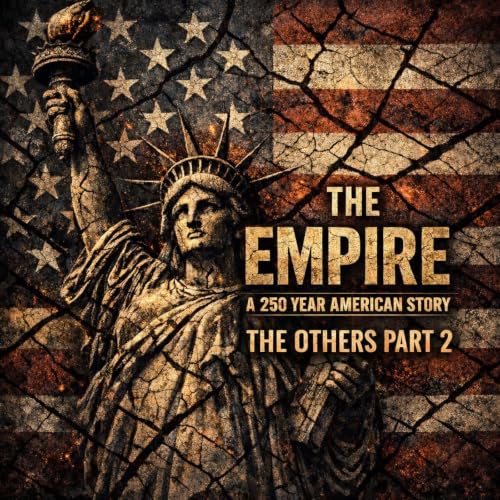
  • The Empire - The Others (Part 2)
    2026/07/30

    Black Americans stand at the center of the American story long before the Civil War begins, shaping the nation’s identity, economy, and moral contradictions across nearly two and a half centuries. This episode traces that deeper history—one often overshadowed by the narratives of founders, generals, and political leaders—to reveal how millions of men, women, and children lived, labored, resisted, and hoped within a system built on bondage.

    The journey begins in colonial America, where early forms of servitude evolved into a racial caste system that hardened across generations. From the trauma of the Middle Passage to the rise of hereditary slavery, the foundations of the American economy were laid through forced labor. Yet even in these earliest chapters, Black Americans forged families, communities, and spiritual traditions that sustained them through unimaginable hardship.

    As the Revolution swept across the colonies, the ideals of liberty and equality collided with the reality of slavery. Black soldiers fought on both sides of the conflict, seizing any opportunity to claim the freedom promised in the nation’s founding rhetoric. For a brief moment, many Americans believed slavery might fade away. Instead, the invention of the cotton gin and the explosive growth of the cotton economy transformed slavery into the engine of Southern wealth, expanding its reach and intensifying its brutality.

    This episode explores the world that emerged from that transformation: the plantation system, the slave codes, the constant fear of uprisings, and the rare but seismic revolts that reshaped Southern policy. It also highlights the growing abolitionist movement, the courage of escape networks, and the voices—like Douglass, Tubman, and Sojourner Truth—who insisted America confront its own contradictions.

    By the eve of the Civil War, the nation stood divided, and the struggle for freedom had reached a breaking point. This episode sets the stage for what comes next.

    This post is part of our collection and series The Empire: A 250 Year American Story. Each week for the duration of 2026, new episodes will release, telling the unique, complex, and fascinating story of America’s history.

    Learn more about the End of History at our website https://theendofhistory.net.

    続きを読む 一部表示
    48 分
  • The Empire - The Others (Part 1)
    2026/07/28

    This episode steps away from the main political storyline of The Empire: A 250 Year American Story to examine the experiences of those who did not benefit from America’s explosive growth in the eighteenth and early nineteenth centuries. Before the Civil War, as the young republic expanded, innovated, and imagined itself destined for greatness, entire nations of American Indians were confronting a very different reality—one defined by upheaval, shifting alliances, and the relentless pressure of a population racing westward.

    Listeners are taken back to a continent once governed by hundreds of distinct Native nations, each with its own political systems, diplomatic traditions, and regional power. As European empires fought for dominance, these nations navigated the changing landscape with strategy and sophistication—forming alliances, waging wars, and negotiating treaties to preserve their autonomy. But the collapse of French influence, the rise of American settlement, and the revolutionary reshaping of the continent introduced new dangers that no single tribe could outrun.

    The episode traces how frontier violence, broken treaties, and expanding settlement reshaped Native homelands long before the Trail of Tears. It follows the rise and fall of major resistance movements, from Pontiac’s coalition to Tecumseh’s ambitious confederation, and explores how some nations turned toward adaptation—literacy, constitutional government, Christianity, and agriculture—hoping coexistence might secure their future.

    By the 1830s and 1840s, however, the accelerating forces of population growth, economic ambition, and the ideology later called Manifest Destiny made clear that even diplomacy and cultural adaptation could not halt the republic’s westward march.

    This episode offers a wide‑angle view of the American Indian story before the Civil War—one marked by resilience, political brilliance, tragedy, and the reshaping of an entire continent. It sets the stage for the next chapter, where the series turns to another group living at the margins of America’s rise.

    This post is part of our collection and series The Empire: A 250 Year American Story. Each week for the duration of 2026, new episodes will release, telling the unique, complex, and fascinating story of America’s history.

    Learn more about the End of History at our website https://theendofhistory.net.

    続きを読む 一部表示
    45 分
  • The Empire - Industry and Revelation
    2026/07/22

    The early nineteenth century was a turning point in the American story—a moment when the nation’s identity, economy, and spiritual life were all being reshaped at once. This episode explores that seismic transformation, tracing how two massive forces—the Industrial Revolution and the Second Great Awakening—collided to redefine what America was becoming.

    Listeners step into a world where a rural republic of farmers suddenly found itself swept into an age of machines, steam power, and expanding cities. Cotton surged into global dominance, factories multiplied across the North, and new technologies shrank distances and accelerated ambition. The episode follows the rise of industrial espionage, the birth of American manufacturing, and the explosive growth of railroads, steamboats, and textile mills that pulled the country into modernity. These changes didn’t just alter the economy—they reshaped family life, migration, class, and the widening divide between North and South.

    Alongside this economic upheaval came a spiritual revolution. The Second Great Awakening ignited frontier camp meetings, campus revivals, and urban reform movements that touched every corner of American society. Charismatic preachers, new denominations, and grassroots activism helped democratize faith and mobilize ordinary people toward sweeping social change. Abolitionism, temperance, women’s activism, and educational reform all drew energy from this spiritual wave, creating a moral countercurrent to the profit‑driven cotton empire.

    Together, these two revolutions—industrial and spiritual—formed the backdrop of a nation hurtling toward crisis. This episode reveals how technological innovation, economic power, religious fervor, and social reform intertwined to shape the America that would soon face its greatest internal reckoning.

    This post is part of our collection and series The Empire: A 250 Year American Story. Each week for the duration of 2026, new episodes will release, telling the unique, complex, and fascinating story of America’s history.

    Learn more about the End of History at our website https://theendofhistory.net.

    続きを読む 一部表示
    45 分
  • The Empire - Manifest Destiny
    2026/07/16

    America’s westward surge in the first half of the nineteenth century wasn’t just a geographic story—it was the moment the young republic transformed its identity. This episode explores how a coastal nation, barely a generation removed from the Revolution, exploded across a continent with astonishing speed and confidence. What began as scattered settlements along the Atlantic evolved into a sweeping movement driven by ambition, faith, political will, and a powerful belief that expansion was part of the nation’s purpose.

    Listeners are taken through the early frontier world shaped by figures like Lewis and Clark, whose journey revealed the scale and promise of the interior, and Daniel Boone, whose legend helped define the mythology of the American pioneer. Their exploits fed a growing cultural conviction that the West offered opportunity, reinvention, and national destiny.

    The episode also traces how political leaders—especially Andrew Jackson—turned frontier energy into federal policy, clearing pathways for settlers and embedding expansion into the nation’s political imagination. By the 1840s, this momentum crystallized into the idea later known as Manifest Destiny, a blend of nationalism, religious confidence, and economic hunger that framed continental growth as both inevitable and righteous.

    From the grueling realities of the Oregon Trail to the catastrophic ordeal of the Donner Party, the episode highlights the human cost behind the dream. It follows the rise of mountain men who mapped the interior, the revolt that birthed the Republic of Texas, and the geopolitical clashes that culminated in the Mexican‑American War—events that ultimately pushed the United States to the Pacific.

    By mid‑century, the map had been remade. The nation now stretched from ocean to ocean, setting the stage for new conflicts, new opportunities, and the next chapter of America’s transformation.

    This post is part of our collection and series The Empire: A 250 Year American Story. Each week for the duration of 2026, new episodes will release, telling the unique, complex, and fascinating story of America’s history.

    Learn more about the End of History at our website https://theendofhistory.net.

    続きを読む 一部表示
    43 分