エピソード

  • Startup Funding Espresso – These Startups Do Well With Angel Groups
    2026/11/27

    These Startups Do Well With Angel Groups

    Hello, this is Hall T. Martin with the Startup Funding Espresso -- your daily shot of startup funding and investing.

    Some startups do better with angel groups than others.

    Here are some startup characteristics that play well with angel groups:

    Intellectual property.

    Startups with IP do better, as it signals potential protection of the business from competition.

    Those with more patents and trademarks appear to be stronger businesses.

    Current technology over advanced technologies.

    Startups that use existing technology are more likely to get angel funding over those with advanced technology.

    Angel groups look for validation that the technology works, and customers will pay for it.

    Advanced technology is often unproven, and it's not clear customers will pay for it.

    Startups with traction.

    Companies that have revenue and growth do well with angel groups.

    Angel groups like to see the growth story already underway.

    Software companies vs. hardware companies.

    Angel groups look for capital-efficient businesses, and the inclusion of hardware often requires greater fundraising.

    Product-market fit.

    Companies that have product-market fit see strong take-up of the product.

    Angel groups look for this type of growth as evidence of a validated product and business model.

    Consider angel groups if your startup fits these criteria.

    Thank you for joining us for the Startup Funding Espresso where we help startups and investors connect for funding.

    Let's go startup something today.

    _______________________________________________________

    For more episodes from Investor Connect, please visit the site at: http://investorconnect.org

    Check out our other podcasts here: https://investorconnect.org/
    For Investors check out: https://tencapital.group/investor-landing/
    For Startups check out: https://tencapital.group/company-landing/
    For eGuides check out: https://tencapital.group/education/
    For upcoming Events, check out https://tencapital.group/events/

    For Feedback please contact info@tencapital.group

    Please follow, share, and leave a review.

    Music courtesy of Bensound.

    続きを読む 一部表示
    2 分
  • Investor Connect 905: Commercialization Beyond Sales: Driving Adoption in Med Tech with Craig T. Ingram
    2026/11/27

    On this episode of Investor Connect, Hall Martin welcomes Craig T. Ingram, who helps med tech, health tech, biotech, medical device, digital health, and telehealth companies bring products to market more effectively by managing the full commercialization journey.

    Craig explains that commercialization is far more than marketing and selling, outlining 10 components—from market research and product development to finances, budgets, post-market surveillance, and partnerships—and warns that many companies fail early due to low customer adoption. He shares where startups commonly go wrong after raising capital by hiring sales reps too soon, and he introduces his five-point framework—awareness, attention, attraction, adoption, and retention—to prep the market before launch so prospects already have familiarity and curiosity. Craig T. Ingram focuses on commercialization across North America, Europe, and the Middle East, emphasizing that founders should begin planning about 18 months before FDA or EU MDR approval. He notes that market research is often hurried or incomplete because founders are overly attached to their "widget," and he stresses that success comes from validating that customers will pay for the outcome the product delivers—not features, benefits, or advantages. He also discusses positioning for hospitals and providers, urging leaders to build a multi-page commercialization plan rather than relying on "garbage" go-to-market plans, and he argues revenue is a lagging indicator of prospect-to-customer conversion.

    Craig also covers why adoption is harder than product development in regulated healthcare, the role of sales training versus product training, and why "show and tell" selling leads to missed forecasts. He advises venture-backed companies not to talk about scaling until they reach roughly $3–5 million in annual revenue.

    Visit Int'l Commercialization Growth Partners at www.medicalsalesgrowth.com

    Reach out to at www.linkedin.com/in/craigtingram, and on medsurgconsulting@gmail.com

    ________________________________________________________________________

    For more episodes from Investor Connect, please visit the site at: http://investorconnect.org

    Check out our other podcasts here: https://investorconnect.org/
    For Investors check out: https://tencapital.group/investor-landing/
    For Startups check out: https://tencapital.group/company-landing/
    For eGuides check out: https:/_/tencapital.group/education/
    For upcoming Events, check out https://tencapital.group/events/

    For Feedback please contact info@tencapital.group

    Please follow, share, and leave a review.

    Music courtesy of Bensound.

    続きを読む 一部表示
    28 分
  • Startup Funding Espresso – The Benefits of Sector-Specific Investing
    2026/11/26

    The Benefits of Sector-Specific Investing

    Hello, this is Hall T. Martin with the Startup Funding Espresso -- your daily shot of startup funding and investing.

    Most angel investing follows the horizontal approach.

    They invest across the board in many sectors.

    The counter to that is a vertical method.

    This is called sector-specific investing.

    Here are the benefits of sector-specific investing:

    By focusing on one sector, one can build deeper knowledge about the space.

    This improves deal selection by knowing exactly what to look for in an early-stage startup.

    Focusing on one sector helps build a network of professionals in the space.

    This could be potential CEOs for startups who know the domain well.

    Focusing on one sector creates a more efficient diligence process.

    One already knows the space, which minimizes the amount of time for learning.

    Focusing on one domain helps the investor build a network of potential acquirers.

    One can groom the startup towards a more profitable exit and make key introductions when needed.

    Consider focusing on one vertical to gain these benefits for your startup investing.

    Thank you for joining us for the Startup Funding Espresso where we help startups and investors connect for funding.

    Let's go startup something today.

    _______________________________________________________

    For more episodes from Investor Connect, please visit the site at: http://investorconnect.org

    Check out our other podcasts here: https://investorconnect.org/
    For Investors check out: https://tencapital.group/investor-landing/
    For Startups check out: https://tencapital.group/company-landing/
    For eGuides check out: https://tencapital.group/education/
    For upcoming Events, check out https://tencapital.group/events/

    For Feedback please contact info@tencapital.group

    Please follow, share, and leave a review.

    Music courtesy of Bensound.

    続きを読む 一部表示
    2 分
  • Startup Funding Espresso – How To Improve the Angel Group Process
    2026/11/25

    How To Improve the Angel Group Process

    Hello, this is Hall T. Martin with the Startup Funding Espresso -- your daily shot of startup funding and investing.

    The angel group process follows a prescribed series of steps.

    These include application, screening, presentation, and diligence.

    The process for most groups takes from 2 to 4 months to complete.

    This consumes a great deal of time for the startup founder.

    Here are some alternatives to reduce this time-consuming process.

    Eliminate the screening and move the best deals straight to presentation.

    Hold several presentation meetings to cover the very best ones.

    Choose deals that have some investment already made.

    Increase the minimum amount of investment so there's no time spent on trying to include everyone on every deal.

    Build small teams to perform the diligence.

    In short, focus the angel group members on the best deals.

    Eliminate the distractions that come from screening hundreds of deals with the entire membership.

    Make sure to remove the service providers who are not there to invest.

    Consider this approach for your angel group.

    Thank you for joining us for the Startup Funding Espresso where we help startups and investors connect for funding.

    Let's go startup something today.

    _______________________________________________________

    For more episodes from Investor Connect, please visit the site at: http://investorconnect.org

    Check out our other podcasts here: https://investorconnect.org/
    For Investors check out: https://tencapital.group/investor-landing/
    For Startups check out: https://tencapital.group/company-landing/
    For eGuides check out: https://tencapital.group/education/
    For upcoming Events, check out https://tencapital.group/events/

    For Feedback please contact info@tencapital.group

    Please follow, share, and leave a review.

    Music courtesy of Bensound.

    続きを読む 一部表示
    2 分
  • Startup Funding Espresso – Why Angel Groups Get the Middling Deals
    2026/11/24

    Why Angel Groups Get the Middling Deals

    Hello, this is Hall T. Martin with the Startup Funding Espresso -- your daily shot of startup funding and investing.

    Angel groups are accredited investors who come together to share the deal flow and due diligence work for startup investing.

    They are composed of successful entrepreneurs, good business people, family offices, and more.

    Angel groups get the middling deals for the following reasons:

    The poor startups are quickly eliminated.

    The very best deals are picked up by other investors long before they complete the three- to four-month screening, presentation, and diligence process.

    They demand a low valuation regardless of the state of the company.

    They follow the herd by looking at what other investors are doing.

    They want to see more traction than the startup has no matter the current traction.

    This often delays the investment to the point that other investors pick up the deal.

    To overcome this, angel groups should do the following:

    Shorten the screening, presentation, and diligence process to get in on the best investments.

    Make non-consensus investments in startups that don't necessarily have investor validation, such as a lead investor.

    Consider these points for your angel group.

    Thank you for joining us for the Startup Funding Espresso where we help startups and investors connect for funding.

    Let's go startup something today.

    _______________________________________________________

    For more episodes from Investor Connect, please visit the site at: http://investorconnect.org

    Check out our other podcasts here: https://investorconnect.org/
    For Investors check out: https://tencapital.group/investor-landing/
    For Startups check out: https://tencapital.group/company-landing/
    For eGuides check out: https://tencapital.group/education/
    For upcoming Events, check out https://tencapital.group/events/

    For Feedback please contact info@tencapital.group

    Please follow, share, and leave a review.

    Music courtesy of Bensound.

    続きを読む 一部表示
    2 分
  • Startup Funding Espresso – The Importance of Background Checks in Diligence
    2026/11/23

    The Importance of Background Checks in Diligence

    Hello, this is Hall T. Martin with the Startup Funding Espresso -- your daily shot of startup funding and investing.

    Before investing, an investor must perform due diligence on the startup.

    A key step is a background check on the founders.

    Here are several reasons why background checks are important:

    Credentials.

    It's important to know what credentials the founder has.

    This includes education, previous experience, and professional licenses.

    False claims will ultimately be found out so it's best to know before the investment.

    Criminal background.

    For most investors, a criminal history calls for an immediate pass on the deal.

    Those who have felonies and other major crimes on their record are not worthy of an investment.

    Negligence.

    There is a legal liability from hiring someone who poses a risk to employees.

    If the investor didn't take proper steps to find out, then the company is potentially liable.

    Unsafe conditions.

    Hiring someone with a violent past could create an unsafe condition for employees.

    It's best to know the background of the founder before investing.

    Make sure to run background checks on founders before investing in their startup.

    Thank you for joining us for the Startup Funding Espresso where we help startups and investors connect for funding.

    Let's go startup something today.

    _______________________________________________________

    For more episodes from Investor Connect, please visit the site at: http://investorconnect.org

    Check out our other podcasts here: https://investorconnect.org/
    For Investors check out: https://tencapital.group/investor-landing/
    For Startups check out: https://tencapital.group/company-landing/
    For eGuides check out: https://tencapital.group/education/
    For upcoming Events, check out https://tencapital.group/events/

    For Feedback please contact info@tencapital.group

    Please follow, share, and leave a review.

    Music courtesy of Bensound.

    続きを読む 一部表示
    2 分
  • Startup Funding Espresso – Personal Traits To Look For in a Founder
    2026/11/20

    Personal Traits To Look For in a Founder

    Hello, this is Hall T. Martin with the Startup Funding Espresso -- your daily shot of startup funding and investing.

    Investors looking to fund a startup should check for these traits in the founder:

    Founder capability.

    The founder is quite good at their work.

    They know what they are doing and command the tasks at hand.

    Easy to get along with.

    The founder is easy to work with and can get along with others.

    Equity split.

    The founder has reasonable expectations about equity ownership.

    Realistic expectations.

    The founder does not have an unrealistic view of the world but rather reasonable expectations of the outcome.

    Understands the value of an exit.

    The founder knows the investors need to get a return on their investment.

    Aware of the fundraising challenge.

    The founder knows it will take a substantial number of interactions to find the right investor.

    Has communication skills.

    The founder communicates well with the investor.

    Passion.

    The founder has a strong passion to solve the problem.

    Integrity.

    The founder can be trusted by the investors.

    Look for these traits in a founder under consideration for funding.

    Thank you for joining us for the Startup Funding Espresso where we help startups and investors connect for funding.

    Let's go startup something today.

    _________________________________________________________

    For more episodes from Investor Connect, please visit the site at: http://investorconnect.org

    Check out our other podcasts here: https://investorconnect.org/
    For Investors check out: https://tencapital.group/investor-landing/
    For Startups check out: https://tencapital.group/company-landing/
    For eGuides check out: https://tencapital.group/education/
    For upcoming Events, check out https://tencapital.group/events/

    For Feedback please contact info@tencapital.group

    Please follow, share, and leave a review.

    Music courtesy of Bensound.

    続きを読む 一部表示
    2 分
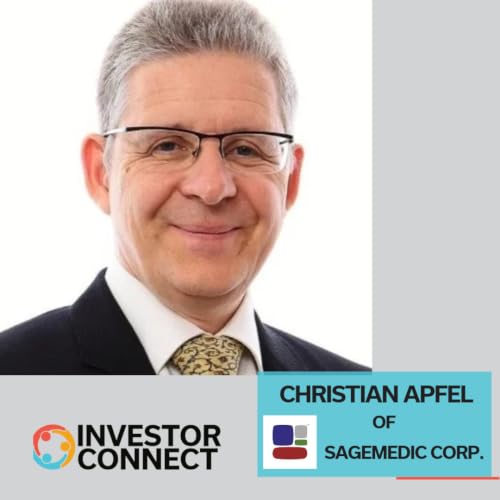
  • Investor Connect 904: Functional Precision Oncology with Dr. Christian Apfel of SageMedic
    2026/11/20

    On this episode of Investor Connect, Hall welcomes Dr. Christian Apfel, founder at Sage Medic. SageMedic is advancing functional precision oncology through its core platform, the Sage OncoTest, which uses a patient's live tumor tissue to create 3D micro-tumors and test therapies directly against the tumor's biology to generate a sensitivity and resistance profile across chemotherapies and targeted therapies, including dose-response and both cytotoxicity and anti-proliferation effects.

    Christian Apfel is a licensed physician, clinical researcher, life sciences investor, and entrepreneur with more than 100 publications, including work in the New England Journal of Medicine, and he previously led a clinical outcomes research group at UCSF. He shares how his father's lung cancer experience and low response-rate realities in standard care drove him to pursue functional testing, why genomic matching often falls short (including NCI MATCH results and sub-50% response even with targetable mutations), and how adoption, guidelines, reimbursement lag, CLIA/LDT readiness, MRD testing, and a planned Series A1 trial strategy shape the path to broader clinical use, with resources at sagemedic.com.

    Visit SageMedic at www.sagemedic.com

    Reach out to at www.linkedin.com/in/chrisapfel, and on capfel@sagemedic.com

    ________________________________________________________________________

    For more episodes from Investor Connect, please visit the site at: http://investorconnect.org

    Check out our other podcasts here: https://investorconnect.org/
    For Investors check out: https://tencapital.group/investor-landing/
    For Startups check out: https://tencapital.group/company-landing/
    For eGuides check out: https:/_/tencapital.group/education/
    For upcoming Events, check out https://tencapital.group/events/

    For Feedback please contact info@tencapital.group

    Please follow, share, and leave a review.

    Music courtesy of Bensound.

    続きを読む 一部表示
    21 分