エピソード

  • New Ways of Imagination and Change - Irit Katz
    2026/09/16

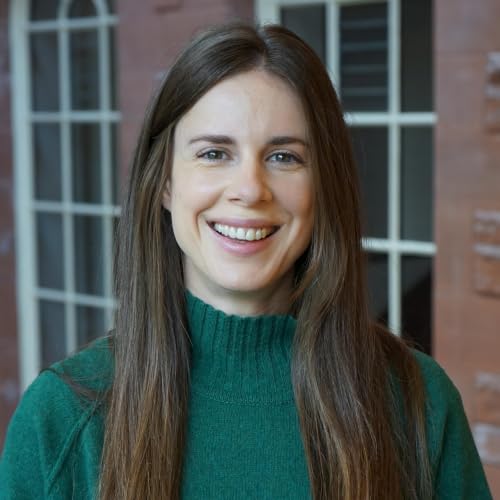
    Irit Katz is Professor of Architecture and Politics at the University of Cambridge, Fellow of Christ's College, and a Leverhulme Research Fellow (2025-26). Her academic work focuses on built environments shaped in extreme conditions, including spaces of displacement, conflict, and environmental changes, in historic and contemporary contexts. Her research has won numerous recognitions including the Mellon/SAH Author Award, the RIBA President’s Award for Research, and the John Urry Mobilities Prize.

    The crisis of culture is a crisis of imagination. In our podcast with Irit Katz, we addressed this very problem, looking at the context of crises going on today; and the need for new ways of imagining a liveable future. A liveable future is about the bonum commune, the common good, it emphasizes the role of the community; instead of maximizing the benefits of single individuals, as is the case in today’s global capitalist world view.

    According to Irit, imagination is not confined to art or mere aesthetics in its common understanding, it is a necessity of life. In regards to shaping a better future, we have to focus on collective forms of imagining, says Irit, instead of still being stuck in traditional forms of imaginaries. In this context, she addressed “classical” utopias, being detached from concrete situations and local needs, and their practical impact in shaping cities and communities until today. Based on her practical work, Irit advocates for a “situated approach” as she calls it, and for the need to train imagination. In this context, there is a difference between imagination - thinking the new - and imaginaries as ideas about a future that are stuck in the past; such as the idea of the nation state, existing capitalism with its image of the human, or the inability to see contexts. New forms and ways of a collective consciousness had been discussed with Irit, as well as a new understanding of order as a flexible, viable structure, not a rigid frame not allowing for change. Such a new concept of order is mandatory for community-based imagination and hence, for a liveable future on our planet.


    続きを読む 一部表示
    53 分
  • Wohnraumproblematik, Karl-Werner Farkhou
    2026/09/14

    Die heutige Wohnraumsituation ist von zentraler Bedeutung für Raum und Gemeinschaft, dem Leitthema unserer Stiftung. In unserem Podcast mit dem Baden-Badener Betriebswirt Karl-Werner Farkhou, geschäftsführendem Gesellschafter von zwei Firmen zur Hausverwaltung, wurden neben Fragen der Wohnraumsituation auch Aspekte zur Lösung dieser Problematik behandelt. Vor dem Hintergrund des Gemeinwohls standen Faktoren zur Debatte, die in ihrem Zusammenwirken die bestehende Wohnraumproblematik ausmachen und verschärfen. In diesen Zusammenhängen wurden machbare Lösungen besprochen, um besagte Problematik zu entschärfen.


    続きを読む 一部表示
    41 分
  • How to Preserve a (still) Alive Cultural Heritage. Chinampas in Mexico City Miriam Samir Rincon
    2026/09/03

    In this podcast with Miriam Samir Rincón, it is about the preservation of the cultural heritage of the Chinampas system in Mexico City. The Chinampas belong to UNESCO Cultural Heritage and are a unique blend of ecological and cultural sustainability from Aztec times onwards. Now, this unique life space is endangered by urban sprawl, corrupted policies, pollution, and tourism.

    Miriam, holding a prize-awarded degree in architecture from University of Notre Dame, is an architect, urban designer, and heritage advocate whose work explores the intersection of culture, ecology, and the built environment. Her research focuses on the restoration of living cultural landscapes, particularly the chinampa system of Xochimilco, examining how traditional knowledge and ecological systems can inform the future of cities.

    Her work has earned international recognition, including the Urban Guild Award, and the Hereditas Urbium Prize. Her work has been featured in The Art of the New Urbanism, published by the Congress for the New Urbanism (CNU). She served as Director of Projects at INTBAU Mexico, where she led heritage-led design and educational initiatives. Miriam is currently an Urban Designer at Moule & Polyzoides, internationally recognized pioneers and advocates of traditional architecture, urbanism, and place-based community design.


    続きを読む 一部表示
    48 分
  • Cockroach Movement - Natasha Sharma
    2026/08/14

    As a participating citizen, Natasha reflects on how the movement began, where it stands today, and what it reveals about the aspirations and frustrations of India’s youth. This conversation starts with the hope to open up space for more voices and perspectives in the future podcasts on youth-led political action, dissent, and the ongoing struggle to reclaim a democratic India.

    Natasha Sharma is an artist, designer, and researcher from India working at the intersection of urban development and social justice. She was previously featured on our podcast, Art and Community.. She is co-founder and curator of the Govandi Arts Festival and leads Public Art and Design programmes at the Community Design Agency. She is currently a recipient of the Dalai Lama Fellowship and serves on the advisory boards of the Global Cultural District Network and the Mumbai Arts and Health Festival.


    続きを読む 一部表示
    33 分
  • Community and tourism - Anna de Jong
    2026/07/22

    Anna de Jong is a professor in the School of Social and Environmental Sustainability, University of Glasgow. Anna’s research focuses on tourism governance in regional areas, guided by wider concerns of resident inequalities, accessibilities, capacities and participation.

    Ideal Spaces spoke with Anna about the impacts of tourism on cities in rural areas in Scotland and Gotland/Sweden, and in touristic hotspots like Tenerife. Our talk focused on major devastating effects of tourism accompanying a neoliberal economic agenda, as well as on the gentrification effects caused by it. Tourism is accompanied by a loss of the sense of place by the original inhabitants, environmental degradation, and a loss of local services for the local community. Next to these aspects, we talked about ways of government inclusion, and organizations run by local communities to balance the negative aspects of tourism.


    続きを読む 一部表示
    46 分
  • Situation of communities in recent urban contexts, Mustafa Sherif
    2026/07/01

    We had an interview with Mustafa Sherif, urban planner and architect, about the situation of communities in recent urban contexts. According to Mustafa’s professional experience, next to the use of architecture as the “hardware” of community building, it needs the “software” of social organization, the “orgware” for bringing people together to make a change. According to Mustafa, this makes the difference between a true community and a mere audience. The prevailing mode today is to have only an audience - people fed with information. But this is not enough to create communities. In this respect, we also addressed critical success factors for building communities.

    続きを読む 一部表示
    48 分
  • The future belongs to communities that recognize culture not as a luxury, but as essential civic infrastructure.
    2026/06/24

    This saying from Eileen Muriel Tasca can be seen as an epitome for the podcast we made with her. Eileen is active in the international film business, member of the International Academy of Television Arts & Sciences (International Emmy® Awards), and president of two cultural initiatives, the CRÉARTS Rome and the Associazione Caput New Mundi, Rome.

    Through CRÉARTS Rome and Associazione Caput New Mundi, Eileen Tasca develops initiatives that connect heritage, creativity, innovation, education, and public space. Her work seeks to build sustainable cultural ecosystems where artists, institutions, entrepreneurs, and citizens collaborate to create lasting social, cultural, and economic value. For her, culture is not an accessory to civic life; it is one of the principal forces that shapes the identity, vitality, and future of communities. She believes culture can serve as a catalyst for urban regeneration, civic engagement, international dialogue, and the re-imagination of public spaces as living environments that inspire participation, inclusion, and creativity.

    We spoke with Eileen about all these issues in our podcast, also addressing critical factors and conditions that shape life in today’s cities; taking two exemplary cases, Rome and New York.


    続きを読む 一部表示
    50 分
  • Ieva Bykova (youth series)
    2026/06/17

    In concluding our series about the younger generation, we had a podcast with Ieva Bykova. 19-year-old Ieva, an aspiring singer and event manager, shared her thoughts on social media, the future, and communication among young people.

    続きを読む 一部表示
    23 分