エピソード

  • Spiritual Abuse: Direction or Damnation?
    2026/10/12

    Send us Fan Mail

    Spiritual abuse doesn’t usually announce itself. It often walks in wearing a title, quoting Bible verses, and speaking with the kind of confidence that makes you doubt your own instincts. We wanted to tackle this because a listener asked us to, and because too many people are trying to follow Jesus while recovering from a leader who used “spiritual authority” as a lever for control.

    We define spiritual abuse plainly: the misuse of religious authority, beliefs, or practices to manipulate, coerce, or harm. From there, we dig into the tactics that show up again and again, especially the unchallengeable line: “God told me.” We talk about why Scripture has to be the ground floor, why you should always verify teaching for yourself, and why leaders who discourage questions are flashing a bright red warning sign. We also draw an important line between fruit and gifting, because spiritual power and platform are not the same thing as spiritual character.

    Then we get practical. What do you do if you think you’re being spiritually abused? When is it safe to talk one-on-one, and what kind of response should humility sound like? What if the abuse involves real crimes, including sexual abuse? We say it clearly: report it. We also discuss how to help a friend who seems trapped, how to avoid gossip while still telling the truth, and why you don’t owe an abusive system unlimited access to you. Along the way we point you back to key passages like Matthew 23 and 2 Peter 2 as “homework” for discernment.

    If this conversation helps you name what’s happening, share it with someone who needs clarity. Subscribe, leave a review, and send us your questions, what warning signs you’ve seen, and what you want us to unpack next.

    続きを読む 一部表示
    45 分
  • *BONUS Episode*-The MAN CRISIS in the Church
    2026/10/05

    Send us Fan Mail

    In this "Gospel Grandpas on the Road," we tackle the shallow church small talk that is easy. Real Christian brotherhood is not, and that’s the problem we can’t ignore. While we’re driving back from a road trip, we get honest about why deep male Christian friendships feel so rare, even in Bible-believing churches that genuinely love the Lord.

    We dig into the hidden wall most men hit: vulnerability. The “alpha” instinct says silence is strength, but Scripture points us toward meekness as power under control, not weakness. From there, we name two ditches we see in modern evangelical and Protestant life: domineering patriarchy that confuses leadership with control, and a church culture that can unintentionally feel feminized, leaving men unsure where they fit. We talk about why so many men disengage, why theology gets treated like a hobby, and why a “big God” gospel centered on duty, honor, sacrifice, love, and obedience still grips men today.

    We also connect the dots to what men are searching for everywhere else: mission. Brotherhood forms around shared goals, not just shared experiences, so we look at David and Jonathan, David’s mighty men, and the call to stand shoulder to shoulder for the gospel. We close with practical steps to rebuild men’s discipleship through consistent conversation and prayer, and a direct challenge to seek God daily with purpose.

    If you care about biblical manhood, men’s ministry, and stronger discipleship in your local church, listen now, share this with a friend, and leave a review so more men can find it. What would change in your church if men pursued real brotherhood on purpose?

    続きを読む 一部表示
    1 時間 4 分
  • What is TRUE Worship?
    2026/09/28

    Send us Fan Mail

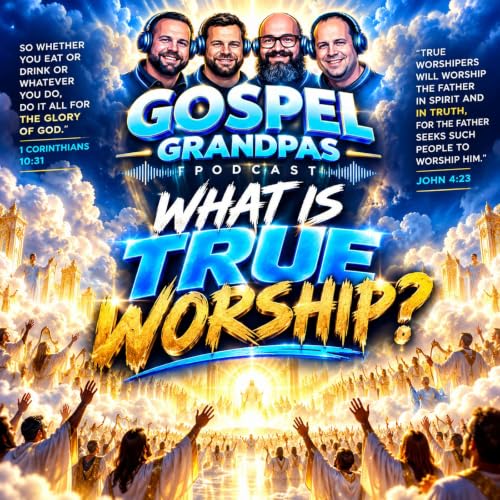
    Five hundred years of worship arguments have trained a lot of us to answer the wrong question. We fixate on songs, tempo, instruments, and “the sound” like the goal is to build the perfect music moment, then we wonder why church can feel hollow. We sit down and challenge the category error head-on: worship is not a genre, a set, or a performance. Worship is giving worth, and that means you and I are always worshiping something.

    We talk candidly about how self-worship sneaks in through comfort, convenience, and the need to be entertained, even when the lyrics are theologically solid. Using Psalm 24, John 6, Romans 12, and Psalm 100, we explore how good gifts become idols, why God sometimes removes the very things we exalt, and how gratitude and joy are meant to shape our approach to Him. We also pull back the curtain on the worship leader’s world: why excellence matters as stewardship, how tech failures can become distractions, and why a Sunday platform can never replace a surrendered Monday.

    The turning point is lifestyle worship. Work, marriage, friendships, private habits, and hidden sin all reveal what we truly treasure. If you’ve ever felt the split between what you sing and how you live, this conversation is for you. Subscribe, share this with a friend who cares about biblical worship, and leave a review so more people can find it. What’s one thing competing most for your attention and affection right now?

    続きを読む 一部表示
    41 分
  • No Other Gods!
    2026/09/14

    Send us Fan Mail

    If God is really omnipotent, omniscient, and omnipresent, then he cannot be a “god among many” and that single point forces a lot of modern spiritual talk to make a choice. We sit down as four friends and work through why the biblical God is in a category by himself, leaning on R C Sproul’s framing and then driving it into the text of Scripture. Deuteronomy’s Shema and Isaiah’s repeated “there is no other” are not poetic flourishes to us, they are the foundation for how Christians speak about God, worship, and truth.

    We also get honest about why this matters for everyday conversations with Mormons, Jehovah’s Witnesses, Muslims, and anyone offering a gospel that sounds close but lands somewhere else. We talk about “lowercase g gods,” spiritual forces of darkness from Ephesians 6, and why the Bible warns that even a dazzling angelic message can still be a trap if it preaches another gospel (Galatians 1). Spiritual experiences can be intense and even real, but we argue they are never self-authenticating, they must be tested by the Word.

    Then we make it practical: the best apologetics tool is often the simplest question, “Who is Jesus to you?” We walk through 1 John’s test about confessing Jesus Christ came in the flesh, why Jesus receiving worship matters, and how to avoid getting bogged down in side arguments meant to pull you away from Christ. If you’re on the fence, our challenge is straightforward: open the Bible, seek God with your whole heart, and measure every voice and every “revelation” against Jesus.

    Subscribe for more conversations like this, share the episode with someone who loves big questions, and leave a review so more people can find the show. What’s the clearest test you use to spot a counterfeit gospel?

    続きを読む 一部表示
    41 分
  • Shepherds Not CEOs
    2026/08/31

    Send us Fan Mail

    If “church success” looks like bigger crowds, slicker branding, and a pastor who functions like a CEO, something vital can get lost. We sit down as four friends and wrestle with a hard claim we’ve heard from Paul Washer: pastors, in our day, can become the greatest threat to the spiritual health of the church. That pushes us into the real question beneath the noise: what is a pastor actually called to be?

    We walk through the biblical picture of shepherding, from Psalm 23 to the qualifications in 1 Timothy 3, and we name the modern pressures that quietly reshape pastoral ministry: multi-campus megachurch models, “power hour” preaching piped to screens, and a culture that treats church like a subscription. Along the way we talk about celebrity Christianity, the cult of personality, and the subtle way people can start treating a pastor like a mediator or priest instead of pursuing daily fellowship with Christ through prayer and Scripture.

    Then we bring it down to street level. What happens to normal people in a corporate church model? How do metrics, headcounts, and “how many got saved” questions distort discipleship? We argue for better measures of faithfulness, more life-on-life discipleship, and a shared responsibility for the Great Commission that doesn’t get dumped on one man behind a pulpit.

    Subscribe for more gospel-centered conversations, share this with a friend who’s thinking through church leadership, and leave a review with your biggest takeaway or your hardest question.

    続きを読む 一部表示
    50 分
  • Pain and the Christian Response
    2026/08/17

    Send us Fan Mail

    Pain can make you question everything you thought you believed and for a lot of people, it does. We sit down as four friends and talk straight about why suffering is often the spark behind intellectual doubt, why “a pain free life” is a false expectation, and how Christians can face real hardship without rewriting God’s character through the lens of their experience.

    We dig into common misconceptions that quietly wreck faith: the idea that pain always means God is punishing you, that suffering is automatically evil, or that mature believers shouldn’t struggle. We also make a crucial distinction between life in Christ and life outside Christ, because Romans 8’s “no condemnation” changes how we interpret our circumstances. Along the way we bring in Job, James, Romans 8, and 2 Corinthians 4 to show how Scripture gives endurance, perspective, and hope that reaches beyond the moment.

    The conversation gets personal through a devastating injury and ongoing daily pain, then turns practical: how to help someone who’s suffering when you don’t have the perfect words. We talk about real intercession, the ministry of presence, refusing the isolating lie that you’re alone, and why God often doesn’t give neat explanations. We also contrast Christianity with other worldviews by centering on a suffering Savior: God doesn’t stand far off from human pain, he enters it.

    If you’re carrying pain or walking with someone who is, listen and share this with a friend who needs steadiness today. Subscribe, leave a review, and tell us what part of the conversation challenged you most.

    続きを読む 一部表示
    1 時間
  • The Bible Assumes A Supernatural Realm
    2026/08/03

    Send us Fan Mail

    The demon conversation usually splits people into two camps: those who obsess over it and those who act like it cannot be real. We sit down as four friends and take a different route, starting with a simple question and letting Scripture set the boundaries. Along the way we talk about why the topic keeps surfacing for us, including unsettling encounters that happened in ordinary places, and why so many Protestants feel untrained to respond with clarity.

    We dig into the Bible’s supernatural worldview and why Western materialism makes it hard to read Scripture on its own terms. Ephesians 6 becomes a framework for spiritual warfare that is sober, grounded, and practical. We also push back on the “demon under every rock” approach, while refusing to explain away everything as psychology or coincidence. If you’ve wondered how demonic oppression might show up in real life, we discuss patterns like intimidation, escalation, and destructive aims, plus a set of questions that can expose whether a thought or influence is driving toward life or toward ruin.

    We also address the “high strangeness” space people label as ghosts or aliens and connect it to biblical warnings about occult practices like Ouija boards, séances, tarot, mediums, and necromancy. The heart of our message is not fear, it’s refuge: identity in Christ, the authority believers have in his name, and the Holy Spirit as God’s seal. We close with a direct charge to pastors and churches to stop outsourcing this topic and start training believers in biblical spiritual warfare with humility and courage.

    If this stirred questions, share it with a friend, subscribe, and leave a review. What’s the hardest part for you: believing the unseen realm exists or knowing what to do about it?

    続きを読む 一部表示
    1 時間 3 分
  • Gospel Grandpas
    2026/07/14

    Send us Fan Mail

    Four friends started meeting at Chick-fil-A before sunrise to talk about the Bible, ask hard questions, and try to live what we say. Our wives joked that we sounded like grandpas debating the gospel at dawn, and the name stuck. What didn’t start as a content plan became a weekly rhythm of Scripture, prayer, and honest friendship that has genuinely changed us, so we decided to pull up an extra chair and invite you in.

    We share the backstory behind each relationship and why these conversations hit so deep: Taylor’s dramatic conversion after growing up in church culture, Landon’s shift from surface-level involvement to real conviction, Jacob’s season of running from church and getting drawn back through break room Bible talks, and Dalen’s sobering self-examination after hearing Jesus’ warning in Matthew 7. Along the way, we talk about something we think the church desperately needs: loving disagreement. We come from different theological backgrounds, but we refuse to caricature each other, and we keep returning to a single anchor point: what does Scripture actually say?

    We also lay out what you can expect from Gospel Grandpas: scriptural integrity, theological precision, a pastoral tone, and practical apologetics that help you give an account for the hope within you. If you’ve ever felt stuck in “going through the motions,” or you want deeper clarity on doctrine, discipleship, and real-world Christian living, join us at the table. Subscribe, share this pilot with a friend, and leave a review, then email us the topics you want us to tackle next.

    続きを読む 一部表示
    40 分