• Our Wild Familiars - DR. DAN WERB on Animals that Live Among Us & Urban Wildlife Conservation - Highlights
    2026/06/29

    If you live in a city, you’ve probably had that moment in the middle of the night. You hear a scratching in the walls, or you catch the glowing eyes of a raccoon peering out from a dumpster, and for a second, the concrete world feels a lot less 'controlled' than we like to pretend. We’ve been taught to think of cities as 'biological deserts'—places where nature goes to die. But my guest today, Dan Werb, says that’s a myth we tell ourselves to feel safe. Dan is an award-winning epidemiologist and a musician, and in his new book, Our Wild Familiars, he explores the 'synanthropes'—the wild creatures that aren't our pets, but aren't quite strangers either. They are the coyotes, the bats, and even the octopuses that are learning to use our cities as laboratories for their own rapid evolution. He’s also the author of The Invisible Siege and City of Omens.

    (0:02) The unexpected biodiversity of urban areas and wild familiars

    (1:18) What is a Synanthrope?

    (4:15) The Myth of the Biological Desert

    (8:04) The Ancestral Bond between early humans, ravens, and foxes

    (9:15) Crows and Grudges

    (12:42) Stepping Stones in the Concrete

    (14:20) The Epidemiological Triangle

    (17:58) The Illusion of AI Connection

    (19:56) The Museum of Memory

    Episode Website

    www.creativeprocess.info/pod

    Instagram:@creativeprocesspodcast

    続きを読む 一部表示
    24 分
  • How Animals Are Adapting to Cities & Reshaping the Natural World w/ Author & Epidemiologist DAN WERB
    2026/06/26

    "So synanthropes are animals that have adapted to human-modified environments, and the Greek translation essentially is together with humans, so synanthrope. And they're a fascinating subset of wild animals that they're all around us, but we don't really notice them. And so in this new book, I was excited about writing something that had to do with the natural world. I was excited about writing something that touched on climate change. These are not just insects and earthworms and things like that. These are very large predators that have nevertheless found a way to survive among us. And that in and of itself I think is just an amazing story and what I explore in this book."

    If you live in a city, you’ve probably had that moment in the middle of the night. You hear a scratching in the walls, or you catch the glowing eyes of a raccoon peering out from a dumpster, and for a second, the concrete world feels a lot less 'controlled' than we like to pretend. We’ve been taught to think of cities as 'biological deserts'—places where nature goes to die. But my guest today, Dan Werb, says that’s a myth we tell ourselves to feel safe. Dan is an award-winning epidemiologist and a musician, and in his new book, Our Wild Familiars, he explores the 'synanthropes'—the wild creatures that aren't our pets, but aren't quite strangers either. They are the coyotes, the bats, and even the octopuses that are learning to use our cities as laboratories for their own rapid evolution. He’s also the author of The Invisible Siege and City of Omens.

    (0:02) The unexpected biodiversity of urban areas and wild familiars

    (2:32) Defining synanthropes and the myth of the biological desert

    (6:04) Why cities are becoming magnets for wildlife and natural biodiversity

    (14:32) How our discarded garbage acts as a reliable nutrition source

    (18:01) The raccoon city and highly adaptable urban mesopredators

    (21:49) Redesigning cities as crucial sites for wildlife conservation and containerisation

    (26:31) The impact of highways on mountain lion migration in Los Angeles

    (31:03) The ancestral spiritual bond between early humans, ravens, and foxes

    (38:24) Facial recognition, grudges, and the intense intelligence of urban crows

    (42:40) Discovering giant Pacific octopuses living in discarded garbage near Seattle

    (49:04) How translucent boardwalks helped save baby salmon afraid of the dark

    (52:42) Building green corridors and ecological stepping stones in the concrete

    (1:01:07) Cultural shifts in pods of orcas sinking boats off the Iberian coast

    (1:05:23) Social epidemiology, vulnerable populations, and insights from City of Omens

    (1:08:29) The epidemiological triangle and the environmental causes of novel viruses

    (1:16:08) The rhythm shift required to observe wild animals in urban spaces

    (1:25:26) Why we need more cosmological humility when studying animal biology

    (1:31:06) The illusion of AI connection and why engaging with nature expands the mind

    (1:34:46) Memories, Laughter, and Animal Connection

    Episode Website

    www.creativeprocess.info/pod

    Instagram:@creativeprocesspodcast

    続きを読む 一部表示
    1分未満
  • Future Cities: Building Bridges Between Memory, Nature & Architecture w/ SALWA & SELMA MIKOU
    2026/06/16

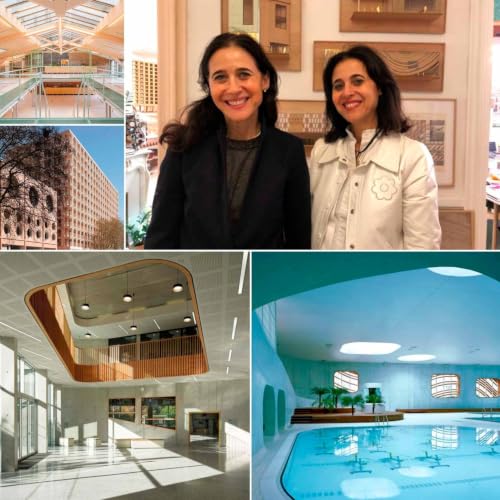
    “Architecture should bring a true sensation of wellbeing. We were really lucky to experience that as children, and now as architects, we try to bring all that we learned into our practice.”

    Salwa and Selma Mikou are the founders of Paris-based Mikou Architecture. Born in Fez, Morocco and educated in Paris, they have spent the last two decades reimagining the relationship between the built environment and the cultural landscape.

    After honing their craft under two of the world’s most iconic architects, Jean Nouvel and Renzo Piano, they founded their own studio. For them, architecture is a living interaction with landscape and what they call the Atlas of Resonance, interpreting the hidden layers of a territory, geology, memory, and craft. It is a philosophy that rejects the generic, seeking instead to weave together technological innovation with local materials. Whether it is a mosque in the north of England or a hybrid innovation hub in a former royal manufactory, their work asks a fundamental question: How does space shape the way we think, learn and remember?

    They were selected by Rem Koolhaas to represent Morocco at the Venice Biennale. Most recently, they were commissioned by Hermès to create a 17,000-square-meter facility that bridges industrial performance with poetic expression. At the heart of their practice is a belief that architecture is not just about building—it’s about shaping relationships: between people, between past and future, between technology and craft.

    (0:04) The Intuitive Knowledge of Living Art

    (4:24) The Medina and the Geometry of Childhood

    (8:18) The Social Spaces of Rooftops

    (13:46) The Intuitive Knowledge of Living Art

    (15:31) Contextual Echoes & Traces of the Site

    (19:18) The Twin Dynamic and Confrontation with 'l'autre'

    (26:42) The Temples of Water

    (33:24) The Mosque as Pure Spatiality

    (38:01) The Crisis Period and Structural Systems

    (48:24) Building Culture with Yves Saint Laurent & Pierre Bergé

    (51:38) The Wast ed-dar (وسط الدار) and the Heart of a Building

    (57:02) Preserving the Human Core of Expression

    (1:04:29) Urban Acupuncture in the Modern City

    (1:08:46) The Smells and Sounds of Home

    (1:10:02) Balance, Nature, and Sisterhood

    Episode Website

    www.creativeprocess.info/pod

    Instagram:@creativeprocesspodcast

    続きを読む 一部表示
    1 時間 19 分
  • Why Do We Listen to the Talkers More Than the Builders Saving the Planet? - TOM CHI - Highlights
    2026/04/18

    Why does our economy treat environmental destruction as an inevitable side effect rather than a massive design flaw? How can shifting our focus from polarizing "talkers" to practical "builders" literally save the planet? We are repeatedly told that the climate crisis is too vast and volatile to solve, but what if the true obstacle is simply bad design?

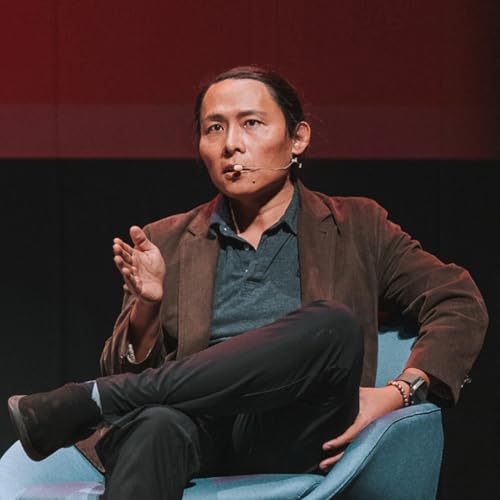
    Tom Chi is a physicist, designer, inventor, and investor whose work has shaped everything from Google Glass and rapid prototyping at Google X to some of the most ambitious climate technologies being built today. He’s now the founding partner of At One Ventures, where he invests in deep-tech companies focused on a bold goal: a world where humanity is a net positive to nature.

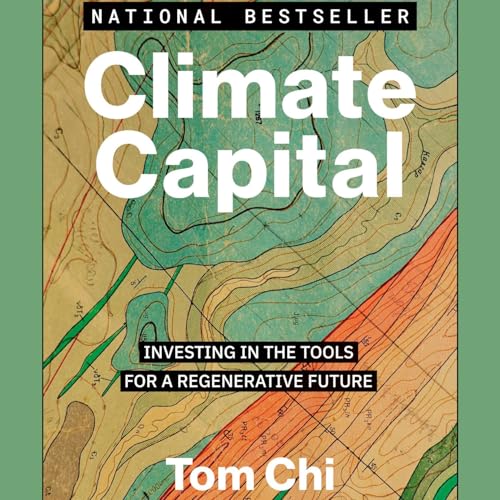
    Tom’s new book, Climate Capital: Investing in the Tools for a Regenerative Future, reframes economics itself—not as a fixed law, but as a design discipline that can be reimagined to align with the physical realities of our planet. Drawing on science, systems thinking, and lessons from nature, the book offers a grounded, practical framework for moving beyond both climate doom and empty optimism—and toward real, regenerative solutions. Today’s conversation is about what Tom calls the 4Cs: Capital, Compassion, Climate, and Community—but also about agency, responsibility, and what becomes possible when we stop treating the future as something that happens to us and start designing it deliberately.

    0:00) Build Integrity: Choosing Builders Over Talkers

    Why prioritizing those who physically create solutions over those who merely debate them is essential for systemic change

    (1:21) Overcoming Powerlessness Through Creativity, Critical Thinking, Community Compassion

    Utilizing a specific framework of portable skills to move from climate anxiety into meaningful, iterative action

    (2:22) Capital Misallocation: Taxing What We Want to See

    A critique of current tax structures that burden labor while under-taxing capital and failing to serve societal needs

    (3:47) The Volatility Gap: Why Average Temperatures Mislead

    Understanding why increasing climate volatility—rather than just average temperature rise—is the true driver of human distress

    (6:19) Economics As Design: Redesigning The Global Engine

    Moving beyond "physics envy" in economics to treat the global market as a discipline that can be redesigned for better outcomes

    (9:11) Depth Over Breadth: Reforming Education Through Experience

    (13:30) Local Resilience: How Cities Can Lead The Transformation

    Practical, block-by-block strategies for urban adaptation, from expanding tree canopies to improving household efficiency

    (16:33) AI and Robotics in Agriculture

    (19:12) Human-Centric AI: Flipping The Priority Of Automation

    (20:18) Thinking In Pictures: A Language Beyond Words

    Episode Website

    www.creativeprocess.info/pod

    Instagram:@creativeprocesspodcast

    続きを読む 一部表示
    22 分
  • Climate Capital with TOM CHI - Google X Co-founder, Founding Partner At One Ventures
    2026/04/18

    “In the book I spend a bunch of time basically teaching skills and teaching frameworks of thinking. Not to indoctrinate, it's not a framework like an ideology where you need to believe exactly these things. This is a lot more about how does one use their minds effectively to solve problems that have been solved before. Of course, I work on things that have to do with investment and climate and the future of the economy and automation. The main things I'm trying to teach in the book are skills around creativity, critical thinking, community compassion and frameworks around how to go and use that on problems that should be relatively portable to a bunch of problems that are meaningful to you. The way that education needs to change is that people need to actively be working on things that truly matter to them so that over time they end up being able to go make that difference.”

    Tom Chi is a physicist, designer, inventor, and investor whose work has shaped everything from Google Glass and rapid prototyping at Google X to some of the most ambitious climate technologies being built today. He’s now the founding partner of At One Ventures, where he invests in deep-tech companies focused on a bold goal: a world where humanity is a net positive to nature.

    Tom’s new book, Climate Capital: Investing in the Tools for a Regenerative Future, reframes economics itself—not as a fixed law, but as a design discipline that can be reimagined to align with the physical realities of our planet. Drawing on science, systems thinking, and lessons from nature, the book offers a grounded, practical framework for moving beyond both climate doom and empty optimism—and toward real, regenerative solutions. Today’s conversation is about what Tom calls the 4Cs: Capital, Compassion, Climate, and Community—but also about agency, responsibility, and what becomes possible when we stop treating the future as something that happens to us and start designing it deliberately.

    (0:00) Overcoming Powerlessness through Creativity, Critical Thinking, Community Compassion

    Why broad hopelessness about the future is a purposeful tactic to maintain the status quo.

    (7:16) How average temperature metrics fail to communicate the true danger of extreme climate volatility.

    (11:54) Economics as Design

    (17:11) Multi-disciplinary Learning Centered on Real-World Impact

    (26:12) Local Resilience

    (31:15) Tax & Capital Misallocation

    (36:52) Build Integrity

    (45:32) AI and Robotics in Agriculture

    (51:08) The First Honeybee Vaccine

    (56:11) The Entropy Curve of Pollution

    (1:15:31) Human-Centric AI

    Flipping the priority of automation to serve the collective good rather than enriching a select few

    (1:20:59) Thinking in Pictures

    How learning to communicate and problem-solve without language fueled a career in deep tech invention

    Episode Website

    www.creativeprocess.info/pod

    Instagram:@creativeprocesspodcast

    続きを読む 一部表示
    1 時間 27 分
  • Performance, Politics, Art & Society w/ Sociologist RICHARD SENNETT - Highlights
    2025/04/18

    “I'm really interested in the relation between performance and ritual. Where do those two separate?”

    Richard Sennett grew up in the Cabrini Green housing project in Chicago, attended the Juilliard School in New York, and then studied social relations at Harvard. Over the last five decades, he has written about social life in cities, changes in labour, and social theory. His books include The Performer: Art, Life, Politics, The Hidden Injuries of Class, The Fall of Public Man, The Corrosion of Character, The Culture of the New Capitalism, The Craftsman, and Building and Dwelling. Sennett has advised the United Nations on urban issues for the past thirty years and currently serves as member of the UN Committee on Urban Initiatives. He is the Centennial Professor of Sociology at the London School of Economics and former University Professor of the Humanities at New York University.

    “I want to show what is kind of the basic DNA that people use for good or for ill. What are the tools they use, if you like, of expression that they use in the creative process?”

    Episode Website

    www.creativeprocess.info/pod

    Instagram:@creativeprocesspodcast

    続きを読む 一部表示
    13 分
  • The Performer: Art, Life, Politics with RICHARD SENNETT, Sociologist & Author
    2025/04/17

    “We look at creative work as though the very creative process itself is something good. These are tools of expression, and like any tool, you can use them to damage something or to make something. They can be turned to very malign purposes, for instance, in the operas of Wagner. So I wanted to do this set of books, I want to show what is kind of the basic DNA that people use for good or for ill. What are the tools they use, if you like, of expression that they use in the creative process?”

    Richard Sennett grew up in the Cabrini Green housing project in Chicago, attended the Juilliard School in New York, and then studied social relations at Harvard. Over the last five decades, he has written about social life in cities, changes in labour, and social theory. His books include The Performer: Art, Life, Politics, The Hidden Injuries of Class, The Fall of Public Man, The Corrosion of Character, The Culture of the New Capitalism, The Craftsman, and Building and Dwelling. Sennett has advised the United Nations on urban issues for the past thirty years and currently serves as member of the UN Committee on Urban Initiatives. He is the Centennial Professor of Sociology at the London School of Economics and former University Professor of the Humanities at New York University.

    Episode Website

    www.creativeprocess.info/pod

    Instagram:@creativeprocesspodcast

    続きを読む 一部表示
    32 分