• Tired, Wired, and Craving Carbs: How Sleep Loss Affects Your Health
    2026/07/06

    Text Dr. Black your questions or comments.

    Sleep deprivation doesn’t just make you tired—it changes how your brain, body, and hormones function in real time. Even one or two nights of poor sleep can affect your mood, decision-making, and physical health in ways most people underestimate.

    In this episode, I break down what actually happens when you don’t get enough sleep—from impaired focus and increased irritability to changes in appetite hormones and immune function. I also share practical, “health made doable” strategies to help you recover after a bad night and improve your sleep moving forward, even if your situation isn’t perfect.

    You’ll learn:

    • Why even one night of poor sleep affects mood, reaction time, and decision-making
    • How sleep deprivation increases cravings and disrupts hunger hormones
    • The connection between sleep, stress, and long-term health risks
    • Simple ways to protect your energy and function after a bad night
    • Practical habits that support better sleep without overcomplicating your routine

    When you understand how quickly sleep impacts your body, it becomes much easier to prioritize it in a realistic way. Small adjustments can make a meaningful difference in how you feel and function day to day.

    Listen now and start protecting one of the most powerful tools you have for your health.

    Links discussed in this episode:

    Andrew Huberman's 20 minute Nonsleep Deep Rest on Spotify

    Today by Mary Oliver

    Today I’m flying low and I’m
    not saying a word
    I’m letting all the voodoos of ambition sleep.

    The world goes on as it must,
    the bees in the garden rumbling a little,
    the fish leaping, the gnats getting eaten.
    And so forth.

    But I’m taking the day off.
    Quiet as a feather.
    I hardly move though really I’m traveling
    a terrific distance.

    Stillness. One of the doors
    into the temple.

    A great way to support the show is to rate it leave a review on your favorite podcast app. Even better - share it with a friend!

    Don't forget to visit the show website and subscribe to my newsletter for more tips on how to Make Health Doable. No spam ever and you can unsubscribe at any time.

    For resources related to a plant-based diet or if you struggle to afford healthy food for your family, please go to eatgreenswithdrblack.com/resources.

    For questions and comments, please shoot me an email at dr.black@eatgreenswithdrblack.com.

    I am happy to answer general questions related to the information presented on this podcast. Be advised that I will never offer specific medical advice via this website, even if your child is an established patient in my practice. If you have concerns about your child’s health or growth, please contact their doctor.

    Thanks for listening and don't forget to Eat Your Greens!

    続きを読む 一部表示
    24 分
  • Culinary Medicine and Mental Health: A Conversation with psychiatrist Dr. Sravan Kakani
    2026/06/15

    Text Dr. Black your questions or comments.

    Mental health is complex—but one piece we often overlook is food. What we eat every day directly affects how our brain functions, how we feel, and how we show up in our lives.

    In this episode, I sit down with psychiatrist Dr. Sravan Kakani to explore how culinary medicine is reshaping the way we think about mental health. We talk through the science behind the gut-brain connection, what the research actually shows about diet and depression, and how simple, realistic changes can support better mood and resilience. This is not about perfection or restrictive eating—it’s about using food as a practical tool to support your mental well-being.

    In this episode, you’ll learn:

    • How the Mediterranean-style eating pattern supports mental health
    • Why fiber and gut health play a key role in mood regulation
    • How ultra-processed foods may contribute to inflammation and depression
    • What the gut microbiome has to do with brain function
    • Simple ways to bring culinary medicine into everyday life

    The goal isn’t to overhaul your diet overnight—it’s to understand how small, consistent choices can support both your brain and your body.

    Listen in to learn how to make food a tool for better mental health—without overcomplicating it.

    Links from this episode:

    SMILES Trial

    This Is Your Brain on Food by Dr. Uma Naidoo

    Healthy Baked Apple Recipe

    Raspberry Chia Pudding (download)

    A great way to support the show is to rate it leave a review on your favorite podcast app. Even better - share it with a friend!

    Don't forget to visit the show website and subscribe to my newsletter for more tips on how to Make Health Doable. No spam ever and you can unsubscribe at any time.

    For resources related to a plant-based diet or if you struggle to afford healthy food for your family, please go to eatgreenswithdrblack.com/resources.

    For questions and comments, please shoot me an email at dr.black@eatgreenswithdrblack.com.

    I am happy to answer general questions related to the information presented on this podcast. Be advised that I will never offer specific medical advice via this website, even if your child is an established patient in my practice. If you have concerns about your child’s health or growth, please contact their doctor.

    Thanks for listening and don't forget to Eat Your Greens!

    続きを読む 一部表示
    32 分
  • Eating to Lower Cholesterol - Health Made Doable
    2026/06/01

    Text Dr. Black your questions or comments.

    Lowering your cholesterol doesn’t have to mean overhauling your entire life. In this episode, I walk through how small, strategic food choices can make a meaningful difference in your numbers—and your long-term heart health.

    I focus on what actually moves the needle when it comes to lowering LDL cholesterol through diet. We break down the most effective evidence-based approaches, including key foods to increase, what to limit, and how to make these changes realistic for busy adults and families. I also introduce the concept of a “portfolio approach” to nutrition—layering small habits that work together to produce measurable results.

    Key Takeaways:

    • Soluble fiber plays a major role in lowering LDL cholesterol
    • Plant sterols and stanols can help block cholesterol absorption
    • Swapping saturated fats for unsaturated fats supports heart health
    • Nuts, beans, and whole grains provide powerful, practical benefits
    • Small, consistent changes are effective and sustainable

    Links from episode:

    ACC/American Heart Association Issue Updated Guideline for Managing Lipids, Cholesterol

    Effects of a Dietary Portfolio of Cholesterol-Lowering Foods vs Lovastatin on Serum Lipids and C-Reactive Protein

    Eating to Lower Cholesterol Recipes - recipes from my live presentation for San Marcos Life Long Learning.

    Simple Tips to Lower Cholesterol

    A great way to support the show is to rate it leave a review on your favorite podcast app. Even better - share it with a friend!

    Don't forget to visit the show website and subscribe to my newsletter for more tips on how to Make Health Doable. No spam ever and you can unsubscribe at any time.

    For resources related to a plant-based diet or if you struggle to afford healthy food for your family, please go to eatgreenswithdrblack.com/resources.

    For questions and comments, please shoot me an email at dr.black@eatgreenswithdrblack.com.

    I am happy to answer general questions related to the information presented on this podcast. Be advised that I will never offer specific medical advice via this website, even if your child is an established patient in my practice. If you have concerns about your child’s health or growth, please contact their doctor.

    Thanks for listening and don't forget to Eat Your Greens!

    続きを読む 一部表示
    22 分
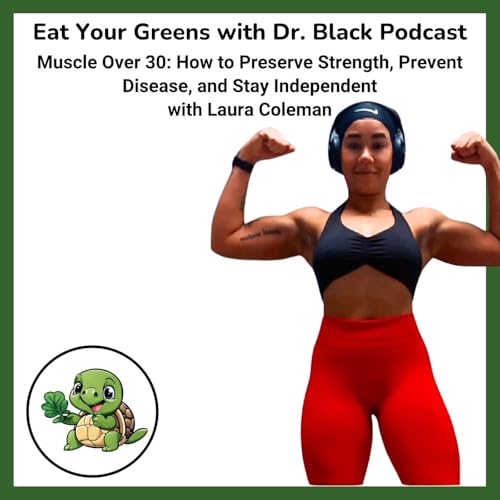
  • Muscle Over 30: How to Preserve Strength, Prevent Disease, and Stay Independent with Laura Coleman
    2026/05/18

    Text Dr. Black your questions or comments.

    Muscle loss starts earlier than most people realize — and it accelerates with age. The good news? You have far more control than you think.

    In this episode, I sit down with my personal trainer, Laura Coleman, to talk about why strength training becomes essential after age 30 — not for aesthetics, but for metabolic health, bone strength, balance, and long-term independence. We break down the difference between muscle mass and strength, why both matter, and how even small, consistent efforts can dramatically change your health trajectory.

    Most importantly, we make this practical. No expensive equipment. No complicated programming. Just realistic strategies you can start at home.

    In this episode, you’ll learn:

    • The difference between muscle mass and strength — and why they’re not the same
    • Why muscle is a metabolic organ that protects against diabetes and fatty liver disease
    • How strength training supports bone health and reduces fracture risk
    • Simple core, glute, leg, and upper body exercises you can do at home
    • Why consistency beats intensity — especially when you’re busy

    If you want to stay strong, capable, and independent as you age, this episode gives you a starting point that’s doable.

    Listen now and start building strength that lasts.

    A great way to support the show is to rate it leave a review on your favorite podcast app. Even better - share it with a friend!

    Don't forget to visit the show website and subscribe to my newsletter for more tips on how to Make Health Doable. No spam ever and you can unsubscribe at any time.

    For resources related to a plant-based diet or if you struggle to afford healthy food for your family, please go to eatgreenswithdrblack.com/resources.

    For questions and comments, please shoot me an email at dr.black@eatgreenswithdrblack.com.

    I am happy to answer general questions related to the information presented on this podcast. Be advised that I will never offer specific medical advice via this website, even if your child is an established patient in my practice. If you have concerns about your child’s health or growth, please contact their doctor.

    Thanks for listening and don't forget to Eat Your Greens!

    続きを読む 一部表示
    28 分
  • Are We Eating Too Much Protein — Or Not Enough? (aka: Dr. Black checks her bias!)
    2026/05/04

    Text Dr. Black your questions or comments.

    Protein is everywhere right now. Protein soda. Protein chips. Protein pancakes. We’ve gone from worrying about fat to obsessing over protein—and the messaging is all over the place. So the real question is: are we eating too much… or not enough?

    In this episode, I break down what protein actually does in the body, how scientists determine how much we need, and why the old 0.8 g/kg recommendation isn’t the whole story. I also take a hard look at my own plant-forward bias and examine whether animal protein really is “higher quality” — and whether that actually matters for long-term health.

    You’ll hear where higher protein intake makes sense (especially for older adults and people strength training), where it likely doesn’t, and why the source of your protein may matter just as much as the amount.

    In this episode, you’ll learn:

    • What the current evidence says about optimal daily protein intake
    • Why 0.8 g/kg prevents deficiency but may not support optimal function
    • How protein needs change with age, illness, and resistance training
    • Whether animal protein is truly “higher quality” than plant protein
    • Why the overall food package matters more than protein grams alone

    By the end, you’ll understand how to personalize your protein intake in a way that supports strength, longevity, and metabolic health — without falling for marketing hype.

    Listen now at:
    https://www.eatgreenswithdrblack.com/protein/

    A great way to support the show is to rate it leave a review on your favorite podcast app. Even better - share it with a friend!

    Don't forget to visit the show website and subscribe to my newsletter for more tips on how to Make Health Doable. No spam ever and you can unsubscribe at any time.

    For resources related to a plant-based diet or if you struggle to afford healthy food for your family, please go to eatgreenswithdrblack.com/resources.

    For questions and comments, please shoot me an email at dr.black@eatgreenswithdrblack.com.

    I am happy to answer general questions related to the information presented on this podcast. Be advised that I will never offer specific medical advice via this website, even if your child is an established patient in my practice. If you have concerns about your child’s health or growth, please contact their doctor.

    Thanks for listening and don't forget to Eat Your Greens!

    続きを読む 一部表示
    35 分
  • HealthQuest: Using Gamified Learning to Build Healthy Habits in Kids with April Jones, CPNP
    2026/04/20

    Text Dr. Black your questions or comments.

    In this episode of Eat Your Greens, I’m joined by April Jones, a pediatric nurse practitioner and the creator of HealthQuest, a gamified, evidence-based wellness platform designed to help kids and families build healthy habits together—without shame, pressure, or perfectionism.

    We talk about why so many wellness programs fail families, how HealthQuest uses barrier assessments instead of guesswork, and why teaching mindfulness—especially around hunger, fullness, and emotions—is one of the most overlooked skills in pediatric health.

    April also shares the story behind her children’s book, Mia and the HealthQuest Dragon, and how storytelling and play can completely change the way kids relate to food, movement, and their bodies.

    In this episode, we cover:

    • Why healthy habits are harder to learn as adults—and why starting earlier matters
    • How HealthQuest personalizes learning for both parents and kids
    • The role of mindful eating in helping kids recognize hunger, fullness, and emotions
    • Why pressure and “just do better” messaging backfires
    • How families can practice healthy habits together instead of going it alone
    • Ways HealthQuest improves access to health education through schools and free resources

    This is a great listen for parents, clinicians, educators, and anyone who wants to support kids in building a healthier relationship with food and their bodies—without turning meals into a power struggle.

    Where to find April Jones and HealthQuest:

    https://www.linkedin.com/in/apriljones5/

    https://www.instagram.com/healthquestapp

    https://www.facebook.com/DiscoverHealthQuest/

    https://www.discoverhealthquest.com

    Buy Mia and the HealthQuest Dragon


    A great way to support the show is to rate it leave a review on your favorite podcast app. Even better - share it with a friend!

    Don't forget to visit the show website and subscribe to my newsletter for more tips on how to Make Health Doable. No spam ever and you can unsubscribe at any time.

    For resources related to a plant-based diet or if you struggle to afford healthy food for your family, please go to eatgreenswithdrblack.com/resources.

    For questions and comments, please shoot me an email at dr.black@eatgreenswithdrblack.com.

    I am happy to answer general questions related to the information presented on this podcast. Be advised that I will never offer specific medical advice via this website, even if your child is an established patient in my practice. If you have concerns about your child’s health or growth, please contact their doctor.

    Thanks for listening and don't forget to Eat Your Greens!

    続きを読む 一部表示
    23 分
  • The New Dietary Guidelines: Love Them or Hate Them?
    2026/04/06

    Text Dr. Black your questions or comments.

    The 2025-2030 Dietary Guidelines for Americans were released earlier this year and are generating a lot of dialogue. In spite of this, many people don’t actually know what they are, who they’re meant for, or how they’re created.

    In this episode, I walk through what the Dietary Guidelines for Americans are, why they exist, and how they influence the food environment around us—from school meals to public health messaging. I compare the newest 2025–2030 guidelines to the previous version, explain the shift in visuals from MyPlate to the new "Real Food" pyramid, and highlight key themes that are driving the current debate.

    We’ll take a closer look at what’s changed, how the guidelines are meant to be used, and why they’ve sparked such strong reactions across healthcare, nutrition, and social media.

    Most importantly, I’ll help you think about how to interpret the guidelines in a way that supports your health—without getting pulled into food wars or dietary extremes.

    To read the new DGA go to https://realfood.gov/

    For a side-by-side comparison of the old MyPlate graphic and the new Eat Real Food pyramid, see the show notes on the episode webpage here.

    A great way to support the show is to rate it leave a review on your favorite podcast app. Even better - share it with a friend!

    Don't forget to visit the show website and subscribe to my newsletter for more tips on how to Make Health Doable. No spam ever and you can unsubscribe at any time.

    For resources related to a plant-based diet or if you struggle to afford healthy food for your family, please go to eatgreenswithdrblack.com/resources.

    For questions and comments, please shoot me an email at dr.black@eatgreenswithdrblack.com.

    I am happy to answer general questions related to the information presented on this podcast. Be advised that I will never offer specific medical advice via this website, even if your child is an established patient in my practice. If you have concerns about your child’s health or growth, please contact their doctor.

    Thanks for listening and don't forget to Eat Your Greens!

    続きを読む 一部表示
    24 分
  • National Broccoli Day: Fun Facts About My Favorite Vegetable
    2026/03/22

    Text Dr. Black your questions or comments.

    March 22 is National Broccoli Day — and somehow I’ve never done a full episode on one of the most powerful vegetables we have.

    In this Fun Facts episode, I break down why this cruciferous vegetable has earned its “superfood” reputation — from fiber and micronutrients to the powerful compound sulforaphane. I explain how broccoli supports cardiometabolic health, why preparation method matters more than most people realize, and how even small amounts per week are associated with meaningful reductions in chronic disease risk.

    I also share practical, low-effort ways to prepare broccoli so it actually tastes good — including the simple “chop and stop” method that helps maximize its benefits.

    This episode isn’t about turning broccoli into a personality trait. It’s about understanding how small, consistent food choices create long-term health advantages.

    In this episode, you’ll learn:

    • Why broccoli is considered a nutritional powerhouse
    • What sulforaphane is and how to preserve it
    • How often you need to eat broccoli to see benefit
    • Why fiber intake matters more than most people think
    • Simple cooking strategies that make broccoli more appealing
    • How to approach vegetables in a way that makes health doable

    A great way to support the show is to rate it leave a review on your favorite podcast app. Even better - share it with a friend!

    Don't forget to visit the show website and subscribe to my newsletter for more tips on how to Make Health Doable. No spam ever and you can unsubscribe at any time.

    For resources related to a plant-based diet or if you struggle to afford healthy food for your family, please go to eatgreenswithdrblack.com/resources.

    For questions and comments, please shoot me an email at dr.black@eatgreenswithdrblack.com.

    I am happy to answer general questions related to the information presented on this podcast. Be advised that I will never offer specific medical advice via this website, even if your child is an established patient in my practice. If you have concerns about your child’s health or growth, please contact their doctor.

    Thanks for listening and don't forget to Eat Your Greens!

    続きを読む 一部表示
    12 分