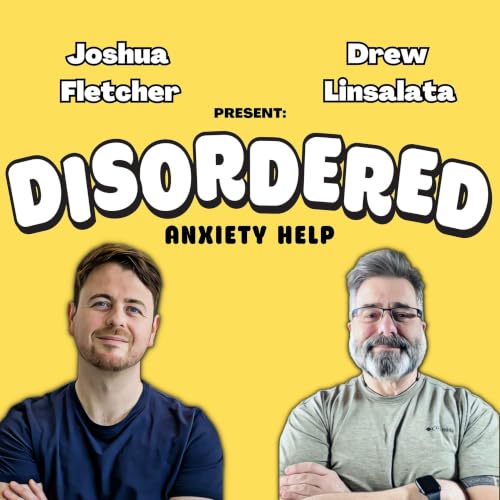
『Disordered: Anxiety Help』のカバーアート

Disordered: Anxiety Help

Disordered: Anxiety Help

著者: Josh Fletcher and Drew Linsalata
無料で聴く

Disordered is the podcast that delivers real, evidence-based, actionable talk about anxiety disorders and anxiety recovery in a kind, compassionate, community-oriented environment. Josh Fletcher is a qualified psychotherapist in the UK. Drew Linsalata is a therapist practicing under supervision in the US. They're both bestselling authors in the anxiety and mental health space. Josh and Drew are funny, friendly, and they have a knack for combining lived experience, formal training, and professional experience in an encouraging, inspiring, and compassionate mental health message.© 2026 Disordered: Anxiety Help 心理学 心理学・心の健康 衛生・健康的な生活
エピソード
  • Anxiety and The Obsession With Optimizing EVERYTHING (Episode 179)
    2026/10/30

    Send a question or comment via text message

    Optimization OCD seems to be a thing. Actually, across a large number of anxious people, the pull to get recovery, sleep, food, fitness, and even your own feelings exactly right is pretty common. This week we're talking about the drive to optimize recovery ... or anything.

    We talk about how "I should" is an anxious thought, why optimizing can mean sending yourself dozens of daily messages that you're not good enough as you are, and why "am I doing this right?" quietly treats some feelings as unwelcome. We also get into resource gathering, tracking devices, outsourcing discomfort to AI, and why you can't optimize your way out of uncertainty. None of this applies to medical conditions that need active management, and what we share about tracking, AI, and wellness culture is our clinical opinion.

    Plus Did It Anyway wins, including opening the shop on an anxious Monday, a panic attack in a conference room followed by a packed stadium, and a wedding speech given anxious.

    ----

    Want to talk about this episode, interact with us, and communicate with others that are sharing your experience? We're hanging out in the Disordered Community Space

    https://disordered.fm/community

    ----

    The Disordered Guide to Health Anxiety is available now:

    ⁠https://www.disordered.fm/the-disordered-guide-to-health-anxiety/⁠

    ---

    Struggling with worry and rumination that you feel you can't stop or control? Check out ⁠⁠⁠⁠⁠⁠⁠⁠⁠⁠⁠⁠⁠⁠⁠⁠⁠⁠⁠⁠⁠⁠⁠⁠⁠⁠⁠⁠⁠⁠⁠⁠⁠⁠⁠⁠⁠⁠⁠⁠⁠⁠⁠⁠Worry and Rumination Explained⁠⁠⁠⁠⁠⁠⁠⁠⁠⁠⁠⁠⁠⁠⁠⁠⁠⁠⁠⁠⁠⁠⁠⁠⁠⁠⁠⁠⁠⁠⁠⁠⁠⁠⁠⁠⁠⁠⁠⁠⁠⁠⁠⁠, a two hour pre-recorded workshop produced by Josh and Drew.

    -----

    Got questions or did it anyways to share? ⁠Send us an email or voicemail on our website⁠.

    https://disordered.fm

    ---

    Disclaimer: Disordered is not therapy or a replacement for therapy. Listening to Disordered does not create a therapeutic relationship between you and the hosts or guests of the podcast. Information here is provided for psychoeducational purposes. As always, please consult your mental health and/or medical care providers. If you are having a mental health crisis, always reach out immediately for in-person help.

    続きを読む 一部表示
    45 分
  • Courage When Anxiety Feels Really Bad (Episode 178)
    2026/10/23

    Send a question or comment via text message

    "Yeah, but it feels so bad."

    We hear it constantly, and this week we answer it directly. When panic, dread, or intrusive thoughts are at full volume, how do you practice willful tolerance?

    This is where courage enters the chat.

    We talk about why waiting to feel less scared first keeps the cycle going, why brave people are usually terrified, and why fear and danger only feel linked when you have an anxiety disorder.

    We also get into what courage can look like in practice: softening instead of bracing, letting tears and shaking happen, and treating the moment you feel anxious as the moment the practice begins. A listener asks what to do when they try to induce panic for exposure and nothing happens. We share our take on that, which is our opinion and not individual treatment advice.

    Plus Did It Anyway wins, including a wedding day with anxiety along for the ride and a 100K ultramarathon with a heart rate scare.

    ----

    Want to talk about this episode, interact with us, and communicate with others that are sharing your experience? We're hanging out in the Disordered Community Space

    https://disordered.fm/community

    ----

    The Disordered Guide to Health Anxiety is available now:

    ⁠https://www.disordered.fm/the-disordered-guide-to-health-anxiety/⁠

    ---

    Struggling with worry and rumination that you feel you can't stop or control? Check out ⁠⁠⁠⁠⁠⁠⁠⁠⁠⁠⁠⁠⁠⁠⁠⁠⁠⁠⁠⁠⁠⁠⁠⁠⁠⁠⁠⁠⁠⁠⁠⁠⁠⁠⁠⁠⁠⁠⁠⁠⁠⁠⁠⁠Worry and Rumination Explained⁠⁠⁠⁠⁠⁠⁠⁠⁠⁠⁠⁠⁠⁠⁠⁠⁠⁠⁠⁠⁠⁠⁠⁠⁠⁠⁠⁠⁠⁠⁠⁠⁠⁠⁠⁠⁠⁠⁠⁠⁠⁠⁠⁠, a two hour pre-recorded workshop produced by Josh and Drew.

    -----

    Got questions or did it anyways to share? ⁠Send us an email or voicemail on our website⁠.

    https://disordered.fm

    ---

    Disclaimer: Disordered is not therapy or a replacement for therapy. Listening to Disordered does not create a therapeutic relationship between you and the hosts or guests of the podcast. Information here is provided for psychoeducational purposes. As always, please consult your mental health and/or medical care providers. If you are having a mental health crisis, always reach out immediately for in-person help.

    続きを読む 一部表示
    40 分
  • Depersonalization and Derealization w/Dr. Claudia Hallett (Episode 177)
    2026/10/16

    Send a question or comment via text message

    Depersonalization and derealization (DPDR) can feel like not recognizing yourself in the mirror, or like living behind a pane of glass. This week, clinical psychologist Dr. Claudia Hallett joins us. She leads a specialist DPDR clinic in London and works with this condition full time.

    We talk about why the experience is so hard to describe, and why that makes it fertile ground for catastrophic interpretation (“I’m losing my mind,” “I’ve broken my brain”). We get into how fear of the symptom keeps it front and center, the OCD-style loops of checking and monitoring that often sit underneath, and why some people experience it episodically while others have lived with it for decades. We also cover why DPDR is so often missed or misdiagnosed, what the word “disorder” does and doesn’t mean, and when a trauma explanation fits and when searching for one becomes part of the problem. Dr. Hallett also explains why there is no “just follow these steps” fix, and why anyone selling one deserves scrutiny.

    To find Dr Claudia Hallet online:

    Instagram

    Website

    Unreal Charity - DPDR Support and Resources


    ----

    Want to talk about this episode, interact with us, and communicate with others that are sharing your experience? We're hanging out in the Disordered Community Space

    https://disordered.fm/community

    ----

    The Disordered Guide to Health Anxiety is available now:

    ⁠https://www.disordered.fm/the-disordered-guide-to-health-anxiety/⁠

    ---

    Struggling with worry and rumination that you feel you can't stop or control? Check out ⁠⁠⁠⁠⁠⁠⁠⁠⁠⁠⁠⁠⁠⁠⁠⁠⁠⁠⁠⁠⁠⁠⁠⁠⁠⁠⁠⁠⁠⁠⁠⁠⁠⁠⁠⁠⁠⁠⁠⁠⁠⁠⁠⁠Worry and Rumination Explained⁠⁠⁠⁠⁠⁠⁠⁠⁠⁠⁠⁠⁠⁠⁠⁠⁠⁠⁠⁠⁠⁠⁠⁠⁠⁠⁠⁠⁠⁠⁠⁠⁠⁠⁠⁠⁠⁠⁠⁠⁠⁠⁠⁠, a two hour pre-recorded workshop produced by Josh and Drew.

    -----

    Got questions or did it anyways to share? ⁠Send us an email or voicemail on our website⁠.

    https://disordered.fm

    ---

    Disclaimer: Disordered is not therapy or a replacement for therapy. Listening to Disordered does not create a therapeutic relationship between you and the hosts or guests of the podcast. Information here is provided for psychoeducational purposes. As always, please consult your mental health and/or medical care providers. If you are having a mental health crisis, always reach out immediately for in-person help.

    続きを読む 一部表示
    43 分
adbl_web_anon_alc_button_suppression_t1
まだレビューはありません