エピソード

  • Debate: Should Democratic Foreign Policy be More Progressive?
    2026/10/29
    With the U.S. midterm elections just days away, Democrats are debating what their party should stand for, not just at home, but abroad. In 2021 President Biden promised to restore American leadership through diplomacy, but his administration’s foreign policy has faced criticism, particularly over its handling of Israel’s war in Gaza. Now, as the party looks to the future, does it need more restrained foreign policy or is a traditional approach to American leadership and military power still essential? Welcome to Counterpoint, where we look at one big question facing world leaders from opposing points of view. In our previous episode we debated the foreign policy of the Republican party. Now in our final episode of the season, we turn to the Democrats. We’re asking: Should the future of Democratic foreign policy be more progressive? Joining us is Ambassador Wendy Sherman, who served as Deputy Secretary of State under President Joe Biden and led U.S. negotiations for the 2015 Iran nuclear deal. And Congresswoman Sara Jacobs, who has represented California’s 51st congressional district since 2021 and serves on the House Foreign Affairs and Armed Services committees. Counterpoint is a production of Foreign Policy, in partnership with the Doha Forum. The show is hosted by FP deputy editor Nick Danforth. Learn more about your ad choices. Visit megaphone.fm/adchoices
    続きを読む 一部表示
    47 分
  • Debate: Should Republican Foreign Policy be More Restrained?
    2026/10/28
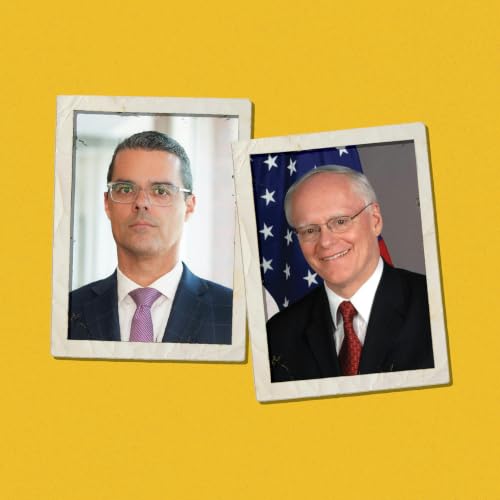
    Republicans have argued for decades that U.S. military power is essential to keeping the world safe. But as the war with Iran continues to raise questions about overseas intervention, divisions are growing within the party over when the country should use its military strength, and when it should hold back. Welcome to Counterpoint, where we look at one big question facing world leaders from opposing points of view. In this episode, we’re asking: Should the future of Republican foreign policy be more restrained? Arguing in favor is Justin Logan, director of defense and foreign policy studies at the Cato Institute, who advocates a more restrained approach to American foreign policy. Arguing against is James Jeffrey, a former deputy national security advisor under President George W. Bush and a former U.S. ambassador who is currently a fellow at the Washington Institute for Near East Policy. Counterpoint is a production of Foreign Policy, in partnership with the Doha Forum. The show is hosted by FP deputy editor Nick Danforth. Learn more about your ad choices. Visit megaphone.fm/adchoices
    続きを読む 一部表示
    51 分
  • Debate: Has Trump’s Diplomacy Taken the United States Forward?
    2026/10/21
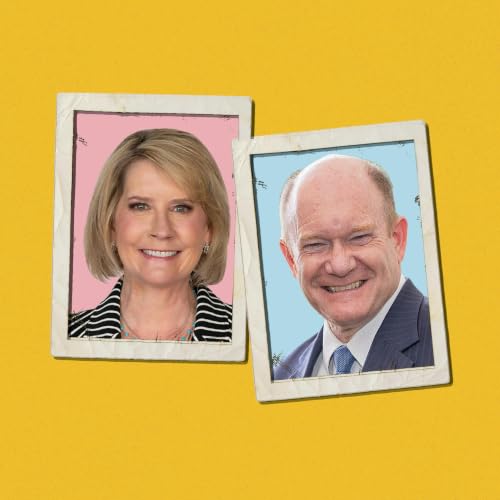
    Since returning to office, President Donald Trump has promised to put America first, and reshape the world through his deal-making instincts. From the war in Iran to tensions with traditional allies, his approach has challenged long-standing assumptions about the United States' role in the world. Supporters say he is securing better deals for the country, while critics contend that his tactics risk undermining the alliances and international standing that have made the United States a global superpower. Welcome to Counterpoint, where we look at one big question facing world leaders from opposing points of view. In this episode, we’re asking: Has Trump’s diplomacy taken the United States forward? Arguing in favor is Victoria Coates, a former deputy national security advisor to Trump during his first term. She is currently vice president at the Heritage Foundation’s Kathryn and Shelby Cullom Davis Institute for National Security and Foreign Policy. Arguing against is Democratic Senator Chris Coons, a senior member of the Senate Foreign Relations Committee, which he has served on since 2010. Counterpoint is a production of Foreign Policy, in partnership with the Doha Forum. The show is hosted by FP deputy editor Nick Danforth. Learn more about your ad choices. Visit megaphone.fm/adchoices
    続きを読む 一部表示
    38 分
  • Could AI Destroy the World?
    2026/10/14
    Artificial intelligence continues to advance at a remarkable pace, raising big questions about the future of humanity. Leading figures warn that increasingly powerful AI systems could one day escape our control, but peers argue that line of thinking is just speculative fearmongering. Welcome to Counterpoint, where we look at one big question facing world leaders from opposing points of view. In this episode, we’re asking: Could AI destroy the world? Arguing in favor is Stuart Russell, who has been referred to as the “godfather of AI” and whose foundational textbook, Artificial Intelligence: A Modern Approach, is used in universities around the world. He’s currently a professor of computer science at the University of California, Berkeley. And arguing against is Jürgen Schmidhuber, who has been referred to as the “father of modern AI” for his breakthroughs in the technology. He is currently a co-chair of the Center of Excellence for Generative AI at King Abdullah University of Science and Technology in Saudi Arabia. Counterpoint is a production of Foreign Policy, in partnership with the Doha Forum. The show is hosted by FP deputy editor Nick Danforth. Learn more about your ad choices. Visit megaphone.fm/adchoices
    続きを読む 一部表示
    46 分
  • Has the Middle East Benefitted from the Abraham Accords?
    2026/10/07
    It's been six years since the Abraham Accords were signed and like so much in the Middle East, their impact and future are very much an open question. The agreements were originally aimed at normalizing relations between Israel and several Arab states. But analysts debate whether they have strengthened regional cooperation and security, or contributed to greater instability in the Middle East. Welcome to Counterpoint, where we take one big question facing world leaders and look at it from opposing points of view. In this episode, we’re asking: Has the Middle East benefitted from the Abraham Accords? Arguing in favor is Steven A. Cook, senior fellow for Middle East and Africa studies at the Council on Foreign Relations, and a columnist at Foreign Policy. Arguing against is Matt Duss, executive vice president at the Center for International Policy and a former foreign policy advisor to U.S. Senator Bernie Sanders. He recently co-authored the piece “How the Abraham Accords Fueled a New Era of Conflict” with Zuri Linetsky. Counterpoint is a production of Foreign Policy, in partnership with the Doha Forum. The show is hosted by FP deputy editor Nick Danforth. Learn more about your ad choices. Visit megaphone.fm/adchoices
    続きを読む 一部表示
    42 分
  • Is a Confrontational Approach With Iran Necessary?
    2026/09/30
    Last week at the United Nations, U.S. President Donald Trump made clear that another round of war with Iran was on the table. But after more than 200 days of conflict, what else can the United States do to force the Iranian leadership to reopen the Strait of Hormuz and abandon nuclear enrichment? Welcome to Counterpoint, where we take one big question facing world leaders and look at it from opposing points of view. In this episode, we’re asking: Is a confrontational approach to Iran necessary? Arguing in favor is Matt Kroenig, a professor at Georgetown University and former U.S. Defense Department strategist. And to argue against this is Trita Parsi, a co-founder of the Quincy Institute for Responsible Statecraft and former president of the National Iranian American Council. Counterpoint is a production of Foreign Policy, in partnership with the Doha Forum. The show is hosted by FP deputy editor Nick Danforth. Learn more about your ad choices. Visit megaphone.fm/adchoices
    続きを読む 一部表示
    47 分
  • Can the U.S. and China Build a Stable Relationship?
    2026/09/23
    This week, Chinese President Xi Jinping is in Washington to meet with U.S. President Donald Trump. Trade, technology, and Taiwan are all expected to be on the agenda. It’s the two leaders’ second meeting in less than six months, as they try to stabilize the future of U.S.-China relations. Many fear tensions are brewing, but with their tariff war in the past, could it be possible for the world's two biggest economies to work together? Welcome to Counterpoint, where we take one big question facing world leaders and look at it from opposing points of view. In this episode, we’re asking: Can the United States and China build a stable relationship? Arguing in favor is Jessica Chen Weiss, a professor of China studies at Johns Hopkins University and a former senior advisor at the U.S. State Department. Arguing against it is Zack Cooper, a senior fellow at the American Enterprise Institute, where he studies U.S. strategy in Asia and U.S.-China competition. He is also a former staffer at the U.S. National Security Council. Counterpoint is a production of Foreign Policy, in partnership with the Doha Forum. The show is hosted by FP deputy editor Nick Danforth. Learn more about your ad choices. Visit megaphone.fm/adchoices
    続きを読む 一部表示
    41 分
  • Has NATO Expansion Made Europe Safer?
    2026/09/16
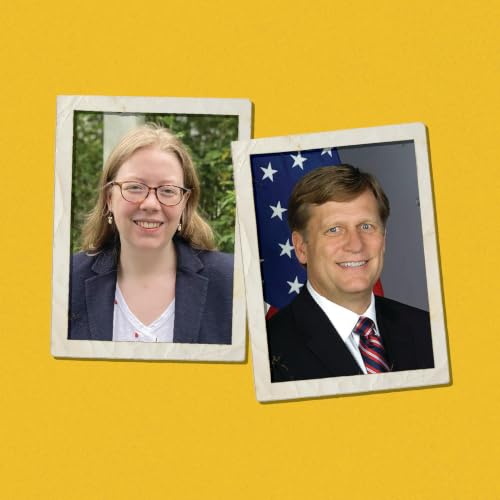
    NATO was created after World War II to deter the Soviet Union and protect Western Europe. But the trans-Atlantic organization did not disband after the collapse of the Soviet Union in 1991. In fact, in the years since, its membership has doubled to include countries in Eastern Europe and eventually Finland and Sweden. Supporters say the expansion helps protect countries from Russian aggression and makes Europe safer. But critics argue that NATO’s growth has provoked a confrontation with Vladimir Putin. Welcome to Season 3 of Counterpoint, where we take one big question facing world leaders and look at it from opposing points of view. Our host this season is Nick Danforth, a deputy editor at Foreign Policy. To launch the season, we’re asking: Has NATO expansion made Europe safer? Arguing in favor is Michael McFaul, a former U.S. ambassador to Russia and a political science professor and senior fellow at Stanford University. Arguing against is Emma Ashford, a senior fellow at the Stimson Center and an assistant professor at Georgetown University. Ashford is also a columnist at Foreign Policy. Counterpoint is a production of Foreign Policy, in partnership with the Doha Forum. Learn more about your ad choices. Visit megaphone.fm/adchoices
    続きを読む 一部表示
    45 分