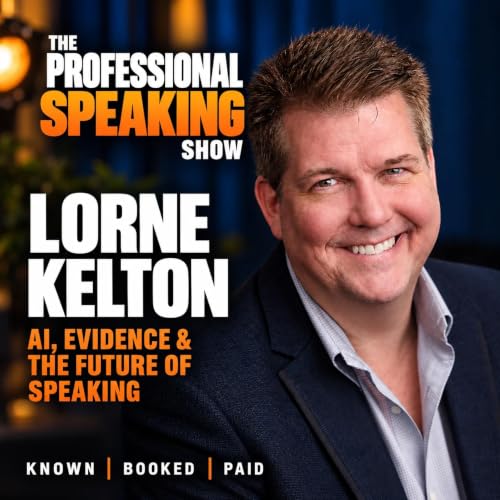
『Confidence Isn’t Competence: Lorne Kelton on AI, Evidence and Speaking』のカバーアート

Confidence Isn’t Competence: Lorne Kelton on AI, Evidence and Speaking

Confidence Isn’t Competence: Lorne Kelton on AI, Evidence and Speaking

無料で聴く

ポッドキャストの詳細を見る

【Amazonプライム会員限定】今ならプレミアムプランが4か月 月額99円。

10月19日まで。※適用条件あり
Lorne Kelton asked AI to find research supporting an argument. It returned what seemed like a cited study. When he checked it, the study and researcher didn’t exist.That experience opens a conversation about the responsibility speakers carry when they use evidence on stage. Lorne and John discuss why confidence can be mistaken for competence, how “fake it till you make it” advice can lead speakers astray, and what critical thinking looks like when a client wants to put it into practice.They also disagree, or at least place different bets, on what AI means for professional speaking. Lorne sees pressure on familiar keynote topics as AI gets better at producing plausible content. John argues that an audience’s relationship with a live speaker still matters. Both questions are worth asking: how strong is the thinking behind your talk, and what happens in the room because you are there?The conversation also covers Lorne’s use of AI during preparation, his approach to choosing stories, and the less glamorous reality of earning a living as a speaker.In this episode:How an invented citation made it through an AI research requestWhy confidence and competence need separatingHow Lorne turns a critical thinking idea into a corporate workshopWhat AI can help a speaker do, and what the speaker must checkWhy a speaking business may need more than keynote feesConnect with Lorne to find out more: https://www.thinkshift.com/https://www.linkedin.com/in/lornekelton/Chapters: 00:00 AI Citation Hallucinations01:14 Confidence vs Competence03:48 AI as Speaking Partner05:04 Generic Topics at Risk07:11 Training AI to Your Voice10:55 Fact-Checking and IP Rights13:44 Will AI Replace Speakers20:19 Critical Thinking Origin Story22:59 Workshop Framework and Triggers25:29 Biases and Motivation Industry27:41 Evidence and Truth Seeking30:14 Future Opportunities for Speakers32:37 Owning Your Viewpoint32:54 Expertise vs Relevance34:32 Celebrity and Internal Competition37:07 Making Speaking Pay38:43 The Business of Speaking41:32 Why Speakers Get Booked43:35 Storytelling Over Slides50:42 Finding Stories and Testing53:49 Encouragement and Authenticity55:27 Where to Connect56:23 Host Reflection on AI57:47 Final SendoffFAQWhat is the difference between confidence and competence, according to Lorne Kelton?Competence is built through real experience and expertise. Confidence can be performed without either. Kelton argues that speakers, and especially newer ones, get told to fake confidence before they've built competence, which he says derails careers rather than accelerating them.Why does Lorne Kelton think certain keynote topics are at risk from AI?Kelton names leadership, productivity, change management and resilience as topics where AI can already generate passable content, which he expects will lead booking committees to question paying five figures for a human speaker on those subjects specifically.How does Lorne Kelton recommend speakers use AI without losing their own voice?Kelton feeds AI his own books, articles, emails and video transcripts so it can act as a sceptical research partner rather than a writer. He treats the deep, time-consuming version of this process as the only one that produces anything close to authentic output.What happened when Lorne Kelton asked AI to find supporting research for an argument?The AI returned a fully formed citation for a study that turned out not to exist, attributed to a researcher who also doesn't exist. Kelton now treats this as a standing warning to verify any AI-sourced research before using it on stage.What is Lorne Kelton's process for teaching critical thinking to corporate clients?Kelton works backwards from a specific trigger incident, then moves the person through reflection, surfacing their assumptions and biases, reframing the situation, and finally writing a concrete plan for how they'll respond differently next time.What percentage of Lorne Kelton's speaker association members make a full-time living from keynoting alone?Fewer than 13%, based on an internal survey his association conducted. The majority earn keynote fees as one component of a broader income that includes facilitation, training, MC work and consulting.How does Lorne Kelton choose which stories to use in a talk?He starts from the client's desired outcome and works backwards to find a personal experience, often a failure, that speaks to it directly. He then tests the story with a small trusted group before using it on stage.What advice does Lorne Kelton give speakers who feel threatened by the current market?Be authentically yourself rather than copying another speaker's style or delivery. He calls this the fail-safe way to get booked and rebooked, and warns against speakers who present themselves as facsimiles of someone else.Connect with John:Find out more about the Known, Booked & Paid BlueprintSubscribe to the Serious About Speaking newsletter on LinkedInFind me on InstaFind me on TikTokFind me on ...
adbl_web_anon_alc_button_suppression_t1
まだレビューはありません