

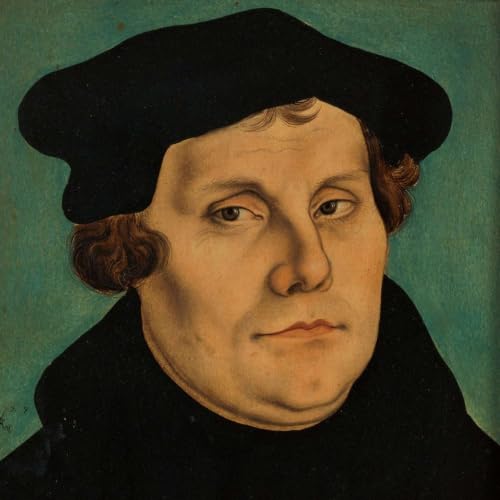
Celebrating 500 Years of Luther's Deutsche Messe with Daniel Baker
カートのアイテムが多すぎます
カートに追加できませんでした。
ウィッシュリストに追加できませんでした。
ほしい物リストの削除に失敗しました。
ポッドキャストのフォローに失敗しました
ポッドキャストのフォロー解除に失敗しました

Celebrating 500 Years of Luther's Deutsche Messe with Daniel Baker
-
ナレーター:
-
著者:
Return to Wittenberg Conference
In this episode (TLHP 82), we are joined by Daniel G. Baker to celebrate the 500th anniversary of Luther's "German Mass." We discuss Baker's article, “The False Dichotomy of Formula Missae and Deutsche Messe.” Luther’s two major orders of service are often treated as representing competing liturgical traditions: the Formula Missae preserving the historic Latin Mass and the Deutsche Messe representing a distinctly German alternative. Baker challenges that interpretation, arguing that both are expressions of the same evangelical approach to worship, adapted to different linguistic and cultural settings. We discuss what Luther was actually trying to accomplish with the Deutsche Messe, the importance of the chorale and Luther’s musical theology, and the substantial similarities between the two services. The conversation then explores the way American Lutherans have subsequently understood Luther’s liturgical reforms. Along the way, we explore what this history can teach us about Luther’s understanding of liturgical freedom, continuity with the historic church, and the distinctly evangelical character of Lutheran worship.
Support the show
- Confessional Languages Scholarship
- The Wauwatosa Diary (book)
- YouTube
- Website
- email: thelutheranhistorypodcast@gmail.com
About the Host:
Benjamin Phelps is a 2014 graduate from Martin Luther College (BA with a German emphasis) and a graduate from Wisconsin Lutheran Seminary in 2018. Ben has been a regular writer and presenter on various Lutheran history topics. His 2018 thesis on Wyneken won the John Harrison Ness award and the Abdel Ross Wentz prize. He is also the recipient of several awards and recognitions from the Concordia Historical Institute. He serves on the board of the Lutheran Historical Conference. Ben is currently a doctoral candidate in historical theology through CSL.