エピソード

  • Monday of the Fourth Week of Easter (Year A) - The Courage of the Good Shepherd
    2026/04/26
    Read OnlineJesus said: “I am the good shepherd. A good shepherd lays down his life for the sheep. A hired man, who is not a shepherd and whose sheep are not his own, sees a wolf coming and leaves the sheep and runs away, and the wolf catches and scatters them. This is because he works for pay and has no concern for the sheep.” John 10:11–13What is it that makes a shepherd “good?” A shepherd’s duties require great sacrifice and time. Like a mother who is always attentive to her newborn, a shepherd devotes his time and energies to the care of his flock. In biblical times, shepherds often lived in caves on the outskirts of towns, where there were plenty of green pastures, space for the sheep to roam, and water sources. The caves provided a place of safety at night and shelter from the elements. During the day, the shepherd watched over the flock in an almost fatherly way, knowing that if he were to neglect his duties and become inattentive, a sheep could wander off or fall victim to a pack of wolves.Jesus expands this familiar image to convey an even greater reality of divine love and sacrifice. In today’s Gospel, Jesus takes this image of a shepherd to a whole new level. He says: “A good shepherd lays down his life for the sheep.” Though this might not have been part of the normal job description of a shepherd, perhaps those who were listening would have made a connection. Some might have understood what Jesus taught in a figurative way, calling to mind the time and commitment shepherds make. And though there is a figurative lesson to be learned, Jesus’ teaching was more than that.Jesus first identified Himself as the Good Shepherd. He then defines what that means: He will lay down His life for His sheep. Though His listeners likely missed His meaning, Saint John, while writing his Gospel, fully understood Jesus’ words to be not only figurative but also literal—Jesus would die on the Cross for the sins of His sheep.The metaphor continues with Jesus contrasting a hired worker with a true shepherd of his own sheep. In the face of danger, a hired worker flees for his own safety, while the shepherd stands and fights for his sheep, even to death. This clearly depicts what Jesus has done for us, but it also reveals our duty toward all of God’s people, His flock.As members of Christ’s Body, the Church, we are called to share in His shepherding mission. Our vocations will especially dictate to us ways in which we are called to do so. Parents, for example, must be so devoted to their children that they value their children’s lives more than their own. Priests and religious are called to be shepherds who guide and protect their flocks spiritually. Each of us, however, must participate in Christ’s shepherding mission in the ways we are called. While the way this is lived will vary, the degree to which it is lived must not. We are all called to lead lives that are sacrificial, selfless, and wholly self-giving. Courageously and completely, we must lay our lives down for others, imitating the Good Shepherd’s commitment to His flock.In communion with the Good Shepherd, we are invited to show this courage in daily acts of charity, fidelity to our commitments, and steadfast love for those entrusted to our care. Through this radical love, we reveal Christ’s presence to the world and share in His mission to gather all into one fold under the divine Shepherd. As we continue to celebrate the joy of the Resurrection, we remember that this joy was won through the courageous love of our Good Shepherd.Reflect today on Jesus’ perfect fulfillment of His mission to be the Good Shepherd. As you ponder His courage, sacrifice, and selfless love, know that He not only acts as the Good Shepherd to you, but He also invites you to share in His shepherding. How courageous are you when given the opportunity to be selfless for the good of another? How willing are you to seek the others’ salvation, even at great cost to yourself? Charity is at the heart of Jesus’ mission, and that same charity must permeate everything we do as we relate to those whom we are called to love. Honor and thank the Good Shepherd by participating in His mission and laying down your life for God’s flock. My Good Shepherd, You have laid down Your life for us, Your sheep, dying a painful death on the Cross. Your courage and sacrifice save us from sin and the evil one, opening the path to eternal life. I accept Your selfless sacrifice in my life and commit to share in that sacrifice by laying my life down for others, so that they will come to know You and share in eternal life. Jesus, I trust in You. Image: The Good Shepherd, via Adobe StockSource: Free RSS feed from catholic-daily-reflections.com — Copyright © 2026 My Catholic Life! Inc. All rights reserved. This content is provided solely for personal, non-commercial use. Redistribution, republication, or commercial use — including use within apps with advertising —
    続きを読む 一部表示
    8 分
  • Fourth Sunday of Easter (Year A) - The Voice of a Stranger
    2026/04/25
    Read Online“When he has driven out all his own, he walks ahead of them, and the sheep follow him, because they recognize his voice. But they will not follow a stranger; they will run away from him, because they do not recognize the voice of strangers.” John 10:4–5Young children are often frightened by strangers. Infants, for example, form a strong bond with their mothers who feed them, hold them close, talk to them, and lavish love upon them. It often happens that when other family members, such as grandparents or even the father, attempt to hold the child, tears emerge until the child is placed once again in the familiar and safe arms of his or her mother.An infant’s reaction to strangers can teach us much about today’s Gospel on Jesus, the Good Shepherd. Like an infant, sheep become familiar with the voice and presence of their shepherd. The shepherd lives with the sheep night and day. He calls to them, speaks to them, keeps them safe, and leads them to green pastures and water. If a stranger were to call to them, they would not listen, similar to how an infant reacts to a stranger.Jesus’ teaching is in response to the criticism He received from the Pharisees after He healed a man born blind. After healing the man, Jesus said, “I came into this world for judgment, so that those who do not see might see, and those who do see might become blind” (John 9:39). When the Pharisees heard Jesus say that, they inquired whether He was suggesting that they were blind, to which Jesus replied, “If you were blind, you would have no sin; but now you are saying, ‘We see,’ so your sin remains” (John 9:41).An infant’s unfamiliarity with a stranger is instinctive and innocent, yet it teaches us about the deeper spiritual reality Jesus describes. Just as sheep recognize the voice of their shepherd and follow him because they trust in his care, so too does a soul attuned to God respond to His voice. In contrast, the Pharisees, who prided themselves on their religious knowledge, failed to recognize Jesus as the true Shepherd. This failure was not innocent ignorance; it was willful blindness rooted in their rejection of His divine mission. The healed blind man perceived Jesus’ voice with the simplicity of faith, while the Pharisees, claiming to ‘see’ with their own wisdom, remained in sin because they refused to hear and follow the voice of the Good Shepherd.The Pharisees saw Jesus as a stranger to their religious beliefs and practices. They labeled Him an imposter. Unlike the innocent reaction of an infant or the natural response of sheep, the Pharisees’ unfamiliarity with Jesus was a sin stemming from pride. It was a blindness of their own making that closed their hearts to the comforting and supernaturally familiar voice of God. To recognize Jesus’ voice is to respond to the call of grace, trust in His teachings, and follow into the fullness of life He offers. Only by humbly admitting our need for His guidance can we, like the sheep, allow Him to lead us to green pastures and salvation.Reflect today on the fact that God calls out to you day and night. Do you recognize His voice? Or do you, like the Pharisees, turn away from Him? Following the Good Shepherd begins with an intimate familiarity with His divine presence in our lives. We must become as familiar with Him as an infant is with its mother or as sheep are with their faithful shepherd. Failure to recognize the Good Shepherd’s voice leaves us lost and unable to care for ourselves. Jesus desires to lead us, care for us, and bring us to the abundant pastures of new life. Become familiar with Him and listen to His voice alone, and like the blind man, you will begin to see in ways you never have before, through the eyes of faith.Jesus, my Good Shepherd, You call to me day and night, but so often I fail to hear and respond to Your gentle voice. Please free me from blindness caused by my own sin so that I can humbly turn to You and follow Your consoling and familiar voice. Jesus, my Good Shepherd, I trust in You.Image: Good Shepherd by Lawrence OP, license CC BY-NC-ND 2.0.Source: Free RSS feed from catholic-daily-reflections.com — Copyright © 2026 My Catholic Life! Inc. All rights reserved. This content is provided solely for personal, non-commercial use. Redistribution, republication, or commercial use — including use within apps with advertising —
    続きを読む 一部表示
    7 分
  • April 25, Feast of Saint Mark - Our Mission as Evangelists
    2026/04/24
    Read OnlineJesus appeared to the Eleven and said to them: “Go into the whole world and proclaim the Gospel to every creature. Whoever believes and is baptized will be saved; whoever does not believe will be condemned. These signs will accompany those who believe…” Mark 16:15–17Today we honor the Gospel writer, Saint Mark. Mark, also called John Mark, was likely from modern-day Libya in North Africa but grew up in Jerusalem with his mother, Mary. Her home was a significant meeting place for early Christians, possibly hosting the Last Supper and Peter’s visit after his release from prison (Acts 12:12). Many scholars believe Mark was the young man who fled naked during Jesus’ arrest (Mark 14:51–52).Mark accompanied Barnabas (his cousin or uncle) and Paul on an early missionary journey but left them before its completion, which led to a sharp disagreement with Paul. Barnabas took Mark to Cyprus, while Paul continued elsewhere. Despite this conflict, Mark and Paul reconciled, and Paul later referred to Mark as a co-worker and a helpful companion during his imprisonment (Colossians 4:10–11; 2 Timothy 4:11).Mark also developed a close relationship with Peter, who affectionately called him “Mark, my son” (1 Peter 5:13). Tradition holds that Mark wrote his Gospel in Rome at Peter’s request, preserving Peter’s preaching for the Church. Mark’s Gospel, likely written for Gentile converts in Rome, became—and remains—a vital record of Jesus’ life and ministry.Later traditions hold that Mark became the first bishop of Alexandria in Egypt, where he preached the Gospel. He is believed to have suffered martyrdom there, dragged over stones and imprisoned for his faith. Though Saint Mark is traditionally honored as a martyr, today’s feast celebrates him above all as an evangelist. In today’s Gospel, Saint Mark recounts Jesus’ final words to His Apostles: “Go into the whole world and proclaim the Gospel to every creature.”Through his life and writings, Saint Mark faithfully fulfilled this command, preserving the saving message of Christ for generations to come.Jesus’ commission was accompanied by promises of signs that would follow those who believe: They would drive out demons, speak new languages, handle serpents, and heal the sick. While these signs were often manifested in miraculous ways in the early Church, they carry a deeper spiritual significance for us today.Like Saint Mark, each of us is called to be an evangelist, bringing the Gospel to the ends of the earth. Though we might not be given the grace to perform miracles, Jesus’ promises remain true when we act in His name. Demons are cast out not only through exorcism, but also when we bring the Light of Christ to the darkness of sin and evil. We “speak new languages” when the Holy Spirit uses us to communicate God’s Word in ways that touch hearts anew. The “serpents” we handle and the “deadly drink” we overcome symbolize the temptations and evils God’s grace protects us from when we remain faithful to Him.As we honor Saint Mark the Evangelist, reflect today on how his Gospel calls you to heed Jesus’ commission. Symbolically speaking, have you learned to speak the new language of the Holy Spirit, combat the powers of evil, and radiate God’s love and mercy to others? This mission takes firm resolve and courage. Do not fear when “serpents” or “deadly drink” appear along the way. Trust that God’s grace will protect and guide you. When you are fully united to Christ, everything you do and say flows naturally in His name, making the Gospel known to the ends of the earth. Saint Mark the Evangelist, though you were young when you met our Lord, you grew deeply in faith and faithfully heeded His commission to proclaim the Gospel to the ends of the earth. Through your fidelity to Christ, countless souls came to believe through your preaching and continue to encounter Him through your inspired writing. Please pray for me, that I may have the courage to speak and act in Jesus’ name, becoming an instrument of His saving Word. Jesus, I trust in You.Image: Ancient painting with St. Mark the Evangelist Source: Free RSS feed from catholic-daily-reflections.com — Copyright © 2026 My Catholic Life! Inc. All rights reserved. This content is provided solely for personal, non-commercial use. Redistribution, republication, or commercial use — including use within apps with advertising — is strictly prohibited without written permission.
    続きを読む 一部表示
    7 分
  • Friday of the Third Week of Easter - Certitude of Faith
    2026/04/23
    Read Online“Amen, amen, I say to you, unless you eat the Flesh of the Son of Man and drink his Blood, you do not have life within you. Whoever eats my Flesh and drinks my Blood has eternal life, and I will raise him on the last day. For my Flesh is true food, and my Blood is true drink.” John 6:53–55Human reason and free will are the most precious natural gifts God gave us. They are what separate us from every other animal. Human reason enables us to think critically, understand concepts, and arrive at conclusions. Central to our human reason is our free will, which enables us to act upon the conclusions we reach or to reject them, choosing instead to follow our disordered appetites and misguided desires. Though human reason was wounded by Original Sin, it was not completely destroyed. We must diligently strive to act rationally and in accord with our common sense, adhering to the natural law that God has written on our souls. However, even though a rational approach to natural law will bring us a long way toward right living, it is not sufficient to lead us into the deeper truths of eternal salvation, promised to us in Jesus’ discourse on the Bread of Life, on which we have been reflecting.By natural reason alone, the Eucharist makes no sense. How could that which appears to be a piece of bread be the “Flesh of the Son of Man” and a cup that appears to be wine be His Blood? Yet when we incorporate divine revelation into our reasoning, the Eucharist as the Flesh and Blood of Jesus, the Son of God, makes perfect sense: “...my Flesh is true food, and my Blood is true drink.” The Eucharist makes sense, but only when we listen with faith to the revelation Jesus gave to us. Today’s Gospel provides the clearest teaching we have ever received on this Precious Gift.Today’s Gospel begins by relating that “The Jews quarreled among themselves, saying, ‘How can this man give us his Flesh to eat?’” (John 6:52). They were quarreling because they were not opening their human reason to the light of Jesus’ revealed truth. In this exchange, the Eternal and Incarnate Son of God was speaking a divine truth to them. Jesus spoke clearly and plainly, but their minds remained closed. They heard His words, but they closed themselves off to the Father’s Voice, which testified on Jesus’ behalf that all He said was true. It seems that some who listened began to understand and believe, prompting the quarrel among them.When you read our Lord’s words, what do you hear? Do you hear the Father’s Voice in the depths of your conscience, confirming the truthfulness of what you read? Do you hear the Living Word of God echoing within your mind and soul? Do you allow that Word to inform your human reason so that you can conclude that the Eucharist is real, that it is the Flesh and Blood of the Son of God, offered to you so that you can share in eternal life? No amount of human study or intelligence alone will ever convince us of divine truths. God alone can convince us, but only if we listen to His Voice.Truths of faith, such as our belief in the Eucharist, must be more certain than any other natural truth we believe. No rational person would deny the reality of the physical world we see with our eyes or touch with our hands. The noises we hear, the food we taste, and the aroma we smell are all judged as real because we believe what our five senses perceive. When our consciences perceive divine truths, those truths are more certain than all sensory knowledge. Why? Because God is the one directly communicating to us. Reflect today on Jesus’ crystal-clear teaching on the Eucharist. We must hear and understand what He said. Our faith in the Eucharist must become certain. Allow the Father’s Voice to resonate within your mind so that you are more certain that the Eucharist is the Flesh and Blood of the Son of God than anything else you believe. Strengthen your faith, knowing that His Flesh and Blood bring you to eternal life. My Eucharistic Lord, I believe that You gave Your life for the salvation of all and that the gift of eternal salvation is given to us through the Sacraments. I believe that the Eucharist is Your Flesh and Blood, Your Divine Essence. Please strengthen my faith so that I am more open to the abundant grace You wish to bestow through this Precious Gift. Jesus, I trust in You. Image: The Feeding the Multitude by S. G. Rudl.Source: Free RSS feed from catholic-daily-reflections.com — Copyright © 2026 My Catholic Life! Inc. All rights reserved. This content is provided solely for personal, non-commercial use. Redistribution, republication, or commercial use — including use within apps with advertising — is strictly prohibited without written permission.
    続きを読む 一部表示
    7 分
  • Thursday of the Third Week of Easter - Drawn by the Father
    2026/04/22
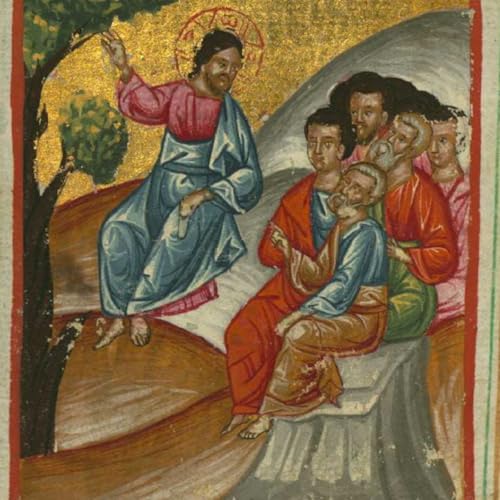
    Read OnlineJesus said to the crowds: “No one can come to me unless the Father who sent me draw him, and I will raise him on the last day.” John 6:44In today’s Gospel, Jesus continues His conversation with the crowd who sought Him out after performing the miracle of the multiplication of the loaves and fishes. As the conversation continues, Jesus deepens His clarity about His relationship with the Father, His divine identity, the Father’s action in our lives, and the gift of Himself as the Bread of Life.The passage above reveals an essential spiritual principle we must understand as we work to strengthen our relationship with God: Faith is a response to the Father’s call, not something we initiate on our own. This principle is crucial because faith is not primarily a resolution we make to grow closer to God; rather, it begins as a resolution from the Father in Heaven Who draws us to Himself by drawing us to His Son, Jesus, especially in the Eucharist.Practically speaking, this principle must guide our prayer lives. Though it’s good to make a conscious effort to pray every day, to meditate on the Scriptures, recite devotions, and attend Mass as often as possible, we must always see those efforts as a response to God’s invitation rather than our own good idea. It’s a subtle, though important, distinction.To illustrate, consider the Gospel story of the contrasting prayer of the Pharisee and the tax collector in Luke 18:9–14. In that parable, the Pharisee offered many prayers each day and fasted regularly, but his prayers went unheard and his fasting was unfruitful. Why? Because his actions were not initiated by God but were works of his own doing. In contrast, the tax collector, aware of his sin and need for God’s mercy, humbled himself and prayed, “O God, be merciful to me a sinner.” That prayer was beautiful and fruitful because it was a response to God Who revealed his sin to him and called him to repent, which he did.Today’s Gospel lesson comes to us within the context of Jesus’ teaching on the Eucharist. Therefore, we must especially apply His opening words to the way we participate in the Mass. Our choice to attend Mass is not something we do as a favor to God. Instead, our participation in the Mass must be a response to the Father Who offers us the Body and Blood, Soul and Divinity of Jesus, His Son, as the spiritual food we need in order to attain everlasting life. Participation in the Mass is God’s gift to us, and our response must be authentic prayer.Our participation in the Mass becomes authentic when we recognize that the Father is inviting us to receive the Eucharist as “the living bread that came down from heaven” and Jesus’ “Flesh for the life of the world.” The Mass is about receiving God into our lives, not because we choose to put Him there, but because we say “Yes” to His invitation to be drawn to Him. The word “Eucharist” means “thanksgiving,” and this must be our prayerful response to such a great gift. We must foster an attitude of sincere gratitude for the Father’s invitation to share in the Sacrifice of His Son so as to be given the unmerited gift of eternal life.Reflect today on your participation in the Mass. If you ever feel that your attendance is a favor to God, pause and listen to the Father’s voice calling you. Try to hear Him invite you to this most precious Feast. Become aware of the Father drawing you to the Mass, to His Son, the source of eternal life. Respond with humble gratitude, knowing that there is no greater gift you can receive.Heavenly Father, You constantly speak to me, call to me, and draw me to Your Son. Please open my ears to hear Your gentle voice, offering me the Body and Blood, Soul and Divinity of Your Son in the Holy Eucharist. May my participation in that unfathomable Gift be one of sincere gratitude for the eternal gifts You invite me to receive. Jesus, I trust in You.Image: Sermon on the Mount via AdobeSource: Free RSS feed from catholic-daily-reflections.com — Copyright © 2026 My Catholic Life! Inc. All rights reserved. This content is provided solely for personal, non-commercial use. Redistribution, republication, or commercial use — including use within apps with advertising — is strictly prohibited without written permission.
    続きを読む 一部表示
    7 分
  • Wednesday of the Third Week of Easter - The Satiation You Desire
    2026/04/21
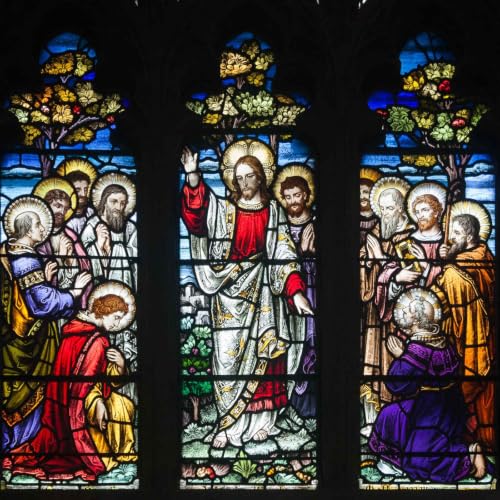
    Read OnlineJesus said to the crowds, “I am the bread of life; whoever comes to me will never hunger, and whoever believes in me will never thirst. But I told you that although you have seen me, you do not believe.” John 6:35–36Some who listened to Jesus’ Bread of Life Discourse must have been shocked. Those who listened with faith began to believe in Him, even though their understanding was not complete. Those who listened with skepticism were not only shocked but angered, as evidenced by their reaction. Today’s Gospel marks Jesus’ clearest revelation of His divine identity and mission, inviting us to accept Him into our lives.After proclaiming Himself to be the Bread of Life, Jesus reveals His unity with the Father in Heaven Who sent Him on His mission. He proclaims that He “will not reject anyone who comes to” Him because He “came down from heaven” to do the will of the Father Who sent Him. Jesus concludes with a declaration about the Father’s will and Jesus’ mission: “Everyone who sees the Son and believes in him may have eternal life, and I shall raise him on the last day” (cf. John 6:37–40). Again, without the ears of faith, what Jesus revealed must have been shocking.At that time, the people of Israel were used to listening to rabbis who interpreted the Law of Moses, the psalms, and the prophets for them. These educated teachers often spoke clearly and with authority, but never like Jesus. His clarity and authority were pronounced, and His message He taught was new. Not even the prophets of old spoke like Him. When they prophesied, they usually began by saying, “Thus says the Lord…” Jesus’ teaching took a drastic shift by essentially proclaiming, “I AM the Lord…”Though some might have been skeptical and critical, it’s important for us to consider those who were humble of heart who listened to Jesus’ words with openness and faith. As they heard this new and amazing teaching, their hearts would have responded, “Yes!”, while their minds would have said, “I don’t understand.”When we experience the gift of faith, we will find we have that same reaction. God’s revealed and mysterious truths often stir our spirits first, calling us to believe, and only once we believe, is clarity given. In fact, faith often precedes understanding, inviting us to trust first and receive deeper insights in time. For that reason, we must understand that belief does not require perfect understanding. It’s appropriate to believe in our spirit, even though our minds have not yet grasped the truth we believe. This is especially the case with the Eucharist.Saint John Vianney once said, “There is nothing so great as the Eucharist. If God had something more precious, He would have given it to us.” Do you believe that? Of all the material possessions we might obtain in this life, nothing is more valuable, important, or precious than the Eucharist. Why? Because the Eucharist is Jesus Himself. He is the Bread of Life. His Body and Blood, Soul and Divinity enter our souls when we receive this precious gift.After Jesus said to the crowds, “whoever comes to me will never hunger, and whoever believes in me will never thirst,” He said that some would not believe in Him. But those who do believe, despite an incomplete understanding of the Eucharist, are promised they will “never hunger” and “never thirst.” Clearly, the hunger and thirst Jesus speaks of are far greater than physical needs. It’s the longing that comes from the depths of our being, desiring fulfillment, contentment, and peace. It’s a desire to be made whole, free from guilt and shame, satisfied beyond any natural satisfaction. This is the Eucharist. Jesus is truly present in the Eucharist, desiring to satisfy our souls’ every longing. Reflect today on Jesus’ invitation to satiate your soul’s deepest hunger and thirst through the Eucharist. He calls you to a personal encounter, to find in Him the true satisfaction that the world cannot give. We attempt to acquire that satiation through many passing means, such as pleasures, comforts, indulgences, wealth, and prestige. None of it works. As you look into your soul and identify the many longings you have, turn to Him alone Who satisfies. Renew your faith in the Eucharist and receive the satiation He desires to bestow. My Eucharistic Lord, You have promised that if I come to You, You will satisfy my deepest longings, every hunger and thirst. I do come to You and believe that You are the Bread of Life, the only means to the Father. I renew my faith in Your True Presence in the Eucharist and pray that every time I receive You, my heart will be open to Your transforming love. Jesus, I trust in You.Image: Sermon on the Mount Stained Glass via AdobeSource: Free RSS feed from catholic-daily-reflections.com — Copyright © 2026 My Catholic Life! Inc. All rights reserved. This content is provided solely for personal, non-commercial use. ...
    続きを読む 一部表示
    8 分
  • Tuesday of the Third Week of Easter - Manna or the Bread of Life
    2026/04/20
    Read OnlineThe crowd said to Jesus: “What sign can you do, that we may see and believe in you? What can you do? Our ancestors ate manna in the desert, as it is written: ‘He gave them bread from heaven to eat.’” John 6:30–31Today’s Gospel begins the beautiful Bread of Life Discourse, which we read at Mass for the rest of the week. In this discourse, we read the conversation Jesus had with some of the crowd who, the previous day, were among the more than 5,000 who were miraculously fed by the multiplication of the loaves and fishes. The conversation begins with the crowd’s search for physical sustenance and gradually unfolds into a revelation of a deeper, spiritual nourishment as Jesus points them to the “food that endures for eternal life” (John 6:27). Jesus had their attention. They understood that He was talking about something mysterious—more than just the miraculous multiplication of loaves and fishes. Therefore, they asked Him for a sign and quoted the Exodus account in which God provided manna in the desert. Understanding their question is key to understanding Jesus’ response.After Moses led the Israelites out of Egypt and they wandered in the desert for forty years on their way to the Promised Land, God provided them with manna as “bread from heaven” (cf. Exodus 16:4–34). About 820 years after the Israelites entered the Promised Land and established their kingdom, Jerusalem fell to the Babylonians in 586 B.C. During this time, the prophet Jeremiah is said to have hidden the Ark of the Covenant, which contained a pot of manna, in a secret place before the Jews were taken into exile (cf. 2 Maccabees 2:5–8). This hidden manna held symbolic significance, and tradition suggests there was a belief that it would miraculously reappear at Passover when the Messiah came, beginning the dawn of the last days and a new era of divine fulfillment.Some traditions suggest that there was an expectation of the hidden manna’s return, leading the crowd to wonder if Jesus would reveal such treasures—true spiritual gifts that would confirm that He was the long-awaited Messiah. However, the people misunderstood Jeremiah’s actions and the deeper significance of the hidden manna. While the tradition spoke of a miraculous return, Jesus intended to fulfill that prophecy not by uncovering the old Ark but by revealing Himself as the new Manna: “...my Father gives you the true bread from heaven. For the bread of God is that which comes down from heaven and gives life to the world” (John 6:32–33).When Jesus revealed this, the people asked Him, “Sir, give us this bread always” (John 6:34). Unfortunately, the people still did not understand. As they recalled the Exodus story about the manna in the desert, they thought Jesus was promising a new physical food that would sustain them. Therefore, Jesus clearly exclaims, “I am the bread of life; whoever comes to me will never hunger, and whoever believes in me will never thirst” (John 6:35). With that, Jesus begins to teach about the Eucharist, a teaching that would find its fulfillment at the Last Supper, where He offered Himself as true food and drink for the life of the world.As we begin reading the Bread of Life Discourse, we are invited into the greatest mystery of our faith. As a divine mystery—a mysterium fidei—the Eucharist is not something we can figure out by study alone. The Eucharist is God’s Presence into which we are invited to enter, and Jesus must teach us the way. The Eucharist is only understood properly through prayer—a prayer in which God reveals His hidden presence to us.Reflect today on your understanding of the Eucharist. Only the spiritual Gift of Understanding will enable us to more fully comprehend this most precious Gift. As we read through the Bread of Life Discourse this week, make an effort to pray over the words. Ask for enlightenment. Like the members of the crowd who conversed with Jesus in today’s Gospel, commit yourself to participate in their discussion. Seek to understand so that you will believe and share in the abundant blessings given to those who partake of the Bread of Life. Bread of Life, You are the true food from Heaven, You are sustenance for my weary soul. As we reflect on Your beautiful and mysterious teaching of the Eucharist, please help me to understand this precious gift so that as I approach the altar, I will do so with renewed reverence, seeking not just physical participation but a spiritual awakening to the reality of Your presence. Jesus, I trust in You.Image: The Sermon on the Mount by S. G. Rudl Source: Free RSS feed from catholic-daily-reflections.com — Copyright © 2026 My Catholic Life! Inc. All rights reserved. This content is provided solely for personal, non-commercial use. Redistribution, republication, or commercial use — including use within apps with advertising — is strictly prohibited without written permission.
    続きを読む 一部表示
    7 分
  • Monday of the Third Week of Easter - Redirecting Your Desire
    2026/04/19
    Read Online“Rabbi, when did you get here?” Jesus answered them and said, “Amen, amen, I say to you, you are looking for me not because you saw signs but because you ate the loaves and were filled. Do not work for food that perishes but for the food that endures for eternal life, which the Son of Man will give you. For on him the Father, God, has set his seal.” John 6:26–27The crowd desired one thing, but Jesus desired another. This reality is common to us all. Earlier in this chapter from John’s Gospel, Jesus miraculously fed 5,000 men—not counting the women and children—with five barley loaves and two fish.The crowd was so ecstatic that they wanted to carry Jesus off and crown Him king. Jesus, however, had no desire to be an earthly king, so He withdrew to a mountain to be alone.The next morning, when the crowd discovered Jesus had left, they searched for Him and found Him in Capernaum with the Twelve. When they found Him, they asked, “Rabbi, when did you get here?” Jesus’ response revealed their true motivation: “You are looking for me not because you saw signs but because you ate the loaves and were filled.” In other words, they desired another meal. Their interest in Jesus was superficial.In John’s Gospel, Jesus’ miracles are referred to as “signs.” These signs point to His divine Sonship and salvific mission, revealing Him as the source of eternal life. Jesus recognized that the people sought Him not because they sought spiritual understanding or insight into His divine nature, but solely for material satisfaction—another meal. The crowd desired physical food, but Jesus desired to give them spiritual nourishment to strengthen their faith so that they would believe and receive the eternal and superabundant treasures He came to bestow. Jesus then exhorted them to work for “food that endures for eternal life.” That “food” is their belief in Him, whom the Father sent to bring eternal life.We often find ourselves desiring the passing things of this world more than we desire God. It is natural, not sinful, to experience physical hunger and desire food. But if such desires become the driving force in our lives, then they become disordered.In addition to natural desires, our spiritual desires can also become misguided. For example, if we seek Jesus in prayer solely because we have a favor to ask of Him, then we are acting much like the crowd in today’s Gospel, and Jesus’ words to them would apply to us: “Do not work for food that perishes but for the food that endures for eternal life, which the Son of Man will give you.”Our pursuit of Jesus must not be centered on our own ideas of what is best for us. Only God knows what is best. We must understand this and allow Him to redirect our desires to seek what is eternal. We must not only seek but also desire God’s work in our lives. His greatest work is that we “believe in the one he sent.” We must desire faith in Jesus and His eternal plan, abandoning every superficial or misguided pursuit.Reflect today on what you desire most from your relationship with our Lord. If your ambitions are earthly and fleeting, look higher. Seek the eternal realities God wishes to bestow, and work to realign your desires toward those alone. God is aware of our natural needs and will provide for them according to His will when we prioritize understanding Him, His divine Sonship, and His mission. Learn from the crowd in today’s Gospel and heed Jesus’ gentle rebuke. Believe in the One the Father sent—Jesus, the Son of God—and all good and eternal things will be lavished upon you according to His will. My heavenly King, You desire to be the King of my life, directing my every action and controlling my every desire. I give all control to You, dear Lord, and ask that you redirect my every ambition and desire in accord with Your perfect will. Jesus, I trust in You. Image: The Sermon on the Mount. by Guillaume FouaceSource: Free RSS feed from catholic-daily-reflections.com — Copyright © 2026 My Catholic Life! Inc. All rights reserved. This content is provided solely for personal, non-commercial use. Redistribution, republication, or commercial use — including use within apps with advertising — is strictly prohibited without written permission.
    続きを読む 一部表示
    7 分