エピソード

  • Episode 2.09: Leadership, Relationships, and the Future of Advancement with Dale Wright
    2026/08/28

    In this episode of Candid Conversations, Chris and Candice sit down with Dale Wright, Vice Chancellor for Advancement and Senior Vice President of the University of Illinois Foundation, to explore a career that began almost by accident and ultimately led to senior leadership in higher education advancement. A first-generation college student from southeast Missouri, Wright discovered alumni engagement while helping plan homecoming at the University of Missouri. That experience opened the door to a career spanning alumni relations, development, fundraising, and advancement leadership—including more than a decade at the University of Illinois Urbana-Champaign. Wright reflects on the mentors and experiences that shaped him and navigating spaces where he was often one of relatively few African Americans in advancement leadership.


    Wright also pulls back the curtain on what fundraising actually looks like, challenging the idea that advancement is primarily about asking people for money. Instead, he describes philanthropy as the culmination of relationships built through curiosity, listening, thoughtful questions, and an understanding of what people hope to accomplish. In his view, relationship building isn’t simply one component of fundraising strategy—it is the strategy. He discusses why successful advancement professionals need to navigate difficult conversations, manage disappointment, work effectively with internal university partners, and translate stories in both directions: sharing the university’s aspirations with donors while bringing donors’ motivations and dreams back to the institution.


    The conversation turns toward the changing landscape of higher education and the opportunities—and responsibilities—ahead for advancement organizations. Wright argues that universities need to tell a more complete story about philanthropy, moving beyond headline-grabbing campaign totals to demonstrate how gifts, relationships, and investments create impact over time. He also shares his perspective on data, technology, and artificial intelligence. While AI can reduce manual work and make processes more efficient, Wright cautions against allowing technology to obscure the people behind the data. The real opportunity, he suggests, is using technology to free advancement professionals to spend more time on the deeply human work of building relationships, understanding motivations, and connecting people with possibilities.


    Throughout the episode, Wright brings those ideas to life through stories of philanthropy transforming the student experience—from scholarships that combined financial support, study abroad, and undergraduate research opportunities to a donor-supported bridge at Illinois that doubles as a living laboratory for civil engineering students. He closes by reflecting on humility, servant leadership, and Martin Luther King Jr.’s “The Drum Major Instinct,” which has become an important touchstone for how he approaches leadership.


    -------

    Candice and Chris are IT leaders at the University of Illinois at Urbana-Champaign and collectively have more than 50 years of experience working in higher education. Candice is currently the Senior Director of IT Partners at the College of Applied Health Sciences and Chris is the Chief Information Officer and Senior Director of IT Partners at the Gies College of Business.

    続きを読む 一部表示
    47 分
  • Episode 2.08: Building Culture, Trust, and Stronger Teams with Joy Brownridge
    2026/08/13

    In this episode of Candid Conversations, Chris and Candice sit down with Joy Brownridge, assistant director of organizational effectiveness for the University of Illinois System and the operational lead for the Professional Staff Leadership Academy. Joy brings a fascinating leadership journey to the conversation, beginning with 15 years as an industrial engineer in the automotive industry before making a major career pivot into higher education and human resources. Her experience across very different workplace environments shaped her approach to leadership, communication, continuous improvement, and employee engagement.


    Joy shares how she discovered that leadership is often about influence rather than authority, especially when working across roles with very different priorities and perspectives. She discusses the importance of adapting communication to meet people where they are, seeking out mentors, and taking advantage of accessible learning opportunities for newly promoted leaders. The conversation also explores workplace culture and Joy's work on the article about the ways leaders can unintentionally undermine their office culture, including one of the biggest pitfalls: holding yourself to a different standard than the people you lead.


    A major theme throughout the episode is that healthy workplace culture is built through consistent actions, not slogans. Joy encourages leaders to overcommunicate, follow their words with action, demonstrate vulnerability, and remain transparent during periods of uncertainty and organizational change. She also discusses empathy, recognition, and the value of understanding how individual team members prefer to receive appreciation. From handwritten notes to asking people directly what motivates them, Joy offers practical ideas for making recognition more personal while maintaining fairness across a team.


    The conversation closes with Joy's approach to difficult conversations and her top habit for becoming a more effective leader: solicit more feedback. She explains how leaders can create psychological safety by consistently asking for input, experimenting with different feedback methods, and demonstrating that they are genuinely willing to listen and act. Joy also reflects on the leadership accomplishment she is most proud of—building a career and a team culture she loves—and reveals a delightfully unexpected personal talent: turning pop songs into operatic performances. It's a candid, practical, and often funny conversation about what it really takes to lead people well.


    Candice and Chris are IT leaders at the University of Illinois at Urbana-Champaign and collectively have more than 50 years of experience working in higher education. Candice is currently the Senior Director of IT Partners at the College of Applied Health Sciences and Chris is the Chief Information Officer and Senior Director of IT Partners at the Gies College of Business.


    続きを読む 一部表示
    32 分
  • Episode 2.07: Excellence, Innovation, and the Future of Illinois with Chancellor Charles L. Isbell, Jr.
    2026/07/15

    In this episode of Candid Conversations, Chancellor Charles L. Isbell, Jr. reflects on a leadership journey that began remarkably early. From the age of eight, he knew he wanted to become a professor, pursue artificial intelligence and machine learning, and contribute to education at a broader scale. He shares how his academic career evolved alongside a parallel path in university leadership, moving through faculty and administrative roles simultaneously. Along the way, he learned an important lesson about leadership and human development: not everyone follows a linear path, and effective leaders must resist the temptation to assume others share the same experiences or motivations.As he approaches the end of his first year as Chancellor of the University of Illinois Urbana-Champaign, Isbell discusses the opportunities he sees for the institution and the vision behind the Illinois Leads strategic planning initiative. He argues that Illinois is uniquely positioned to become a truly preeminent university—one that not only excels academically but also serves as a leader in addressing society’s most important challenges. Throughout the conversation, he emphasizes that being a public, land-grant institution and being globally elite are not competing goals. Instead, excellence and public service are deeply connected, and the university’s responsibility is to bring world-class education, research, and impact to as many people as possible.The discussion also explores several themes facing higher education today, including public trust, political resilience, operational excellence, and the rapid advancement of artificial intelligence. Drawing from his expertise in machine learning, Isbell explains how organizations can fall victim to their own assumptions, much like AI systems can inherit biases from their training data. He highlights the importance of listening, questioning long-held beliefs, and remaining flexible in the face of change. Whether discussing community engagement in Chicago, the role of strategic planning, or preparing students for careers that do not yet exist, he returns repeatedly to the idea that universities must balance innovation with a strong sense of purpose and service.The episode concludes on a more personal note as Isbell reflects on leadership, personal well-being, and what motivates people who value independence and autonomy. He shares advice for aspiring academic leaders, encouraging them to view leadership as a calling centered on enabling the success of others. Listeners also get a glimpse of the person behind the title as he talks about his love of racquetball, comic books, science fiction, and quiet time at home. In a fitting final metaphor, Isbell compares strategic planning to the long narrative arc of the television series Babylon 5—a vision carefully planted early, then patiently developed over time into something far greater than the individual pieces that first appeared on the surface.Candice and Chris are IT leaders at the University of Illinois at Urbana-Champaign and collectively have more than 50 years of experience working in higher education. Candice is currently the Senior Director of IT Partners at the College of Applied Health Sciences and Chris is the Chief Information Officer and Senior Director of IT Partners at the Gies College of Business.

    続きを読む 一部表示
    45 分
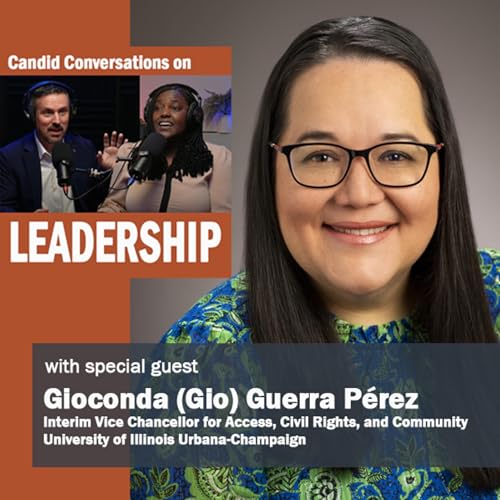
  • Episode 2.06: Leading with Courage and Cultural Humility with Dr. Gioconda (Gio) Guerra Pérez
    2026/05/06

    In this episode of Candid Conversations, Candice and Chris welcome Dr. Gioconda (Gio) Guerra Pérez, Interim Vice Chancellor for Access, Civil Rights, and Community at the University of Illinois Urbana-Champaign. Born and raised in Panama, Dr. Guerra brings a deeply personal perspective to leadership, shaped by her multicultural upbringing, early exposure to political unrest, and a family rooted in education and social justice. She reflects on how her journey as an international student and Fulbright scholar broadened her worldview and continues to influence her work today.


    Dr. Guerra dives into the formative role her mother—an educator and activist—played in shaping her passion for advocacy and equity. Growing up during Panama’s military dictatorship, she witnessed firsthand the power of collective action and the importance of standing up for civil rights. These early experiences continue to ground her leadership approach, especially as she navigates complex institutional challenges and works to support diverse student populations, including undocumented and mixed-status students.


    The conversation explores the realities of leadership in higher education, from managing slow-moving institutional change to responding rapidly under external pressures. Dr. Guerra shares candid insights into making difficult decisions, rebuilding trust, and balancing urgency with care. She emphasizes the importance of collaboration, transparency, and drawing on existing work to move initiatives forward—especially in times of crisis or policy change.


    The episode also highlights the human side of leadership. Dr. Guerra speaks openly about emotional resilience, the importance of community within teams, and modeling authenticity in high-pressure roles. She offers thoughtful reflections on what inclusion truly looks like in practice, acknowledging its complexity while encouraging leaders to strive toward spaces where all individuals can feel a sense of belonging. The episode closes on a lighter note, revealing her long-standing love for K-dramas and K-pop—reminding listeners that even the most dedicated leaders find joy and balance in unexpected ways.


    Candice and Chris are IT leaders at the University of Illinois at Urbana-Champaign and collectively have more than 50 years of experience working in higher education. Candice is currently the Senior Director of IT Partners at the College of Applied Health Sciences and Chris is the Chief Information Officer and Senior Director of IT Partners at the Gies College of Business.

    続きを読む 一部表示
    39 分
  • Episode 2.05: Being Intentional: Leadership Lessons from ITLW Graduates Jen Anderson and Lauren Gray
    2026/04/19

    In this episode of Candid Conversations, Chris and Candice sit down with Jen Anderson, Assistant Director of IT at the School of Information Sciences, and Lauren Gray, Data Analyst and Decision Support and Strategy Lead at Gies College of Business. Both guests are 2025 alumni from the University of Illinois IT Leadership Workshop, a three-month leadership development program for IT and IT-adjacent leaders on campus, and they reflect on how the experience changed the way they think about leadership, communication, and growth.

    Jen and Lauren discuss what motivated them to join ITLW, the leadership gaps they hoped to address, and the biggest challenges they faced during the workshop. Both point to the group project as a defining experience, especially the challenge of working with peers who all brought leadership strengths to the table. Their conversation highlights the realities of collaboration, navigating different voices, and learning how to lead when no one person is officially in charge.

    The episode also explores how both have applied what they learned in practical ways at work. Jen shares how she has become more intentional about communication, especially when working with remote employees and ensuring that important conversations do not stay trapped in hallway chats. Lauren talks about using feedback more deliberately, developing a client feedback survey, and continuing to seek input as she takes on new projects and responsibilities. Together, they reflect on the value of time management, self-awareness, delegation, and learning to lead with greater purpose.

    The conversation closes with broader reflections on leadership, including common mistakes emerging leaders make, the importance of understanding culture before making big changes, and the difference between leadership and title. Jen and Lauren also offer advice for early-career professionals: build strong habits, say yes to growth opportunities, and stay open to discomfort because that is often where confidence develops. It is an honest, thoughtful, and encouraging episode about becoming a leader intentionally and learning to grow one step at a time.

    Candice and Chris are IT leaders at the University of Illinois at Urbana-Champaign and collectively have more than 50 years of experience working in higher education. Candice is currently the Senior Director of IT Partners at the College of Applied Health Sciences and Chris is the Chief Information Officer and Senior Director of IT Partners at the Gies College of Business.


    続きを読む 一部表示
    45 分
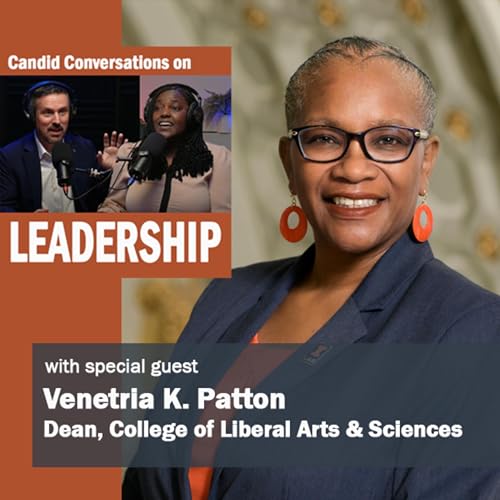
  • Episode 2.04: A Journey to Inclusive Leadership with Dean Venetria K. Patton
    2026/03/24

    In this episode of Candid Conversations, Chris and Candice welcome Venetria K. Patton, the Harry E. Preble Dean of the College of Liberal Arts and Sciences. Dean Patton reflects on the leadership journey that brought her from faculty roles in English and African American studies to major administrative positions at Purdue University and the University of Illinois. She opens up about the early experiences that shaped her understanding of leadership, including serving on a graduate advisory committee and learning the value of having a seat at the table where decisions are made.

    Patton also shares the influence of mentors and role models who modeled strong leadership through listening, thoughtfulness, and the ability to navigate conflict. Just as important, she explains how she learned from less effective leaders by observing what not to do. That perspective helped her develop a leadership philosophy centered on integrity, collaboration, and inclusive decision-making, with a focus on creating environments where people feel heard, valued, and empowered to contribute.

    The conversation turns to her academic work and the challenge of balancing scholarship with the demands of being dean of the largest college on campus. Patton discusses her research on Black women writers and the Harlem Renaissance, along with the ongoing projects she continues to pursue while managing a packed administrative schedule. She also speaks about the college’s future, including online degree completion, AI, academic freedom, personalized education, and the need to help LAS stand out as a place of broad expertise and impact across many disciplines.

    Later in the episode, Patton reflects on the habits that sustain her, from intentional work-life integration to protecting time for family, rest, and even a relaxing hair appointment. She also shares a surprising personal side: her background as a dancer, soccer player, coach, and referee, and how those experiences still shape her leadership today. The conversation closes with a thoughtful reminder that people should not postpone their lives in pursuit of work alone, and that balance, joy, and purpose matter now.

    Candice and Chris are IT leaders at the University of Illinois at Urbana-Champaign and collectively have more than 50 years of experience working in higher education. Candice is currently the Senior Director of IT Partners at the College of Applied Health Sciences and Chris is the Chief Information Officer and Senior Director of IT Partners at the Gies College of Business.

    続きを読む 一部表示
    29 分
  • Episode 2.03: Leading Through Our Fractures
    2026/02/22

    In this episode, Chris and Candice go one-on-one for a candid conversation sparked by Chris’s recent Substack post, “Leading Through Our Fractures.” They open by grounding the moment in Black History Month, with Candice noting its significance and encouraging listeners to keep learning because Black history is American history. From there, the episode settles into a reflective, personal discussion about leadership, identity, and the real stories that shape how we show up at work.


    Chris introduces the core idea behind “leading through our fractures”: the belief that leaders don’t become credible by appearing flawless—they become relatable by acknowledging what’s real. He connects this to the Japanese art of kintsugi, where broken pottery is repaired with gold, making the cracks part of the beauty rather than something to hide. Candice shares why this resonated so deeply: our flaws and missteps aren’t just baggage, they’re often the very things that make us uniquely grounded, empathetic, and effective—if we learn how to carry them with intention.


    Together, they explore the tricky middle ground between being an authentic, vulnerable leader and oversharing in a way that becomes unsteady or inappropriate. Candice talks about learning where that line is by watching examples of what not to do, and by paying attention to feedback when she shares something personal in a way that helps others grow. They dig into empathy too—how it’s less about claiming you “know exactly how someone feels” and more about listening, asking questions, and letting your own experiences with challenge make you more compassionate without turning it into a comparison game.


    The conversation gets personal as both reflect on how childhood experiences echo into adulthood leadership. Chris names the lingering impact of not being “picked” growing up, and how that quietly fueled a need for approval and expertise—until he learned to notice it and choose differently. He also brings in ideas from Positive Intelligence (and the notion of internal “saboteurs”), sharing how his own restlessness can push unnecessary change unless he checks his motives. They wrap on a lyrical note, referencing a line Candice highlighted—about broken pieces, scars, and harmony—underscoring the episode’s theme: when leaders embrace the cracks with honesty and boundaries, they don’t look weaker… they look more whole.


    To read the article that inspired this epiosde, please visit https://thinkfeellead.substack.com/p/leading-through-our-fractures

    続きを読む 一部表示
    32 分
  • Episode 2.02: Servant Leadership with James Quisenberry
    2025/11/09

    In this episode of Candid Conversations on Leadership, Chris and Candice welcome guest James Quisenberry, who leads IT for Student Affairs at the University of Illinois Urbana-Champaign and co-founded the campus IT Leadership Workshop. Together they unpack servant leadership—rooted in Robert Greenleaf’s 1970 essay “The Servant as Leader”—as a philosophy where a leader’s primary goal is to serve the people and the organization. Candice walks through hallmark traits like empathy, deep listening, community-building, self- and organizational awareness, stewardship, commitment to growth, and humility—framing how these build trust, morale, innovation, retention, and ethical cultures.


    The trio contrasts servant leadership with more traditional, hierarchical models, noting how generational shifts changed how people want to be led. They surface a core tension leaders must navigate: balancing autonomy and agency with organizational clarity and speed. Chris shares how his team uses “disagree and commit” to invite inclusive debate before moving decisively—and how accountability is not at odds with compassion. James pushes back on the misconception that servant leadership is “soft,” arguing it often means serving people best by holding them to clear standards, and by prioritizing the whole organization over a one-to-one dynamic.


    Personal origin stories come through: Candice’s grounding in Alpha Phi Omega’s service ethos; James’ upbringing with educator parents and long-time involvement in Rotary and Scouting; and Chris recognizing service in his own leadership through feedback from his team. They explore how to cultivate the “heart” of a servant leader—through active listening reps, identity-based habits, and service outside of work. Mentorship and coaching emerge as essential—trusted partners who “won’t let you believe your own BS” and help you check ego, motivation, and perception.


    Finally, they get candid about the hard parts: resisting the urge to rush to solutions, getting out of your own head, and truly listening (especially when you love to talk). They offer practical moves: ask “What serves the organization?” on big calls; celebrate team contributions so success is shared; treat ego as a potential tailwind—not a headwind; and use accountability to remove barriers to others’ growth. Chris closes with a story where stepping back let the team find a better answer—proof that servant leadership can drive both stronger culture and stronger results.

    続きを読む 一部表示
    32 分