エピソード

  • #26 David Stålmarck - Co-Founder & CTO of Atech on Building the “Lovable for Hardware”
    2026/05/15

    Why is hardware still dramatically harder to build than software?

    This week we sat down with David Stålmarck, Co-Founder & CTO of Atech, one of the most exciting early-stage hardware startups coming out of Scandinavia right now.

    Backed by Lovable, Nordic Makers, Emblem, and scout-linked capital connected to Sequoia and Andreessen Horowitz, Atech is tackling a problem that has existed for decades: while software has gone through massive abstraction waves, hardware development is still constrained by complexity, tooling, and long iteration cycles.

    In this conversation, we explore whether hardware could go through a similar transformation to software, and what happens if building physical products suddenly becomes dramatically more accessible.

    We talk about:

    • Why hardware never experienced the same abstraction wave as software
    • The biggest bottlenecks in modern hardware development
    • Why "Hackathon Maxxing" and Building in Public is Key
    • Building a software-like UX for physical products
    • The role of AI in hardware development
    • Physical AI, robotics, and the next computing wave
    • Working with Lovable and lessons from modern developer tools
    • The realities of building a deep-tech startup in Europe

    Many thanks to David for the highly technical and thoughtful conversation.

    Now available on all major platforms.

    続きを読む 一部表示
    34 分
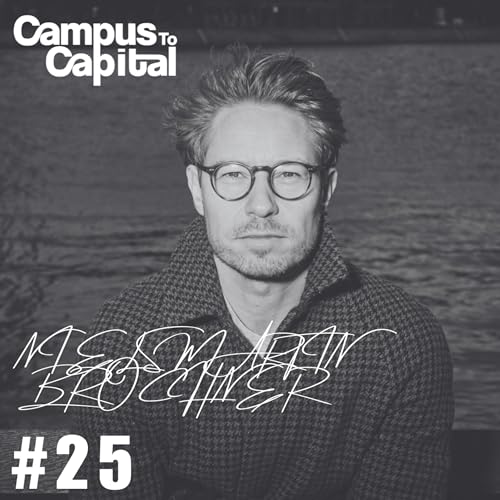
  • #25 Niels Martin Brøchner - Founder of Paradox on Organizational Intelligence, Context Fragmentation & the Future of Enterprise Software
    2026/05/07

    Why are organizations still structured around management principles that are thousands of years old?

    This week we sat down with Niels Martin Brøchner, Founder of Paradox, a Danish startup building what might become one of the most ambitious infrastructure layers in enterprise software.

    Backed by SpeedInvest and already working with leading Danish companies, Paradox is tackling a problem most organizations feel every day but rarely describe clearly: context fragmentation -> the idea that meaning, priorities, and understanding drift as information moves through layers of an organization.

    Instead of building another productivity tool, Paradox is trying to fundamentally rethink how companies align, communicate, and make decisions.

    In this conversation, we explore what happens when organizations move beyond static workflows and toward continuously connected organizational intelligence.

    We talk about:

    • Why most companies still operate on outdated organizational structures

    • The hidden cost of context fragmentation inside large organizations

    • What Paradox and Apppa actually do in practice

    • The idea behind the “Organizational World Model”

    • Why enterprise alignment is becoming one of the biggest software opportunities

    • The overlap between AI, knowledge systems, and leadership

    • Trust, security, and handling highly sensitive organizational data

    • How AI could fundamentally reshape leadership and decision-making

    • Building deep-tech enterprise software in Europe

    • Advice for students and young founders entering tech

    Many thanks to Niels for the thoughtful and highly ambitious conversation.

    Now available on all major platforms.

    続きを読む 一部表示
    57 分
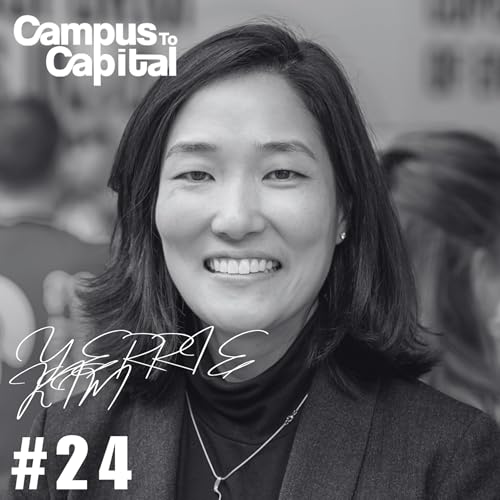
  • #24 Yerrie Kim - Executive Director of CSE on Research, Entrepreneurship and Long-Term Impact
    2026/04/24

    What happens when universities move beyond teaching entrepreneurship and start shaping it?


    This week we sat down with Yerrie Kim, who holds degrees from Harvard and MIT and has worked across finance, consulting, and venture building, before recently taking on the role of Executive Director at the Copenhagen School of Entrepreneurship.


    At CSE, the ambition is not to replicate a VC fund or accelerator. Instead, it operates at the intersection of research, education and entrepreneurship; supporting founders while staying grounded in academic thinking and long-term impact.


    In this conversation, we explore what that actually looks like in practice, and where universities can play a more meaningful role in building companies and ecosystems.


    We talk about:


    What differentiates university entrepreneurship from VC and accelerators

    The role of research in shaping entrepreneurial thinking

    Why US universities continue to outperform in producing top innovators

    Whether business schools risk losing relevance in the age of AI and deep tech

    How to prepare founders for increasingly competitive venture environments

    Europe’s ambition to strengthen its innovation ecosystem

    Making entrepreneurship accessible beyond the “already entrepreneurial”

    Many thanks to Yerrie for the thoughtful and forward-looking conversation.


    🎧 Now available on all major platforms.

    続きを読む 一部表示
    57 分
  • #23 Dr. Hendrik Brandis - Co-Founder & General Partner at Earlybird VC on Deep Tech, AI in Venture Capital & Europe’s Innovation Gap
    2026/03/18

    What does it take to back the most ambitious technology companies before the breakthrough?

    This week we sat down with Hendrik Brandis, Co-Founder and General Partner at Earlybird VC and one of Europe’s most experienced venture capitalists. After starting his career as an aerospace engineer and later moving through consulting, Hendrik co-founded Earlybird nearly three decades ago and has since helped finance some of Europe’s most important technology companies.

    In this conversation we explore how venture capital actually works behind the scenes - from sourcing founders long before they become visible to the market, to evaluating deep tech opportunities where the biggest uncertainty is technical feasibility rather than market demand.

    We talked about:

    • The role of AI and data in sourcing, screening and investment decisions

    • Why deep tech investing requires a fundamentally different due diligence mindset

    • Europe’s persistent gap between world-class research and global category leaders

    • Whether Europe is building the capital stack needed to compete with the US

    • The reopening of IPO markets and what it means for venture exits

    • Career advice for students interested in technology and venture capital

    Many thanks to Hendrik for the thoughtful and wide-ranging conversation.

    🎧 Now available on all major platforms!

    続きを読む 一部表示
    51 分
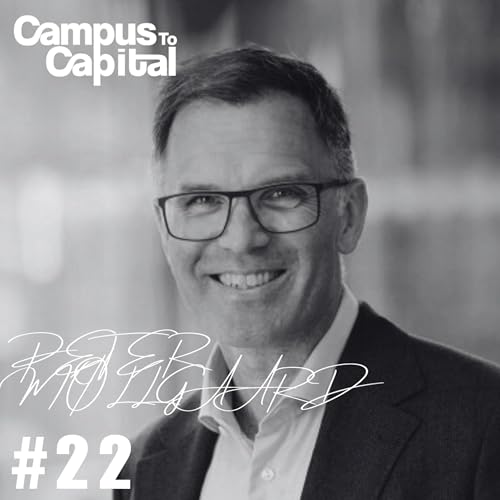
  • #22 Peter Møllgaard - President of Copenhagen Business School on AI, Geopolitics & the Future of Business Education
    2026/03/04

    How should a European business school position itself in a world shaped by AI and geopolitical fragmentation?

    This week we sat down with Peter Møllgaard, President (Rektor) at Copenhagen Business School.

    From his early career in economic research and public policy to leading one of Europe’s most international business schools, Peter reflects on how universities are evolving in an era of technological acceleration and political uncertainty. We explore whether business schools risk becoming irrelevant in an AI-driven economy, how small open economies like Denmark navigate global power shifts, and what universities must do to remain both competitive and responsible.

    We talk about:

    • The changing role of university leadership in a politicized and technologized world
    • Economic power, tariffs, and fragmentation beyond the headlines
    • CBS’s positioning as a European alternative to US-style MBA models
    • The growing dominance of AI and STEM and what that means for business education
    • Redesigning education in the age of generative AI
    • Supporting international students in an increasingly complex global job market
    • The responsibility of universities in climate and long-term policy debates

    Many thanks to Peter for the thoughtful and forward-looking conversation.

    🎧 Now available on all major platforms
    PS: Here is Peter’s Podcast Recommendation: https://www.economist.com/audio/podcasts/boss-class

    続きを読む 一部表示
    56 分
  • #21 Michael Wiatr Aagaard - General Partner at Antler on Building Startups Before They Exis
    2026/02/11

    How do you invest in founders before there’s a company, a product - or even an idea?


    In this episode of Campus To Capital, we sit down with Michael Wiatr Aagaard, General Partner at @ Antler, one of the world’s most active early-stage investors with more than 1,300 portfolio companies across 27 global locations.

    Michael shares his journey from real estate finance and consulting into entrepreneurship - and eventually into backing founders at the very beginning of their journey. We explore how Antler identifies outliers before the market does, how risk is managed on the left side of the J-curve, and why the Nordics are becoming a critical hub for Europe’s next generation of founders.

    We talk about:

    • From operator to investor: how founder experience shapes investment judgment
    • Identifying high-potential founders at the idea stage
    • Antler’s €4.5m commitment to Danish startups and the role of Copenhagen in Europe
    • Investing at scale without sacrificing quality
    • AI as both a startup enabler and an investor tool
    • Climate tech, AI, and building companies with real-world impact
    • Why founders are getting younger — and how Antler helps them scale faster
    • Exit thinking in an era of longer private market cycles
    • Differences (and similarities) between Danish and Swedish startup ecosystems
    • Leveraging Antler’s global network to accelerate growth

    Many thanks to Michael for joining the conversation.

    🎧 Now available on all major platforms.

    続きを読む 一部表示
    48 分
  • #20 Deniz Schütz - CEO & Co-Founder of StrategyBridgeAI on AI in M&A & Private Markets
    2025/12/24

    How do you turn millions of financial data points into faster, more objective investment decisions?

    In this episode of Campus To Capital, we sit down with Deniz Schütz, CEO & Co-Founder of StrategyBridgeAI, a fintech startup automating data-driven business analysis for private equity funds, M&A advisors, and consultants. Before founding StrategyBridgeAI, Deniz worked at institutions like UniCredit and Amundi - exactly the environments where he experienced first-hand how slow, manual, and subjective financial analysis can become at scale.

    In our conversation, we explore how StrategyBridgeAI uses AI to benchmark companies against peers, validate management forecasts, and support buy-side decisions across M&A and private credit, all while operating in an increasingly regulated environment.

    We talk about:

    • Deniz’s journey from large financial institutions to founding an AI-native fintech startup

    • How StrategyBridgeAI processes millions of financial data points into objective analytical reports

    • Real-world use cases in M&A and private credit, including identifying undervalued mid-market opportunities

    • How AI is reshaping workflows in M&A — between efficiency gains and headcount implications

    • The rebound in global M&A activity and the rise of private credit as a key growth engine

    • What the EU AI Act means for financial AI tools, especially in deal screening and credit assessment

    • Scaling StrategyBridgeAI after an oversubscribed seven-figure pre-seed round

    • Building a high-performance team in Munich as an emerging European finance hub

    • Key AI trends young professionals in finance should be paying attention to

    A deep dive into the intersection of AI, M&A, private markets, and regulation.

    Many thanks to Deniz for joining the conversation.

    Now available on all major platforms.

    続きを読む 一部表示
    47 分
  • #19 Robert Habeck - Former German Vice Chancellor on Europe’s Future, AI, Energy Demand, War & Leadership
    2025/12/03

    The past years reshaped Europe more than any decade since the end of the Cold War: war returned, energy systems fractured, AI accelerated, and political extremes gained ground. We spoke with someone who stood at the center of these shifts: Robert Habeck, former German Vice Chancellor and Minister for Economic Affairs and Climate Action.

    Recorded just months after leaving office, this conversation goes far beyond headlines.

    We discuss Europe’s execution gap and regulatory identity, the tensions between short-term energy decisions and long-term climate goals, and whether real strategic autonomy in energy and technology is achievable. We explore Draghi’s competitiveness agenda, Europe’s response to the IRA and China, and what it would take to prevent a deep-tech exodus.

    We also talk about the war in Ukraine and how it reshaped long-held Green ideas on pacifism; Europe’s role in a fragmenting global order; the rising electricity needs of AI and data centres; and the question of whether next-generation nuclear must return to Europe’s strategic debate.

    Finally, Robert reflects on leadership under pressure, stepping out of the “corset” of Berlin politics, his message to Gen Z, and whether he could imagine returning to political office.

    An unusually open conversation about power, responsibility, uncertainty & the future of Europe.

    Now available on all major platforms.

    続きを読む 一部表示
    1 時間 18 分