『Campus To Capital』のカバーアート

Campus To Capital

Campus To Capital

著者: Julius Ambrosius and Konstantin Girst
無料で聴く

In a world where AI can give you any answer, knowing which questions to ask becomes your most valuable skill. That's what Campus To Capital is all about. Currently ranked in Careers and Business podcast charts in Denmark, Germany and the UK.Julius Ambrosius and Konstantin Girst 出世 就職活動 経済学
エピソード
  • #26 David Stålmarck - Co-Founder & CTO of Atech on Building the “Lovable for Hardware”
    2026/05/15

    Why is hardware still dramatically harder to build than software?

    This week we sat down with David Stålmarck, Co-Founder & CTO of Atech, one of the most exciting early-stage hardware startups coming out of Scandinavia right now.

    Backed by Lovable, Nordic Makers, Emblem, and scout-linked capital connected to Sequoia and Andreessen Horowitz, Atech is tackling a problem that has existed for decades: while software has gone through massive abstraction waves, hardware development is still constrained by complexity, tooling, and long iteration cycles.

    In this conversation, we explore whether hardware could go through a similar transformation to software, and what happens if building physical products suddenly becomes dramatically more accessible.

    We talk about:

    • Why hardware never experienced the same abstraction wave as software
    • The biggest bottlenecks in modern hardware development
    • Why "Hackathon Maxxing" and Building in Public is Key
    • Building a software-like UX for physical products
    • The role of AI in hardware development
    • Physical AI, robotics, and the next computing wave
    • Working with Lovable and lessons from modern developer tools
    • The realities of building a deep-tech startup in Europe

    Many thanks to David for the highly technical and thoughtful conversation.

    Now available on all major platforms.

    続きを読む 一部表示
    34 分
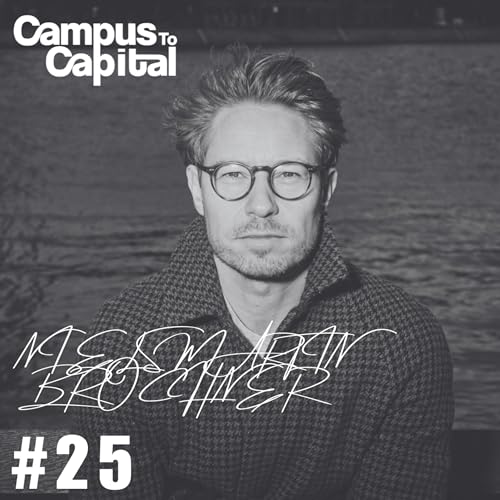
  • #25 Niels Martin Brøchner - Founder of Paradox on Organizational Intelligence, Context Fragmentation & the Future of Enterprise Software
    2026/05/07

    Why are organizations still structured around management principles that are thousands of years old?

    This week we sat down with Niels Martin Brøchner, Founder of Paradox, a Danish startup building what might become one of the most ambitious infrastructure layers in enterprise software.

    Backed by SpeedInvest and already working with leading Danish companies, Paradox is tackling a problem most organizations feel every day but rarely describe clearly: context fragmentation -> the idea that meaning, priorities, and understanding drift as information moves through layers of an organization.

    Instead of building another productivity tool, Paradox is trying to fundamentally rethink how companies align, communicate, and make decisions.

    In this conversation, we explore what happens when organizations move beyond static workflows and toward continuously connected organizational intelligence.

    We talk about:

    • Why most companies still operate on outdated organizational structures

    • The hidden cost of context fragmentation inside large organizations

    • What Paradox and Apppa actually do in practice

    • The idea behind the “Organizational World Model”

    • Why enterprise alignment is becoming one of the biggest software opportunities

    • The overlap between AI, knowledge systems, and leadership

    • Trust, security, and handling highly sensitive organizational data

    • How AI could fundamentally reshape leadership and decision-making

    • Building deep-tech enterprise software in Europe

    • Advice for students and young founders entering tech

    Many thanks to Niels for the thoughtful and highly ambitious conversation.

    Now available on all major platforms.

    続きを読む 一部表示
    57 分
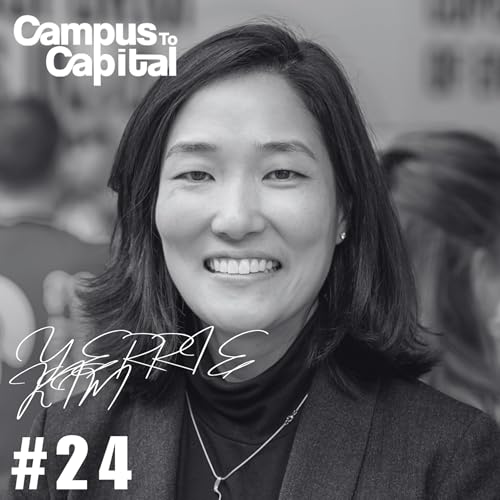
  • #24 Yerrie Kim - Executive Director of CSE on Research, Entrepreneurship and Long-Term Impact
    2026/04/24

    What happens when universities move beyond teaching entrepreneurship and start shaping it?


    This week we sat down with Yerrie Kim, who holds degrees from Harvard and MIT and has worked across finance, consulting, and venture building, before recently taking on the role of Executive Director at the Copenhagen School of Entrepreneurship.


    At CSE, the ambition is not to replicate a VC fund or accelerator. Instead, it operates at the intersection of research, education and entrepreneurship; supporting founders while staying grounded in academic thinking and long-term impact.


    In this conversation, we explore what that actually looks like in practice, and where universities can play a more meaningful role in building companies and ecosystems.


    We talk about:


    What differentiates university entrepreneurship from VC and accelerators

    The role of research in shaping entrepreneurial thinking

    Why US universities continue to outperform in producing top innovators

    Whether business schools risk losing relevance in the age of AI and deep tech

    How to prepare founders for increasingly competitive venture environments

    Europe’s ambition to strengthen its innovation ecosystem

    Making entrepreneurship accessible beyond the “already entrepreneurial”

    Many thanks to Yerrie for the thoughtful and forward-looking conversation.


    🎧 Now available on all major platforms.

    続きを読む 一部表示
    57 分
adbl_web_anon_alc_button_suppression_c
まだレビューはありません