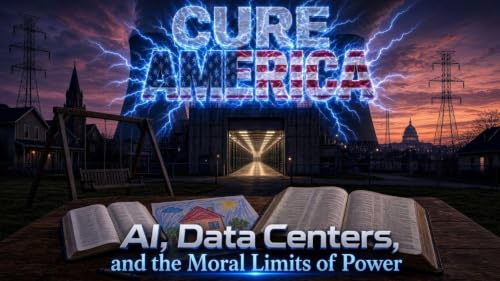
『CURE America with Star Parker』のカバーアート

CURE America with Star Parker

CURE America with Star Parker

著者: The Center for Urban Renewal and Education
無料で聴く

More than fifty years after the Civil Rights movement and nearly 160 years after the Civil War, racial tension in the country is at an all-time high. Riots, police reform and racial equity are all topics of national debate. Syndicated columnist and author of four books analyzing government impact on poverty in our urban communities, Star Parker, delves deep into national issues that impact America's most distressed communities and the power and political will needed to fix them. This is a podcast of the Center for Urban Renewal and Education, a non-profit think tank fighting poverty and restoring dignity through scholarship supporting faith, freedom, and personal responsibility. 政治・政府 政治学 社会科学
エピソード
  • The Church at the Clinic Door
    2026/10/10
    Jonathan Alexandre of Liberty Counsel opens "CURE America" with the ancient claim of Jeremiah 1:5: that the child was known before the body was formed. He is joined by Jordan Jackson, city director of Love Life DC, and by Torrey Snow, CURE's National Clergy Director. Jackson describes standing outside the Planned Parenthood clinic at Fourth and Florida and insists the building is only the smallest part of the contest. The decisive ground, he argues, is not the White House but the church house. He returns again and again to the forgotten fathers: when a frightened woman first turns to the man in her life and receives provision rather than the slogan "your body, your choice," more than ninety percent of those pregnancies continue. House of Refuge congregations publish a public pledge of help without shame. A Canadian pastor read the pledge once; two women came forward the same morning—one who had carried silence for forty years, another for fifteen. In Plantation, Florida, a local chapter prayed a clinic closed and later purchased the building. Women still arrive seeking abortions. The door is not locked behind them. Jackson speaks of his own wife and children, though they remain off camera. Snow traces the same conviction through the late Bishop Dean Nelson and the Douglass Leadership Institute: a Jeremiah 1:5 Sunday directed at Black pulpits, a denominational statement that became practical, an amicus brief on the road to the Court, and Nelson standing in the street at the height of Black Lives Matter naming the clinics that sat inside the zip codes the slogans claimed to defend. Together the three men name four tasks for the church—compassion, mercy, justice, and fellowship—and place the numbers that give justice its weight: a people who are twelve to thirteen percent of the nation account for roughly forty percent of abortions; in New York City the odds that a Black child who is conceived will be born are roughly even. Marty Dannenfelser, CURE's vice president for government relations and coalitions, then takes Jackson's place. The conversation moves from the clinic door to the kitchen table: inflation, credit, rent, and the politicians who treat price ceilings as compassion. Competition, they argue, is what lowers prices; artificial ceilings on credit, wages, and rent shrink supply and leave households with higher paychecks that buy less. Ownership is set against the rent cycle. Star Parker's column on policies that would make borrowing more expensive is placed under the discussion. They close by surveying the midterm landscape—the SAVE Act, "Dobbs", the filibuster, court-packing, D.C. and Puerto Rico statehood, and the Women's Health Protection Act—and by recalling a warning as old as the commandments: beware the candidate who offers something for nothing. The church can walk with the woman and the family. Government can step aside. It cannot do the walking.
    続きを読む 一部表示
    59 分
  • AI, Data Centers, and the Moral Limits of Powerc
    2026/09/27

    The cloud is not in the sky. It is poured concrete, cooling towers, and a draw on the grid that a neighborhood can feel when the bill arrives.

    Tonight, Jonathan Alexandre, Vice President of Governmental Affairs and Senior Counsel at Liberty Counsel, sits in the nation's capital with Marty Dannenfelser, Vice President for Government Relations and Coalitions at the Center for Urban Renewal and Education. Dannenfelser has spent four decades on Capitol Hill and inside the Department of Energy. The hour is about artificial intelligence—and the buildings that make it run.

    Every search, map, family photo, hospital chart, and Pentagon order now moves through rooms most viewers will never see. Those rooms need electricity first and water second. Communities hear the rumble of construction and ask a kitchen-table question: who pays when the plant is larger than the town? Alexandre and Dannenfelser take that question seriously. They look at a presidential pledge that the companies, not the household, will carry the cost, and at a rare House vote sending the same instruction to state utility commissions. They do not treat Washington as the last word. The people who have to live beside the fence still have to decide whether the jobs, the revenue, and the promised upgrades are worth the strain on the wires.

    The technology itself is the other half of the story. The same executives who built it now warn that it can identify a vulnerability and hand that map to a hostile state. Credit files. Faces stolen and used. Networks opened from the inside. Biochemical misuse in the wrong hands. China, they argue, will not observe an American caution flag. When the largest firms invite Congress to regulate them, Star Parker's column sits in the conversation as a warning of its own: is the aim safety, or a barrier a startup cannot climb? Slow the field so the wreck can be cleared—or watch another circuit ignore the rules and take the lead.

    Scripture is not an afterthought. Genesis 11 is the picture of a tower raised so that man might become like God, followed by confusion of speech and dispersion. Alexandre and Dannenfelser ask what happens when the end of the project is no longer healing or abundance, but the hope that machines can replace the limits God placed on the creature. Technology is not neutral in its use. It can search for a cure. It can also erase the face of a neighbor or put a weapon in the hands of someone who does not share this country's moral restraints.

    The Senate is still in session after the House has gone home. On the table is the SAVE America Act: citizenship to register, a photograph to prove it, a 53–47 vote merely to proceed, and a filibuster that would require seven Democrats to yield. Alexandre reminds the viewer that the ballot was once a demand of the civil rights movement. It is not a privilege to be diluted by those who never took the oath.

    The choice left standing is not theoretical. Affordable power. Local consent. Guardrails that do not freeze invention. A moral limit that machines cannot write for themselves. Pastors, parents, and citizens will have to decide which of those they intend to keep. That is tonight on CURE America.

    続きを読む 一部表示
    4 分
  • Before I Formed Thee
    2026/09/14

    Jonathan Alexandre of Liberty Counsel opens "CURE America" on Jeremiah 1:5: before God formed the child, He knew him. He is joined by special guest Jordan Jackson, city director of Love Life DC, and by Torrey Snow, CURE's National Clergy Director.

    Jackson walks Planned Parenthood on Fourth and Florida and calls that the small piece. Abortion, he says, is a spiritual fight the church house must win, not the White House. He names the forgotten fathers: when a frightened woman goes first to the man and he answers with provision instead of "your body, your choice," more than ninety percent choose life. House of Refuge churches publish a promise of help without shame. A Canadian pastor read that statement once; two women came forward the same day, silent forty years and fifteen. In Plantation, Florida, a chapter prayed a clinic shut and bought the building. Women still walk in looking for an abortion. The door does not lock behind them. Jackson mentions his wife and children. They are not on camera.

    Snow traces the longer line through the late Bishop Dean Nelson and the Douglass Leadership Institute: a Jeremiah 1:5 Sunday for Black pulpits, a denominational statement that got practical, an amicus brief on the road to the Court, and Nelson in the street at the height of Black Lives Matter naming clinics in the zip codes the slogans claimed. Together the three men give the church four tasks—compassion, mercy, justice, fellowship—and the numbers underneath justice: a community that is twelve to thirteen percent of the country bearing about forty percent of the abortions; in New York City, a coin flip whether a Black child conceived is born.

    Marty Dannenfelser, CURE's vice president for government relations and coalitions, then takes Jackson's place. The subject is the kitchen table: inflation, credit, rent, and politicians who treat price caps as compassion. Competition lowers prices, they argue; ceilings on credit, wages, and rent shrink supply and turn a higher stub into money that buys less. Ownership is set against the rent cycle. Star Parker's column on who would make borrowing more expensive sits under the table. They close on the midterm—the SAVE Act, "Dobbs", the filibuster, court-packing, D.C. and Puerto Rico statehood, and the Women's Health Protection Act—and on a warning as old as the commandments: beware the candidate who offers something for nothing. The church can walk with the woman and the family. The government can get out of the way. It cannot do the walking.

    続きを読む 一部表示
    58 分
adbl_web_anon_alc_button_suppression_t1
まだレビューはありません