エピソード

  • The 18-to-36 Month Exit Runway: Fixing Key-Person Dependency Before M&A.
    2026/07/21
    Most founders think their business determines its valuation. The 1 hidden valuation driver costing founders millions is often the founder themselves. By the time a buyer expresses interest, much of your valuation has already been established. Systems, leadership, and operational independence aren't built during due diligence—they're revealed by it. Waiting until an offer arrives often means negotiating from a position that took years to create, but only weeks to evaluate. The bigger risk isn't always EBITDA or revenue growth. Buyers are also assessing whether the business can thrive without the founder, whether transition expectations are aligned, and whether hidden dependencies will create pressure on valuation after the deal begins. Those conversations can quietly reshape enterprise value long before the purchase agreement is signed. Cece Lung from Rich & Sassy Wealth Strategies shares why founders often become the biggest hidden valuation driver in their own business—and why waiting until buyer interest appears can quietly cost millions before negotiations even begin. Learn more about your ad choices. Visit megaphone.fm/adchoices
    続きを読む 一部表示
    36 分
  • 70% of Your Team Is Probably Underperforming Today
    2026/07/14
    70% of your team may not be underperforming. They may be underutilized. The cost isn't payroll. It's the EBITDA you're already leaving behind. Most CEOs assume AI becomes valuable when it replaces people. That assumption quietly pushes attention toward cost cutting while a much larger financial opportunity goes unnoticed. Every week spent treating experienced employees like expensive administrators instead of economic assets compounds into slower execution, lower operating leverage, and pressure on future valuation. The real exposure isn't whether AI arrives. It's whether your competitors redeploy thousands of productive hours before you do—and widen a gap that's difficult to close once it becomes embedded in the business. Dejan Nenov, Founder and Chairman of Panaton, shares lessons from more than three decades building technology companies across software and healthcare, explaining why the companies creating the most value from AI may look remarkably similar on the org chart—but dramatically different on the income statement. Learn more about your ad choices. Visit megaphone.fm/adchoices
    続きを読む 一部表示
    40 分
  • The 1 Comp Plan Mistake Delaying Profitable Growth
    2026/07/07
    Your sales team may be creating revenue patterns your business cannot afford. The wrong compensation structure can turn growth into a profitability problem. Revenue does not always equal value. The quality of the revenue, the timing of deals, and the behaviors rewarded inside the sales organization determine whether growth strengthens or weakens the business. A compensation plan is a signal to your sales team about what matters most. When incentives and company economics are disconnected, CEOs can see unexpected deal timing, lower-value revenue priorities, and pressure on profitability. The challenge is that these issues often remain hidden until leadership examines margins, cash flow, or the long-term value of the company. Mike Brunnick from Valor Advisors shares the hard-earned lessons behind aligning sales incentives with profitable growth, including why compensation plans influence behavior long before CEOs see the financial impact. Learn more about your ad choices. Visit megaphone.fm/adchoices
    続きを読む 一部表示
    26 分
  • Impatience Kills 80% of Go-To-Market Strategies
    2026/06/30
    Your revenue problem may not be your sales team. It may be the go-to-market strategy behind them. The fastest-growing companies can still lose months of revenue when urgency replaces buyer clarity. Many CEOs push harder when growth stalls: more activity, more pipeline, more hiring, more pressure. But when the market message, buyer definition, and revenue process are not aligned, additional effort can amplify the wrong direction. The cost is not just missed deals. It shows up in wasted sales capacity, longer cycles, unpredictable forecasting, weaker EBITDA performance, and valuation pressure when future growth is questioned. Revenue engines become difficult to diagnose when leadership cannot see where demand breaks down or why opportunities stop moving.\ Mike Brunnick, CEO of VALR Advisors, shares the hard-earned perspective gained from years leading revenue growth and helping companies understand where go-to-market strategies lose momentum—and why impatience can become one of the most expensive decisions a CEO makes. Learn more about your ad choices. Visit megaphone.fm/adchoices
    続きを読む 一部表示
    24 分
  • 1 Compensation Plan Mistake That Kills EBITDA Growth
    2026/06/16
    Most CEOs think compensation drives performance. What if it's quietly destroying EBITDA instead? Revenue growth can hide a lot of mistakes. Weak customer segmentation. Transactional selling. Pricing based on competition instead of value. Compensation plans that reward activity while leaking profit. The problem isn't usually effort. The problem is incentive alignment. When sales teams are compensated against the wrong metrics, companies often create more revenue while leaving cash flow, margins, and valuation behind. The damage compounds because growth makes the problem harder to see. The real exposure isn't whether a compensation plan is perfect. It's whether the plan creates behaviors that increase value—or embed costs that surface later when EBITDA, cash flow, or valuation come under scrutiny. Eric Wiklendt from Speyside Equity spends his time evaluating and improving manufacturing and distribution businesses between $50M and $500M in revenue. His perspective comes from seeing how operations, pricing, customer economics, and compensation influence enterprise value long before most CEOs recognize the connection. Learn more about your ad choices. Visit megaphone.fm/adchoices
    続きを読む 一部表示
    47 分
  • The $30,000 Difference Was Only The Story
    2026/06/09
    Most CEOs think buyers choose on logic. The companies winning premium pricing know that's rarely true. Every sales process has a hidden narrative. Every proposal, case study, customer interaction, and buying decision is shaped by a story buyers are already telling themselves. The problem is most companies leave that narrative unmanaged and then wonder why deals stall, margins compress, and prospects compare them on price. A buyer doesn't need more information. They need enough confidence to make a decision. The companies that create trust, reduce uncertainty, and shape perceived value often outperform competitors offering nearly identical products, services, or outcomes. That gap shows up in close rates, pricing power, customer retention, referrals, and ultimately company valuation. The surprising part is that many CEOs already own the asset creating those outcomes—they just aren't using it deliberately. Robert Kennedy III shares why storytelling isn't a marketing exercise. It's a business mechanism that influences trust, buying behavior, premium pricing, and how customers perceive value long before they make a purchasing decision. Learn more about your ad choices. Visit megaphone.fm/adchoices
    続きを読む 一部表示
    40 分
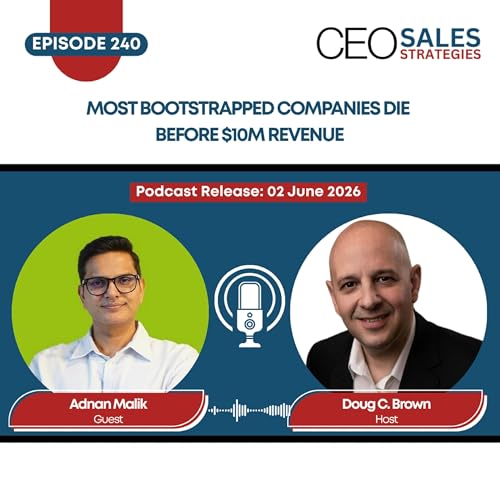
  • Most Bootstrapped Companies Die Before $10M Revenue
    2026/06/02
    Most bootstrapped companies don’t fail because the idea was bad. They fail because cash leaves faster than validated demand comes in. Founders build too much before customers commit. They hire before process exists. They scale departments before operational discipline is strong enough to survive growth. What looks like momentum early quietly becomes reporting chaos, rising acquisition costs, weak retention, and eventually margin pressure. This conversation breaks down what sustained 100% year-over-year growth actually demanded inside a bootstrapped company: customer-first validation, ruthless spending discipline, operational process, and knowing exactly when systems start breaking under scale. Adnan Malik from Software Finder shares the operating decisions behind six consecutive years of 100%+ growth without outside funding — and why most founders wait too long to build the structure growth actually requires. Learn more about your ad choices. Visit megaphone.fm/adchoices
    続きを読む 一部表示
    51 分
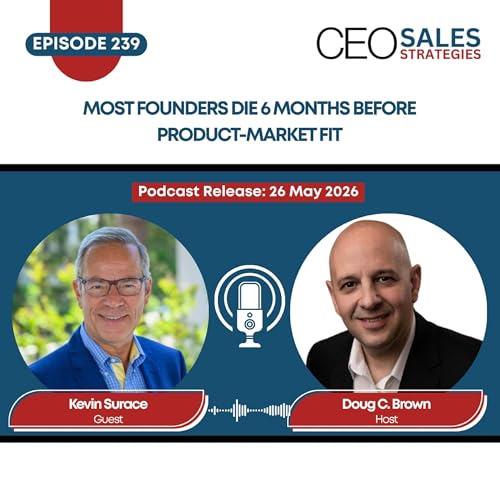
  • Most Founders Die 6 Months Before Product-Market Fit
    2026/05/26
    Most founders do not fail because they lack intelligence, ambition, or effort. They fail because cash disappears before the market is ready. The dangerous part is that most companies cannot see the timing problem while it is happening. Leadership keeps hiring, scaling, building, and pushing harder while customer behavior, market readiness, or adoption psychology still lag behind the vision. By the time reality becomes financially visible, the runway is already shrinking. At the same time, AI is accelerating operational disruption underneath nearly every industry. Work that once justified departments, research cycles, and executive structures is collapsing into tools that now execute in minutes. That is forcing founders to rethink not only labor and execution, but where human value actually exists inside the business. This conversation explores why product-market timing matters more than intelligence, how founder identity quietly becomes operational risk, why convenience destroys incumbents faster than expected, and how companies unknowingly defend processes the market no longer rewards. Kevin Surace shares what he learned building breakthrough technologies before markets were ready — and why many leadership teams still misunderstand the economic shift already happening underneath their companies. Learn more about your ad choices. Visit megaphone.fm/adchoices
    続きを読む 一部表示
    1 時間 5 分