エピソード

  • Coaching for Every Learner: Joy De Los Santos
    2025/12/04

    In this episode of C3, hosts Courtney Groskin and Sandy Heiser welcome Joy De Los Santos, a special education coach with over 20 years of experience who now co-leads an instructional coaching team supporting nine districts.

    Joy discusses her journey into coaching, practical strategies for overwhelmed teachers—including prioritizing high-impact supports and using visuals like visual schedules—and the importance of using data to guide decisions and build common ground among teams.

    The conversation highlights what true inclusion looks like (access, engagement, and respectful peer interaction), leadership coaching to build capacity, and real coaching wins that helped teachers feel empowered and improved student outcomes.

    In this episode:

    • Courtney and Sandy share highlights from facilitating Day 5 of the Cognitive Coaching Foundation Seminar, celebrating the energy and dedication of their 35-person cohort.
    • They discuss the transformative power of coaching conversations, including a moment where a 20-minute planning conversation left a participant feeling empowered and energized.

    Featured Guest: Joy de los Santos Joy brings over 20 years of experience in special education, working with students from early childhood through high school. She now co-leads an instructional coaching team across nine districts, supporting educators in building inclusive and supportive classrooms for students with disabilities.

    Key Takeaways from Joy:

    • Her journey into special education coaching grew from supporting teachers and students while reducing high turnover rates and increasing inclusive practices.
    • When teachers feel overwhelmed by IEP requirements or diverse learner needs, Joy recommends strategies that support multiple students across contexts to maximize impact with sustainable effort.
    • Collaboration and alignment are essential: she emphasizes using data as a neutral tool to guide team decisions and resolve differing perspectives.
    • For Joy, a truly inclusive classroom means all students have access, engagement, and respect for differences, not just physical placement in the classroom.
    • Memorable coaching impact: supporting a veteran special education teacher to feel confident and effective with a challenging student population—demonstrating the power of coaching for teachers at any career stage.

    Rapid-Fire Tips from Joy:

    • One strategy every coach should have: Visual supports, especially visual schedules, to support student independence and classroom management.

    Advice for new teachers: Feeling unsure is normal. Asking for help is a sign of strength, and no one has all the answers—especially early in your career.

    続きを読む 一部表示
    21 分
  • Crafting Powerful Coaching Questions with Connie Hamilton
    2025/11/06

    In this episode Courtney and Sandy welcome Connie Hamilton, author and consultant, to discuss the power of well-crafted coaching questions. Connie explains how to create a cognitive journey for teachers, balance coaching and consulting roles, normalize imperfection, and use targeted follow-up questions to deepen reflection and instructional growth.

    Listeners get practical strategies: focus deeply on one instructional goal, use metacognitive prompts (How will you know? What will tell you to pivot?), offer multiple options as a menu, and gather data to inform coaching conversations. Resources are available at ConnieHamilton.org.

    Episode Description: In this episode of C3: Connecting Coaches & Cognition, we sit down with Connie Hamilton, an experienced educator, author, and consultant, to explore the art and science of instructional coaching. Connie shares her journey through various roles in education—from classroom teacher to principal to assistant superintendent—and how those experiences inform her approach to supporting teachers.

    We dive deep into the power of well-crafted coaching questions, discussing how they can spark reflection, build teacher efficacy, and create a culture of continuous improvement. Connie offers practical strategies for balancing coaching and consulting roles, supporting new teachers, and fostering collective efficacy within schools.

    Listeners will gain actionable insights on:

    • How to frame coaching questions that promote metacognitive thinking and reflection
    • The balance between curiosity and guidance in coaching conversations
    • Strategies for normalizing imperfection and embracing iterative teaching
    • Techniques for observing and analyzing classroom data to support teacher growth
    • Approaches to working with both new and experienced teachers, including emotional support and building confidence

    Connie also shares a free resource on her website, SIFT Data Descriptions, which provides practical ways for coaches to collect and use classroom data to guide instructional conversations.

    Rapid Fire Highlights:

    • One coaching strategy to always have: Identify the most challenging part of a lesson and reflect on what to keep or adjust for next time.
    • Advice for new teachers: Focus on student learning as the true measure of lesson success, not just busyness or adherence to a plan.

    Connect with Connie Hamilton: Website: www.conniehamilton.org Free Resources: Available on her website, including SIFT Data Descriptions

    Timestamps (Approximate):

    • 0:00 – Introduction & Connie’s background in education
    • 5:30 – The power of well-crafted coaching questions
    • 15:00 – Balancing curiosity and guidance as a coach
    • 23:00 – Strategies for deeper teacher reflection
    • 32:00 – Working with new teachers and supporting emotional states
    • 42:00 – One habit coaches can start tomorrow to be more intentional

    50:00 – Rapid fire tips & final thoughts

    続きを読む 一部表示
    31 分
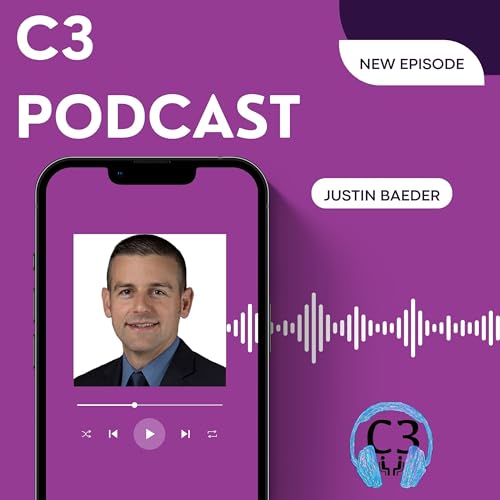
  • From Walkthroughs to Wins with Justin Baeder
    2025/10/16

    Episode Description: In this episode of C3: Connecting Coaches & Cognition, Courtney Groskin sits down with Justin Baeder, founder of The Principal Center and author, to explore the art and science of instructional leadership and feedback. Justin draws on his experiences as a teacher and principal to share practical strategies for giving feedback that actually changes teacher practice and improves school-level decision-making.

    Justin discusses:

    • The importance of consistent classroom observations and making feedback a normal, low-stakes practice.
    • How to strike the balance between encouragement and constructive critique while promoting teacher autonomy.
    • Common pitfalls in feedback conversations, including postmortem critiques that miss the opportunity to influence teacher judgment.
    • How to create a culture of reflection where teachers retain ownership of their practice.
    • The “sweet spot” for feedback and why not every conversation will immediately lead to change.
    • A simple but powerful mindset shift: approaching every conversation with curiosity.

    Justin also shares practical resources for school leaders and coaches, including his classroom walkthrough FAQ at principalcenter.com/FAQ.

    Rapid Fire Insights from Justin:

    • Top resource: Principalcenter.com/FAQ for classroom walkthrough advice.
    • Coaching strategy to keep in your back pocket: Patience—sometimes people need more than we can give in one conversation.
    • Advice for new teachers: Teaching is challenging but rewarding; the learning curve is long, but it’s worth it—don’t give up.

    This episode is a must-listen for school leaders, instructional coaches, and anyone who wants to make feedback conversations more effective, actionable, and supportive of teacher growth.

    続きを読む 一部表示
    27 分
  • Engagement Is Not a Unicorn—It's a Narwhal: Real Strategies for Real Classrooms
    2025/09/11

    In this episode of the C3 Podcast, we welcome Heather, an educator, administrator, author, and superintendent whose work has reshaped how we think about student engagement. Heather shares her journey from aspiring writer to classroom teacher, staff developer, administrator, and now published author—bringing both practical wisdom and fresh metaphors to the conversation.

    Heather’s book, Engagement is Not a Unicorn, It’s a Narwhal, reframes engagement as something real and attainable, not mythical or out of reach. She introduces us to the continuum of engagement—non-compliant, compliant, interested, and absorbed—and explains how shifting students along this spectrum is less like flipping a switch and more like adjusting a dimmer.

    We also explore her follow-up collaboration, The Big Book of Engagement Strategies, a collection of over 50 practitioner-driven strategies to help teachers bring lessons to life. Heather highlights a few of her favorites, including:

    • Caught Tickets – simple notes of recognition that strengthen relationships and encourage positive behavior.

    • Almost/Some Learning Targets – a differentiation approach that creates choice, voice, and pathways for all learners.

    • Room to Breathe – a balance of “inhale” (input) and “exhale” (output) that empowers students to engage actively rather than remain passive.

    Throughout the episode, Heather emphasizes that engagement isn’t about students cheering at the end of a lesson—it’s about fostering genuine curiosity, investment, and moments of absorption that, while rare, are powerful and real.

    Whether you’re a classroom teacher, coach, or administrator, Heather’s insights will leave you with practical strategies and a renewed belief that engagement is within reach.

    Resources Mentioned:

    • Engagement is Not a Unicorn, It’s a Narwhal by Heather

    • The Big Book of Engagement Strategies by Heather and contributing educators

    • To contact Heather for speaking or consulting, please visit www.LyonsLetters.com, where you can also subscribe to her weekly blog posts.
    続きを読む 一部表示
    35 分
  • Small Steps, Big Shifts: Redefining Coaching with Sherry St. Clair
    2025/05/01

    Episode Notes:

    -Teacher, H.S. Administrator, worked for the State Department in Kentucky, and a middle and high school expert, and worked nationally with schools on instructional improvement and instructional leadership.

    -Coaching Redefined Book- instructional leaders can have a guide book of how to set it up effectively and all of the components that go into it: growing yourself to growing your school and thinking of the culture of the school. It came from a desire to make it work and from real experience in a coaching and admin role.

    -Intentional Instructional Moves Book- it sets up what classroom instruction should look like based on research and the intentional steps to get there. The audience is to teachers because they are the ones who will make these shifts. It is also powerful for admins or coaches, but it starts with the teacher shifts.

    -Actions speak louder than words, teachers see what we are doing as coaches. We need to be humble in our position, and know we are all learners. We are not the people who know it all. Coaches can show that they are still learning too.

    -Ask reflective questions. Have a listening tour prior to meeting with a teacher. Constantly ask questions, ask for feedback, and all the nuances in between. See the best in people as coaches.

    -We need to believe in the teachers’ ability to grow constantly!

    -Listening Tour - when schools try it, they think it is the best thing. It shapes the coaching within our school. A respectful approach to how we lead. It can change your trajectory in how teachers in your school see coaching.

    -Get clarity around your role as a coach. See the website for questions to ask and the admin when entering that role. They understand the parameters and protocols within that role.

    -Recognize the positive part of the instructional methods. There is a lot of research as to how individuals are recognized for their positive work, engaged deeper in the work, and is connected to retention. All is important for us in education right now. We need to recognize the positive things teachers do.

    -Provide timely, honest, and consistent feedback.

    -Honest conversations can go a long way. Critical conversations grounded in the third point of data can also be powerful.

    -When we look back, we can remember which teachers believed in us, respected us, and loved us - and we know the ones who didn't. And for those who did, we would do anything in the world they asked us to improve.

    -We need to have collaborative goals set with our teachers. Research shows that goals can bump our productivity from 11 to 25 percent. Think about that per classroom. A clear goal set with that teacher could make a huge impact. That has to be a collaborative goal.

    -We need to differentiate as coaches for educators. If we expect teachers to model differentiation for our students, we also have to model that differentiated learning.

    -Research shows that our walk-throughs should take between 3- 10 minutes. If the goal is right you will be able to see it in that amount of time. Sometimes we can spend too much time. Then they miss out on other classrooms. If we can get in more often but for less time we will see greater growth in those educators we are coaching.

    -We have to be very intentional with our time and our feedback. We have to think about the small steps.

    We have to be mindful of their next step, not necessarily where we want them to be. Those can at times be two very different places, but focus on the small steps. Think about not the end mark, but the next small step in that learning progression.

    -Intentional Instructional Moves - it outlines those big concepts of effective instruction, and breaks it down to intentional steps, and a virtual guide to have all the resources for each strategy.

    -Human growth and psychology research and podcasts can be helpful. Listen to the podcasts and it can impact your work.

    -Take accurate notes- so we can see what we are doing so we can get where we are trying to go.

    -Coaches are collaborators of content and that partner for growth, that understands teachers do not come to school as a blank slate. They have other things going on outside of the school. We all need the support of other humans.

    -Embedded coaching has the largest impact on student learning. It is hard because it is so important. It is also equally rich and rewarding.

    -Find yourself a community of coaches and latch onto them. It is how people see things they need to see within themselves.

    Connect with Sherry:

    -reflecttolearn.com - newsletter sign up there

    -Twitter, Instagram & Facebook

    続きを読む 一部表示
    47 分
  • Radical Listening with Christian van Nieuwerburgh
    2025/04/03
    Episode Notes: -Education is what Christian’s journey revolves around. “I am most passionate about education. I want to imagine a time when everyone has access to excellent education.” That is what motivates him. He has reflected on how access to excellent education has impacted him, given him more opportunities, and his journey. -Discovering coaching was a transformational moment for me. Coaching is the most respectful way to support people’s learning and professional development. And it's the most empowering way of doing that. Once I learned about coaching, there was no going back. My question became how can we use coaching most effectively in an educational setting. Then I learned the art of positive psychology which is the science of living or performance. -As coaches we are supporting people to be at their best. By linking coaching, which is the methodology of helping others meet desired change, and positive psychology, which is the science of being at our best, we bring out the best in others. Education gives us the tools to pursue our goals. It also helps us overcome barriers. Everyone needs a good education. -There is something with each of us deciding what is the best contribution we can make. Some are amazing teachers… some are amazing leaders… Some are amazing support staff. Coaching matched my need to do well and my general approach to life. I love to see people succeed. -Our jobs as coaches relate to other peoples’ successes. -Radical Listening: THe Art of True Connection Book- Our job as coaches is helping others to be at their best. -We hope the listeners are ensuring they are at their best. -Radical Listening: Take what coaches already know and share it with a much larger audience. It expands to so many more professional roles that could be enhanced by better listening. -One of my biggest strengths is that I am a learner and co-authoring with someone else can be such a remarkable learning experience. -Connection to the C3 Podcast: Connecting Coaches’ Cognition, and the subtitle of the book is ‘The Art of True Connection.’ Listening is not reactive and it is actually proactive. We can use the skill of listening to connect with other people. -Radical Listening- We see listening as a two way interaction. -Work with each other in partnership to pull someone forward. -In the moments that are the hardest to relate, reach out, and be able to engage can be the most powerful. -Radical Listening Book is very practical. We are all good listeners already. We listen in empowering and powerful ways to others. Start with an intention. Imagine you are about to go into a scenario, take a moment to think, what is my intention in this conversation? -3 Social Intentions: Connect, Appreciate, & Influences -3 Cognitive Intentions: Understand, Solve, & Listening in Order to Learn -Depending on our intention we listen in different ways. -Solving is a trap- when they really want to be listened to, not find a solution. -Notice barriers of our listening: What can get in the way of our listening to others? -Time? - Time Poverty -I know what is best in this situation? -Internal barriers or internal dialogue -Quieting and Quietening - one of the skills to be a radical listener is to create an environment for the listening to happen, the other is to create an environment that is not full of distractions. Difficult in education but minimizing what we can and shielding the conversation. Trying to show the conversation is important for us. -Skill that is challenging is interjecting. We think - don't just go quiet or not speak. Jump in and engage. It helps to build this sense of rapport. Some programs say to not do this, but if I don't respond to those big emotions it breaks the sense of being with the other person. It is all the nonverbals. It is a building of rapport. -Build up the energy of the conversion by connecting with them. Finesse and optimal matching required with discernment. -Making sure the way we are listening to the person helps us to best be most helpful for our conversational partner. -All of us need to be careful that fidelity to the intervention does not get in the way of the best interest of the client. Finesse is needed. Put the client first. It is based on their belief that they know what is best for them. -Radical Listening involves that we can listen to people in a way that builds rapport and relationships. And sometimes putting the relationship and rapport first can be really powerful. The message behind Radical Listening. - Start by having dialogue. Unlock starts by trying to validate, understand and appreciate where you are coming from. Can learn from you. I hope it has a broader application as well. -The motivation for this book is Radical Listening Applies in a professional context but personal as well. Something you can do straight away. What is my intention for my next interaction I am going to have? -Are you applying this to ...
    続きを読む 一部表示
    45 分
  • Mentoring That Matters: Supporting & Retaining New Teachers: Leslie Ceballos
    2025/03/06

    Episode Notes:

    -Served in a wealth of roles within education from teaching, coaching, to administration.

    -Contract work for curriculum companie and Senior Consultant for Learning Forward

    -Mentoring Program through Learning Forward- a learning cycle with three parts. 1. Diagnose 2. Coaching Support 3. Monitoring Progress and Reflect

    -The mentors only goal is to help the mentee grow professionally. You have to communicate effectively through listening, paraphrasing, questioning, and giving quality feedback.

    -Work life balance and time management are two big factors that can be barriers for new teachers, as well as big behaviors.

    -We can support and retain teachers through the use of a specifically assigned mentor. Also having a good, collaborative team can be a huge difference in morale and make you not feel alone in this difficult job.

    -Monthly mentor/mentee check in meetings are also powerful in supporting our newest educators.

    -This job does not get easier, you just get better - because you have more tools and resources in your toolbox.

    -Establish strong and trusting relationships. Develop partnership agreements to foster that strong relationship- sets the purpose of the relationship.

    -We assign mentors as soon as is possible. We want to be proactive in building that relationship and that they are part of a team and a culture.

    -Mentor check ins - agenda - and tailor to strategic points in the year to ensure we are checking in and providing support. Your success is our success!

    -Observation and feedback are essential to growing as an educator. Utilize SMART goals between mentor and mentee. Make it timely and attainable, so the mentee can feel that success in a timely manner.

    -Coaching is a way to scale your impact, a way to impact more students through educators. Every educator needs a coach.

    -If you could fix one thing about this situation, what would it be? If you could wave a magic wand and it would fix the hardest parts of this situation, what would it be? In a perfect world, what would this look like?

    Connect with Leslie:

    -X: @ldhirsh

    -Learning Forward Consulting Services

    -Mentoring New Teachers: A Learning Cycle Approach go to LearningForward.org —> Bookstore

    続きを読む 一部表示
    35 分
  • Students at the Center: Kyle Wagner
    2025/02/06

    Episode Notes:

    -High Tech High- PBL Based Leader

    -International Educator to move from teacher focused to student focused learning.

    -Moving from sage on the stage to the guide on the side. Where do you start? Look at the physical environment first. Eliminating the ‘front’ of the classroom and teacher desk, which changes the dynamics in the room. It makes any space in the room a learning space.

    -Have students help in the redesign process around what their needs are, the environment dictates what the learning looks like. Shared decision making is pivotal.

    -Giving voice and choice, involving the students within each portion of the learning process.

    -Lead with questions- student generated or open ended?

    -Encouraging student independence - it does not come overnight, structures need to be put into place over time.

    -Project Based Learning - student driven - foster that level of independence with critical thinking with support and then slowly take some of those supports away.

    -Make things highly visual in your classroom - even progression within learning.

    -Classroom culture that encourages students to ask questions, explore, and find inquiry within their own learning.

    -How do I set up an environment that fosters that type of inquiry? Work to gather and group questions together and gauge interest so you can structure accordingly. Start with the student at the center of the lesson.

    -Don't lead with content, lead with inquiry. What is an open ended challenge you can present? What is meaningful to them? How can you scaffold their learning by addressing that inquiry?

    -Rigor - having high expectations for student learning - have to teach them to not rely on us as much. It is not about jumping and checking boxes. It has to be led by wonder and inquiry.

    -Try to eliminate teacher time in the front of the room. How can you reach the same end without the teacher being the main focus? Have students present their learning or share out. It is a great formative assessment.

    -How can they articulate their learning in a way that is meaningful to them?

    -Coaching means reaching your own identified personalized goals.

    -A mentor or a coach will always be my saving grace in education. Reach out as you need someone to coach you through. Shift models are so important and have made a world of difference and have brought back the joy!

    -Find your mentor or your coach. Every journey starts small, every journey starts with a single step. What will your first step be?

    Connect with Kyle:

    -Website - https://transformschool.com/ - this has resources, links, scorecards, blogpost, training, and his podcast.

    -Email- kylewagner@transformschool.com

    -LinkedIn - Kyle Wagner - reach out

    続きを読む 一部表示
    31 分