エピソード

  • AI, Leadership, and the Future of Performance
    2026/05/26
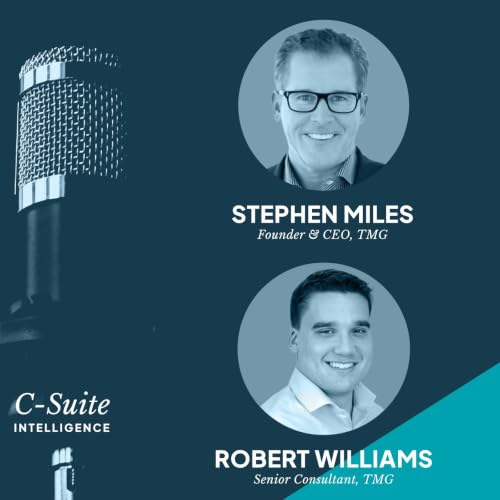
    AI may be transforming how work gets done, but the fundamentals of leadership haven’t changed. Sound judgment, clear direction, and trust remain the true differentiators.

    In this episode, host Robert Williams sits down with Stephen Miles, Founder & CEO of TMG, and Taylor Griffin, Managing Partner, to explore how AI is reshaping work, leadership, and employee value. As intelligence shifts from a scarce resource to an abundant one, leaders are faced with a new challenge: redefining self-worth, productivity, and performance in an AI-enabled workplace.

    They discuss:
    • How AI can elevate human capability by eliminating low-value work
    • Why judgment (not activity) will become the new measure of performance
    • The organizational shifts required in an AI-enabled workplace
    • Breaking down silos between HR, technology, and leadership
    続きを読む 一部表示
    30 分
  • Turning Tension into Trust: Leading Under Pressure
    2026/05/12
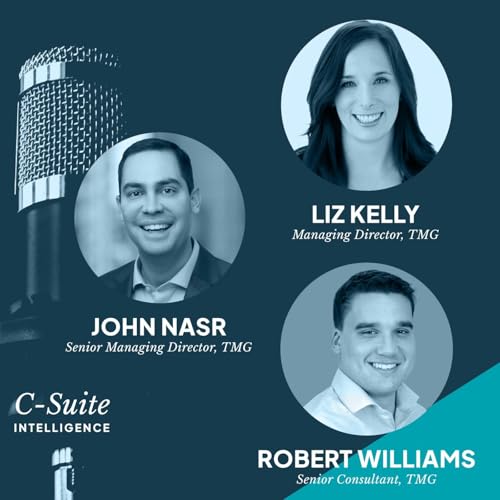
    High-pressure environments have a way of bringing real team dynamics to the surface. When deadlines loom and priorities pile up, conflict can either pull a team apart or strengthen trust, alignment, and performance.

    In this episode, host Robert Williams is joined by TMG’s Liz Kelly and John Nasr to discuss what leaders can do when the pressure is on and the team starts feeling the strain. Liz and John share what effective conflict management looks like in the real world, how trust is built through clarity and consistency, and what it takes to create an environment where people can collaborate instead of compete. They also unpack the role of a growth mindset, how “healthy tension” can actually make teams stronger, and the practical ways leaders can reduce stress, clarify priorities, and keep everyone moving in the same direction.

    In this episode, we discuss:
    • Building trust through clear roles, expectations, and accountability
    • Why cross-functional collaboration tends to break down under pressure (and how to fix it)
    • The difference between unhealthy conflict and healthy tension
    • Techniques for reducing team stress and maintaining focus on priorities
    続きを読む 一部表示
    17 分
  • Making the Most of Your Coaching Relationship
    2026/04/28
    Coaching has become part of the leadership operating model at the top of organizations. What used to be perceived as a corrective measure is recognized as an investment in leadership -- a disciplined way to strengthen individual decision-making, accountability, performance, and support overall leadership effectiveness.

    In this episode, host Robert Williams is joined by TMG Managing Directors Liz Kelly and Stephanie Loquvam to explore the benefits of professional coaching for senior leaders. Drawing on recent Stanford research co-authored by our CEO, Stephen Miles, they examine why coaching adoption has increased significantly in recent years and how to make coaching sessions most productive. The conversation focuses on approaching coaching with intention, preparing thoughtfully, setting clear priorities, and maintaining continuous engagement.

    In this episode, we discuss:
    ● Why coaching is critical for leaders
    ● How preparation and clear priorities drive more effective coaching relationships
    ● The role of accountability and vulnerability in leadership development
    ● Using data and feedback to strengthen coaching outcomes
    続きを読む 一部表示
    16 分
  • New Member = New Team
    2026/04/14
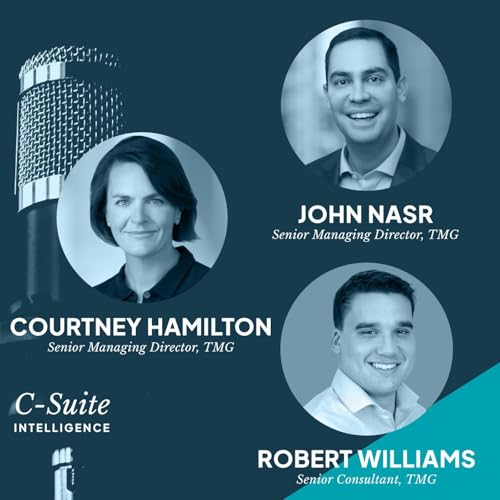
    When a new team member joins, leaders often focus on getting the individual up to speed while overlooking the broader impact on the rest of the team. Over time, this can create misalignment and friction within team dynamics, even when performance might appear strong on the surface.

    In this episode, TMG’s Robert Williams is joined by Courtney Hamilton and John Nasr to look at what happens to the team as a whole in these moments. They explore the idea of “new member, new team,” challenging the assumption that teams change only when leadership does. They also discuss how leaders can use these moments to reset norms and clarify expectations.

    In this episode, we discuss:
    • Why every new hire reshapes team dynamics
    • The importance of revisiting and documenting team norms
    • Common leadership mistakes during onboarding and team transitions
    • Using onboarding to strengthen cohesion and performance
    続きを読む 一部表示
    24 分
  • Beyond Labels: Leading a Multigenerational Workforce
    2026/03/31
    With four generations now working side by side, leaders are being challenged to rethink how they communicate, motivate, and build trust across different work styles and expectations.

    In this episode, host Bobby Williams speaks with Taylor Griffin and Courtney Hamilton about managing multiple generations in today’s workplace. They explore why flexibility is more important than generational labels, how context-rich communication and clear expectations reduce friction, and what predictable leadership routines look like in high-performing, multigenerational teams.

    Join us as we discuss:
    • Leading across Baby Boomers, Gen X, Millennials, and Gen Z
    • Focusing on individual motivation rather than generational stereotypes
    • Building trust through transparency and consistent leadership routines
    • Using detailed feedback and context-rich communication to align teams
    続きを読む 一部表示
    21 分
  • Protecting Time at the Top
    2026/03/17
    Senior leaders are often pulled in countless directions, responding to stakeholders, managing fast-moving priorities, and trying to stay focused amid constant fragmentation. Over time, this can dilute impact, pulling even the most capable leaders away from high-value work.

    In this episode, TMG’s Robert Williams, Taylor Griffin, and John Nasr explore what it means to prioritize at the executive level. They break down how leaders determine the work only they can do, what should be delegated, and what can be eliminated altogether. Through the lens of ruthless and dynamic prioritization, they discuss how senior leaders protect their time, clarify expectations, and stay focused on the outcomes that actually matter.

    In this episode, we discuss:
    • Creating a clear framework for owning, delegating, and eliminating work
    • Protecting time and attention
    • Aligning stakeholders around critical priorities
    • Staying flexible and adaptive as demands and circumstances shift
    続きを読む 一部表示
    18 分
  • The Board’s New Mandate: Enterprise-Wide Talent
    2026/03/03
    Boards are taking a more active role in overseeing talent, expanding their focus from CEO succession into examining leadership strength across the enterprise.

    In this episode, TMG’s John Nasr and Eric Shor examine how directors are partnering more closely with CHROs, connecting people decisions to business strategy, and evolving compensation committees into true “People Committees.” They share how leading Boards are developing structured, forward-looking processes to assess readiness, strengthen succession depth, and link talent planning directly to long-term value creation.

    Join us as we discuss:
    • The shift from CEO succession to enterprise-wide talent strategy
    • Partnering with HR leaders to align people and business strategy
    • Creating repeatable processes for evaluating and developing top talent
    • Best practices for executive-board engagement
    続きを読む 一部表示
    22 分
  • Leading with an Enterprise Lens
    2026/02/17
    As leaders rise, they must shift their focus from leading a team to shaping the business. Success at the top depends on how well they see across the enterprise, not just how well they manage their own business or function.

    In this episode, John Nasr and Stephanie Loquvam break down what it means to operate with an enterprise lens. Through the idea of “T leadership,” they explore how leaders balance deep expertise with broad alignment across peers and business units. Enterprise leadership requires influence, trust, and collaboration, qualities that translate individual results into collective progress across the organization.

    The conversation explores how senior leaders can:
    • Build credibility across functions and business units
    • Map stakeholders and influence outcomes
    • Earn trust through consistent, transparent behaviors
    • Shift from driving team results to co-authoring enterprise success
    続きを読む 一部表示
    20 分