エピソード

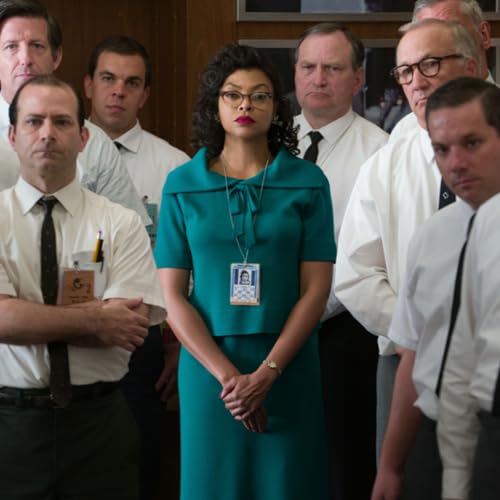
  • Hidden Figures (2016) - Who Decides What Progress Looks Like?
    2025/11/06

    This week, we discuss how the history of NASA was shaped by racial inequality. The stories of Katherine Johnson, Dorothy Vaughan, and Mary Jackson, the three women highlighted in this film by Theodore Melfi, remind us that science has never been a neutral subject. Listen to hear about the civil rights protests against the Cold War space race, NASA's collaboration with Nazi scientists, and what this means for technological progress today. We recorded this episode in October, which is Black History Month in the UK: an annual reminder to seek out historical figures that still remain hidden from conventional narratives about the past.

    References:

    • My Remarkable Journey: A Memoir by Katherine Johnson
    • Hidden Figures: The American Dream and the Untold Story of the Black Women Mathematicians Who Helped Win the Space Race by Margot Lee Shetterly
    • NASA and the Long Civil Rights Movement edited by Brian C. Odom & Stephen P. Waring
    • 'The Story of NASA’s Real “Hidden Figures”' by Elizabeth Howell
    • 'Hidden Figures Light Up Screen: Black Women Who Helped America Win the Space Race' by Jenna Carpenter
    • 'Moving Beyond the “Movement that Changed the World”: Bringing the History of the Cold War into Civil Rights Movement' by Renee Romano
    • 'Desegregation as a Cold War Imperative' by Mary L. Dudziak
    • Operation Paperclip: The Secret Intelligence Program that Brought Nazi Scientists to America by Annie Jacobsen
    • 'How Historians Are Reckoning With the Former Nazi Who Launched America’s Space Program' by Alejandro de la Garza
    • 'Meet the former Nazi rocket scientist who all too accurately saw the future' by John Naughton
    • Civil Rights Activists Protest Apollo 11 (2019) (found in American Archive of Public Broadcasting)
    • 'From Hidden to Modern Figures' (NASA website)
    続きを読む 一部表示
    31 分
  • Marie Antoinette (2006) - Why Is She Back?
    2025/10/10

    Marie Antoinette seems to be everywhere these days, but why? In this episode, we unravel the legacy of the French queen through the lens of the iconic Sofia Coppola movie. Listen to learn more about women's role in the French Revolution, fashion scandals, and what Marie Antoinette can teach us about history.

    References:

    • Marie Antoinette: The Journey by Antonia Fraser
    • "Just Another 'Citoyenne?' Marie-Antoinette on Trial, 1790-1793" by Elizabeth Colwill
    • Trading Places – Colonization and Slavery in 18th-Century French Culture by Madeleine Dobie
    • "Pass as a Woman, Act Like a Man: Marie-Antoinette as Tribade in the Pornography of the French Revolution" by Elizabeth Colwill
    • Memoirs of Madame Vigée Lebrun by Louise-Elisabeth Vigée-Lebrun, 1755-1842
    • "'Let Them Eat Cake': The Mythical Marie Antoinette and the French Revolution" by Nancy Ν. Barker
    • "Women’s Roles, Rights and Representations in France, 1758–1848" by Siobhán McIlvanney
    • "Zamore 'the African' and the Haunting of France's Collective Consciousness" by Lisa Schreier
    • "Recent Historiography on the French Revolution and Gender" by Suzanne Desan
    • "'Marie Antoinette': Fashion, Third-Wave Feminism, and Chick Culture" by Suzanne Ferriss and Mallory Young
    • "Representing Maternal and Domestic Virtues: The Governess of the Children of France in the Bourbon Dynasty, 1704-1789" by Alisha Ma (unpublished dissertation)
    • "Terrorizing Marie Antoinette" by Pierre Saint-Amand and Jennifer Curtiss Gage
    • "Black Jacobins in Contemporary France: On Identities on Politics, Decolonial Critique, andthe Other Blackness" by Vanessa Eileen Thompson
    • "Marie Antoinette and the Ghosts of the French Revolution" by Alexander Zevin
    続きを読む 一部表示
    44 分
  • The Young Victoria (2009) - How Do We Portray Female Rulers?
    2025/07/11

    In this episode, we talk about Queen Victoria’s early reign and her marriage to Prince Albert. Listen in to learn about German sausage slander, being cold and emasculated, and our distorted assumptions about female rulers. What did you think of Victoria and Albert’s love story?

    References:

    • Queen Victoria's Early Letters by John Raymond (ed.)
    • Queen Victoria: A Life of Contradictions by Matthew Dennison
    • Mistress of Everything: Queen Victoria in Indigenous Worlds by Sarah Carter and Maria Nugent (eds.)
    • Uncrowned King: The Life of Prince Albert by Stanley Weintraub
    • Painting: 'The Secret of England's Greatness' (Queen Victoria presenting a Bible in the Audience Chamber at Windsor), National Gallery
    • 'Of Hype and Type: The Media Making of Queen Victoria 1837-1845' by John Plunkett
    • 'Queen Victoria : A Reference Guide to Her Life and Works' by C. V. Reeds
    • 'Queen Victoria – Icon of the Victorian Age and Feminism' by Aimée Stagl and Günter Fahrnberger
    • 'Sex, sovereignty and sausages: TV writer traces prejudice against Germans back to Victoria’s time' by Vanessa Thorpe (The Guardian)
    • '"She will wear the britsch": Masculinity and the iconography of Prince Albert' by Hannah Bradshaw
    • 'The Historiography of Queen Victoria: On the Threshold of Private Psychoanalysis and Public Feminism' by Rebecca Willis
    • 'The Bicentenary of Queen Victoria' by Miles Taylor
    • 'Visualising Victoria: Gender, Genre and History in The Young Victoria (2009)' by Julia Kinzler
    • '"We Don't Want Any German Sausages Here!" Food, Fear, and the German Nation in Victorian and Edwardian Britain' by Keir Waddington
    続きを読む 一部表示
    49 分
  • Sylvie's Love (2020) - Harlem Jazz and the Politics of Romance
    2025/06/25

    This week, we chat about the movie Sylvie's Love (2020), directed by Eugene Ashe and starring Tessa Thompson and Nnamdia Asomugha. The film poses the question of whether romance stories can be stripped of their political context. We dissect the legacy of the Harlem Renaissance, jazz history, and the civil rights movement.

    In this episode, we reference the following works:

    • ‘Sylvie’s Love’ Nnamdi Asomugha and Writer-Director Eugene Ashe Reflect on Telling a Story Audiences Hadn’t Seen Before by Scott Huver
    • Ella Baker and the Black Freedom Movement by Barbara Ransby
    • The New Negro Aesthetic: Selected Writings from Alain Locke
    • "Our History," published by the NAACP
    • A History of the Harlem Renaissance edited by Rachel Farebrother and Miriam Thaggert
    • "Black Women Working Together: Jazz, Gender, and the Politics of Validation" by Tammy L. Kernodle
    • "The Harlem Renaissance and its Blue-Jazz Traditions: Harlem and its Places of Entertainment" by Virginia Whatley Smith
    続きを読む 一部表示
    45 分
  • Persuasion (2022) - Gender, Meritocracy, and Empire
    2025/06/18

    This week, we're talking about the Netflix adaptation of Jane Austen's 1817 novel Persuasion, starring Dakota Johnson. Join us as we discuss the gendered relations of the era, issues of aristocracy vs. meritocracy in early-nineteenth-century Britain, and the theme of empire that lies just under the surface of Austen's work.

    P.S. We mention the Victorian period throughout this episode and its strict separation of gender, but Persuasion was technically written a few years before this period officially began. These themes, however, were already emerging in the run-up to Queen Victoria's reign.

    In this episode, we reference the following works:

    • 'Gender Roles in the 19th Century' & Victorians Undone: Tales of the Flesh in the Age of Decorum by Kathryn Hughes
    • 'Jane Austen on Screen' & Jane Austen: Writer in the World by Kathryn Sutherland
    • Orientalism by Edward Said
    • 'Decolonizing Imperialist Discourse in Jane Austen's Persuasion' by Muna Abd-Rabbo, Ghadir Zalloum, and Ziad Nemrawi
    続きを読む 一部表示
    37 分
  • Brooklyn (2015) - The Story Behind Irish Immigration
    2025/06/11

    Tizia and Christina chat about the movie Brooklyn (originally a novel written by Colm Tóibín), starring Saoirse Ronan and Emory Cohen. In this episode, we talk about the difficulties of moving to a new place, the history of Irish and Italian immigration, the romance between Eilis and Tony, and so much more.

    In this episode, we reference the following works:

    • Forging an Ethnic Identity: The Case of Italian Americans by Stefano Luconi
    • America Classifies the Immigrants - From Ellis Island to the 2020 Census by Joel Perlmann
    • Irish Immigrants in New York City, 1945-1995 by Linda Dowling Almeida
    • Who's Irish? Ethnic Identity and Recent Trends in Irish American History by Deirdre Moloney
    • An Unlikely Union: The Love-Hate Story of New York's Irish and Italians Account by Paul Moses
    • Review: Resettling the Meaning of Home in ‘Brooklyn,’ With Saoirse Ronan by A. O. Scott for the New York Times
    続きを読む 一部表示
    58 分