『Berkeley Talks』のカバーアート

Berkeley Talks

Berkeley Talks

著者: UC Berkeley
無料で聴く

【Amazonプライム会員限定】今ならプレミアムプランが4か月 月額99円。

10月19日まで。※適用条件あり
A Berkeley News podcast that features lectures and conversations at UC Berkeley

Hosted on Acast. See acast.com/privacy for more information.

All rights reserved
社会科学
エピソード
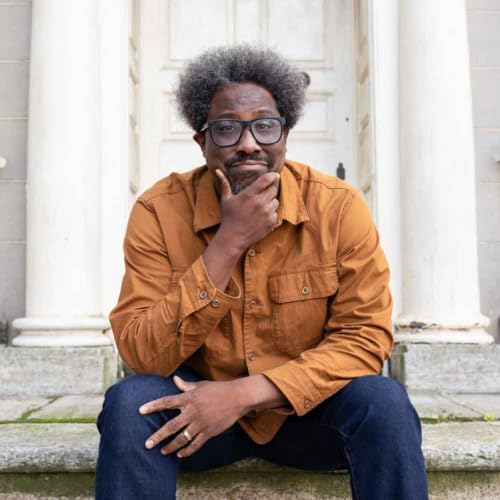
  • W. Kamau Bell on AI, creativity and resisting the pull of automation
    2026/09/18

    When W. Kamau Bell was a child, his mother bought the family a Commodore VIC-20, a popular home computer of the early 1980s. He also had Pong, a ColecoVision and, later, a MiniDisc player. Today, he is still the person his family calls when the TV stops working — and the father who sees technology’s potential to connect his introverted 11-year-old with cousins over FaceTime.

    “I am not a technophobe,” Bell said at a recent UC Berkeley Journalism event. “If you say, ‘We’re going there, there’s no Wi-Fi,’ I’m not going there.”

    But Bell — a comedian, filmmaker and author known for using humor to examine race and American culture — also said technology’s growing presence does not mean people should unquestioningly hand over their language or creativity to artificial intelligence.

    Bell was joined by UC Berkeley Journalism Dean Michael D. Bolden on Aug. 26 for a conversation at the AI, Journalism and Public Trust Symposium, sponsored by UC Berkeley Journalism and the Pulitzer Center. During the discussion, Bell described the subtle ways that AI already shapes everyday communication, like Gmail or Google Docs suggestions that, rather than merely fixing typos, end up standardizing a person’s style. For Bell, whose comedic voice often relies on vernacular and intentionally unconventional grammar, that raises a deeper concern: “You want us all to sound like the same person.”

    AI, he said, should not be treated as an inevitable, neutral force. It is a tool, but one being developed and deployed within systems that prioritize corporate profit and centralized power — often at the expense of communities that are already bearing the costs of technological development. He pointed to data centers placed near Black, rural and low-income communities, as well as the danger of automated systems built from historically biased information. “Once you feed in bad information, bad outputs come out of there,” he said.

    Rather than trying to halt technological progress altogether, Bell urged people to maintain and invest in forms of connection and creativity that resist automation’s pull. After all, the value of art comes from wrestling with our lived experiences.

    “Wasn’t AI supposed to do all the work so we could make art?” Bell said, quoting comedian Stavros Halkias. “Why did we flip it?”

    The response to AI cannot rest solely on individual consumer choices or the assurances of technology companies, he said. It requires people to challenge the systems shaping the technology around them.

    “I am down for a future of AI that doesn’t exist under American capitalism,” he said.

    Watch the conversation, listen to the episode and read the transcript on UC Berkeley News (news.berkeley.edu/podcasts/berkeley-talks).

    Music by by HoliznaCC0.

    Photo courtesy of United Shades of America.

    Hosted on Acast. See acast.com/privacy for more information.

    続きを読む 一部表示
    1 時間 6 分
  • Leaping robots, AI companies and a NASA mission
    2026/08/21

    When Aravind Srinivas arrived at UC Berkeley in 2020 hoping to join Pieter Abbeel’s robotics lab, he encountered an immediate obstacle: The lab was already full.

    Undeterred, Srinivas proposed that he and Abeel work together for six months so he could prove himself. What followed was such a prolific stretch of research that Abbeel found himself repeatedly asking about his new student’s well-being.

    “Honestly, the only big advice I ever had to give Aravind was the question, ‘Did you sleep?’” Abbeel recalls. He says Srinivas replied, “I cannot afford to sleep until I’m officially in your lab.” After joining Abbeel’s lab and being persuaded to rest, Srinivas completed what Abbeel calls “a really amazing Ph.D.,” went on to work at OpenAI and later founded Perplexity, the AI company built around answering questions with source-grounded responses.

    In this Berkeley Talks episode, Srinivas’ determination is one of several stories Abbeel, a professor of electrical engineering and computer sciences at Berkeley, shares about former students and postdoctoral researchers who went on to help found AI and robotics companies, contribute to influential research advances and, in one case, become a NASA astronaut.

    That astronaut, Woody Hoburg, came to Berkeley from MIT in 2011. At the time, he told Abeel that he knew the likelihood of becoming an astronaut was “effectively zero,” but was determined to try: “If I can make it from 0.1 to 1 by giving it my all, that’s what I’m going to do.” Hoburg went on to earn a Ph.D. in electrical engineering and computer sciences at Berkeley, join NASA’s 2017 astronaut class and, in 2023, serve as the pilot of NASA’s SpaceX Crew-6 mission aboard the Crew Dragon spacecraft, spending 186 days in space.

    For Abbeel, the common thread among his former students is not only brilliance but also generosity. “All of them (are) super nice,” he says. “And what I mean with that is it’s easy to be nice to your boss, you have to be. But they’re super nice to all their peers, everybody around them, new talent that wants to join. I’m really proud.”

    Abbeel’s lecture took place on April 17, 2026, as part of Berkeley’s “Brilliance of Berkeley” speaker series.

    Listen to the episode, read the transcript and watch the lecture on UC Berkeley News (news.berkeley.edu/podcasts/berkeley-talks)

    Music by by HoliznaCC0.

    Photo by Elena Zhukova.

    Hosted on Acast. See acast.com/privacy for more information.

    続きを読む 一部表示
    53 分
  • How we've long misread gun violence (and ways to prevent it)
    2026/08/07

    In the early hours of November 2007, Amadou Cisse, a 29-year-old University of Chicago chemistry graduate student, was walking home when Demetrius Warren, then 17, and Benjamin Williams, 21, approached him. According to trial testimony, Warren pointed a gun at Cisse while Williams attempted to grab his backpack. A struggle ensued, and Warren shot Cisse in the chest. Cisse died from the wound.

    “Behind every news headline and every statistic, there is a mom who has just lost the most important person in their life,” says Jens Ludwig, a University of Chicago economics professor and director of its Crime Lab. “And in this particular case … Warren is currently spending 150 years downstate in the Illinois Department of Corrections. So in this case, two moms lost the most important people in their lives.”

    Delivering the 2026 Wildavsky Lecture in Public Policy at UC Berkeley’s Goldman School of Public Policy this past April, Ludwig, author of Unforgiving Places: The Unexpected Origins of American Gun Violence, argues that both major political parties misdiagnose gun violence as a deliberate, rational choice, when in fact it’s almost always an impulsive one.

    "Both sides of that debate implicitly think that before anybody ever pulls a trigger, they're engaging in some sort of deliberate, rational weighing of pros and cons,” he says. But in reality, he contends, roughly 80% of gun homicides stem from everyday arguments that rapidly escalate in brief, uncalculated moments.

    Drawing on insights from behavioral economics, Ludwig says there are several low-cost, scalable tools — from youth programs and de-escalation training for police to simple urban fixes like greening vacant lots — that deliver meaningful public-safety gains. He points to “Becoming a Man,” a school-based group counseling program that helps teenage boys slow down their thinking in high-stakes situations. Randomized research trials found that it reduced participants’ violent-crime arrests by up to 50% — evidence, he argues, that communities don’t need to wait for sweeping political overhauls to make real progress.

    Listen to the episode, read the transcript and watch a video of the lecture on UC Berkeley News (news.berkeley.edu/podcasts/berkeley-talks).

    Music by by HoliznaCC0.

    Detail of a mural by Kyle Holbrook and local youth in Miami, Florida. (Photo by Terence Faircloth via Flickr)

    Hosted on Acast. See acast.com/privacy for more information.

    続きを読む 一部表示
    1 時間 28 分
adbl_web_anon_alc_button_suppression_t1
まだレビューはありません