エピソード

  • Season 2 Overview: "Legends of the Emerald Isle" by Beat Nomads
    2026/03/24

    Have you ever heard a wail in the dark - and wondered if it was meant for you? Step into mist-soaked Ireland, where old magic still breathes, heroes fall standing, and every legend leaves an echo.

    In "Legends of the Emerald Isle" the band Beat Nomads journeys through ten Irish legends - tales of love and betrayal, sacred fire and fairy realms, feasts that never end, and cries that stop the heart.​

    • Episode 1 - Cú Chulainn stands defiant at the edge of death, his legend refusing to fall.​
    • Episode 2 - Deirdre’s fated beauty sparks exile, betrayal, and a love that ends in tragedy.​
    • Episode 3 - A merry chase for gold turns into a lesson in tricks, riddles, and wishful thinking.​
    • Episode 4 - From goddess to saint, Brigid’s enduring light guards hearth, healing, and poetry.​
    • Episode 5 - The Tuatha Dé Danann arrive with four cities’ secrets - and vanish into the sídhe.​
    • Episode 6 - Oisín rides to the Land of Youth, then learns the cruel cost of returning home.​
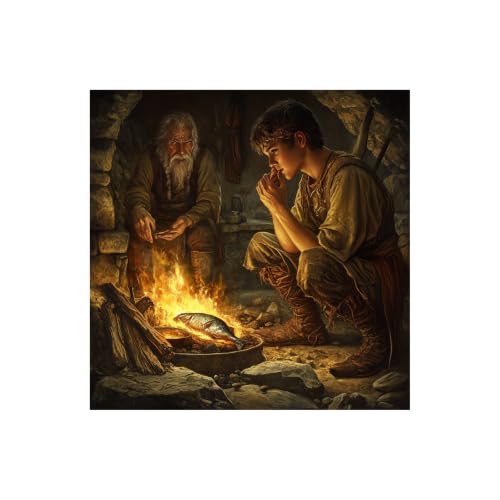
    • Episode 7 - Finn MacCool earns legend-status through one burned thumb and the Salmon of Knowledge.​
    • Episode 8 - A keening in the hills foretells the final breath - once heard, never forgotten.​
    • Episode 9 - A “Good God,” a bottomless cauldron, and power that can both kill and restore life.​
    • Episode 10 - The Children of Lir endure centuries as swans, freed at last by a bell- and broken by time.​

    Press play and let the Emerald Isle find you. Start with Episode 1 or jump to the story that haunts you most- then follow the show, share it with a fellow myth-lover, and come back each week for another doorway into Ireland’s legendary past.​

    続きを読む 一部表示
    2 分
  • The Man who Let Silence Kill Him
    2026/03/17

    In this episode, uncover the fall of Thomas More—the king's confidant who chose silence over submission, and paid for it on the scaffold. Join us as "The Man who Let Silence Kill Him" investigates how a refusal to swear became a death sentence in Henry VIII's England.​

    Through courtroom testimony, prison pressure, and the hard logic of Tudor power, this story tracks a friendship that collapses into prosecution—and a legal system bent to turn conscience into treason. We follow the thread from More's strategic silence to the trial where a single disputed conversation helps seal his fate, ending at Tower Hill with an execution that echoes far beyond 1535.​

    This episode examines More's 1504 parliamentary defiance, his intellectual bond with Henry VIII over theology and humanism, and the moment their shared faith fractured over Anne Boleyn and papal authority. We trace the Oath of Supremacy that transformed dissent into treason, the 13 months More spent in the Tower refusing every compromise, and the perjured testimony of Richard Rich—testimony contradicted by witnesses present but believed by a jury that took just 15 minutes to convict.​

    You'll hear how More invoked Magna Carta in his own defense, arguing the king had violated the law itself, and why modern historians have debunked centuries of torture allegations as propaganda. This is history as detective work: rigorously sourced, narratively gripping, and deeply relevant to anyone asking what states can demand from citizens—and what price comes with refusing.​

    Subscribe, share with a history-loving friend, and leave a review to support more meticulously sourced stories of legends, myths, and the people who survived them.

    Visit our website https://linktr.ee/beatnomadsofficial to learn more about what we do and find more stories.

    続きを読む 一部表示
    27 分
  • The Maid who saved France
    2026/03/03

    Uncover the secrets behind Joan of Arc’s rise - and the betrayals that sealed her fate - in "The Maid who saved France" episode. Join us as we follow how a teenage visionary helped lift the siege of Orléans, pressed a cautious court toward the coronation of Charles VII, and then became too politically dangerous to protect once her usefulness faded.​

    In this episode, betrayal isn’t just personal - it’s contractual and legal. We trace broken truces and shifting alliances, then follow Joan from capture at Compiègne to being transferred into English hands, where her enemies pursued a courtroom victory they couldn’t secure on the battlefield. Inside the trial at Rouen, we examine how procedure itself can become a weapon: custody and confinement issues, pressure to submit, and the trap of “relapse” that turned a coerced abjuration into a death sentence. We also weave in a crucial correction to a popular misconception: this wasn’t a simple story of “the Church versus Joan,” but a political prosecution conducted through an ecclesiastical court under English control, later challenged by a formal rehabilitation process that overturned the earlier judgment.​

    If you like immersive, evidence-driven history told like a mystery, this episode is built for you. It’s a case study in how states and institutions manufacture legitimacy, and how one person’s reputation can be put on trial to break an entire cause. And it asks a question that still stings: when someone “saves” a nation, who decides what they’re owed afterward - honor, silence, or a stake in the marketplace?​

    Subscribe, share with a history-loving friend, and leave a review to support more meticulously sourced stories of legends, myths, and the people who survived them.​

    Visit our website https://linktr.ee/beatnomadsofficial to learn more about what we do and find more stories.

    続きを読む 一部表示
    28 分
  • The Prisoner who Refused Revenge
    2026/02/17

    Uncover Nelson Mandela’s betrayal story in The Prisoner who Refused Revenge - from the 1962 arrest that changed everything to the hard choice to build peace with former enemies. Join us as we trace Madiba’s long road through broken trust, moral compromises, and the risky idea that a nation can survive without revenge.

    In this episode, we treat betrayal as a breach of trust, law, or unwritten contract - and we follow the trail like a historical investigation. We begin in the shadows of the early 1960s, when Mandela moves underground and the apartheid state tightens its net. Then we widen the lens: what happens to a movement when its most famous leader is removed, and the struggle continues in his absence? What kinds of loyalties hold - and what kinds fracture?

    From there, the story turns intimate and unsettling. Mandela becomes an icon the world can project onto, but icons cast long shadows. We examine how violence, fear, and paranoia can warp even the people closest to a cause, and how the language of “security” and “protection” can become a weapon against the vulnerable. The question isn’t just who betrayed Mandela - it’s how betrayal spreads, how it recruits ordinary people, and how it changes what a revolution thinks it is allowed to do.

    Finally, we arrive at the most controversial ground: the transition from apartheid to democracy. We explore why forgiveness became policy, why truth was sometimes chosen over punishment, and why many South Africans - especially those who fought and sacrificed - felt the promises of liberation did not fully land in their lives. Along the way, we quietly correct a popular misconception: that this history is clean, simple, and morally effortless. It wasn’t. And that’s what makes Mandela’s refusal of revenge so historically rare - and so hard to imitate.

    Subscribe, share with a history-loving friend, and leave a review to support more meticulously sourced stories of legends, myths, and the people who survived them.​

    Visit our website https://linktr.ee/beatnomadsofficial to learn more about what we do and find more stories.

    続きを読む 一部表示
    25 分
  • The Conquering Lion Who Was Caged
    2026/02/03

    Uncover the fall of Haile Selassie - the “Conquering Lion” - through one driving theme: betrayal, from broken promises in Addis Ababa to shattered agreements on the Red Sea coast. Step into a mystery of power, famine, and captivity as Ethiopia’s ancient throne collapses and the Lion is caged.

    In this episode, the story follows three interlocking breaches of trust: a military committee that claims it will preserve the monarchy, then dismantles it; an emperor who overturns a federal pact meant to protect Eritrean autonomy; and a state that fails its people during the Wollo famine as officials suppress or delay catastrophic news.

    Along the way, the episode untangles what’s known, what’s disputed, and why Haile Selassie’s legacy remains both revered and contested - ending with the haunting questions surrounding his final year under house arrest and what happened after he disappeared from public view.

    Subscribe, share with a history-loving friend, and leave a review to support more meticulously sourced stories of legends, myths, and the people who survived them.​

    Visit our website https://linktr.ee/beatnomadsofficial to learn more about what we do and find more stories.

    続きを読む 一部表示
    29 分
  • The Gadfly Who Questioned Everything
    2026/01/20

    Uncover the betrayal at the heart of Socrates’ death: in 399 BC, Athens puts its most famous questioner on trial for impiety and for “corrupting the youth.” Join us as we track the case from the public square to the courtroom to a quiet prison cell, asking one unsettling question all the way through: who broke faith first—Socrates, the city, or the people who claimed to defend it?​

    In this episode, we follow the evidence that survives from antiquity—especially Plato’s Apology and Crito, alongside other ancient testimony—to reconstruct what Athens said it was punishing, and what it may have been trying to protect. We explore how Socrates’ method of relentless questioning could look like civic medicine to admirers and civic sabotage to anxious leaders, particularly in a democracy still raw from recent political violence and instability.​

    Then the investigation tightens around the most uncomfortable part of the story: the people closest to Socrates. We examine why the shadows of notorious former associates—especially figures tied to anti-democratic upheaval—could make a philosopher feel like a threat even if no conspiracy can be proved. We also look at the religious charge, including Socrates’ claim of a “divine sign” (daimonion), and why that detail could be framed as spiritual innovation—or as convenient legal cover for a more political fear.​

    Finally, we return to the moment that turns a trial into a legend: Crito’s escape plan, Socrates’ refusal, and the argument that a life built inside the laws can’t be saved by breaking them—no matter how unjust the verdict feels. With hemlock waiting, the episode asks whether this was the ultimate act of loyalty… or the most devastating betrayal of his own survival.​

    Subscribe, share with a history-loving friend, and leave a review to support more meticulously sourced stories of legends, myths, and the people who survived them (or not).​

    Visit our website https://linktr.ee/beatnomadsofficial to learn more about what we do and find more stories.

    続きを読む 一部表示
    34 分
  • The Chief who Wouldn’t Yield
    2026/01/06

    Uncover the untold story of Sitting Bull (Tȟatȟáŋka Íyotake) - the Lakota leader who faced a lifetime of promises made, promises broken, and a final dawn where the trigger was pulled by men of his own nation. What if the most infamous charge against him - the idea that he led a dangerous Ghost Dance uprising - was not fact, but a convenient pretext?

    In this episode, we investigate betrayal as the throughline of Sitting Bull’s life. We begin at the treaty tables, where the Fort Laramie agreement promised the Great Sioux Reservation and the sanctity of the Black Hills - terms later unraveled when gold fever and federal pressure replaced signatures with starvation rations. We cross the medicine line into Canada, where asylum came without food or a future, and where an ally was quietly removed so that hunger could finish what armies could not. We step into the glare of the arena lights, where a defeated nation was sold back to the public as entertainment - and a world-famous chief became a living exhibit of his people’s conquest.

    Then we follow the panic surrounding the Ghost Dance - what the movement was, what it wasn’t, and how fear turned religious revival into “proof” of sedition. The trail ends at a frozen cabin on the Grand River, where Indian agency police arrived before sunrise to arrest a man for the danger of his voice, his credibility, and his refusal to yield. Shots were fired. Sixteen men died. A nation’s largest symbol of resistance fell - killed not by soldiers in blue, but by a system that made neighbors into instruments.

    This is an investigation into power and memory: treaties turned into traps, refuge turned into pressure, celebrity turned into a cage, and a spiritual revival turned into the final excuse. It’s a story about who betrayed whom - and why - and what it costs a people when survival is mistaken for surrender. If you think you know Sitting Bull’s last days, listen closely. The records, the reports, and the voices that remain tell a different story - one that still reverberates wherever fear is used to silence the inconvenient and the unconquered.

    Subscribe, share with a history-loving friend, and leave a review to support more meticulously sourced stories of legends, myths, and the people who survived them (or not).​

    Visit our website https://linktr.ee/beatnomadsofficial to learn more about what we do and find more stories.

    続きを読む 一部表示
    28 分
  • The Liberator who Ended Liberty
    2025/12/23

    On the Ides of March, 44 BCE, Rome's greatest general walked into the Senate and never walked out. Julius Caesar—the man who conquered Gaul, crossed the Rubicon, and reshaped an empire—was murdered by those he trusted most, including his closest friend.

    But this is not simply a story of assassination; it's an investigation into betrayal itself: how a man who built Rome through victory became undone by his own ambition, arrogance, and refusal to see the daggers being sharpened in the shadows around him.

    In this episode, we uncover the psychological fractures that split the Senate, the personal vendettas masked as patriotism, the warnings Caesar ignored, and the moment when the Republic itself died on the marble floor. Through primary sources—letters, historical accounts, and Senate records—we trace the conspiracy from its inception to its bloody climax, exploring not just who killed Caesar, but why even his closest allies felt compelled to betray him.

    We'll also examine how Caesar's own actions betrayed the very ideals of the Republic he claimed to serve, setting Rome on an irreversible path toward autocracy. What drove Brutus to strike down the man he loved like a father? How did Caesar, a master strategist on the battlefield, become blind to the conspiracy forming around his own chair? And what does his fall reveal about power, loyalty, and the corrosive nature of ambition?

    Listen as we walk the corridors of Roman politics and stand in the Senate on history's most pivotal day.

    Subscribe, share with a history-loving friend, and leave a review to support more meticulously sourced stories of legends, myths, and the people who survived them.​

    Visit our website https://linktr.ee/beatnomadsofficial to learn more about what we do and find more stories.

    続きを読む 一部表示
    28 分