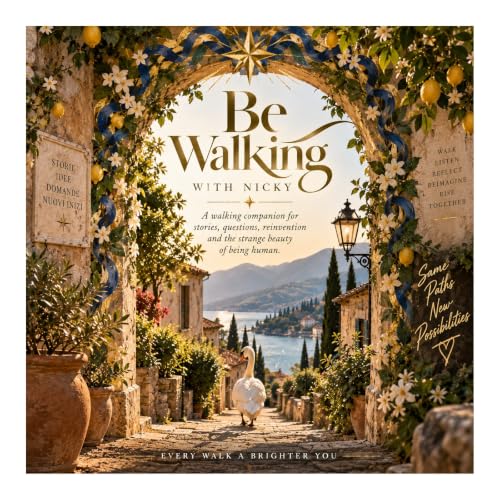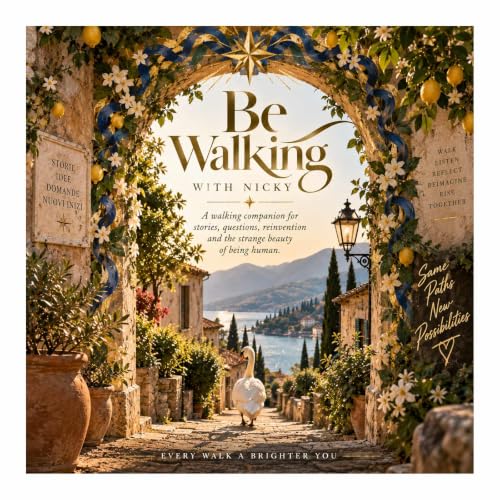
『Be Walking with Nicky』のカバーアート

Be Walking with Nicky

Be Walking with Nicky

著者: A podcast for the lone walker who just wants to hear the voice of a friend or something calming to listen to in a world of busy thoughts about being human when the instruction manual never arrived
無料で聴く

プレミアムプランが3か月 月額99円

登録で500円分のAmazonギフトカードプレゼント。12月23日まで。※適用条件あり
概要
Be Walking with Nicky Most podcasts give answers. This one follows questions. Questions about belonging, identity, friendship, community, loneliness, home, change, and what it means to be human in a world that often asks us to flatten ourselves to fit in. Recorded through walks, reflections, stories, and conversations, Be Walking with Nicky is for thoughtful outsiders, curious minds, and anyone still figuring things out. Because none of us arrive fully formed. We're all walking somewhere. The interesting part is what we notice along the way. Come for the walk. Stay for the thought. ▶ Start walking

spirandiombrevtre.substack.comNicole Wallace
哲学 社会科学 科学
エピソード
  • Season 2 Episode 5 On noting
    2026/11/22
    A Conversation With YourselfIn this episode, I reflect on the practice of journaling and why it has remained one of the most helpful tools for understanding what’s really happening inside my mind. This isn’t a productivity system or a method designed to transform your life overnight. It’s a conversation about writing, self-discovery, honesty, and learning to listen to yourself.The Hardest Part Is StartingFor me, the most difficult part of journaling is rarely the writing itself. It’s opening the notebook.Once I begin, the words usually come. But the blank page has a way of asking questions I wasn’t expecting. It invites honesty, reflection, and sometimes truths I wasn’t ready to face.A Fresh Notebook Represents PossibilityI love buying notebooks. A new journal feels like optimism in paper form.Every fresh notebook carries the promise that this might be the one where everything becomes organised, insightful, and beautifully documented. Yet often, when I finally open it, all the brilliant thoughts disappear, replaced by random memories or a shopping list.Stop Writing for an Imaginary AudienceI realised that for a long time I wasn’t writing for myself. I was writing for people who would probably never read my journal.Many of us edit our thoughts before we’ve even written them down. We try to sound wise, reasonable, kind, or insightful. Journaling becomes far more powerful when we stop performing and start being honest.Writing Quietens the NoiseThe outside world doesn’t disappear when I write.The emails still exist. The worries are still there. The difficult conversations still replay in my mind.But something changes when the pen touches the page. The volume of everything else lowers just enough for me to hear my own voice.Follow What Keeps ReturningIf you’re not sure where to begin, start here:What is the thing you’ve been thinking about most this week?Not what should matter. Not what sounds impressive.Just the thought that keeps returning whether you invite it or not.Consider:* What hurt today?* What sparked joy?* What are you worried about?* What won’t leave your mind alone?Journaling Reveals What Is HiddenOne of the biggest myths about journaling is that it’s simply about recording your life.I think it’s about discovering it.I’ve often started writing convinced that I’m upset about one thing, only to realise several pages later that something completely different is actually bothering me. Writing has a remarkable way of uncovering what’s beneath the surface.The Stories We Tell OurselvesEvery journal entry contains a story.Not necessarily about what happened, but about the meaning we’ve attached to what happened.A delayed response becomes rejection. A mistake becomes proof we’re not good enough. An uncertainty becomes a prediction of failure.Sometimes the story creates more suffering than the event itself.Journaling gives us an opportunity to notice the narratives we’re creating and question whether they’re true.Courage Looks Different Than We ThinkPeople often imagine courage as something dramatic.But sometimes courage looks like writing one sentence you’ve spent years avoiding.The page eventually asks uncomfortable questions:* What are you really afraid of?* What are you avoiding?* What would you do if you trusted yourself?Those questions are worth sitting with.The Page Doesn’t Need to Be a CourtroomI can easily use journaling against myself.I can fill pages with evidence of my mistakes and failures, building a case against myself.But writing becomes far more helpful when it shifts from judgement to curiosity.Instead of writing:“I’m such an idiot.”Try writing:“I can see why I did that.”The page can be a conversation rather than a courtroom.Gratitude for YourselfWe’re often encouraged to be grateful for external things.The sunshine. The coffee. The productive day.But what about gratitude for yourself?For:* Showing up.* Trying again.* Surviving difficult seasons.* Opening the notebook when you didn’t feel like it.That deserves recognition too.Journaling Is About DiscoveryI don’t believe journaling is about finding truth.I think it’s about discovering truth.The person who starts writing isn’t always the same person who finishes.Sometimes I begin an entry thinking I’m angry and end it realising I’m sad.Sometimes I think I’m stressed and discover I’m relieved.Sometimes I don’t realise I’m happy until I see the words on the page.Quotes from the Episode“A fresh notebook is optimism in paper form.”“The page doesn’t have to be a courtroom. It can be a conversation.”“You’re not a project or a problem to solve. You’re a person trying to understand yourself.”Reflection QuestionIf you opened a notebook tonight and wrote one completely honest sentence, what would it be?No pressure. No perfection. Just honesty.Thanks for reading Spirandi Ombrevôtre! This post is public so feel free to share it.Journaling isn’t about ...
    続きを読む 一部表示
    23 分
  • Season 2 Episode 4.1 How to UnNPC and become the main character again
    2026/11/19
    There are people who become so accustomed to carrying everybody else’s needs that they eventually lose sight of their own.In this episode, I examine the quiet ways self-abandonment disguises itself as kindness. The habit of saying yes. The comfort of being indispensable. The identity built around being needed.What begins as care can slowly become a life organised around everyone else’s expectations.This episode explores the hidden cost of usefulness and asks a deceptively simple question:What do you actually want?In This Episode0:00 - The burden of being everything for everyone* Becoming the person who remembers, organises and carries.* Why constant availability feels safer than honesty.* The uncomfortable question: What do you want?1:05 - The danger of self-knowledge* Why many people avoid looking too closely at their own desires.* Discovering what you want may require changing your life.* The difference between staying busy and being fulfilled.2:02 - The immediate reward of saying yes* Approval.* Relief.* Avoiding conflict.* Why saying yes feels so good in the moment.2:45 - The delayed cost* Exhaustion.* Resentment.* Disconnection from self.* Becoming trapped by others’ expectations.3:20 - The good person trap* When self-abandonment is mistaken for kindness.* Why caring for others doesn’t have to mean neglecting yourself.* The danger of virtue becoming a hiding place.4:05 - Becoming indispensable* Building an identity around being useful.* The emotional rewards of being needed.* The fear of who you might be without a role to perform.5:00 - Reflection exerciseThree simple lists:* Things I do because I genuinely want to.* Things I do because I feel I should.* Things I do because I am afraid of what will happen if I don’t.5:45 - Looking aheadThe freedom that arrives when you stop asking:“Will everyone be okay with this?”And start asking:“Am I okay with this?”There is a particular type of person whom the world rewards generously.Not with money, necessarily. Not with rest. But with approval.The dependable one. The accommodating one. The person who remembers birthdays, picks up the extra work, listens to one more problem, absorbs one more inconvenience. They become a steady bridge across everybody else’s uncertainty.And because they are praised for carrying, they rarely notice the weight accumulating.What is striking is how ordinary the process appears. No great sacrifice announces itself. There is only another yes. Another favour. Another adjustment made in the name of being reasonable.Years pass this way.A life can become crowded with obligations that were never consciously chosen.The episode suggests that self-knowledge is unsettling not because it is difficult, but because it is consequential. To discover what one truly wants may require confronting everything that has been built around ignoring it.The safer option is often movement.Stay busy.Stay needed.Stay useful.A full calendar can become an effective distraction from an empty relationship with oneself.Yet usefulness contains its own danger. What begins as a contribution slowly hardens into identity. A person is no longer someone who helps. They become the helper. No longer someone who gives. They become the giver.And identities are notoriously difficult to question.Especially when they are rewarded.The tragedy is not that people ask too much. The tragedy is that many of us stop asking ourselves anything at all.What do I want?What am I avoiding?What would happen if I said no?The answers may not arrive immediately.But the act of noticing changes something.Because patterns lose some of their authority once they are seen.And a life organised around obligation can only become a life organised around choice when a person finally admits the difference between the two.Memorable Quotes“Don’t know yourself too well. Knowing yourself creates problems.”“You might discover that you don’t actually enjoy being available all the time.”“Yes gives you something immediately.”Reflection Questions* What am I doing because I genuinely want to?* What am I doing because I feel obligated?* What am I afraid might happen if I stopped?* Where has usefulness become identity?* What part of my life remains unexplored because I stay busy?Walking PracticeTake ten quiet minutes after your walk.Create three columns:Want ToShould DoAfraid Not ToDo not judge what appears.Simply observe.The most significant changes rarely begin with action.They begin with noticing.Walk good. This is a public episode. If you'd like to discuss this with other subscribers or get access to bonus episodes, visit spirandiombrevtre.substack.com/subscribe
    続きを読む 一部表示
    6 分
  • Season2 Episode 4 How to NPC your life. The uncreative way
    2026/11/11

    Thanks for reading Spirandi Ombrevôtre! This post is public so feel free to share it.

    Episode 12: How to NPC Your Life (The Uncreative Way)

    Duration: 6 min 15 sec

    Episode Summary

    There is a peculiar kind of exhaustion that comes from becoming indispensable.

    Not because life is difficult, but because a person slowly disappears beneath service. One favour at a time. One accommodation at a time. One harmless “yes” after another.

    In this episode, I explored the quiet tragedy of self-abandonment disguised as kindness. The ways we become useful rather than known. Reliable rather than alive. Good rather than honest.

    The conversation examines how identity can become built around being needed, and why constantly saying yes often protects us from a more frightening question:

    What if I want something different?

    This is not an episode about selfishness.

    It is an invitation to notice the patterns that have quietly organised a life.

    In This Episode

    0:00 - The burden of being everything for everyone

    * Why many caring people become experts at anticipating, organising and carrying the emotional weight of others.

    * The hidden fear beneath constant availability.

    * What happens when someone asks, “What do you want?”

    1:05 - The danger of self-knowledge

    * Why discovering what you truly want can disrupt an entire life.

    * The uncomfortable truths that emerge when we stop staying busy.

    * Rest, creativity, money, freedom and desire as inconvenient discoveries.

    2:02 - The immediate reward of saying yes

    * Approval.

    * Relief.

    * Avoiding conflict.

    * Why people-pleasing works brilliantly in the short term.

    2:45 - The delayed cost

    * Exhaustion.

    * Resentment.

    * Disconnection from self.

    * How others become accustomed to the version of you that always agrees.

    3:20 - The “good person” trap

    * When self-abandonment disguises itself as kindness.

    * Why caring for others can become an excuse for neglecting yourself.

    * The difficulty of questioning behaviour that appears virtuous.

    4:05 - Becoming indispensable

    * Building an identity around usefulness.

    * The emotional rewards of being needed.

    * The fear that emerges when usefulness becomes self-worth.

    5:00 - Reflection exercise

    Create three lists:

    * Things I do because I genuinely want to.

    * Things I do because I feel I should.

    * Things I do because I am afraid of what will happen if I don’t.

    5:45 - Looking ahead

    Part Two explores what happens when you begin taking yourself seriously.

    The shift from asking:

    “Will everyone be okay with this?”

    to:

    “Am I okay with this?”

    Memorable Quotes

    “Don’t know yourself too well. Knowing yourself creates problems.”

    “Yes gives you something immediately: approval, relief, certainty.”

    “Everybody has become accustomed to the version of you who says yes anyway.”

    Reflection Questions

    * What parts of my life are driven by desire and what parts are driven by obligation?

    * Where have I confused kindness with self-sacrifice?

    * What am I afraid would happen if I said no more often?

    * Who would I be if I were no longer needed by everyone?

    * What have I learned to tolerate simply because it has become familiar?

    Walking Practice

    As you finish your walk, write three columns:

    Want To

    Should Do

    Afraid Not To

    What genuinely energises me?

    What feels obligatory?

    What fear is keeping this behaviour alive?

    Do not change anything yet.

    Just notice.

    Because awareness comes before freedom. And every unnecessary yes begins with a moment that was never examined.

    Walk good.


    This is a public episode. If you'd like to discuss this with other subscribers or get access to bonus episodes, visit spirandiombrevtre.substack.com/subscribe
    続きを読む 一部表示
    6 分
adbl_web_anon_alc_button_suppression_t1
まだレビューはありません