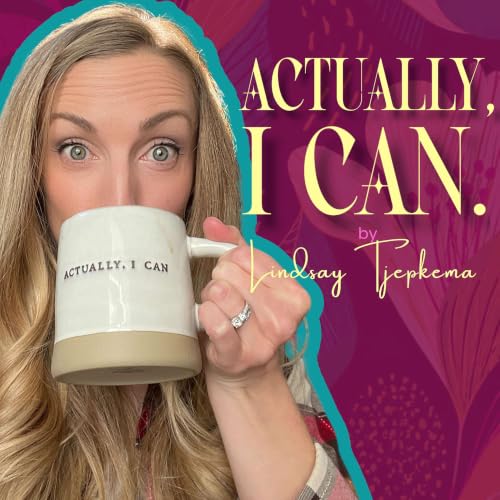
『Actually, I Can.』のカバーアート

Actually, I Can.

Actually, I Can.

著者: Lindsay Tjepkema
無料で聴く

【Amazonプライム会員限定】今ならプレミアムプランが4か月 月額99円。

10月19日まで。※適用条件あり

What if the voices that say "you can't" and "you shouldn't" are wrong? Actually, I Can. is a celebration of bold choices, courageous journeys, and the deeply personal stories of founders, visionaries, and leaders who dared to defy the doubters and choose "yes" even when the world kept saying "no."

This isn’t about growth hacks or formulas—it’s about the raw, human moments that shape real leaders. Host Lindsay Tjepkema sits down with real leaders and digs deep into the grit, grief, and reinvention that turned real dreams into exceptional realities.

Whether you're an entrepreneur, a dreamer, or on the edge of your next big move, Actually, I Can. will inspire you to trust your intuition, bet on yourself, and redefine success on your own terms.

© 2026 Lindsay Tjepkema
マネジメント・リーダーシップ リーダーシップ 経済学
エピソード
  • Build the Life You Actually Want with Hope Horner
    2026/09/15

    What if the advice to “find work-life balance” is actually making you feel like you’re doing something wrong?

    In this episode of Actually, I Can., Lindsay Tjepkema sits down with Hope Horner, founder and CEO of Lemonlight, to unpack one of the most common pieces of advice founders hear: that success requires maintaining a healthy balance between work and life.

    For Hope, that advice created more guilt than clarity. In the early years of building Lemonlight, she was working 70–90+ hours a week, sacrificing much of her social life, and wondering why her experience didn't look like the balanced founder life everyone seemed to recommend. Eventually, she realized something important: balance isn't one-size-fits-all. The right balance depends on what you're building, what you want your life to look like, and what you're willing to prioritize in a particular season.

    Hope shares what changed when she stopped apologizing for her ambition, how she navigated the impact of entrepreneurship on her relationships, and why being honest with the people around you matters when you're choosing to go all in.

    The bigger lesson? You don't have to build someone else's version of success. You get to decide what you want—and then build a life that supports it.

    What You’ll Learn

    • Why “work-life balance” can become a source of guilt for ambitious founders
    • How Hope spent years working 70–90+ hours a week while building Lemonlight
    • Why balance looks different depending on your goals and definition of success
    • The moment Hope realized she needed to embrace her ambition instead of apologizing for it
    • How to have honest conversations with friends, family, and partners about entrepreneurial demands
    • Ways to integrate relationships into an ambitious life instead of treating work and life as completely separate
    • Why there isn't one correct formula for building a successful company—or a fulfilling life
    • How books, podcasts, and other entrepreneurs can help founders navigate the messy middle
    • Why defining success for yourself is more important than following someone else's blueprint

    📩 Subscribe to the newsletter

    🔗 Follow Lindsay on LinkedIn

    🔗 Follow Hope on Linkedin

    🌐 Learn more about Lemonlight

    続きを読む 一部表示
    20 分
  • Toxic Positivity Is a Leadership Strategy with Stephen Shedletzky
    2026/09/01

    In this episode of "Actually I Can," host Lindsay Tjepkema sits down with leadership coach Steven “Shed” Shedletsky to unpack a piece of bad advice that taught him a powerful lesson about toxic positivity, organizational politics, and the importance of speaking up.

    Shed shares how he was once encouraged to coach a team member by deflecting an interpersonal problem with the advice, “Enough about them, let’s talk about you.” What sounded like a positive, forward-looking approach was actually a way of avoiding a difficult problem—and ultimately contributed to a valued team member being let go.

    Years later, Shed experienced the same tactic from the other side. When he raised concerns about leadership and morale, the conversation was redirected back toward him. Shed describes the experience as gaslighting and says it ultimately became part of what pushed him to leave.

    Lindsay and Shed explore what toxic positivity really looks like in leadership, why founders can fall into the trap of trying to fix people's emotions instead of listening to them, and how leaders can respond with compassion while still moving toward a bigger vision.

    They also tackle what to do when you're on the receiving end of unhealthy leadership. Shed introduces the idea of “Jedi leadership”—finding ways to influence ego-driven leaders without directly triggering their defenses—and explains why sometimes the most effective way to create change is to work within the system rather than fight it head-on.

    Shed shares a framework for healthier organizations built around mindset, actions, and systems, including the importance of consistent one-on-ones, creating genuine speak-up cultures, and designing systems that make empathy and psychological safety part of how a company operates.

    Because sometimes what looks like positivity is actually a strategy for avoiding the truth.


    What You'll Learn

    • What toxic positivity really looks like in leadership
    • How “positive” advice can become a way to avoid difficult conversations
    • Why validating someone's emotions should come before trying to change their perspective
    • How organizational politics and unhealthy power dynamics can silence concerns
    • What to do when you're the person experiencing toxic leadership
    • How “Jedi leadership” can help you influence defensive or ego-driven leaders
    • Why founders need to recognize their own blind spots
    • Why people should never be reduced to KPIs
    • Shed's Mindset → Actions → Systems framework for organizational change
    • Why consistent one-on-ones matter
    • How to build a culture where people actually feel safe speaking up
    • How leaders can turn empathy into an organizational system rather than an individual personality trait

    📩 Subscribe to the newsletter

    🔗 Follow Lindsay on LinkedIn

    🔗 Follow Shed on LinkedIn

    🌐 Learn more about Shed Inspires

    続きを読む 一部表示
    32 分
  • Stop Holding Out for a Hero with Monica Stewart
    2026/08/18

    What if the reason you haven't started isn't because you're not ready—but because you're waiting for a story that proves you deserve to?

    In this episode of Actually I Can, host Lindsay Tjepkema talks with Monica Stewart, CEO of MSP Consulting, about the advice that kept her from starting her business: that she needed a "hero story" to establish her expertise.

    Monica had watched other leaders build credibility through big-name credentials, impressive growth stories, and marquee clients. Compared to those stories, her own experience didn't seem extraordinary enough. That doubt led to false starts and years of questioning whether she had earned the right to build the business she wanted.

    Eventually, she realized she had been looking at expertise all wrong.

    The customer is the hero.

    Monica's value isn't that she has one spectacular success story. It's that she's seen patterns across dozens of companies and knows how to help B2B SaaS founders build sustainable sales teams.

    Lindsay and Monica explore the confidence dynamics behind claiming expertise, why some people seem comfortable stepping into authority while others wait for permission, and how building a "success bank" can help founders recognize the experience they already have.

    Because you don't need to become a hero before you're qualified to help someone.

    You just need to know what you know—and keep learning what you don't.

    What you'll learn:

    • Why waiting for a "hero story" can keep founders from starting
    • How comparison can distort your perception of your own expertise
    • Why the customer, not the founder, is the hero
    • Why pattern recognition can be more valuable than one big success
    • How gendered confidence dynamics can influence who claims authority
    • How to build a personal "success bank" to combat self-doubt
    • Why staying current requires curiosity and critical thinking
    • How to evolve your methods while staying committed to the outcome
    • Why your existing experience may already qualify you to take the next step

    📩 Subscribe to the newsletter

    🔗 Follow Lindsay on LinkedIn

    🔗 Follow Monica on LinkedIn

    🌐 Learn more about MSP Consulting

    続きを読む 一部表示
    27 分
adbl_web_anon_alc_button_suppression_t1
まだレビューはありません