• The Beloved Physician.
    2026/10/18

    October 16 - The Holy Apostle and Evangelist Luke.

    The Apostle Luke the Evangelist is commonly identified as “the beloved physician” who is mentioned in St. Paul’s letter to the Colossians (4:14). In this episode, we look at evidence from the text of Luke’s gospel - his emphasis on healing - to mitigate for his being known as the physician. This emphasis is not unique to Luke, but it permeates his book more so than Matthew, Mark and John. Between Luke and Acts of the Apostles, we find at least 36 occurrences of the verb “to heal” or the noun “healing,” which is overwhelming to say the least!

    Notes:
    θεραπείας (translated “household” in Luke 12:42)
    οἰκετείας (also translated “household” in Matthew’s parallel text - 24:45
    Acts 16
    Colossians 4:14
    Revelation 22:1

    Megalynaria is performed by *Ncense from the album More Spacious Than The Heavens.

    続きを読む 一部表示
    8 分
  • The Known God.
    2026/10/04

    Acts 17:22-31.
    The Apostle Paul, in Athens, takes the opportunity to preach in the Areopagus. One man, Dionysius, is among those who hear and join him. Athens is named after the goddess Athena. Its name is grammatically plural (detectable in the final “s” - “Athens”), reflecting the many statues and temples erected to the goddess in the city. This was common in the ancient world. Anyone visiting Athens would immediately know to whom the city pertained. Such convention sheds light on an otherwise puzzling fact: in the Bible, “God” in Hebrew (“Elohim”) is grammatically plural. Why is that so? And how is the God that Paul preached unlike the other deities, known and unknown, that were worshipped in the ancient world?

    This is Episode 88 of A Light to the Nations, a production of the Ephesus School Network.

    Notes:
    Genesis 1:1
    אֱלֹהִ֑ים (Elohim)

    “Sing A New Song” composed and performed by Raphael Shaheen.

    続きを読む 一部表示
    8 分
  • The Son Of Man.
    2026/09/18

    The Son Of Man.

    When Jesus refers to himself in the Gospels, it is almost exclusively as “Son of Man;” that is to say, not “Son of God” as in “a king.” Moreover, Jesus is systematically referred to as “a teacher” in the Gospels more than any other appellation. In both of these aspects - Son of Man and teacher - the Gospels are following the lead of both Ezekiel and Isaiah, respectively. In Ezekiel, the title is a belittling of the kings of Judah and Israel who were supposed to be the representatives of God. Because of their disobedience, God makes a mere Son of Man (ben-Adam) his plenipotentiary. In Isaiah, we hear that the servant of the Lord is assigned to restore not only the redeemed of Israel, but is also given as a light to the nations, “so that the salvation of the Lord might reach to the end of the earth” (Isaiah 49:6). This servant is struck by the will of the Lord, after which his progeny is raised via the word, the seed of instruction. Thus, he is a teacher.

    Enter in the Gospels Jesus, the Son of Man, the Teacher…

    Notes
    Genesis 3:5
    Isaiah 49:6;53:6,10-11
    Ezekiel 3:1-2
    Psalm 45:6-7;82:4,6-7
    Matthew 21:23;25:31-33
    Philippians 2:5-11


    Crystal Ball rehearsal and Bobbi Jo performed by Prince.

    続きを読む 一部表示
    12 分
  • The Temple Of God.
    2026/08/07

    The Temple Of (The Biblical) God.


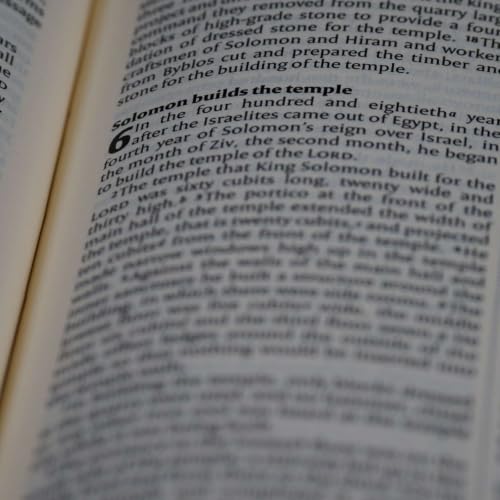
    When we hear St. Paul say in 1 Corinthians, “you are the temple of God, and the spirit of God dwells in you“ we often imagine that he means each one of us is a temple. But that is not true. The “you” of 1 Corinthians 3:16 is not addressed to individuals but to the Church. It is the Church that constitutes the one temple, or “God’s building” as St. Paul had put it in verse 9. It is in the gathering together of his Church, his “called ones” (in Greek ecclesia) that the spirit of God dwells. And in this way the Church is his temple. And since we are dealing with the Biblical God, it is not a temple made of stones. The temple of this God is radically different from the temples of other gods of the ancient world. Those deities could be depicted in representative statues, which were housed in temples made of stone and built by the hands of men. They were attached to both a city and a king, who was the deity’s plenipotentiary. The God of the Bible is not like that. He has no statue, and he doesn’t speak to an earthly king in a palace or temple made of stone. In fact, his first interaction with a people is through Abraham, who is not a king, but rather a Shepherd, a Bedouin sheik (see Genesis 13).


    So when Paul addresses the Corinthian Church in the first century, it is with this understanding of temple - a dwelling place of the spirit of God. Not a building made of stone, but rather anywhere God‘s people are gathered around his word, which is the expression of his will, and led by his spirit. Let’s hear how St. Paul, in chapter 3 of 1 Corinthians, uses the metaphor of architecture - “you are God’s building” and expands on it to show that the work one does in building up the Church can have a permanent, lasting value, or be considered utterly worthless.


    Photo by Brett Jordan.

    続きを読む 一部表示
    15 分
  • The Fruit Of The Spirit.
    2026/07/10

    Love controls all.
    Galatians 5:22-6:2.

    Although the works of the flesh are many, there is one fruit of the Spirit. In Galatians 5, St. Paul teaches the difference between working the works of the flesh (our own desires) and living and walking by the Spirit (God). Doing the latter bears fruit, two of the manifestations of which are joy (χαρά) and peace (εἰρήνη). Both are eschatological, meaning they come at the end. In the meantime, we are called to love with the love of Christ himself, who is gentle (πραΰς) and whose yoke is easy (χρηστὸς).

    Notes
    Matthew 11:29-30

    Photo by Bade Saba.
    Ruff Enuff performed by MonoNeon and Prince. Brand New Orleans performed by Prince.

    続きを読む 一部表示
    8 分
  • Outside The Tent.
    2026/06/07

    Outside The Tent.

    Original intro music composed and performed by Raphael Shaheen.
    “Ruff Enuff” performed by MonoNeon and Prince.

    続きを読む 一部表示
    15 分
  • The Next Generation.
    2026/04/18

    The Next Generation.

    In Scripture, the mercy of God is expressed in his extending life to the next generation. We hear this demonstrated in two parallel stories in the Gospel of Mark: one in the raising of Jairus’ daughter in chapter 5, and the other in the healing of the man’s son with a mute spirit in chapter 9. In both of these, we hear the same terminology, presented in the same sequence, found later in the New Testament when Paul speaks of Jesus being raised from the dead and then standing in that raised position. When we understand how these two verbs, ἐγείρω and ἀνίστημι, work, we realize why the English translation of the Nicene Creed says (following 1 Thessalonians) that Christ “rose again from the dead.”
    Χριστός Ανέστη! Christ is risen!


    Notes:
    Joshua 4:5; 8:30-35
    Mark 5:35-43; 7:24-30; 9:25-27
    1 Corinthians 10:1-11
    Galatians 1:1
    1 Thessalonians 4:14
    ἐγείρω - to raise up; to lift up
    ἀνίστημι - to be raised up, to be in the raised, standing position

    Music courtesy of Crystal Ball rehearsals.
    Read the article on Substack -https://open.substack.com/pub/alighttothenations/p/the-next-generation?r=1wf6e9&utm_medium=ios

    続きを読む 一部表示
    13 分
  • St. Anger.
    2026/03/27

    Don’t Try This At Home.

    If you were to ask someone if Jesus ever got angry, they would probably say yes and refer to the story where he overturns the tables of the money changers. But that’s not accurate. All four of the gospels include a passage about Jesus overturning tables but in none of them does it say anything about his being angry. The noun ὀργῆς (orgēs),

    anger, appears in Mark 3:5, and it’s a unique example of this word being applied to Jesus. When we are accustomed to understanding anger as sin, then this is a problem. In the gospels Jesus is presented like Isaiah’s suffering servant, one who does the will of his God and father without arguing, complaining or trying to figure it out. Moreover, in the gospels, as in Isaiah, it is the will of the Lord that his servant is bruised, is smitten. For no reason. In other words, he didn’t do anything to incur being struck. He is faultless, blameless - without sin. How then do we reconcile that with this passage from the Gospel of Mark?

    Join me in a discussion of Mark 3:1-6.


    Notes:
    Matthew 5:21-22
    ὀργῆς (orgēs) - anger


    Abba Poemen of Egypt.

    “Voodoo Who” and “Run Amok” performed by the Flesh.

    続きを読む 一部表示
    8 分