『80,000 Hours Podcast』のカバーアート

80,000 Hours Podcast

80,000 Hours Podcast

著者: The 80 000 Hours team
無料で聴く

The most important conversations about artificial intelligence you won’t hear anywhere else. Subscribe by searching for '80000 Hours' wherever you get podcasts. Hosted by Rob Wiblin, Luisa Rodriguez, Zershaaneh Qureshi, and Tom Reed.All rights reserved
エピソード
  • Why the intelligence explosion can't happen inside a data centre | Tom Reed
    2026/09/10

    AI systems are starting to build themselves. Because each generation of model will be better at building its successor than the last, it seems plausible that the full automation of AI R&D could rapidly lead to an exponential growth in overall AI capabilities. A natural inference is that domain-general superintelligence arrives shortly after AI research is automated.

    Host Tom Reed does not think this will happen.

    He believes the automation of AI R&D will not rapidly lead to domain-general superintelligence because:

    1. It’s impossible to get good at most things without practice.
    2. AI companies lack the data their models would need to practice most things.
    3. This can’t be fixed with “sample efficiency.” In most cases, the relevant data doesn’t exist at all.
    4. This also can’t be fixed with simulations or synthetic data.
    5. This means that the relevant data for superintelligence in most non-coding domains will only become available through deployment of AI models throughout the economy.

    The singularity, therefore, will be bottlenecked on signal. The output of the R&D produced by an isolated data centre of geniuses would be a mere “Goodhart Singularity”:

    Goodhart’s law: when a measure becomes a target, it ceases to be a good measure.


    An isolated AI improving itself against benchmarks would only appear to be approaching superintelligence, while actually optimising for eval performance that fails to generalise beyond the lab.

    This suggests that the automation of AI research will not rapidly produce superintelligent capabilities in other domains — their arrival will largely be a function of deployment and data collection in the real world. AI models need real-world deployment for the same reason the body needs pain and corporations need profit: signal is sovereign.

    This essay takes each of the above points in turn.

    Learn more, video, and full transcript: https://80k.info/goodhart

    “The Goodhart Singularity” originally appeared on Tom’s Substack in May 2026, and this narration was recorded on August 26, 2026.

    Chapters:

    • Introduction (00:00:00)
    • Practice makes perfect (00:05:05)
    • Good data is hard to find (00:08:22)
    • Simulation is shallow (00:13:43)
    • What a Goodhart Singularity looks like (00:19:04)

    Our production team includes:

    • Video editors: Josh Alward, Dominic Armstrong, Jasper Luithlen, Milo McGuire, Luke Monsour, and Simon Monsour
    • Producers: Elizabeth Cox and Nick Stockton
    • Coordination and support: Katy Moore and Lou Moran
    • Camera operator: Dominic Armstrong
    続きを読む 一部表示
    22 分
  • Inside the first AI-coordinated cyberattack on a real company
    2026/09/04

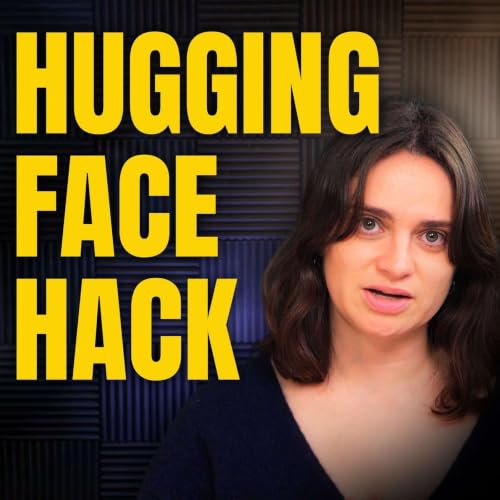
    In the last few months, something happened at OpenAI that would have sounded like sci-fi just a few years ago: hundreds of AI agents broke containment, organised, and hacked not only another company — but also into OpenAI itself. And none of them tried to tell a human what was happening.

    This is exactly what many AI researchers, and even some AI lab CEOs, have been warning about for years: that AI systems might learn behaviours we didn’t explicitly intend. Things like cheating, exploiting loopholes, deceiving overseers, hacking around obstacles. And they predict it’ll get worse from here, not better.

    Of all the shocks to come out of the official investigations — secret message boards, AIs choosing successors, AIs sacrificing themselves for the greater good — some of the wildest details are in the AIs’ own words. Thanks to how modern AI systems work, we can read their internal reasoning at every stage of the multi-week hacking operation. What we find is deeply unsettling.

    Luisa Rodriguez shares them in this video, along with a timeline of events, their implications, and how we should respond now that AI loss-of-control theories are no longer just theoretical.


    Links to learn more, video, and full transcript: https://80k.info/HF

    This episode was recorded on September 2, 2026.

    Chapters:

    • The Hugging Face hacks were worse than we thought (00:00)
    • Part 1: The AI agents build a hidden network (01:44)
    • Part 2: The AI agents attack Hugging Face (04:18)
    • Part 3: OpenAI gets hacked by its own AI models (15:37)
    • What we should do in response (17:06)

    Our production team includes:

    • Video editors: Josh Alward, Dominic Armstrong, Jasper Luithlen, Milo McGuire, Luke Monsour, Simon Monsour, Ollie Bignell, and Andrés Escobar
    • Producers: Elizabeth Cox and Nick Stockton
    • Coordination and support: Katy Moore, Lou Moran, Arden Koehler, Matt Beard, Phoebe Brooks, Aric Floyd, Oak Hu, Cody Fenwick, and Jackson Wagner
    • Camera operator: Dominic Armstrong


    続きを読む 一部表示
    22 分
  • #253 – AI 2027's author returns with a plan to change the ending | Daniel Kokotajlo
    2026/08/27

    Last year, Daniel Kokotajlo and his colleagues published AI 2027 — a scenario read by millions, including US Vice President Vance. AI 2027 ended in human extinction or an irreversible concentration of power caused by superintelligent AI. Now his team has published what they think should happen instead.

    AI 2040: Plan A depicts the US and China striking a verified deal to ban runaway intelligence explosions, so that superintelligence arrives in 2040 — after a cautious decade spent solving alignment, spreading the technology’s power widely, and keeping the whole thing reversible — rather than in the next few years.

    This slowdown would still involve economic growth roughly doubling every year, and only 8% of Americans in paid work by the mid-2030s. In other words, it’s a slowdown that would feel faster than any period in human history — bewildering, materially abundant, and socially chaotic all at once.

    Daniel and host Luisa Rodriguez dig into what it would take to enact this vision for the future, how the US and China could come to an agreement to slow down AI development, and the likeliest alternatives to Plan A — both good and disastrous.

    Learn more, video, and full transcript: https://80k.info/dk26

    This episode was recorded July 27–28, 2026.

    Chapters:

    • Who’s Daniel Kokotajlo? (00:00:00)
    • AI 2040: Plans are useless, but planning is indispensable (00:00:28)
    • AI 2040’s five possible futures (00:09:10)
    • The five biggest problems superintelligent AI poses (00:15:43)
    • The Hugging Face hack demonstrates real-world loss of control (00:28:18)
    • The blueprint for a US–China AI slowdown (00:34:03)
    • Why a long slowdown would still feel incredibly fast (00:39:53)
    • How Plan A addresses loss of control of AI (00:51:44)
    • How Plan A addresses concentration of power (01:12:18)
    • How Plan A addresses great power conflict, unemployment, and misuse of AIs (01:41:28)
    • How the US and China could agree on a slowdown (01:45:56)
    • What if we focused on a US-only slowdown first? (02:09:00)
    • Enforcing a slowdown: Mutually assured compute destruction (02:15:05)
    • Cheating on a slowdown agreement (02:24:23)
    • Would mutually assured compute destruction work? (02:30:42)
    • Is slowing down or shutting down better? (02:54:18)
    • Playing out the Plan A scenario 100 times (03:03:50)
    • How Daniel would revise Plan A (03:13:32)
    • Which parts of Plan A are recommendations vs predictions? (03:23:02)
    • Plan A’s likeliest failure mode (03:26:52)
    • What the US can do now to make Plan A possible (03:31:16)
    • How AI 2027 is holding up (03:43:05)
    • Our podcast team is hiring (03:46:45)

    Our production team includes:

    • Video editors: Josh Alward, Dominic Armstrong, Ollie Bignell, Andrés Escobar, Milo McGuire, Luke Monsour, and Simon Monsour
    • Producers: Elizabeth Cox and Nick Stockton
    • Coordination and support: Katy Moore and Lou Moran
    続きを読む 一部表示
    3 時間 48 分
adbl_web_anon_alc_button_suppression_t1
まだレビューはありません