

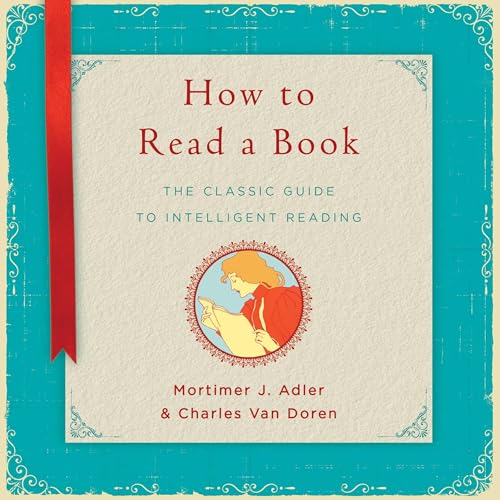
How to Read a Book
The Classic Guide to Intelligent Reading
カートのアイテムが多すぎます
ご購入は五十タイトルがカートに入っている場合のみです。
カートに追加できませんでした。
しばらく経ってから再度お試しください。
ウィッシュリストに追加できませんでした。
しばらく経ってから再度お試しください。
ほしい物リストの削除に失敗しました。
しばらく経ってから再度お試しください。
ポッドキャストのフォローに失敗しました
ポッドキャストのフォロー解除に失敗しました
聴き放題対象外タイトルです。Audibleプレミアムプラン登録で、非会員価格の30%OFFで購入できます。
オーディオブック・ポッドキャスト・オリジナル作品など数十万以上の対象作品が聴き放題。
オーディオブックをお得な会員価格で購入できます。
30日間の無料体験後は月額¥1500で自動更新します。いつでも退会できます。

How to Read a Book
ナレーター:
David Tredinnick
¥2,600 で購入
-
ナレーター:
-
David Tredinnick
Originally written in 1940 and first published by Simon & Schuster in 1972, How to Read a Book introduces and elucidates the various levels of reading and how to achieve them in order to gain the most understanding and insight from any book. From elementary reading, through systematic skimming and inspectional reading, to speed reading and beyond, readers will learn when and how to ‘judge a book by its cover,’ perceive structure no matter the prose, read critically, and extract an author’s message from any text.
Also included are specific reading techniques that work best for particular genres, whether they be practical books, imaginative literature, plays, poetry, history, science and mathematics, philosophy or social science works. A recommended reading list and multiple reading comprehension tests are incorporated as well in order to measure progress in reading skills, speed, and understanding.
As poignant and applicable today as it was on first publication, this beautiful, special hardcover edition is the perfect way for new readers to pick up How to Read a Book and for dedicated fans to rediscover this rare phenomenon, the best and most successful guide to reading comprehension.
adbl_web_anon_alc_button_suppression_t1
批評家のレビュー
‘It shows concretely how the serious work of proper reading may be accomplished and how much it may yield in the way of instruction and delight.’
‘These four hundred pages are packed full of high matters which no one solicitous of the future of American culture can afford to overlook.’ (Jacques Barzun, historian)
‘“There is the book; and here is your mind.” Adler and Van Doren’s suggestions on how to connect the two will make you nostalgic for a slower, more earnest, less trivial time.’ (Anne Fadiman, essayist)
まだレビューはありません