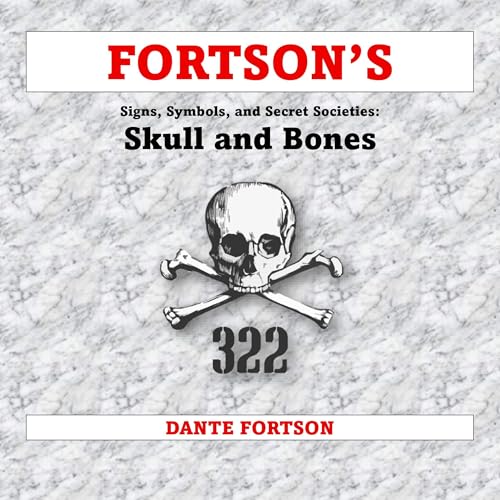
Fortson's Signs, Symbols, and Secret Societies: Skull and Bones
カートのアイテムが多すぎます
カートに追加できませんでした。
ウィッシュリストに追加できませんでした。
ほしい物リストの削除に失敗しました。
ポッドキャストのフォローに失敗しました
ポッドキャストのフォロー解除に失敗しました
Audibleプレミアムプラン30日間無料体験

Fortson's Signs, Symbols, and Secret Societies: Skull and Bones
¥750 で購入
-
著者:
-
Dante Fortson

この作品は、デジタルナレーションを使用しています
The mythos of the American power elite is often centered on a windowless, Neo-Gothic brownstone on High Street in New Haven, Connecticut. This is "The Tomb," the windowless headquarters of the Skull and Bones, perhaps the most influential and misunderstood secret society in global history. Founded in 1832 at Yale University, it was never intended to be a mere social club. Instead, it was designed as a crucible for leadership, a place where the scions of the American Brahmin class would be forged into a cohesive unit of political, economic, and cultural influence.
For nearly two centuries, the society has operated under a veil of deliberate obscurity. Its members, known as "Bonesmen," are sworn to a silence that many have maintained even unto death. Yet, the fingerprints of the society are found on the most significant events of the modern era, from the creation of the Central Intelligence Agency to the highest echelons of the executive branch. To understand Skull and Bones is to understand the evolution of the American Establishment, a transition from hereditary wealth to meritocratic, yet insular, power.
This history explores the society not as a cartoonish cabal, but as a functional network of patronage. We will examine its origins in the tensions of 19th-century Yale, its expansion into the "Eastern Establishment" during the World Wars, and its resilience in the face of modern scrutiny. By examining both the well-documented political ascents and the obscure, ritualistic traditions involving "Geronimo’s skull" and the number "322," we can begin to peel back the layers of a fraternity that has seen three of its members become President of the United States.
シリーズを続ける