

Is This Just My Life Now?
カートのアイテムが多すぎます
カートに追加できませんでした。
ウィッシュリストに追加できませんでした。
ほしい物リストの削除に失敗しました。
ポッドキャストのフォローに失敗しました
ポッドキャストのフォロー解除に失敗しました

Is This Just My Life Now?
-
ナレーター:
-
著者:
Every morning it takes you 20 minutes to loosen up. Getting off the couch has become a production. So you start to wonder: is this just my life now? If that sounds familiar, this episode is for you.
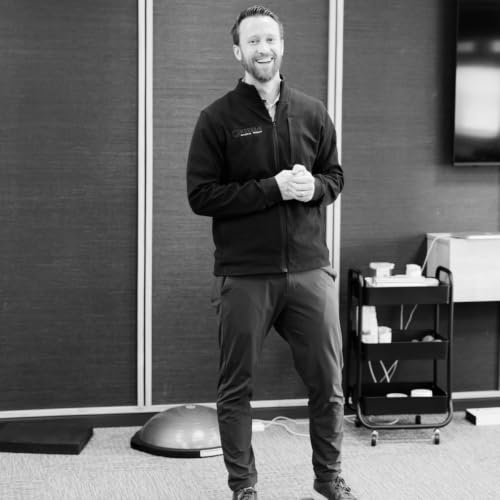
In this live Q&A session, Ricky Morgan, physical therapist and owner of MORGAiN Physical Therapy in Grand Forks, ND, explains why the way your body feels first thing in the morning tells a story, and why it’s a story you can change.
Ricky’s short answer to “Is this just my life now?” is no. But what happens next depends on one decision: will you choose activity or inactivity? Choose inactivity, and stiffness grows, it takes longer to loosen up each morning, and getting out of a chair keeps getting harder. And if it hurts too much to move, that usually doesn’t mean you should stop moving. It means you need the right exercise, in the right position, at the right dose.
Why do you feel so stiff getting out of bed? While you sleep, your body is busy recovering, but your joints aren’t moving through their range or getting much blood flow. The discs in your spine soak up fluid overnight, which can add to that tight, compressed feeling first thing in the morning. Once you start moving, your joints lubricate, blood starts flowing, and the stiffness eases. Some morning stiffness is normal. But if you can barely get out of bed, movement doesn’t help, and nothing seems to ease it, that’s when to get checked out.
Struggling to get out of a chair is a different story. Sitting for long stretches compresses your glutes and limits blood flow. Over time, that becomes a strength and capacity issue, and that’s trainable.
Ricky shares a simple two-to-three-minute morning routine for your back:
- Lying on your back with your knees bent, gently rock your knees side to side.
- Do an active hamstring stretch: hold behind your thigh and slowly straighten and bend your knee.
- Try press-ups: lie on your stomach and press your upper body up while keeping your low back relaxed.
- Do pelvic tilts in your chair, gently arching and slouching to get your spine moving.
These won’t suit everyone. If they increase your pain, get evaluated.
Myth: Morning stiffness is just a normal part of aging. Reality: How long your stiffness lasts and how fast it loosens up are useful information, and both often improve with the right movement habits. If it were simply your age, everyone your age would feel the same. Yet plenty of people in their 70s and 80s are running 10Ks and lifting weights because they chose to invest in activity.
Is your mattress or pillow to blame? Possibly, if it’s ten years old. But a new mattress rarely fixes the problem on its own. Ricky asks you to look at your day instead. If you sit for breakfast, for the drive, for an eight-hour workday, for dinner, and for your evening show, that has more to do with your stiffness than your bed does. If you sleep on your side, a pillow between your knees keeps your hips in a better position, and a neck roll can support your neck.
Does poor sleep make pain worse? Absolutely. When you don’t sleep well, your nervous system gets stuck in fight-or-flight mode and becomes more sensitive, so things that shouldn’t hurt start to hurt. That’s why some people have real pain even when every test comes back normal. It isn’t in your head. Your nervous system is in protection mode. Add afternoon caffeine to get through the day, and the cycle keeps going. Ricky’s sleep habits:
- Keep caffeine to the morning and drink more water.
- Move every day, working up to walking about two miles.
- Put the screen away before bed. Read a real book in dim light instead.
- Wake up at the same time every day.
Morning stiffness is information, not a life sentence. With the right plan, you can arrive at 80 feeling 60.
Ready to start? Download the free Active Longevity Guide, request a free copy of Ricky’s book, Don’t Just Retire Rich, Retire Strong, or book a free Discovery Visit to find out what’s driving your stiffness.
Hosted on Acast. See acast.com/privacy for more information.