エピソード

  • The Tragic Tale of the Consoles: A Dive Into History and Maritime Mystery
    2026/02/03


    Introduction: In the depths of the Atlantic Ocean lies a shipwreck that tells a story of tragedy and loss. The Consoles, an English freighter, met a fiery end off the Virginia coast in 1912, carrying with it not just cargo, but the hopes of its crew. Join us as we explore the fascinating history of the Consoles, the circumstances surrounding its demise, and the lessons we can learn about maritime safety today.


    The Consoles: A Brief History


    Constructed in 1898 by Bartram and Sons in Sunderland, England, the Consoles was a 3500 gross ton freighter that played a significant role in transatlantic trade. This ship was not just a vessel; it was a symbol of the industrial age, transitioning from wooden sailing ships to iron and finally steel. The Consoles routinely transported cotton from Texas to England, a journey fraught with peril in the waters known as the Graveyard of the Atlantic.


    The Graveyard of the Atlantic


    The waters off the coast of North Carolina and Virginia have earned the nickname "Graveyard of the Atlantic" for good reason. While the Consoles met its tragic fate due to an onboard fire rather than enemy action, thousands of ships have succumbed to the treacherous conditions of these waters over the centuries. The area was notorious for its dangerous currents and unpredictable weather long before the advent of German U-boats in the World Wars.


    The Fire That Led to Disaster


    On February 3, 1912, while off the coast of South Carolina, the Consoles caught fire in its forward hold, ignited by the very cargo it was transporting—9,500 bales of cotton. The crew fought bravely to contain the flames for over 20 hours, but despite their efforts, the situation deteriorated. Captain Jones managed to send out a distress signal, which was picked up by nearby vessels, including the steamship Texas and the British steamer Castle Eden. Unfortunately, by the time help arrived, the fire had engulfed the ship, forcing the crew to abandon it.


    An Unfortunate End


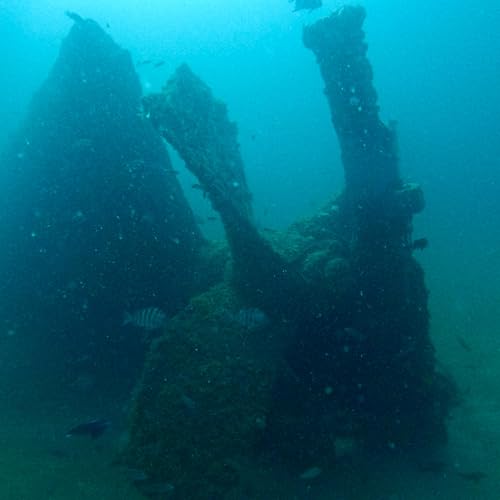
    The Consoles ultimately succumbed to the flames, slipping beneath the waves after nearly 20 hours of struggle. Its last known location was reported to be 33 miles south of Cape Henry, Virginia Beach. To this day, the wreck remains unconfirmed, presenting a unique opportunity for divers to explore and potentially identify the ship through artifacts that bear the shipbuilder's name.


    Maritime Safety Then and Now


    The tragic sinking of the Consoles highlights the evolution of maritime safety. In 1912, the communication methods available were rudimentary compared to today’s advanced systems. Capt Tom discusses the significant differences in emergency protocols, emphasizing how modern captains would now call for help at the first sign of smoke or fire. Today, ships are equipped with fire doors and rated bulkheads to contain potential disasters and advanced communication systems, including satellite phones and emergency beacons.


    The Importance of Technology


    In the face of emergencies, technology has transformed how mariners respond to distress. The use of VHF radios, EPIRBs (Emergency Position-Indicating Radio Beacons), and satellite communicators has greatly improved chances of survival. Capt Tom notes that while technology has advanced, the maritime community remains tightly knit, and nearby vessels often play a crucial role in rescues, much like they did in the case of the Consoles.


    Conclusion: Key Takeaways


    The story of the Consoles is a somber reminder of the dangers that lie beneath the waves. As we reflect on this maritime tragedy, we recognize the importance of continuous improvement in safety protocols and technology. While the Consoles' tragedy was a result of unfortunate circumstances, the lessons learned have paved the way for safer navigation and emergency response in modern maritime operations. The legacy of the Consoles lives on, not just as a wreck to explore, but as a testament to the resilience of the human spirit in the face of adversity.


    続きを読む 一部表示
    28 分
  • Francis E. Powell: A Wartime Casualty
    2026/01/29

    Introduction:

    In the depths of the Atlantic, tales of bravery and tragedy unfold, particularly during the tumultuous years of World War II. One such story is that of the SS Francis E. Powell, an American tanker that met a harrowing fate off the Virginia coast. Join us as we explore the events leading up to its sinking and the human stories intertwined within this maritime disaster.


    Main Content:

    **The Role of the SS Francis E. Powell**

    The SS Francis E. Powell, a 7,096 gross ton tanker, was built in the early 1920s and owned by the Atlantic Refining Company of Philadelphia. It played a crucial yet often overlooked role during World War II, transporting fuel oil and gasoline along the eastern seaboard. As the war escalated, these tankers became prime targets for German U-boats, aiming to disrupt vital fuel supplies to the Allies. According to Ben, our dive master, "Being a tanker off the East Coast in 1942 was extremely dangerous."


    **The Fateful Journey**

    On January 27, 1942, the Powell set sail from Port Arthur, Texas, loaded with 80,000 barrels of unescorted and blacked-out fuel, bound for Providence, Rhode Island. As it navigated the Virginia coast, the crew remained unaware of the impending doom. At 09:43, the German submarine U-130, commanded by Captain Lieutenant Ernst Kahls, fired a torpedo that struck the Powell on its port side, igniting chaos on board.


    **The Attack and Its Aftermath**

    The torpedo hit between tanks four and five, causing oil to leak into the ocean as a thick black sludge. A fire erupted in the pump room, destroying the ship's radio antenna, rendering the crew unable to call for help. The situation quickly escalated into chaos as the ship began to list and burn. By 2 PM, the Powell had broken into two and sank into the frigid Atlantic, with debris and survivors scattered across the water.


    **Survival Against the Odds**

    Out of the 32 crew members, four tragically lost their lives, including the captain. The remaining 28 survivors faced freezing temperatures, gale-force winds, and rough seas while desperately clinging to life rafts and debris. Rescued nearly nine hours later by nearby vessels responding to the sight of lifeboats, the survivors' ordeal highlights the perilous nature of maritime operations during the war.


    **The Broader Context of U-Boat Warfare**

    The sinking of the Powell was not an isolated incident but part of a larger narrative of warfare in the Atlantic. As Captain Tom pointed out, "The Atlantic was a hunting ground for U-boats," during the early years of America’s involvement in the war. The term "Torpedo Alley" was often used to describe the stretch of ocean where these attacks were rampant, particularly along the Virginia and North Carolina coasts.


    **Evolution of Submarine Warfare**

    Interestingly, the technology of submarines has evolved considerably since World War II. While today's submarines can dive to great depths, the submarines of that era, primarily diesel-powered, were designed for surface operations with the ability to dive when threatened. This limitation necessitated attacks in shallower waters, making U-boats particularly dangerous along the eastern United States coastline.


    Conclusion:

    The tragic sinking of the SS Francis E. Powell serves as a poignant reminder of the dangers faced by maritime crews during World War II. While the story may be one of loss, it also reflects resilience and the human spirit's capacity to endure in the face of adversity. Key takeaways from this maritime disaster include the importance of understanding the historical context of wartime logistics and the evolution of naval warfare technology.


    Tags: SS Francis E. Powell, World War II, maritime history, U-boats, tanker sinking, Atlantic Ocean, naval warfare, shipwrecks, survival stories, Kraken Charters.

    続きを読む 一部表示
    23 分