• Ukraine’s Secret Drone Factories: War Turns Into Export Business
    2026/04/21

    In this episode we uncover a surprising story from the Ukraine war: at least ten private Ukrainian companies secretly built drone factories in other countries and sold thousands of interceptor drones abroad — while Ukraine’s own military faced critical shortages on the front lines.

    President Zelenskyy publicly revealed the issue, highlighting how one company alone sold 1,000 drones for $3.5 million. We explore the reasons behind these secret overseas operations, the tension between private profit and national defense, the innovation that made Ukrainian drones attractive worldwide, and the risks of technology leakage.

    This story reveals how modern conflicts are quietly turning into export industries and raises tough questions about balancing business incentives with wartime survival.

    This episode uses AI-generated voice for narration.

    続きを読む 一部表示
    21 分
  • Myanmar The War That Never Ends… Or Is It Just That No One Wants to Lose
    2026/04/20

    Myanmar: The War That Never Ends… Or Is It Just That No One Wants to Lose?

    Why has Myanmar been trapped in civil war for more than five years since the 2021 military coup — and why does this conflict actually stretch back nearly 80 years?

    In this episode, we take a calm, clear look at one of the world’s longest-running and most overlooked conflicts. From the ethnic tensions that began right after independence in 1948, through decades of rebellion and uneasy ceasefires, to the dramatic 2021 coup that turned peaceful protests into a full-scale civil war.

    We break down the current painful stalemate: • The military junta still controls the big cities and economic heartland • Resistance forces and ethnic armed groups dominate the borderlands and rural areas • Why neither side can achieve total victory

    You’ll also discover: • China’s clever two-sided strategy and how it keeps the war going • The role of Russia and Iran in supplying the junta • Why Western countries and ASEAN mostly stay on the sidelines • The devastating human cost — destroyed schools and hospitals, millions facing hunger, and a lost generation of young people • How this “forgotten war” directly affects Thailand and the rest of Southeast Asia through refugees, border instability, and the drug trade

    This is not just another news update. It’s a big-picture story about power, identity, geopolitics, and why some wars refuse to end.

    If you want to understand why Myanmar’s suffering continues in 2026 — and why the world should still care — this episode is for you.

    続きを読む 一部表示
    22 分
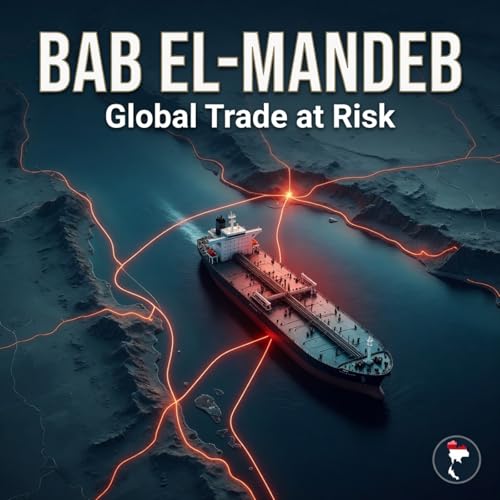
  • Why Bab el-Mandeb Has Become the World’s Most Dangerous Chokepoint
    2026/05/06

    Imagine a giant oil tanker leaving Saudi Arabia’s Red Sea port… but instead of taking the usual short route, it turns south toward a narrow strait most people have never heard of.

    In this episode, we explore why the Bab el-Mandeb Strait has quietly become one of the most critical — and dangerous — chokepoints on the planet. We look at how this tiny 29-kilometer-wide passage connects three continents, carries 12% of global trade and 10% of the world’s traded oil, and why even Saudi Arabia is now rerouting its tankers because of tensions in the Strait of Hormuz.

    From the domino effect between Hormuz and Bab el-Mandeb, to the real risks of attacks and blockages, the costly detour around Africa’s Cape of Good Hope, and what it all means for oil prices and everyday life in Thailand — this is a calm, thoughtful look at the fragile arteries of our global economy.

    This is not just today’s headline. The geography hasn’t changed, trade keeps growing, and these narrow passages will remain vital for years to come.

    続きを読む 一部表示
    21 分
  • “Honest Living” or Deportation: Why Sweden Is Changing the Rules for Migrants
    2026/05/06

    Sweden was once celebrated as Europe’s most generous “humanitarian superpower.” But in 2026, the government proposed a controversial new law: migrants must live an “honest life” (bristande vandel) — or risk losing their residence permit and facing deportation.

    What does “honest living” really mean? Why is Sweden changing course after years of open-door policies? And can generous welfare systems survive if newcomers aren’t expected to contribute?

    In this thoughtful episode, we explore the economic realities, the erosion of social trust, success stories of real integration, voices of concern from human rights groups, and what this shift means for Europe and the world.

    A calm, balanced look at one of the biggest migration debates of our time.

    続きを読む 一部表示
    25 分
  • North Korea’s Hidden Engine: How One Rocket Test Could Slowly Reshape the World
    2026/05/04

    In a quiet mountain valley in North Korea, a powerful new solid-fuel rocket engine roared to life while the leader watched closely. What looked like one technical test may quietly signal a deeper shift in global power.

    In this thoughtful episode, we explore the science behind the lighter, stronger carbon-fiber engine, why solid fuel changes the game, and how this development ripples across East Asia and beyond. From worried neighbors in South Korea and Japan to subtle shifts in superpower balance, we also gently examine what it means for trade, energy prices, and regional stability in Southeast Asia – including Thailand.

    Blending calm storytelling with balanced analysis, this episode looks at missiles not just as weapons, but as tools of negotiation, persistence, and long-term strategy. Perfect for anyone who wants to understand the bigger picture without the daily noise.

    続きを読む 一部表示
    21 分
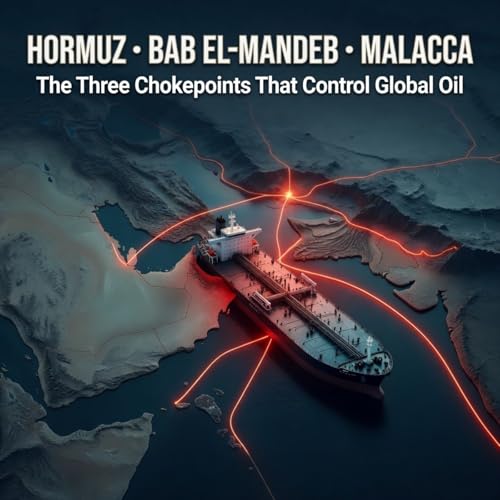
  • The Three Chokepoints That Control Global Oil: Hormuz, Bab el-Mandeb & Malacca
    2026/05/02

    What if three tiny strips of water could suddenly raise the price of fuel and affect almost everything you buy?

    In this episode, we take a calm, thoughtful journey into the three most important chokepoints that control global oil: the Strait of Hormuz, Bab el-Mandeb, and the Strait of Malacca.

    Together, these narrow passages carry nearly 30% of the world’s traded oil every day. We explore how oil flows through this invisible global highway — from the Persian Gulf through Hormuz, past Bab el-Mandeb and the Suez Canal, or eastward through the busy Strait of Malacca to Asia.

    We also look at the real risks, the domino effect when one strait faces trouble, the costly detours ships must take, and the long-term efforts to make the system more secure.

    This is not just today’s headline. The geography hasn’t changed, trade keeps growing, and these strategic passages will remain vital for years to come.

    A deep yet accessible look at the fragile arteries that keep our modern world running.

    続きを読む 一部表示
    19 分
  • Germany’s Travel Control vs Norway’s Gender-Equal Army: Two European Paths to Military Readiness
    2026/05/01

    In this thoughtful exploration, we compare two fascinating European approaches to military service in the 21st century.

    Germany has introduced new rules under its Military Service Modernization Act: men aged 17–45 must now seek Bundeswehr approval for stays abroad longer than three months. It’s not full conscription, but a quiet system of data control to strengthen reserves while keeping daily life mostly uninterrupted.

    In contrast, Norway runs one of Europe’s most progressive models — selective, gender-neutral conscription since 2015. Both young men and women register, and only the most motivated and capable (about 17% of the age group, with women making up roughly one-third) serve 12–19 months. Many Norwegians actually compete to get in, seeing it as a prestigious and valuable experience.

    We dive deep into the reasons behind each system, their real-life effects on young people’s education and careers, the trade-offs between personal freedom and national security, gender equality perspectives, societal impacts, and timeless lessons for other countries.

    A calm, balanced look at how nations balance duty and liberty in an uncertain world.

    続きを読む 一部表示
    18 分
  • Strait of Hormuz: The Chokepoint That Controls Oil… and Global Food
    2026/04/30

    In this thoughtful episode, we explore one of the world’s most critical yet overlooked chokepoints — the Strait of Hormuz. While most people see it only as an oil route, this narrow 21-mile waterway also controls a massive share of global fertilizer trade.

    Discover how disruptions here quietly ripple through fertilizer production and transport, affecting everything from wheat and rice yields to cooking oil, sugar, meat, and milk on dinner tables worldwide. We follow the journey from natural gas in the Persian Gulf to the fields that feed billions, and examine the deeper, longer-lasting impacts on food security.

    From the hard choices faced by farmers to the human cost in vulnerable communities — especially children at risk of stunting and long-term hunger — this episode connects distant geopolitics to everyday life with calm, human storytelling.

    A timely yet evergreen look at global interconnection, resilience, and the hidden foundations of the food we eat every day.

    続きを読む 一部表示
    31 分