『Word on the Reef』のカバーアート

Word on the Reef

Word on the Reef

著者: Tanya Murphy
無料で聴く

概要

Diving into marine science adventures on the Great Barrier Reef and beyond!© 2026 Word on the Reef 生物科学 科学
エピソード
  • S3 E4: Reef Time Capsules: What Coral Cores Reveal About the Reef’s Past
    2026/03/07

    Did you know coral skeletons contain a record of every flood event in Queensland since 1648?

    We often hear that climate and water pollution conditions on the Great Barrier Reef have changed dramatically since pre-industrial times. But how do we actually know that? After all, weather records only stretch back just over a century, and systematic water quality monitoring only began in the 1980s.

    The answer is written in the corals themselves. By extracting a core sample — much like studying tree rings — scientists can read the chemical signatures locked inside the growth layers of coral skeletons, revealing what ocean conditions were like hundreds of years ago.

    So what stories are those coral cores telling us? To find out, we’re joined today by Dr Stephen Lewis, Senior Principal Research Officer specialising in water quality at James Cook University in Townsville.


    Support the show

    Help Keep Word on the Reef Afloat!
    Please take 2 minutes to fill out our Word on the Reef Listener Survey to help us apply for funding for the show!

    PROTECT THE REEF - Sign these Petitions Now!

    • Australian Marine Conservation Society: Australia, it's time to lead on Climate Action!
    • Divers for Climate: Sign the 'I'm a Diver for Climate' National Statement
    • Australian Conservation Foundation: No New Coal and Gas!
    • Queensland Conservation Council: Take Strong Climate Action and Build a Positive Renewable Future!
    • Our Islands Our Home: Protect the Torres Strait Islands from Climate Change
    • Greenpeace: Save the Great Barrier Reef!
    • WWF Australia: Protect Nature
    • Rising Tide: ...
    続きを読む 一部表示
    44 分
  • S3 E3: Coral 2.0: Can Technology Save the Great Barrier Reef?
    2026/03/01

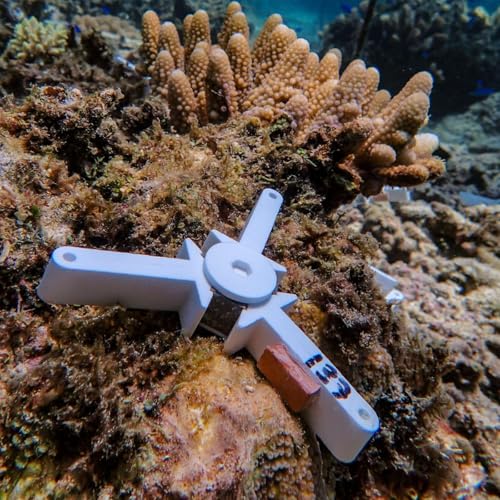
    For thousands of years, the Great Barrier Reef has had the power to regenerate itself — so until 2017, coral transplantation was illegal. The rule was simple: let nature recover itself. Then mass bleaching events driven by global warming changed everything.

    This summer, for the first time, scientists released tens of thousands of genetically selected, heat-tolerant baby corals - attaching them to ceramic stars and dropping them from boats in a bid to boost survival. The ambitious goal of this government-funded project is to plant millions of these devices using robots.

    But can engineered human intervention work at the scale of an ecosystem the size of Japan? Is restoration a lifeline - or a distraction from cutting emissions? And what’s riskier: playing God with nature, or doing nothing?

    This week, we're joined by Dr Cedric Robillot, Executive Director of the Reef Restoration and Adaptation Program, to explore what the Reef’s future looks like — because one thing is certain: it won’t resemble its past.

    Support the show

    Help Keep Word on the Reef Afloat!
    Please take 2 minutes to fill out our Word on the Reef Listener Survey to help us apply for funding for the show!

    PROTECT THE REEF - Sign these Petitions Now!

    • Australian Marine Conservation Society: Australia, it's time to lead on Climate Action!
    • Divers for Climate: Sign the 'I'm a Diver for Climate' National Statement
    • Australian Conservation Foundation: No New Coal and Gas!
    • Queensland Conservation Council: Take Strong Climate Action and Build a Positive Renewable Future!
    • Our Islands Our Home: Protect the Torres Strait Islands from Climate Change
    • Greenpeace: Save the Great Barrier Reef!
    • WWF Australia: Protect Nature
    • Rising Tide: ...
    続きを読む 一部表示
    1 時間 1 分
  • S3 E2: Dissolving Coral: Ocean Acidification and the Future of Coral Reefs
    2026/02/23

    Our oceans are 40% more acidic than pre-industrial times, making it harder for corals, molluscs, crustaceans and plankton to build their calcium carbonate skeletons. It's a crucial planetary boundary we've crossed — threatening reefs, fisheries, tourism, food security, and coastal communities. And almost no one is talking about it.

    So what’s driving it? What does it mean for the Great Barrier Reef? And what can we do?

    This week on Word on the Reef, we’re joined by Dr Katharina Fabricius from the Australian Institute of Marine Science — a global leader in coral reef ecology and ocean acidification research — to unpack the science and the solutions.

    Read Dr Fabricius's research: Volcanic bubbles help foretell the fate of coral in more acidic seas

    Thumbnail image: CO2 bubbles emerging from volcanic seeps in Papua New Guinea. Dr Katharina Fabricius

    Support the show

    Help Keep Word on the Reef Afloat!
    Please take 2 minutes to fill out our Word on the Reef Listener Survey to help us apply for funding for the show!

    PROTECT THE REEF - Sign these Petitions Now!

    • Australian Marine Conservation Society: Australia, it's time to lead on Climate Action!
    • Divers for Climate: Sign the 'I'm a Diver for Climate' National Statement
    • Australian Conservation Foundation: No New Coal and Gas!
    • Queensland Conservation Council: Take Strong Climate Action and Build a Positive Renewable Future!
    • Our Islands Our Home: Protect the Torres Strait Islands from Climate Change
    • Greenpeace: Save the Great Barrier Reef!
    • WWF Australia: Protect Nature
    • Rising Tide: ...
    続きを読む 一部表示
    47 分
まだレビューはありません