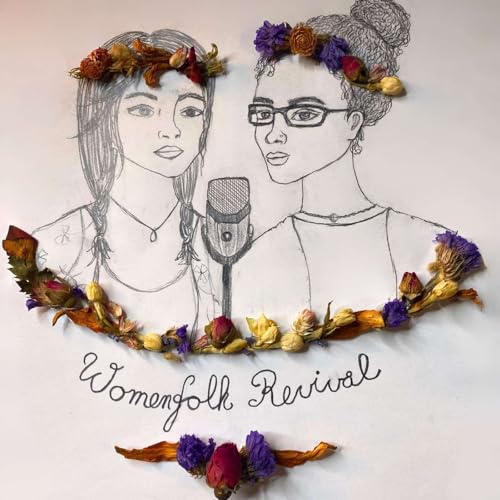
『Womenfolk Revival』のカバーアート

Womenfolk Revival

Womenfolk Revival

著者: Maggie and Meara
無料で聴く

Deeply Rooted. Wildly Intentional. For the woman who wants to nourish her home, health, and family naturally. Join longtime friends Maggie (unconventional mama) and Meara (LPN mom of seven and grandmother), as we share practical wisdom to help you reclaim rhythm and balance in a life grounded in simplicity. Together, we explore the healing power of nature, ancestral skills, and slow living. This is a non-religious, inclusive space centered on honoring the Creator, where women of all traditions, paths, and beliefs are welcomed with grace. New episodes every Wednesday at 5 AM EST.Copyright © 2026 Womenfolk Revival 代替医療・補完医療 社会科学 衛生・健康的な生活
エピソード
  • Traditional Nourishment: The Forgotten Power of Homemade Broth
    2026/06/24

    Traditional Nourishment: The Forgotten Power of Homemade Broth

    Have we forgotten some of the most nourishing foods our grandparents relied on every day?

    In this episode of Womenfolk Revival, we explore the traditional kitchen practices that once formed the foundation of family nourishment. From homemade bone broth and nourishing stocks to slow-cooked meats, healthy fats, collagen-rich foods, and mineral-dense meals, we discuss how generations before us used simple ingredients to support their families long before supplements and convenience foods existed.

    As modern life has shifted toward convenience, many of these traditional practices have quietly disappeared. Yet homemade broth remains one of the simplest and most affordable ways to bring deep nourishment back into the home.

    Sometimes the answers we're searching for aren't found in a supplement aisle, they're found in the pantry we forgot.

    In This Episode We Discuss
    The difference between nourishment and convenience
    Why homemade bone broth was once a kitchen staple
    Natural sources of collagen, minerals, and healthy fats
    How traditional foods supported family wellness
    Using leftover bones and scraps to reduce waste
    Simple ways to begin making homemade broth
    The connection between traditional nourishment and modern health concerns
    Why food once served as both medicine and daily sustenance

    We also touch on the work of Weston A. Price and the insights from traditional cultures that relied on whole foods, animal-based nourishment, and seasonal cooking.

    Quotes from the Episode

    "Have we been throwing away the most nourishing parts of our food, then buying them back in supplement form?"

    "Sometimes the answers we're searching for aren't found in a supplement aisle, they're found in the pantry we forgot."

    "For generations, people were getting nourishment from everyday foods, eggs, butter, cream, slow-cooked meats, and broth."

    Key Takeaway

    Sometimes returning to simple things isn’t about doing more, it’s about remembering.

    Remembering that nourishment doesn’t always come from a bottle. Some of the most valuable foods are already in our kitchens, waiting to be used.

    FAQ

    What is bone broth?
    Bone broth is made by slowly simmering bones and connective tissue to create a mineral-rich, nourishing broth often used in soups, cooking, or drinking on its own.

    Is homemade broth actually healthy?
    Yes. Traditional broth contains minerals, gelatin, and nutrients that support digestion, joint health, and overall nourishment when made from quality ingredients.

    What’s the difference between broth and stock?
    Stock is typically made primarily from bones, while broth can include both meat and bones. Both serve as a flavorful, nutrient-rich base for cooking.

    How do you use bone broth in everyday meals?
    It can be used to cook rice, make soups, stews, sauces, or simply sipped warm as a nourishing drink.

    Do I need special ingredients to make it?
    No. Most broths can be made using leftover bones, vegetable scraps, water, and basic kitchen staples.

    Related Topics
    Traditional homemaking
    Slow living
    Natural health
    Holistic wellness
    Healthy fats
    Bone broth
    Homemade stock
    Ancestral nutrition
    Nourishing traditions
    Family wellness
    Modern homesteading
    Closing Thought

    Returning to traditional nourishment isn’t about rejecting modern life, it’s about remembering what once worked, and deciding what still serves us today.

    If You Enjoyed This Episode

    Follow Womenfolk Revival, leave a review, and share this episode with someone who is curious about simple, traditional ways of living.

    Stay Rooted + Stay Wild

    続きを読む 一部表示
    23 分
  • The Fat Revolution: When Did We Become So Afraid of Fat?
    2026/06/17

    The Fat Revolution: When Did We Become So Afraid of Fat?

    Butter. Ghee. Tallow. Cream.

    For generations, families around the world cooked with traditional fats that were available through their climate, culture, and local food systems. Somewhere along the way, many of us began fearing the very foods our grandparents considered ordinary.

    In this episode of Womenfolk Revival, Meara and Maggie explore traditional fats, ingredient labels, food culture, and why simple foods often contain fewer ingredients than the products filling modern grocery store shelves.

    We discuss:

    • Butter, ghee, tallow, and traditional cooking fats
    • Reading ingredient labels and asking better questions about our food
    • Traditional kitchens and ancestral foodways
    • Cooking with intention instead of perfection
    • Small changes families can make without overwhelming their budget
    • Why traditional food looks different around the world
    • Nourishing our families with simple, recognizable ingredients

    This conversation isn't about perfection. It's about becoming more aware, asking questions, and taking small steps toward understanding where our food comes from.

    Ohio Resources for Traditional Fats, Dairy & Local Food
    Looking for grass-fed beef, beef tallow, raw dairy, pasture-raised meats, or local farms in Ohio? These directories are a great place to start:

    • OEFFA (Ohio Ecological Food and Farm Association)
    https://grow.oeffa.org

    • OEFFA Organic Farm Directory
    https://www.oeffa.org/countymap.php

    • Real Milk Ohio Farm Directory
    https://www.realmilk.com/farm-directory/wpbdm-region/ohio/

    • Raw Milk Finder – Ohio
    https://getrawmilk.com/browse/US/Ohio

    • Raw Milk Sources Near Cincinnati/Hamilton Area
    https://getrawmilk.com/search/Hamilton%2C%20Ohio


    When purchasing fats, ask questions about:

    • Animal diet (grass-fed vs. grain-fed)
    • Farming practices
    • Processing methods
    • Whether products are minimally processed

    Many local butcher shops and grass-fed beef farms also offer beef tallow, suet, and fat trimmings for home rendering.

    As always, build relationships with local farmers whenever possible. Knowing where your food comes from is one of the oldest traditions there is.

    Important Note: This episode is intended for educational and informational purposes only. Dietary needs vary from person to person. Please consult your healthcare provider before making significant dietary changes, especially if you have existing medical conditions.

    🌿 Follow Womenfolk Revival wherever you listen to podcasts.

    🌿 Visit us at womenfolkrevival.com

    🌿 Leave a review and share this episode with someone who loves traditional skills, slow living, and the wisdom that helped families thrive for generations.

    Stay rooted. Stay wild.


    続きを読む 一部表示
    30 分
  • The Call Back Home: Why Modern Women Are Craving a Simpler Life
    2026/06/10
    The Call Back Home: Why Modern Women Are Craving a Simpler LifeWhat if it’s an echo?For generations, families passed down more than names and dates—they passed down ways of living, tending land, growing food, preserving harvests, and building community.Somewhere along the way, many of those rhythms faded.But what if the longing so many women feel today isn’t random?What if it’s an echo?In this episode of Womenfolk Revival, Maggie and Meara explore their ancestry journeys and the surprising ways they connect to the lives they’re building today.Meara shares how discovering her Austrian, Slovenian, Nigerian, and West African roots helped her understand a missing piece of her identity after being adopted.Maggie reflects on uncovering the traditions and values woven through her own family history and how those discoveries mirror the things she has always felt called toward.Together, they discuss traditional living, food preservation, herbal knowledge, community, family traditions, and why so many women seem to be longing for a return to practical skills, meaningful connection, and life closer to the land.This conversation isn't about DNA percentages or family trees.It’s about asking what wisdom is worth carrying forward.Because maybe some human needs never really change.And maybe some echoes are worth listening to.Episode HighlightsIn this conversation, Maggie and Meara explore: Ancestry and identity beyond DNA tests The emotional experience of discovering biological roots Austrian, Slovenian, Nigerian, and West African heritage connections Germanic and Celtic influences on traditional living Food preservation, herbal remedies, and seasonal living The importance of community and the “lost village” Why so many women feel drawn back to homemaking skills and land-based living The difference between modern isolation and ancestral community life What it means to carry forward meaningful traditions Ancestry, Identity & The Search for BelongingMeara shares her experience of being adopted and how, for most of her life, she didn’t feel a strong need to search for her biological roots.But something shifted over time.As she began exploring ancestry more deeply, she discovered connections to Austrian, Slovenian, Nigerian, and West African heritage, and with it, something clicked.Not just names or locations, but a sense of familiarity in how those cultures lived: Seasonal rhythms Farming and food preservation Community-based living Practical, land-connected skills For her, it wasn’t just information, it was recognition.Maggie shares her own experience of uncovering family lineage and noticing how certain values and instincts in her life seemed to align with the way her ancestors once lived.Living Closer to the LandA major theme in this episode is how many ancestral cultures shared similar rhythms of life, even across continents.Both hosts reflect on: Living by the seasons Preserving food for winter Relying on herbal knowledge and home remedies Building skills that supported the household directly Living within close-knit communities These weren’t trends, they were survival, structure, and culture.And today, many women feel themselves naturally drawn back to those same patterns.The Lost VillageOne of the strongest threads in this episode is the idea of the “lost village.”Meara reflects on how modern motherhood can feel isolating compared to traditional community structures where: Children were raised collectively Elders passed down knowledge Families lived in close proximity No one carried everything alone Maggie adds that even in modern life, the absence of community places a heavy emotional load on women, especially mothers.The longing for connection isn’t nostalgia, it’s a response to isolation.Why Traditional Skills Keep Coming BackThroughout the conversation, both hosts notice a pattern:Even without being taught these skills growing up, they both found themselves drawn to: Gardening Herbal remedies Homemade food and preservation Cooking from scratch Ingredient awareness Maggie reflects on how plants in ancestral cultures often served multiple purposes: food, medicine, dyes, and symbolism.Meara shares how natural remedies like garlic, ginger, onion syrup, and herbal teas felt familiar, even without being passed down directly.The question becomes: Are we learning these things again… or remembering them?Modern Life vs. Ancestral RhythmThe episode doesn’t romanticize the past, but it does question the cost of modern isolation.Maggie reflects on how she once struggled to find meaningful female friendships that aligned with her values.Meara shares how friendships shift over time, and how connection is less about sameness and more about shared respect and alignment.Both agree: Community still matters, but it may look different today as people rebuild it intentionally.Final ReflectionBefore closing, Maggie and ...
    続きを読む 一部表示
    25 分
adbl_web_anon_alc_button_suppression_t1
まだレビューはありません