

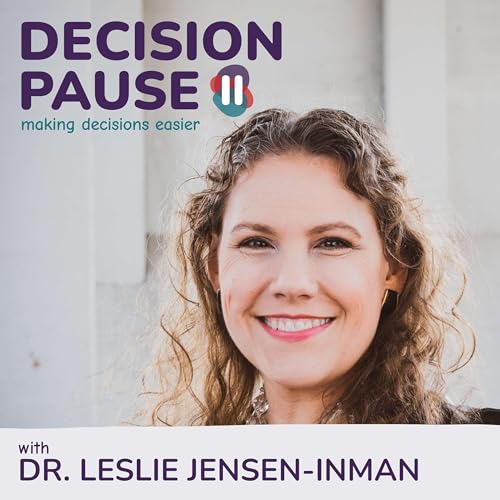
When Outside Opinions Make Decisions Harder
カートのアイテムが多すぎます
カートに追加できませんでした。
ウィッシュリストに追加できませんでした。
ほしい物リストの削除に失敗しました。
ポッドキャストのフォローに失敗しました
ポッドキャストのフォロー解除に失敗しました

When Outside Opinions Make Decisions Harder
-
ナレーター:
-
著者:
概要
Join our FREE Decision Pause Newsletter here: https://decisionpause.com/subscribe-form/
Episode DescriptionSometimes a decision feels solid—until someone else weighs in.
In this episode of Decision Pause, Dr. Leslie Jensen-Inman explores how outside opinions can quietly undermine clarity, especially for parents of neurodivergent children who are already carrying complex context and long-term impact.
This episode looks at why advice can feel heavy, how authority gets assigned, and how to listen to others without losing yourself in the process.
What This Episode Explores- Why decisions often feel shakier after sharing them with others
- How advice can be helpful and destabilizing at the same time
- The difference between expertise and lived context
- Why professional input doesn’t automatically equal a workable plan
- How too many opinions make it harder to hear your own voice
- A grounded way to weigh advice without surrendering authority
Why Outside Opinions Hit So Hard
Parents of neurodivergent children are often surrounded by input—from teachers, therapists, specialists, family, and social media. Each perspective may be well-intentioned, but each one usually reflects only a slice of your child’s life.
You are the one holding:
- the full day
- the nights
- the recovery time
- the emotional aftermath
- the long arc over weeks, months, and years
That context matters more than it’s often acknowledged.
Expertise vs. ContextStatements like:
- “Research says…”
- “Best practice is…”
- “Most kids benefit from…”
can sound authoritative—while quietly ignoring capacity, recovery, and real-world constraints.
Expertise can inform decisions.
But context determines whether a decision is sustainable.
Ignoring context doesn’t make a choice better.
It just makes the cost invisible.
A Helpful DistinctionAdvice is information.
Authority is something you assign.
You can listen, consider, and still choose differently.
That doesn’t make you defensive.
It makes you discerning.
Honoring context isn’t resistance—it’s responsibility.
A Grounding QuestionWhen advice feels overwhelming, try asking:
Does this account for our capacity, recovery, and reality?
If the answer is no, the advice doesn’t have to be wrong—it just may not be right right now.
Gentle TakeawayYou don’t lose wisdom by listening to others.
But you do lose clarity when you abandon your own context.
Holding both—outside input and lived reality—is a skill.
And like any skill, it takes practice.
Coming Up NextIn the next episode, we’ll talk about a decision that often feels countercultural but deeply stabilizing for many families: choosing less.
Until then, if advice feels loud right now, see if you can gently turn down the volume—just enough to hear yourself again.
This has been Decision Pause.
Thank you for listening—and we’ll pause again next time.