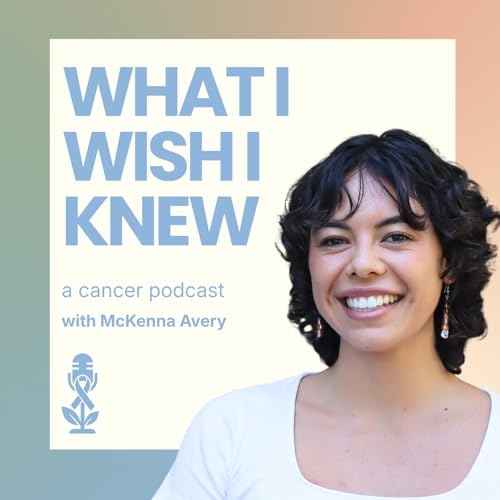
『What I Wish I Knew: A Cancer Podcast』のカバーアート

What I Wish I Knew: A Cancer Podcast

What I Wish I Knew: A Cancer Podcast

著者: McKenna Avery
無料で聴く

このコンテンツについて

A cancer diagnosis can turn life into a blur of appointments, opinions, and unanswered questions. What I Wish I Knew is the podcast that slows it all down and brings you the conversations people deserve to hear sooner.

Hosted by Dr. Dan Sullivan and McKenna Avery (cancer survivor), each episode features candid, compassionate interviews with leading medical experts, professors, researchers, practitioners, advocates, and survivors across the entire cancer landscape. Together, we explore what’s rarely explained clearly, from treatment and side effects to recovery and survivorship, mind-body health, nutrition, relationships, intimacy, and the emotional and spiritual terrain that comes with healing.

Whether you’re newly diagnosed, in treatment, post-treatment, supporting someone you love, or simply looking for trustworthy insight, this show is here to help you feel informed, supported, and less alone.

Educational content only. Not medical advice. Always consult your healthcare team for personal guidance.

All rights reserved.
心理学 心理学・心の健康 衛生・健康的な生活 身体的病い・疾患
エピソード
  • Proton Therapy vs X-Ray Radiation
    2025/12/30

    Radiation can be one of the scariest words you hear after a cancer diagnosis. In this episode of What I Wish I Knew, host and cancer survivor McKenna Avery shares what it felt like to finish 33 rounds of proton radiation, including the emotional “last day” moment, and the three things she wishes she knew sooner: that proton therapy can be an option, the power of visualization during treatment, and why consistent moisturizing matters.


    Dr. Dan sits down with radiation oncologist Dr. James Urbanski (UC San Diego) for a grounded, patient-first explanation of radiation therapy and the real-world decision-making behind it. They break down the goals of treatment (symptom relief, life prolongation, post-surgery “cleanup,” and curative intent), why some cancers are treated with radiation to preserve function (including larynx/voice box, cervix, and anal cancers), and how the field has advanced with better imaging, tighter accuracy, and faster planning.


    You’ll also hear a clear, non-hype comparison of proton therapy vs conventional X-ray (photon) radiation, including the Bragg peak, why “best” depends on the situation, and how technique differs from modality (3D conformal, IMRT/IMPT, SBRT, SRS). Dr. Urbanski walks through what planning day looks like (CT imaging, immobilization devices, contrast considerations, and behind-the-scenes safety checks), what side effects can look like across body areas (including skin reactions and why proton skin reactions may be more pronounced), how clinicians think about re-irradiation, and where immunotherapy may or may not fit alongside radiation. The conversation also touches on cost, insurance authorization realities, access gaps, and what patients should listen for when deciding if a care team feels trustworthy and thorough. This conversation is for patients, survivors, caregivers, and clinicians seeking clarity, not marketing. Educational only, not medical advice.


    Episode Chapters:

    00:00:00 - Cold Open: Progress, Immunity, and Hope

    00:00:29 - Welcome + McKenna’s Proton Radiation Story

    00:01:06 - Three Things McKenna Wishes She Knew About Proton Therapy

    00:02:03 - Meet Dr. James Urbanski

    00:02:51 - From Ships to Cancer Care: Dr. Urbanski’s Path

    00:05:31 - Radiation Therapy Basics Explained

    00:07:22 - The Goals of Radiation Treatment

    00:09:00 - When Radiation Replaces Surgery

    00:10:48 - How Radiation Therapy Has Evolved

    00:13:30 - When Patients Want to “Go Natural”

    00:18:25 - Radiation Myths, Safety, and Trust

    00:21:46 - What Is Proton Therapy?

    00:26:41 - Who Proton Therapy Helps Most

    00:32:39 - Cost, Coverage, and Insurance for Proton Therapy

    00:40:27 - Proton Therapy Hype vs Reality

    00:42:39 - SBRT, SRS, and Modern Radiation Techniques

    00:50:30 - Immunotherapy and Radiation Used Together

    01:01:54 - What Happens on Radiation Planning Day

    01:06:15 - AI and Machine Learning in Radiation Planning

    01:11:52 - What Treatment Looks Like Behind the Scenes

    01:21:03 - Radiation Side Effects: Short-Term and Long-Term

    01:24:25 - Re-Irradiation: When and Why It’s Considered

    01:31:28 - Diet, Exercise, and Mind-Body Support During Treatment

    01:38:46 - The Future of Radiation: New Particles, New Questions

    01:43:23 - Access, Geography, and Proton Center Availability

    01:48:18 - Questions Every Patient Should Ask

    01:50:40 - Resilience, Meaning, and Joy in the Work


    Disclaimer:

    This episode is for general educational purposes and reflects personal experiences and professional perspectives. It is not medical advice and is not a substitute for individualized diagnosis or treatment planning. Always consult your oncology team for guidance specific to your situation. If you think you may be experiencing an urgent medical issue, seek immediate care.

    続きを読む 一部表示
    2 時間
  • Death, Cancer, And Choice
    2025/12/16

    After a cancer diagnosis, fear of death can get loud fast. In this episode, McKenna Avery sits down with certified death doula Selena Jong to talk about what happens when mortality moves from a distant idea to a daily thought, and how honest conversation can make the weight feel more carryable.

    Together, they explore hospice and the dying process, the role of a death doula (emotional, spiritual, and practical support), and end-of-life autonomy including Medical Aid in Dying in California. They also talk through real-world planning that can protect families from chaos, plus options for how to care for the body after death, including eco-friendly choices like water cremation, body composting, and natural burial.

    This conversation is for cancer patients, survivors, caregivers, loved ones, and clinicians who want clearer language, grounded perspective, and more humane ways to talk about dying, grief, legacy, and the relationships that matter most.

    Learn more about Selena's work

    • on instagram @movingthroughdeath
    • www.movingthrough.org and www.thedeathnetwork.com


    If this episode helped you feel a little less alone, please like, subscribe, and leave a comment with what resonated most. Share it with a friend, caregiver, or survivor who might need this conversation right now. And for more community and updates, follow us on Instagram @WIWIKPOD.

    続きを読む 一部表示
    1 時間 31 分
  • T Cell & Resistance
    2025/12/16

    Immunotherapy can feel like a black box when you’re living through cancer, caring for someone with cancer, or trying to understand today’s rapidly changing treatment landscape. In this episode of What I Wish I Knew, functional medicine doctor Dr. Dan speaks with immunobiology expert Dr. Susan Kaech (Salk Institute) about how the immune system works in cancer, how T cells recognize tumors, and how the tumor microenvironment suppresses immune responses.

    They walk through what immunotherapy is (including immune “brakes” like PD1/CTLA4 and CAR T cell therapy), what side effects can look like, and why some cancers respond better than others. The conversation also tackles treatment resistance, the role of chemotherapy plus immunotherapy, and why tumor mutations and tumor sequencing matter for treatment options and clinical trial eligibility.

    You’ll also hear emerging perspectives on cancer vaccines (including personalized vaccine approaches and mRNA platforms), the gut microbiome and dietary fiber, and the developing science of neuroimmunology, including how chronic stress signaling can shape immune suppression and why beta blockers are being studied alongside immunotherapies. This episode is for patients, survivors, caregivers, and clinicians who want an understandable, research-informed conversation without hype.

    If this conversation helped you feel more informed or less alone, please like, subscribe, and leave a comment with what you want to learn about next. Share this episode with a patient, survivor, caregiver, or clinician who might benefit from a clearer understanding of immunotherapy, cancer vaccines, and the stress-immune connection. Follow us on Instagram @WIWIKPOD.

    続きを読む 一部表示
    1 時間 45 分
まだレビューはありません