『We Don't Have Time Podcast』のカバーアート

We Don't Have Time Podcast

We Don't Have Time Podcast

著者: Wedonthavetime.org
無料で聴く

今ならプレミアムプランが3カ月 月額99円

2026年5月12日まで。4か月目以降は月額1,500円で自動更新します。

概要

From scientists and activists to entrepreneurs and policymakers, we explore the stories, ideas, and debates shaping the path toward a sustainable future. We Don’t Have Time is the world’s largest media platform for climate action. We are democratizing knowledge about climate solutions to inspire and mobilize people everywhere to accelerate the transition toward a prosperous, fossil-free future.Wedonthavetime.org 科学
エピソード
  • The beginning of the end of fossil fuels
    2026/04/02

    For more than three decades, the world has been trying ot answer a key question: how do you get every country on Earth to act collectively on climate change?

    This new episode of the We Don't Have Time Podcast takes you from the early days of international cooperation in the 1990s to the landmark Paris Agreement. Showing how climate diplomacy has made historic progress while also revealing just how difficult global consensus can be.

    Conflicting interests, economic inequalities, and the need for unanimous agreement have slowed action, even as the urgency of the crisis has grown. But now, a new chapter may be beginning with the Santa Marta Conference on transitioning away from fossil fuels marking a turning point in how the world moves from promises to action.

    Listen in now and sign up to the event: https://www.wedonthavetime.org/events/transitioningaway

    続きを読む 一部表示
    36 分
  • Climate tipping points
    2026/03/15

    What would happen if climate change pushed the planet past a breaking point?

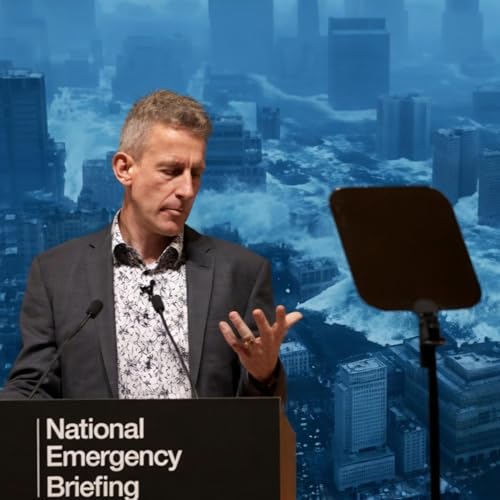
    If you’ve seen the 2004’s The Day After Tomorrow, you might picture massive tidal waves, superstorms engulfing entire continents, and oceans freezing overnight. It made for exciting cinema, but the real scientific discussion around climate “tipping points” is more complicated.

    Scientists believe that gradual warming could push critical Earth systems over thresholds that trigger large and potentially irreversible changes. From the decline of tropical coral reefs to the risk of shifts in the Amazon rainforest or the Atlantic Ocean circulation, understanding how close we may be to these tipping points is one of the most critical questions we face as a species.

    But not everyone agrees that “tipping points” are the best way to think about climate risk. Are they a crucial framework about how complex systems behave, or a confusing metaphor that distracts from the real work of cutting emissions?

    続きを読む 一部表示
    30 分
まだレビューはありません