エピソード

  • Keeping Catawba Culture Alive with Beckee Garris
    2026/10/14

    What does it mean to keep a tradition alive while making sure future generations understand its importance? I had the pleasure of sitting down with Beckee Garris, an award-winning Catawba potter and storyteller, at the Native American Studies Center in Lancaster, South Carolina. Born and raised on the Catawba Indian Reservation near Rock Hill, Beckee shares memories of growing up in a close-knit community where family, traditions, and caring for one another were simply a way of life.

    We talk about the women who taught her the art of traditional Catawba pottery, the deep respect she has for the clay, and why preserving these traditions means so much to her. Beckee also shares what led her back to college at age 65, how storytelling helps keep the Catawba language and culture alive, and the special joy of sharing her craft with her great-grandchildren. It's a wonderful conversation about family, heritage, lifelong learning, and the importance of listening to the people whose stories are such an important part of the places we visit.

    Episode Highlights
    [2:12] – Growing up on the Catawba Indian Reservation and the close-knit community where everyone looked out for one another.

    [3:00] – The family legacy of two Catawba chiefs and the lessons Becky learned about family, generosity, and caring for others.

    [6:38] – Learning traditional Catawba pottery from master potters and understanding why the clay is sacred.

    [9:06] – Preserving a pottery tradition that has been passed down for thousands of years while allowing creativity and personal expression.

    [14:34] – What inspired Becky to return to college at age 65 and pursue her associate's degree in art.

    [17:38] – Bringing Catawba stories and language to life and feeling connected to her ancestors through storytelling.

    [20:14] – Watching her great-grandchildren discover pottery and why passing traditions to the next generation means so much.


    Links & Resources

    • Beckee Garris – 2026 Jean Laney Harris Folk Heritage Award Recipient – Learn more about Beckee and her recognition by the South Carolina Arts Commission for her contributions to traditional Catawba pottery and storytelling.
    • Native American Studies Center (NASC) – Located in Lancaster, South Carolina, the center celebrates Native American history, art, and culture and houses an extensive collection of traditional Catawba pottery.
    • Catawba Cultural Center – Discover Catawba traditions, handmade pottery, and artwork while learning more about the Catawba Nation's efforts to preserve its cultural heritage.

    If you enjoyed this conversation with Beckee, I hope you'll take a moment to follow Voices of Inspiration, leave a rating and review, and share this episode with someone who loves discovering the stories, people, and traditions that make the Carolinas special. Your support helps me continue bringing these inspiring voices and meaningful conversations to you.


    続きを読む 一部表示
    25 分
  • Where History, Folklore, and Tradition Meet with Dr. Stephen Criswell
    2026/10/08

    What can a piece of pottery tell us about the people who lived thousands of years ago? And how did a simple riverside fish fry become a tradition that brought entire communities together? In recognition of South Carolina Archaeology Month, I visited the Native American Studies Center in Lancaster, South Carolina, to sit down with Dr. Stephen Criswell, Director of Native American Studies at USC Lancaster and professor of English and folklore. For more than 20 years, he's worked alongside Native American communities, documenting their stories, studying traditional art, and helping preserve cultural histories that haven't always received the attention they deserve. His work has also earned him the Jean Laney Harris Folk Heritage Award.

    Our conversation took us in some unexpected directions, from the remarkable pottery traditions of the Catawba Nation to the origins of Carolina fish camps, Piedmont blues, and even local legends like the Lizard Man. I especially enjoyed hearing Dr. Criswell's perspective on the creativity behind ancient pottery and the importance of allowing communities to tell their own stories. He also shared some unforgettable experiences from his years of research, including one that reminded me just how much trust matters when someone shares a piece of their history. And you'll want to stay for his answer to my final question. It genuinely gave me goosebumps.


    Episode Highlights
    [03:14] - Dr. Criswell shares how growing up in North Carolina and his early interest in Irish folklore influenced his career.

    [05:29] - Why cultural traditions are so difficult to erase, even after generations of hardship and change.

    [06:54] - How meeting Catawba potters sparked a deeper interest in Native American traditions and eventually brought him to USC Lancaster.

    [08:50] - What visitors should know about the Native American Studies Center and the vibrant Native communities in South Carolina today.

    [11:00] - Why allowing Native American communities to tell their own stories is central to the center's mission.

    [13:02] - What traditional pottery, baskets, and handmade objects can reveal about the lives and creativity of earlier generations.

    [15:55] - The surprising story of an oversized Catawba pottery piece and the human desire to create something beautiful.

    [16:54] - How traditional artists balance preserving cultural practices with expressing their own creativity.

    [18:41] - The fascinating symbolism behind Georgia Harris's Rebecca snake pitcher and its connection to Catawba traditions.

    [20:29] - Bigfoot, the Lizard Man, and the Southern tradition of sharing local legends.

    [21:14] - The origins of Carolina fish camps and how Luther Lineberger helped turn riverside fish fries into a regional dining tradition.

    [23:47] - Growing up around fish camps and why these restaurants became such an important part of life for textile mill families.

    [25:42] - Why Carolina fish camps began disappearing and how the remaining restaurants continue serving their communities.

    [27:07] - The connection between Piedmont blues, Southern food traditions, and transforming adversity into beauty.

    [28:20] - Dr. Criswell reflects on his research with Native American communities in the Lowcountry and the personal stories that have stayed with him.

    [30:47] - A memorable interview with Catawba elder Elsie Blue George and what it taught him about earning someone's trust.

    [32:30] - Dr. Criswell shares his favorite words of wisdom and a touching story about love, loss, and finding meaning in unexpected places.

    I hope this conversation encourages you to think about the stories behind the places you visit, the traditions you experience, and the people who keep those traditions alive. There's so much we can learn when we take the time to listen.

    If you enjoyed this episode, please follow, rate, and leave a review, and share it with someone who enjoys discovering history, culture, and the stories behind the places we explore. Your support means so much and helps me continue bringing these conversations to you!


    続きを読む 一部表示
    34 分
  • Exploring South Carolina Archaeology with Chris Judge
    2026/09/30

    To begin this new season, we’re exploring what archaeology can teach us about South Carolina’s past. An artifact, a piece of pottery, or even the land itself can reveal parts of history that were never written down and help us better understand the people who came before us.

    I had the opportunity to sit down with South Carolina State Archaeologist Chris Judge at the South Carolina State Museum. Chris has spent more than 35 years studying Native American history and archaeology across the state, and our conversation explores the stories beneath our feet, the discoveries still being made, and why preserving the past matters.

    Chris has such a genuine enthusiasm for this work, and I think you’ll hear throughout our conversation that archaeology is about so much more than finding old things. It is about connecting objects to stories, giving context to what was left behind, and recognizing our own responsibility for what future generations will inherit.


    Episode Highlights


    [0:54] - Beginning a new season with the stories beneath our feet and why preserving South Carolina’s history matters.

    [3:15] - How travel changes our perspective and helps us notice the history hiding in the places closest to home.

    [5:41] - Looking beyond museum displays to understand the surveying, documentation and preservation behind archaeology.

    [6:38] - The unexpected discovery of a 5,000-year-old Savannah River point on my own property—and all of the questions one object left behind.

    [8:06] - Connecting archaeology with 100 Things to Do in South Carolina Before You Die and asking who decides which places and stories are remembered.

    [11:41] - Meeting South Carolina State Archaeologist Chris Judge and discovering how National Geographic inspired his lifelong interest in archaeology.

    [13:12] - The South Carolina archaeological site that changed the trajectory of Chris’s career and became a 20-year research project.

    [14:26] - What a state archaeologist actually does, including maintaining records for approximately 38,000 archaeological sites across South Carolina.

    [16:34] - Exploring underwater archaeology, a centuries-old shipwreck, the Topper archaeological site, ancient pottery, plant research and some of the fascinating projects happening across the state.

    [20:40] - What modern science can reveal from ancient artifacts, including evidence left behind in the tiny crevices of stone tools.

    [21:23] - What happens when highways, buildings and other development projects encounter archaeological or historic sites.

    [23:46] - The challenges facing South Carolina archaeology, from funding and rapid development to coastal erosion and sea-level rise.

    [26:01] - Returning to my Savannah River point and discovering what coastal shell rings can tell us about life thousands of years ago.

    [26:58] - What archaeology has had to “unlearn” and why collaboration with Native American communities has become an essential part of the work.

    [28:51] - What should you actually do if you discover an arrowhead, pottery or another possible artifact?

    [31:16] - Why you should never remove archaeological artifacts from state or federal lands.

    [32:00] - Ground-penetrating radar, LIDAR, blood-residue analysis and the technologies changing what the next generation of archaeologists may discover.

    [33:11] - Chris shares one of his most recent finds—and the story it revealed about Columbia’s historic Wheeler Hill community.

    [34:42] - From a Spanish kiln to a pair of scissors, Chris shares memorable discoveries and how even ordinary objects can help archaeologists reconstruct a story.

    [36:45] - Why archaeology is not simply about finding old things, but recovering relationships between objects, places, people and generations.

    [37:15] - Considering the evidence we are creating today and asking what people hundreds of years from now might understand about us.

    [39:18] - Why preserving our own stories, memories and context may be an important part of the legacy we leave behind.

    [41:47] - Closing with a reminder that we have inherited only part of the story—and what happens to the chapter in our care is partly up to us.

    The past is all around us, and sometimes it takes slowing down and paying attention to recognize the stories that are still there. I hope this conversation encourages you to look a little closer at the places you know and think about the stories we each have a responsibility to preserve.

    If you enjoyed this conversation, please follow the podcast, share it with a friend, and take a moment to leave a rating and review. It truly helps more people discover the stories and voices shared here.

    続きを読む 一部表示
    43 分
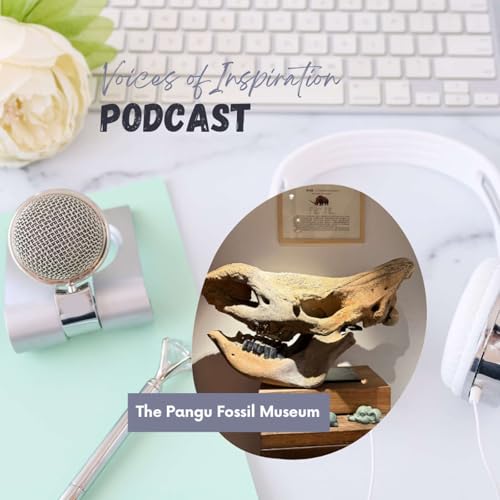
  • Dinosaurs in Keqiao: The Pangu Fossil Museum
    2026/02/20

    In this episode, I travel to Keqiao, an ancient water town in Shaoxing, Zhejiang Province, where history stretches back more than 1,700 years. But beneath the canals, stone bridges, and historic buildings lies a much deeper story—one written millions of years ago. I sit down with Fang Lei (Florence), the co-founder of the Pangu Fossil Museum, to talk about how a personal passion for fossils unexpectedly turned into a museum with more than 3,000 ancient specimens.

    Florence and her husband never planned to build a museum. They were interior designers from Hong Kong who simply loved collecting fossils. But when they discovered the perfect historic building in Keqiao, their private collection became something bigger—a place for education, curiosity, and wonder. We talk about how fossils change the way we see our place in history, why she curates the museum differently from traditional institutions, and how the project eventually led to Shaoxing’s first museum-themed homestay for visiting scientists and travelers.

    Episode Highlights

    [00:00] – Introducing Keqiao, an ancient water town where a story millions of years old lies beneath the ground.

    [02:02] – How the Pangu Fossil Museum began and why Florence and her husband chose to share their private fossil collection with the public.

    [06:23] – The unexpected beginning: a fossil discovered during a design project in Shanghai sparks a lifelong passion.

    [07:23] – Finding the perfect Jiangnan-style historic building and transforming it into a museum in Keqiao.

    [09:19] – Why standing in front of ancient fossils reminds us how small humans are in the timeline of Earth.

    [10:54] – Florence explains how she curates fossils differently—treating them as both scientific artifacts and works of natural beauty.

    [11:52] – Teaching students that dinosaurs once lived right beneath Zhejiang’s soil.

    [14:15] – Scientists begin visiting the museum, inspiring the creation of Shaoxing’s first museum-themed homestay.

    [16:50] – Florence shares her philosophy on following intuition and learning new skills along the way.

    [18:30] – Closing reflection: why preserving fossils helps us understand the deeper story of life on Earth.

    Links and Resources

    This episode is sponsored by China Eastern Airlines, who supported my travel for this journey. You can learn more about their routes and destinations at us.ceair.com.

    Interested in visiting this homestay? You can find them on Trip.com

    https://www.trip.com/w/YPUkzsE7aT2

    Follow Amelia

    Instagram: @AmeliaOldOfficial

    Website: https://AmeliaOld.com

    If you enjoyed this episode of Voices of Inspiration, please take a moment to follow the podcast, leave a rating, share the episode, and write a review. Your support helps these stories reach more people around the world.


    続きを読む 一部表示
    22 分
  • Preserving 2,000 Years of Tradition: Shaoxing Wine with Zhu Qingli
    2026/02/07

    In this episode, I take you to Shaoxing, a historic city in China’s Zhejiang Province where an ancient tradition continues to shape daily life. Known for producing Shaoxing yellow rice wine, this region has been crafting its signature brew for thousands of years using the same natural elements—local water, climate, and air—that make its flavor impossible to replicate anywhere else. But this story isn’t just about wine; it’s about culture, heritage, and the people working to keep traditions alive.

    I sit down with Zhu Qingli, the founder of a unique homestay dedicated entirely to Shaoxing wine culture. He shares how guests can experience the full journey—from learning the craft to brewing their own jar of wine—and why preserving this centuries-old tradition matters so deeply to him. Along the way, we explore the philosophy behind traditional craftsmanship, the meaning of cultural preservation, and what it truly takes to dedicate your life to something you love.

    Episode Highlights

    [0:00] – In Shaoxing, guests experience something far beyond a typical visit. Travelers learn the ancient process of brewing yellow rice wine and leave with a small clay jar containing the wine they helped create—often sealed with personal wishes or blessings.

    [1:05] – Shaoxing’s reputation for yellow rice wine comes from a rare combination of natural elements. The local water from Jianhu Lake, the climate, and even the microorganisms in the air all contribute to a flavor that cannot easily be recreated anywhere else.

    [3:00] – Huangjiu, often translated as “yellow rice wine,” is introduced along with its brewing process. Unlike grape wine, it’s brewed more like beer using glutinous rice, creating complex flavors that can be sweet, nutty, earthy, or savory.

    [6:50] – Zhu Qingli shares the story behind his homestay, a cultural space designed to help visitors—especially international travelers—understand the history, craftsmanship, and cultural importance of Shaoxing wine.

    [9:34] – The fascinating Kaiba stage of brewing reveals how the winemaker’s personality can influence the final taste. Patience, instinct, and attention during fermentation leave subtle marks on every batch.

    [11:19] – Guests at the homestay experience the entire journey of the craft: observing traditional methods, learning the history behind the process, tasting the wine, and eventually brewing their own jar.

    [12:43] – Zhu discusses his book Searching for the Taste of Shaoxing, which explores the city’s culinary traditions, cultural customs, and hospitality practices—including the ceremonial ten-course meal served to honored guests.

    [14:43] – A meaningful ritual allows visitors to take home the jar of wine they created. Many choose to write messages or blessings inside before sealing the jar, turning the experience into a personal memory.

    [15:45] – One memorable guest arrived from Beijing knowing very little about Shaoxing wine but left deeply inspired. The experience sparked a friendship with Zhu and eventually led the visitor to help promote Shaoxing wine culture.

    [18:07] – Zhu reflects on the belief that passion and dedication give meaning to difficult work. Even without large financial rewards, preserving this tradition remains a life choice he feels proud of.

    Links and Resources:
    This episode is sponsored by China Eastern Airlines, who supported my travel for this journey. You can learn more about their routes and destinations at us.ceair.com.

    Interested in visiting this homestay? You can find them on Trip.com https://www.trip.com/w/k4gak3FtPT2


    続きを読む 一部表示
    23 分
  • Inside a Thousand-Year-Old Village: Shen’ao and Eight Blessings Inn
    2026/01/29

    Shen’ao Village sits just outside Hangzhou, in China’s Zhejiang province. This is where Amelia met JoAnn Leung.

    JoAnn left city life behind and restored a 240-year-old courtyard house here, turning it into Eight Blessings Inn. It isn’t built around amenities or schedules. It’s built around meals, conversation, and the belief that time spent together still matters.

    In this episode, Amelia and JoAnn talk about following a calling later in life, starting over without certainty, and taking responsibility for a place and the people who move through it. JoAnn doesn’t frame her story as reinvention. It’s simply the life she chose—and the one she continues to tend to every day.

    Shen’ao isn’t preserved. It’s lived in. Craftsmen open their workshops. Neighbors stop to talk. An ancient drainage system still works beneath the stone paths. The village does what it has always done.

    This episode isn’t about travel as escape. It’s about paying attention—to where you are, to the people around you, and to the kind of life you’re building.

    🎥 The YouTube version includes photos and video clips from Shen’ao Village and Eight Blessings Inn.

    Topics Covered

    • Life inside Shen’ao Village, a thousand-year-old working community
    • Following a calling later in life
    • Restoring a 240-year-old courtyard house
    • Building Eight Blessings Inn around meals and conversation
    • Responsibility to place and people
    • Choosing attention over pace

    Keywords

    Shen’ao Village, Shenao Village, Hangzhou China, Zhejiang China, Zhejiang Province, Eight Blessings Inn, historic villages in China, slow travel, cultural travel, heritage travel, China bed and breakfast

    Listen & Share

    If this episode resonated, consider sharing it with someone who values thoughtful travel, meaningful conversation, or stories about choosing a different way to live. Following the show and leaving a review helps these stories reach others.

    Sponsor

    This episode is sponsored by China Eastern Airlines, who supported Amelia’s travel for this journey.


    You can learn more about their routes and destinations at:
    https://us.ceair.com/en/

    Photos from this journey are shared at @AmeliaOldOfficial, with additional details at AmeliaOld.com

    続きを読む 一部表示
    23 分
  • The Gift of Time at Qianhuang Bay
    2026/01/22

    This episode takes place at Qianhuang Bay, a family-run homestay in Xiling Village, during an evening spent with homestay owner Zhu Xiaokui and his family.

    Amelia talks with Zhu Xiaokui about how Qianhuang Bay came to be and why he chose to stay rooted in the village where he grew up. The homestay wasn’t created to present rural life for visitors. It developed out of an existing way of life, with family involvement and daily routines shaped by the land. As the first homestay in Xiling Village, it became the starting point for what followed.

    Today, Xiling Village is home to more than thirty homestays. Families share resources rather than compete, host travelers and group retreats together, and work toward a definition of success centered on continuity — families staying connected, neighbors supporting one another, and the village moving forward collectively.

    This episode isn’t focused on destinations or itineraries. It examines what happens when time isn’t rushed, when people sit together and pay attention, and when hospitality is built gradually and sustained over time.

    This episode is sponsored by China Eastern Airlines, who supported my travel for this journey. You can learn more about their routes and destinations at: https://us.ceair.com/en/

    Topics Covered

    • Family-run homestays in Xiling Village
    • Opening the village’s first homestay at Qianhuang Bay
    • Building a cooperative model instead of competing for visitors
    • Hosting travelers and group retreats as a shared village effort
    • Daily and seasonal rhythms shaped by land, family, and routine
    • Time as a foundation for meaningful hospitality

    Keywords

    Qianhuang Bay, Xiling Village, Zhu Xiaokui, rural homestay, family-run homestay, village cooperation, rural revitalization, sustainable travel, hospitality and community, gift of time

    Listen & Share

    If this conversation resonated, share it with someone who could use a reminder to slow down. Subscribe, leave a review, and find more episodes of Voices of Inspiration wherever you listen.

    Photos and moments from this journey are on social at @AmeliaOldOfficial, and you can learn more about my work at AmeliaOld.com .


    続きを読む 一部表示
    22 分
  • A Walk for Peace and the Art of Diancha
    2026/01/15

    A roadside crowd in South Carolina. An ancient mountain path in Jingshan. A scarf passed hand to hand and a cup of whisked tea that turns strangers into friends. This episode traces those moments to show how small, intentional acts can travel farther than we expect.

    In this episode, Amelia sits down with Zhang Hongyan, a second-generation tea practitioner who returned home to preserve the art of Diancha and open a tea-focused homestay at the base of Jingshan Mountain. She shares how the Jingshan Tea Banquet, rooted in the Tang and Song dynasties, brings together Zen philosophy, etiquette, and presence. Beyond ceremony, she founded Songyun Tea Affairs, a women-led collective that has trained and employed dozens of local women, creating opportunity while keeping cultural heritage alive in the village.

    We also step into Jingshan Temple and the living culture that surrounds it. Amelia reflects on wearing Hanfu with care, the difference between appropriation and appreciation, and why heritage here isn’t preserved behind glass. It’s practiced every day, in temples, teahouses, and family rituals.

    This episode is sponsored by China Eastern Airlines, who supported my travel to Changxing, China. You can learn more about their routes and destinations at: https://us.ceair.com/en/

    In this episode:
    • The origins of the Jingshan Tea Banquet
    • The art of Diancha and why it still matters
    • Building a women-led tea collective
    • Visiting Jingshan Temple and wearing Hanfu with respect
    • How one cup of tea can change a life

    If this conversation spoke to you, share it with someone who could use a reminder to slow down. Subscribe, leave a review, and find more episodes of Voices of Inspiration wherever you listen.

    Photos and moments from this journey are on social at @AmeliaOldOfficial, and you can learn more about my work at AmeliaOld.com .

    Keywords

    Jingshan Tea Banquet, Diancha, Jingshan Temple, Hanfu, Zhang Hongyan, Songyun Tea Affairs, Buddhist monks Walk for Peace, women in tea culture, Chinese tea ceremony, Voices of Inspiration podcast

    続きを読む 一部表示
    20 分