エピソード

  • The Quick Artificial Intelligence Revolution and the Poor Publisher’s Paradox
    2026/08/17

    The internet was built on a promise—but sustained by a legal fiction. Section 230 granted platforms immunity as "neutral conduits." That fiction is now collapsing under the weight of generative AI.

    In this episode, we explore the profound legal and ethical questions raised by AI-generated content:

    📌 Why the "neutral conduit" analogy was always flawed—and why it's now entirely unsustainable

    📌 The 2026 Bouck v. Meta ruling that changed everything

    📌 Why users are treated as publishers while AI platforms escape responsibility

    📌 The perverse incentive structure that rewards automation over accountability

    📌 What judicial and legislative reform could look like—and why it matters

    Key topics covered:

    • Section 230 and the birth of platform immunity

    • The algorithmic turn and the end of "neutrality"

    • How generative AI shatters the old legal framework

    • The asymmetry of responsibility between users and platforms

    • Bouck v. Meta and the German Google ruling

    • The economic case for reform

    • Why liability won't stifle innovation—and why that argument is a myth

    📖 Read the full analysis: https://virtuslegis.com/publishers-paradox-artificial-intelligence/

    ⚠️ Disclaimer: Please refer to the original blogpost at https://virtuslegis.com/publishers-paradox-artificial-intelligence/ for the authoritative version. The channel accepts no responsibility for views or conclusions expressed in this AI generated podcast.

    #Section230 #AILiability #GenerativeAI #ArtificialIntelligence #TechPolicy #PlatformImmunity #AIRegulation #DigitalServicesAct #InternetLaw #AIEthics #BouckvMeta #ContentModeration #TortLaw #AISafety #LegalTech

    続きを読む 一部表示
    10 分
  • Tarun Tejpal Judgment: Rape Really So Grave? Not Simple!
    2026/08/09

    The Tarun Tejpal judgment of Bombay High Court at Goa creates an opportunity to discuss fundamental questions about sexual autonomy, consent, context and the direction of modern rape jurisprudence.

    In this episode, we examine:

    • How the judgment treated allegations concerning the complainant’s sexual conduct and character.
    • Why sexual history should not be confused with consent, while female sexual agency remains an important part of the discussion.
    • The transformation of rape law from the traditional “property” conception to the modern principle of bodily autonomy.
    • Whether the female body has effectively become a form of “self-managed property.”
    • The difficult question of proportionality when legal redemption for one person may result in the destruction of another.
    • Whether modern rape jurisprudence gives sufficient importance to context and individual agency.
    • The relationship between consent, punishment, justice and proportionality.
    • Whether contemporary rape jurisprudence can protect bodily autonomy without losing sight of the broader consequences of criminal punishment.


    Read the full analysis: https://virtuslegis.com/tarun-tejpal-judgment/

    ⚠️ Disclaimer: Please refer to the original blogpost at https://virtuslegis.com/tarun-tejpal-judgment/ for the authoritative version. The channel accepts no responsibility for views or conclusions expressed in this AI generated podcast.

    #TarunTejpal #RapeJurisprudence #BodilyAutonomy #SexualAutonomy #CriminalLaw #Justice #LegalAnalysis #Consent #Proportionality

    続きを読む 一部表示
    18 分
  • Can Do Something About Modi’s Dirty Insults by GenZ?
    2026/08/03

    The recent GenZ protests in India have done what no opposition party has managed in a decade—they've exposed a fundamental crack in the system. Profanity against Prime Minister Modi has gone viral, the BJP machinery is scrambling, and big businesses are watching their "Brand Modi" investment burn.

    But here's the real story: Indian law has no effective provision to punish profanity against a political executive head. FIRs are being filed under laws that don't fit. Police are investigating cases they have no jurisdiction over. And the state is quietly borrowing tactics from regimes it would never publicly acknowledge.

    In this episode, we break down:

    • Why Sections 352, 353, and 356 of the Bharatiya Nyaya Sanhita (BNS) simply don't apply to profanity
    • How the establishment has adopted a quasi-North Korean approach—de-facto prosecution without de-jure authority
    • Global comparisons: from America's aggressive tolerance to Turkey's Article 299, Germany's presidential authorization, and China's "state interest" reinterpretation
    • Where India is heading—legal maneuvering through the Supreme Court, or forceful de-facto prosecutions becoming the new norm?

    The GenZ protests aren't just about street anger. They've exposed a constitutional question that no one saw coming. And the answer will define India's democratic character for years to come.

    ⚠️ Disclaimer: Please refer to the original blogpost at https://virtuslegis.com/modis-dirty-insults-by-genz/ for the authoritative version. The channel accepts no responsibility for views or conclusions expressed in this AI generated podcast.

    #GenZProtest #Modi #IndianPolitics #FreeSpeech #ConstitutionalLaw #BNS #BharatiyaNyayaSanhita #LegalVoid #IndiaProtests #CJP #CockroachJanataParty #BrandModi #Democracy #RuleOfLaw

    Cover Image Credit: Polites News (CC BY-SA 4.0)

    続きを読む 一部表示
    20 分
  • Gen Z Protests: No Victory of Natural Law Till Now
    2026/07/27

    Are the recent Gen Z protest movements across South Asia transforming constitutional law—or are they merely testing the limits of state power?

    This discussion examines the historical conflict between Natural Law and Positive Law, beginning with John Locke's revolutionary theory and tracing its influence through the French Revolution to contemporary protests in Bangladesh, Nepal, Sri Lanka and India.

    The analysis explores:

    • John Locke's theory of resistance against tyranny.

    • Why the French Revolution never legally created a universal right to rebel.

    • How states historically developed legal mechanisms to suppress dissent.

    • The evolution from monarchies to modern surveillance states.

    • Bangladesh's July Mass Uprising Ordinance, 2026.

    • Political immunity in Nepal.

    • Judicial responses in Sri Lanka.

    • Why India's recent Gen Z protests do not fundamentally alter the legal position.

    • The geopolitical risks posed by digitally driven protest movements and possible foreign influence.

    Read the complete article:

    https://virtuslegis.com/gen-z-protests/

    ⚠️ Disclaimer: Please refer to the original blogpost for the authoritative version. The channel accepts no responsibility for views or conclusions expressed in this AI generated podcast.

    #GenZ #NaturalLaw #PositiveLaw #PoliticalPhilosophy #JohnLocke #FrenchRevolution #Bangladesh #Nepal #SriLanka #India #InternationalLaw #HumanRights #RuleOfLaw #Constitution #Geopolitics #PoliticalTheory #SocialMedia #RegimeChange #History #VirtusLegis

    Cover Image Attribution: Himal Suvedi at https://commons.wikimedia.org/wiki/File:2025_Nepalese_Gen_Z_protesters_infront_of_Bharatpur_mahanagarpalika_office.jpg (Creative Commons Attribution-Share Alike 4.0 International)

    続きを読む 一部表示
    17 分
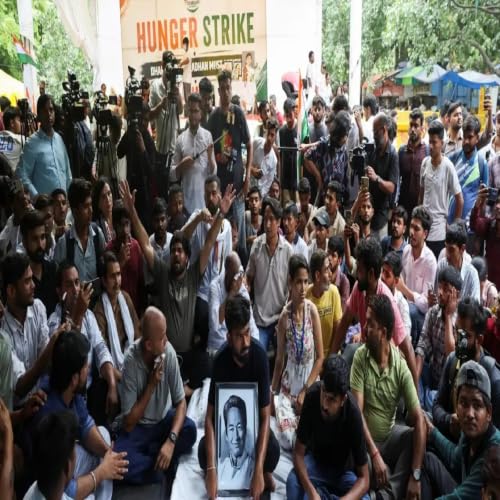
  • Sonam Wangchuk’s Detention in Safdurjung Hospital Is Guaranteed Illegal
    2026/07/21

    This episode examines the constitutional and legal questions arising from Sonam Wangchuk's confinement at Safdarjung Hospital following the Delhi High Court's order dated July 16, 2026. It explores whether the State can invoke Article 21 of the Indian Constitution—the fundamental right to life and personal liberty—to justify restricting an individual's liberty in the name of protecting life.

    The discussion covers:

    • Whether confinement in a hospital without the freedom to leave amounts to detention.
    • Whether there is any statutory authority to detain and force-feed a voluntary hunger striker after the decriminalization of attempted suicide.
    • The Delhi High Court's reasoning and its similarities with the Supreme Court's intervention in the Jagjit Singh Dallewal hunger strike.
    • Whether these judicial interventions amount to a colorable exercise of power by the State.
    • The contrasting case of environmental activist G.D. Aggarwal and what it suggests about the consistency of State intervention.

    Read the complete article:
    https://virtuslegis.com/sonam-wangchuks-detention-in-safdurjung-hospital/

    ⚠️ Disclaimer: Please refer to the original blogpost for the authoritative version. The channel accepts no responsibility for views or conclusions expressed in this AI generated podcast.

    #SonamWangchuk #SafdarjungHospital #Article21 #IndianConstitution #DelhiHighCourt #SupremeCourt #Judiciary #RuleOfLaw #ConstitutionalLaw #FundamentalRights #CivilLiberties #HumanRights #HungerStrike #ForceFeeding #PublicInterestLitigation #LegalAnalysis #IndianPolitics #Democracy #Freedom #RightToLife #PersonalLiberty #JagjitSinghDallewal #GDAggarwal #Constitution #Law #India #CurrentAffairs #PoliticalAnalysis #VirtusLegis

    続きを読む 一部表示
    19 分
  • Termination of Channels on YouTube: Not Good If Politics
    2026/07/13

    This AI podcast discusses the legal and policy questions surrounding YouTube channel terminations. It examines concerns about AI-driven moderation, allegations of arbitrary enforcement, procedural fairness, platform dominance, and whether existing legal frameworks adequately protect independent content creators.


    The discussion explores:

    • AI moderation and false positives

    • YouTube's Terms of Service

    • State Action Doctrine

    • Unfair Contract Terms

    • Labor law and creator status

    • Procedural Due Process

    • EU Digital Services Act vs. US legal approach

    • The broader implications of concentrated control over digital information


    For the complete article and supporting analysis, please visit:

    https://virtuslegis.com/termination-of-channels-on-youtube/


    ⚠️ Disclaimer: Please refer to the original blogpost for the authoritative version. The channel accepts no responsibility for views or conclusions expressed in the podcast.

    #YouTube #ContentModeration #DigitalRights #FreeSpeech #PlatformGovernance #AI #ArtificialIntelligence #TechnologyLaw #ConstitutionalLaw #DigitalPolicy #SocialMedia #VirtusLegis #Digital


    続きを読む 一部表示
    27 分
  • Special Intensive Revision (SIR) Judgment: Erroneous to the Core
    2026/07/04

    The Supreme Court of India recently upheld the Election Commission's power to conduct a Special Intensive Revision (SIR) of electoral rolls. The judgment, delivered in Association for Democratic Reforms vs Election Commission of India, has been praised by some as a victory for free and fair elections. But a closer look at the legal reasoning raises serious questions.


    In this episode, we break down the SIR judgment and examine whether the Supreme Court actually got the law right. We dive into Section 21 of the Representation of the People Act, 1950, and ask: Did Parliament already provide for intensive revision of electoral rolls? If so, how can the Election Commission order the same exercise independently? And what does "any constituency" really mean under the law?


    The blog post we're discussing doesn't hold back: it calls the judgment "erroneous" and even suggests the reasoning "hints at corruption." Whether you agree or disagree, this is a judgment that demands scrutiny. Tune in for a critical analysis of one of the most consequential electoral rulings in recent memory.


    🔗 Read the full blog post: https://virtuslegis.com/special-intensive-revision-sir-judgment/


    📌 Key Topics Covered:


    · What is the Special Intensive Revision (SIR) and why does it matter?

    · The legal battle: ADR vs Election Commission of India

    · Section 21 of the RP Act and the meaning of "any constituency"

    · Did the Supreme Court ignore the constitutional context?


    ⚠️ Disclaimer: Please refer to the original blogpost for the authoritative version. The channel accepts no responsibility for views or conclusions expressed in the podcast.


    #SupremeCourt #ElectionCommission #ConstitutionalLaw #LegalPodcast

    続きを読む 一部表示
    19 分
  • India China NSA Talks: Ironically "NSA" Is the National Security Risk
    2026/07/01

    This episode examines the constitutional position of India's National Security Advisor, the evolution of the office into a de facto foreign policy role, and the implications of concentrating strategic decision-making outside traditional ministerial institutions.


    The discussion covers:

    • The legal role of the NSA.

    • The National Security Council and Strategic Policy Group.

    • The expanding role of Ajit Doval.

    • India's foreign policy and institutional governance.

    • Whether concentration of power creates national security risks.


    Original blogpost: https://virtuslegis.com/india-china-nsa-talks/


    ⚠️ Disclaimer: Please refer to the original blogpost for the authoritative version. The channel accepts no responsibility for views or conclusions expressed in the podcast.


    #India #China #IndiaChina #AjitDoval #WangYi #NationalSecurity #ForeignPolicy #InternationalRelations #Geopolitics #StrategicAffairs #Diplomacy #Constitution #Governance #VirtusLegis


    Episode Art Attribution: https://www.flickr.com/photos/meaindia/ (CC BY-NC-ND 2.0)

    続きを読む 一部表示
    15 分