

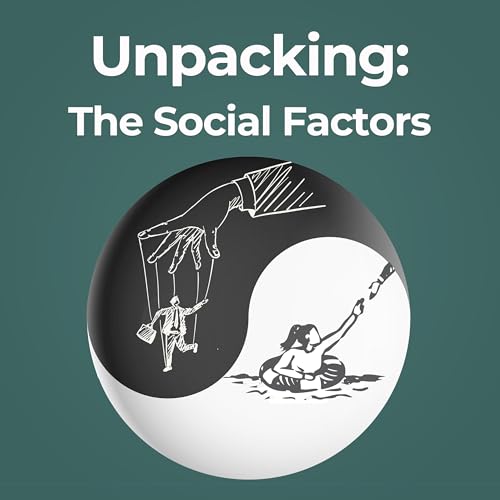
Unpacking: How Social Factors Shape Chronic Pain Journeys
カートのアイテムが多すぎます
ご購入は五十タイトルがカートに入っている場合のみです。
カートに追加できませんでした。
しばらく経ってから再度お試しください。
ウィッシュリストに追加できませんでした。
しばらく経ってから再度お試しください。
ほしい物リストの削除に失敗しました。
しばらく経ってから再度お試しください。
ポッドキャストのフォローに失敗しました
ポッドキャストのフォロー解除に失敗しました

Unpacking: How Social Factors Shape Chronic Pain Journeys
-
ナレーター:
-
著者:
概要
Why do two people with the same injury have completely different pain journeys - and what does a zip code have to do with it?
Today we dig into the often-overlooked social side of persistent pain: the way income, work conditions, food access, relationships, and even cultural expectations can ramp pain up or help dial it down.
Dr. Megan and Holly explore how:
- Socioeconomic status and access to care change the way pain shows up and sticks around
- Food deserts, chronic stress, and unstable housing contribute to inflammation and nervous system sensitization
- Social support, community, and a sense of belonging act as real “medicine” for the brain
- Work satisfaction, toxic bosses, and job insecurity influence chronic low back pain and recovery
- Simple practices - like visualization, “spoon” or gas-tank metaphors, and clearer communication with friends, partners, and coworkers - can make it easier to live your life while living with pain
You’ll come away with language to explain your limits to others, new ways to think about your own pain story, and practical, low-cost tools for building more safety, connection, and support into your everyday life
Links to interesting things from this episode:
- Dr. Megan’s Instagram
- “Integrating multidimensional data analytics for precision diagnosis of chronic low back pain”
- “Navigating the biopsychosocial landscape: A systematic review on the association between social support and chronic pain”
- “Radical Acceptance: Embracing Your Life With the Heart of a Buddha” by Tara Brach
- Étoile
adbl_web_anon_alc_button_suppression_c
まだレビューはありません