

US History 1492-1877, Unit 2: Colonial America: Colonial Labor
カートのアイテムが多すぎます
カートに追加できませんでした。
ウィッシュリストに追加できませんでした。
ほしい物リストの削除に失敗しました。
ポッドキャストのフォローに失敗しました
ポッドキャストのフォロー解除に失敗しました

US History 1492-1877, Unit 2: Colonial America: Colonial Labor
-
ナレーター:
-
著者:
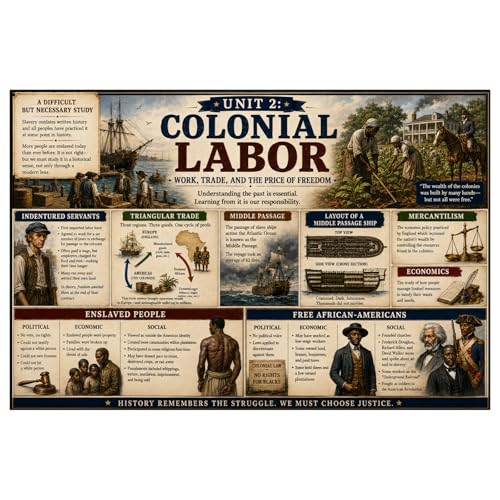
In this lesson from Unit 2: Colonial America, students examine the labor systems that developed in the American colonies, including indentured servitude, slavery, mercantilism, and the Atlantic trade system. The lesson explores how labor became essential to colonial economic growth while also examining the human impact of slavery and forced labor in Colonial America.
The lesson begins with a historical overview explaining that slavery existed long before Colonial America and had appeared in many civilizations throughout world history. Students are encouraged to study slavery within its historical context while also recognizing that slavery and human trafficking still exist in parts of the modern world.
Students then investigate indentured servitude as the first major labor system used in the English colonies. The lesson explains how indentured servants agreed to work for a certain number of years in exchange for passage to America and examines the harsh realities many servants faced once they arrived.
A major focus of the lesson is the transition from indentured labor to race-based slavery in the colonies. Students examine the arrival of the first Africans in Virginia in 1619 and learn how early African laborers were not initially enslaved in the same way slavery later developed in Colonial America.
The lesson also explores the story of Anthony Johnson, a formerly enslaved African who gained freedom, acquired land, and became a successful tobacco farmer. Students examine the important legal case involving Anthony Johnson and John Casor, which became one of the earliest examples of lifetime servitude being legally recognized in the English colonies.
Students then study the Triangular Trade and the Middle Passage, analyzing how trade connected Europe, Africa, and the Americas through the exchange of manufactured goods, enslaved Africans, and raw materials. The lesson also explains how mercantilism shaped colonial economies and increased the demand for labor.
Finally, students examine the political, economic, and social realities faced by enslaved and free African Americans in the colonies. Topics include slave codes, restrictions on rights, family separation, resistance to slavery, and the growth of free African American communities.
By the end of the lesson, students will understand how labor systems, trade, economics, and slavery became deeply connected to the development of Colonial America and shaped the future history of the United States.