エピソード

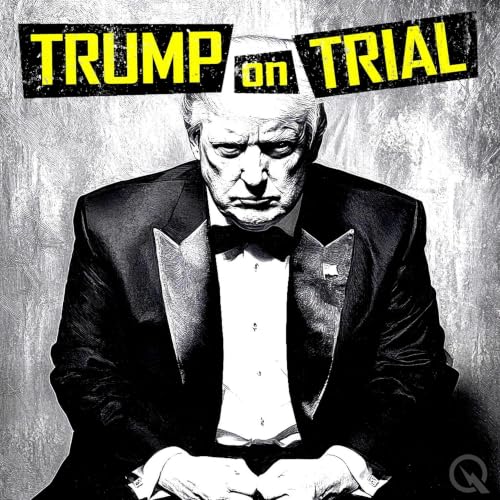
  • Trump's Legal Battles Test American Justice System Across Multiple Courtrooms and Cases
    2026/06/03
    The past few days in Donald Trump’s court battles have felt less like a series of hearings and more like a rolling stress test on the American legal system, and you can feel it in every courtroom doorway he walks through. In New York, the criminal hush money case that once sounded almost technical has turned into a running clash over what accountability looks like for a former president. NBC News and CNN have reported on how Trump’s lawyers are pressing hard on appeal issues and potential challenges to any sentence, arguing that prosecutors stretched state law by tying business record falsification to federal election crimes. At the same time, New York court reporters describe a judiciary trying to show that the rules of evidence, contempt warnings, and jury instructions apply even when the defendant is Donald J. Trump. You hear it when judges remind the parties that public statements outside the courthouse can still threaten the integrity of the trial inside. Shift to the federal election interference case in Washington, and the word that hangs over everything is immunity. According to reporting from the New York Times and the Washington Post, Trump’s team has been leaning hard on the argument that actions he took while president, including pressuring officials about the 2020 election, should be shielded from criminal liability. Special Counsel Jack Smith’s prosecutors have pushed back, pointing to Supreme Court precedent that no person, not even a president, is above the law. Legal analysts at outlets like Justia and Oyez note that recent Supreme Court arguments in presidential power cases are being watched as a proxy battle over how far that immunity can stretch. Then there is Georgia, where the Fulton County election case has been mired in fights over District Attorney Fani Willis and allegations of conflicts of interest. According to the Atlanta Journal-Constitution, the last several days have been dominated less by jury selection and more by hearings on whether Willis can stay on the case, and whether the racketeering charges against Trump and his allies are being wielded too broadly. It is a reminder that the Trump trials are not just about one man, but about the prosecutors, judges, and local jurors pulled into a national storm. Meanwhile, civil cases continue to ripple in the background. News outlets like Reuters and the Associated Press have described how New York’s civil fraud judgment, with its massive financial penalties and monitoring of the Trump Organization, is now intersecting with the criminal cases. Every appeal deadline, every bond posting, becomes another data point in whether a former president can run for office while under extraordinary legal constraint. Across all of this, commentators on Court TV and major networks keep returning to the same point: these cases are testing the seams between politics and law. Jurors are told to decide only on evidence and statutes, while knowing the entire world is watching. Judges are forced to balance free speech rights against the risk of intimidating witnesses and poisoning a jury pool. And listeners are left tracking multiple dockets at once, watching the same name appear in New York, Washington, Georgia, and beyond. As these past days have shown, none of these trials moves in isolation. A ruling on presidential immunity in one courtroom reshapes strategy in another. A contempt warning in New York echoes into how Trump speaks on the courthouse steps in Washington or Atlanta. The story is no longer just about verdicts, but about whether the system can hold together when the defendant is a former and possibly future president. Thank you for tuning in, and come back next week for more. This has been a Quiet Please production, and for more, check out QuietPlease dot A I. Some great Deals https://amzn.to/49SJ3Qs For more check out http://www.quietplease.ai
    続きを読む 一部表示
    4 分
  • Supreme Court Tackles Trump Birthright Citizenship Executive Order in Major 2026 Constitutional Battle
    2026/05/20
    In the latest legal news touching Donald Trump, the most closely watched development from the past few days is still the Supreme Court’s March 25, 2026 action in the Trump-related birthright citizenship fight. Rutgers Law School’s Legal Issues to Watch in 2026 says the Court has centered attention on whether President Trump’s Executive Order 14160 can change who gets U.S. citizenship at birth, and that issue remains one of the biggest constitutional battles of the year. SCOTUSblog’s March 25 report also shows the Court was moving through a packed calendar that day, underscoring how many major Trump-era legal questions are still rising through the system at once. At the same time, the federal courts have continued to deal with Trump administration policy disputes in fast-moving fashion. SCOTUSblog reported that the Court was weighing the asylum case Noem v. Al Otro Lado, where the justices appeared likely to uphold the government’s policy of turning back asylum seekers before they reach the border with Mexico. That argument matters because it reflects the Court’s ongoing willingness to scrutinize immigration policies that came out of the Trump era and remain politically central now. There is also a separate Trump-linked shadow docket development noted by Rutgers Law School. Rutgers says the Supreme Court already ruled in Trump v. Orr that a Trump administration policy requiring all passports to reflect sex assigned at birth was likely constitutional and could go into effect. That is another sign that disputes tied to Trump’s governance are not limited to election law or immigration, but continue to reach into civil rights and federal administrative power. And while not involving Trump directly as a party in the results I found, the broader legal environment around federal authority is still being shaped by the same kind of high-stakes constitutional arguments that defined the Trump years. SCOTUSblog’s March 25 coverage and Rutgers’ 2026 roundup both show a Court term loaded with questions about executive power, citizenship, and the reach of federal agencies. Those themes matter because any new Trump-related case will land in a legal landscape already primed for major clashes over presidential authority. So the picture as of late March is clear: Donald Trump’s legal footprint is still very much alive in the courts, especially through the birthright citizenship challenge, immigration policy disputes, and other tests of executive power. Thank you for tuning in, come back next week for more, and this has been a Quiet Please prodution. For more, check out Quiet Please Dot A I. Some great Deals https://amzn.to/49SJ3Qs For more check out http://www.quietplease.ai
    続きを読む 一部表示
    3 分
  • Trump's Legal Shadow Looms Over 2026 Higher Education and Supreme Court Battles
    2026/05/12
    This content was created in partnership and with the help of Artificial Intelligence AI.
    続きを読む 一部表示
    4 分
  • Supreme Court Citizenship Case, Connecticut Vaccine Lawsuits, and IRS Tax Penalties Shake Legal Landscape in April 2026
    2026/04/27
    I never thought I'd be glued to the Supreme Court docket like this, but here we are, listeners, in the thick of it. Just last fall, the justices heard arguments in a blockbuster case straight out of President Donald Trump's playbook: whether his Executive Order 14160 violates the Citizenship Clause of the Fourteenth Amendment and the Immigration and Nationality Act. Rutgers Law School professors are calling it one of the most pivotal issues of 2026, as it challenges who gets U.S. citizenship by birth—potentially rewriting birthright rules that have stood for over a century. Imagine the ripple effects on families, borders, and elections if the Court sides with the challengers. But that's not all unfolding in these past few days. On April 21, Yankee Institute reported how Connecticut lawmakers are playing a risky game, pushing bills to tweak laws mid-litigation. Take Senate Bill 450—it's aimed right at an active lawsuit over the state's 2021 move to scrap religious exemptions for school vaccines. The bill declares that Connecticut's Religious Freedom Restoration Act won't apply to immunizations, even in pending cases, yanking the legal standard out from under the court's feet. Critics say it's a pattern: lawmakers repealing rules while courts decide if they were broken, raising red flags on accountability. Is it legal? Courts will say, but it smells like dodging scrutiny. Shifting to tax battles with echoes of big penalties, The National Law Review detailed IRS moves from April 6. Taxpayers in Hirsch v. US Tax Court are begging the Supreme Court to extend the 2024 SEC v. Jarkesy ruling, demanding jury trials for civil fraud penalties topping $15 million—tied to faked US Virgin Islands residency claims. A win could hobble IRS audits everywhere. Meanwhile, the IRS proposed overhauling its Voluntary Disclosure Program, swapping a one-time 75% fraud penalty for 20% accuracy-related hits spread over six years, plus a 90-day payback deadline. Practitioners cheer ditching the huge lump sum but warn cumulative costs could still sting. And labor law's buzzing too. JD Supra notes the National Labor Relations Board is back in action this April, with Crystal Stowe Carey as General Counsel since January, issuing guidance to protect workers' rights. Yet nominations like James Macy's on April 13 keep it in flux, shadowed by Supreme Court fights over agency independence. Whew, from citizenship showdowns to mid-case law tweaks, these legal fires are burning hot. What's next? Stay tuned, because the courts never sleep. Thanks for tuning in, listeners. Come back next week for more, and this has been a Quiet Please production—for more, check out Quiet Please Dot A I. Some great Deals https://amzn.to/49SJ3Qs For more check out http://www.quietplease.ai This content was created in partnership and with the help of Artificial Intelligence AI.
    続きを読む 一部表示
    4 分
  • Trump's Legal Reshaping: SPLC Indicted, Birthright Citizenship Challenge, Immigration Enforcement Expands
    2026/04/22
    I never thought I'd be glued to my screen at 6 AM on April 22, 2026, watching the legal world spin around President Donald Trump like a whirlwind, but here we are, listeners. Just yesterday, on April 21, the U.S. Department of Justice dropped a bombshell in Montgomery, Alabama—a federal grand jury indicted the Southern Poverty Law Center on 11 counts of wire fraud, false statements to a federally insured bank, and conspiracy to commit concealment money laundering. Acting Attorney General Todd Blanche and FBI Director Kash Patel announced it from Washington, with the FBI and IRS Criminal Investigation leading the probe. Two forfeiture actions aim to claw back the alleged proceeds, though it's all allegations for now, and a conviction could strip away their ill-gotten gains, according to the Justice Department's press release. But that's not all keeping Trump's legal orbit buzzing these past few days. Shift over to the Supreme Court, where his Executive Order 14160—aimed at redefining birthright citizenship under the Fourteenth Amendment—is hanging by a thread. SCOTUSblog reports that during two hours of oral arguments in Trump v. Barbara last week, justices gave the administration's push an icy stare, hinging on a novel take on "domicile." The government argues a mother's domicile should limit citizenship for kids born on U.S. soil, but without that buy-in, the order likely crumbles. Rutgers Law School professors predict a pivotal ruling this term, clashing with the Immigration and Nationality Act, and we might not hear until late June. Meanwhile, Trump's immigration enforcement machine keeps humming. Vasquez Law in Smithfield, North Carolina, details how fresh 2026 executive orders ramp up electronic monitoring, tighten green card rules for applicants, and boost local-federal cop cooperation from Florida to nationwide. Dreamers and undocumented folks face expedited removals, prioritized by public safety risks—policies echoing back to 2016 but supercharged now to protect Americans, as their blog outlines in a grim timeline from initial encounters to appeals dragging months. And don't sleep on the DOL front—Mayer Brown notes that on April 15, the Department of Labor released Technical Release 2026-01, sparked by Trump's December 2025 executive order. It cracks down on ERISA retirement plans' proxy voting and advisory services, ensuring fiduciary duty aligns with worker interests. From Alabama indictments to Supreme Court showdowns, Trump's legal moves are reshaping enforcement, citizenship, and more, proving the past week's drama is just the latest chapter. Thanks for tuning in, listeners—come back next week for more. This has been a Quiet Please production, and for more, check out Quiet Please Dot A I. Some great Deals https://amzn.to/49SJ3Qs For more check out http://www.quietplease.ai This content was created in partnership and with the help of Artificial Intelligence AI.
    続きを読む 一部表示
    4 分
  • Supreme Court Sends Bannon Contempt Case Back to Lower Court as DOJ Seeks Dismissal in Major Trump Ally Victory
    2026/04/20
    I never thought I'd be glued to the Supreme Court docket like this, but here we are on a crisp April morning in 2026, and Steve Bannon's legal saga just took a wild turn. Picture this: Stephen K. Bannon, the fiery former strategist to President Donald Trump, convicted back in 2022 for contempt of Congress after defying a subpoena from the House committee investigating the January 6 Capitol riot. He served four months in federal prison, but now, SCOTUSblog reports that the Supreme Court, in its Monday order list, has sent his case back to the lower court. The Department of Justice has already filed a motion to dismiss the indictment entirely. It's a massive win for Bannon, clearing the path for his conviction to vanish just as Trump gears up for another White House run. Listeners, this feels like poetic justice in the endless Trump orbit legal battles—Bannon's loyalty to Trump never wavered, and now the courts might let him walk free. But hold on, because the Trump world's legal ripples don't stop there. Just days ago, on April 7, the justices also added a new case to their 2026-27 docket challenging veterans' benefit laws, though it's not directly tied to Trump. Still, the court's moves echo broader fights over executive power that Trump champions. Fast forward to this week, and Attorney General Pam Bondi—Trump's pick, confirmed earlier this year—has been flexing muscle through the Department of Justice's AI Litigation Task Force. Established back on January 9, 2026, this squad is primed to sue states over AI laws, arguing they burden interstate commerce or clash with federal rules. Baker Botts' AI Legal Watch notes it's all part of a White House push from March 20, including a National Policy Framework for Artificial Intelligence that urges Congress to protect voices and likenesses from AI deepfakes—think Trump's image cloned without permission—while carving out spots for satire and news. Trump's influence seeps into procurement too. The General Services Administration dropped its "Basic Safeguarding of Artificial Intelligence Systems" clause on March 6, forcing companies to ditch their own AI terms for government deals, claiming ownership of custom tech, and sticking to American-made systems. It's a Trump-era clampdown on Big Tech, overriding commercial safety nets. Meanwhile, in a nod to hiring fairness that could hit Trump's business empire, Judge Rita Lin in the Northern District of California greenlit core age-discrimination claims in Mobley v. Workday on March 6. The ruling says the Age Discrimination in Employment Act covers job seekers, not just employees—huge for AI bias suits that might one day scrutinize Trump Organization practices. These threads weave a tapestry of Trump-shaped legal shifts: from Bannon's potential exoneration to AI battles shielding his brand. As federal preemption looms over state regs like New York's LLC Transparency Act, enforced since January 1, it's clear 2026 is reshaping the game. Thanks for tuning in, l This content was created in partnership and with the help of Artificial Intelligence AI.
    続きを読む 一部表示
    4 分
  • Trump v. United States: Supreme Court Challenges Executive Order on Birthright Citizenship in April 2026
    2026/04/15
    I never thought I'd be glued to my screen this early on a crisp April morning in 2026, but here I am, coffee in hand, scrolling through the latest legal fireworks swirling around President Donald Trump. Just days ago, on April 1st, the Supreme Court chambers in Washington, D.C., echoed with oral arguments in Trump v. United States, a blockbuster case challenging Executive Order 14160. Rutgers Law School professors are calling it one of the most pivotal issues of the year, as it questions whether Trump's order redefining birthright citizenship under the Fourteenth Amendment and the Immigration and Nationality Act holds water. Picture this: the justices grilling lawyers over who qualifies as a U.S. citizen by birth, with Trump's team arguing it bolsters national security while opponents cry foul on constitutional grounds. Rutgers Law highlights how this could reshape immigration law overnight, sending shockwaves through families across America. But that's not all keeping me up at night. Fast-forward to April 7th, and G37 Chambers' International Legal News roundup drops a bombshell from the White House. They're defending Trump amid Middle East tensions, stating outright that "the US President, Donald Trump was making the entire region safer." It's tied to broader foreign policy moves, like Syria's new Investment Arbitration Centre in Damascus, launched post-Assad to lure investors—moves Trump champions as stabilizing the chaos. Guernica 37's weekly updates from the International Criminal Court and European Court of Human Rights paint a picture of global legal chess, with Trump's administration pushing back hard. Shifting gears to the courts back home, the Southern District of New York is heating up with a wild twist on sanctions. The National Law Review reports that the U.S. Department of the Treasury’s Office of Foreign Assets Control issued then revoked a license for legal fees to defend former Venezuelan President Nicolás Maduro and his wife, Cilia Flores de Maduro. They're on the SDN List, facing narcotics and firearms charges after a dramatic U.S. Army rendition via Operation Southern Spear. Maduro's lawyers are firing back, claiming it guts their Sixth Amendment right to counsel and Fifth Amendment due process—echoes that make you wonder if similar sanction snags could ever loop in U.S. political heavyweights like Trump. Meanwhile, the Supreme Court's fall 2025 arguments in Fernandez v. United States and Rutherford v. United States linger like a storm cloud, potentially curbing judges' power on compassionate releases for prisoners. Rutgers Law notes this could trap countless inmates in "extraordinary and compelling" limbo, a reform battle Trump-era policies have fueled. As the sun rises here on April 15th, these threads weave a tapestry of power, borders, and justice that's anything but sleepy. From the Supreme Court's marble halls to Damascus streets, Trump's legal orbit keeps the world spinning. Thanks for tuning in, listeners. Come bac This content was created in partnership and with the help of Artificial Intelligence AI.
    続きを読む 一部表示
    4 分
  • Supreme Court Battles Trump's Birthright Citizenship Order: What 2026's Biggest Legal Cases Mean for Immigration Law
    2026/04/13
    I never thought I'd be glued to my screen at 6 AM on this crisp April 13th, 2026, watching the legal world swirl around President Donald Trump like a storm over Mar-a-Lago. But here we are, listeners, with the U.S. Supreme Court diving headfirst into his bold Executive Order 14160, challenging the very heart of birthright citizenship. According to Rutgers Law School's analysis of key issues to watch in 2026, this order seeks to redefine who qualifies for U.S. citizenship by birth, potentially clashing with the Citizenship Clause of the Fourteenth Amendment and the Immigration and Nationality Act. Oral arguments heated up just days ago on April 1st, as reported in coverage from the Maine Supreme Judicial Court proceedings, where lawyers like Peter J. Brann for the Senate President and David M. Kallin for the League of Women Voters of Maine squared off against Timothy C. Woodcock for the Republican National Committee. The stakes? A doctrinal earthquake that could reshape immigration law for generations. Just last week, on April 7th, G37 Chambers' International Legal News roundup from March 30 to April 3 highlighted the White House defending Trump, stating he was making the entire Middle East region safer amid foreign policy firestorms. But back home, the courts are buzzing. Picture this: the Supreme Court also just rejected Colorado's ban on conversion therapy in a March 31st update noted by Rutgers Law professors, a win for broader civil rights debates that echo Trump's administration priorities on limiting judicial overreach. Meanwhile, in a twist tying sanctions to legal battles, the U.S. Department of the Treasury’s Office of Foreign Assets Control, or OFAC, issued then revoked a license for paying defense attorneys in the Southern District of New York case against former Venezuelan President Nicolás Maduro and his wife Cilia Flores de Maduro, per G37 Chambers. They're on the SDN List, facing narcotics and firearm charges after a dramatic U.S. Army Operation Southern Spear rendition. Their lawyers argue it violates Sixth Amendment rights to counsel and Fifth Amendment due process—echoes of constitutional fights Trump knows all too well from his own past tussles. And don't sleep on Trump v. CASA, Inc., where the Supreme Court in June ruled that universal injunctive relief likely exceeds federal courts' equitable authority, as detailed in Goodwin's emerging issues report for 2026. This curbs sweeping injunctions, handing a victory to executive actions like Trump's. With the D.C. Circuit eyeing CFPB overhauls under acting director Russell Vought, who wants to slash 88% of staff, these rulings signal a federal retrenchment aligning with Trump's deregulatory push. As the sun rises over Washington, D.C., these battles paint Trump as the epicenter of 2026's legal drama—citizenship clashes, sanction skirmishes, and court curbs on power. It's a high-wire act, listeners, blending policy wins with constitutional showdowns. Thanks for tuning in, and c This content was created in partnership and with the help of Artificial Intelligence AI.
    続きを読む 一部表示
    4 分