• The Big Sleep
    2025/11/18

    Send us a text

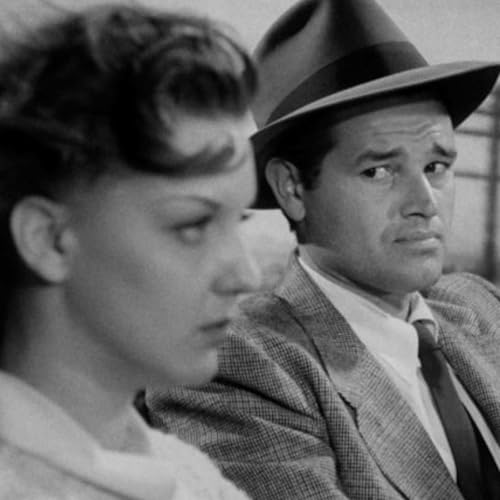
    Exit Scary Season, hello Noirvember and back to film noir in earnest! We’re leaving behind the subgenre of crazy kids on the run and into more established noir territory --- the private detective story. And do we have a great one for our entrance! Among the first pre-wave of classic film noir released in the US after WWII, it’s 1946’s The Big Sleep. Packed with talent in front of and behind the camera, packed with confusion by one of the hallmark authors of the hard – boiled writing style, packed with intrigue beyond the simple telling of a story --- it’s a signal event of the genre. It’s packed.

    It started, as do many of the early noir films, with a master of the pulp magazine story, the estimable Raymond Chandler. Chandler had an extremely round-about path to artistic success. He was a son of the Midwest, born in Chicago and raised in Nebraska, but due to family connections, well educated at Dulwich College in London. He became a British citizen and entered the civil service, which he found stifling. He moved on to newspaper work, had a stop in Canadian military service during WWI, then returned to the US, beginning an executive career in the Southern California oil industry. The Depression put paid to his work there, as well as contributed to his growing alcoholism. Short on funds, Chandler took a flyer and picked up on the paid – by – the – word pulp fiction magazines of the day, his first story in 1933 winning him instant success. He never looked back. He became more ambitious, his slow writing more fitted to novels than paid – by – the – word, publishing his first, The Big Sleep, in 1939.


    Website and blog: www.thosewonderfulpeople.com
    IG: @thosewonderfulpeople
    Twitter: @FilmsInTheDark

    続きを読む 一部表示
    49 分
  • Gun Crazy
    2025/09/16

    We’re plowing ahead five years from last month’s pod subject but staying in the low – rent, “B” picture roots of film noir, with just a bit more polish, a little more class (because of a slightly larger budget). While last month’s Detour sticks with you, it’s because of its rough edges and the kick-in-the-gut noirness of the fated fall of the protagonist (as well as the hyper – meanness of the femme fatale --- Ann Savage indeed!). This month, we look at a film that has an incredible behind-the-camera crew, a great cast with many nice surprises, but also some tendrils that tie it to Detour --- it’s 1950’s Gun Crazy. The film also ushers in (or joins, depending on your view) the sub – genre of “youngstas on the run” noir, as also exemplified by Nicholas Ray’s 1948 work They Live By Night, 1949’s Knock On Any Door, Tomorrow Is Another Day in 1951, and continuing the sub-genre into neonoir with Badlands and the remake of They Live By Night, Robert Altman’s Thieves Like Us. We’re privileged to see sharp writing, wonderful direction, a fabulous ten – minute bit of direct cinema, fine acting, but an inevitable, aching drive down the tracks to a waiting and remorseless fate.

    Detour came out of Poverty Row Hollywood --- Gun Crazy was hard on its run – down heels. PRC barely fronted the money for Detour, and the King Brothers, Frank and Maurice, were only slightly more generous in working up Gun Crazy’s budget (courtesy of the aptly named King Brothers Productions --- which we’ll shorten to KBP). This was another Hollywood “B” picture with no delusions of grandeur --- it was going to play on the bottom of the bill or in the sticks. But for the money, KBP floated a film that was packed with talent --- talent admittedly somewhat over a monetary barrel, but talent, nonetheless. What did KBP get for their $400K and thirty days of shooting?


    Website and blog: www.thosewonderfulpeople.com
    IG: @thosewonderfulpeople
    Twitter: @FilmsInTheDark

    続きを読む 一部表示
    36 分
  • Detour
    2025/08/19

    No producer or director of the 40s and 50s set out to make a film noir. They were simply trying to put together a film that would entertain and turn a profit, dammit! During the 40s and early 50s, TV was a non-entity or a new, expensive element in entertainment --- there was no competition for the 25 cents someone spent every week going to the movies. Consequently, the output of Hollywood was prodigious and many films noir, if not viewed through a modern lens, were simply “B” pictures, inexpensive work that was part of a double bill. The genre film noir encompasses many forms of 40s and 50s stories on its shadowed and fatalistic way… Melodramas. Crimers. Caper films. Heist movies. Police procedurals. Bad girl stories. Gangster films. Detective tales. Many of these films were inexpensive and thus, not worthy of notice or subtle categorization. They were “B”s. But some of the original and most impactful of the film noir genre were low-cost films imbued with the imagination, technical aptitude, and drive of their creators to transcend the double bill. They’re a credit to the people who worked to put forward the best story possible, regardless of the constraints of budget. Unsung heroes.

    So, we’re going to warm up the new season with a few of the under-funded “B” pictures that stood noir up on its legs and paved the way for more sumptuous, but no more impactful productions. We’re going to start with an orphan of Poverty Row filmmaking, from the fabulous Producers Releasing Corporation, fresh from the war, 1945’s Detour, directed by Edgar Ulmer and with a twosome at the top of the cast who made your hair curl with fatalism and dread. Noir enough for you? The tale begins in 1939 during the heyday of pulp magazines and their oeuvre, with a novel by Martin Goldsmith, titled Detour: An Extraordinary Tale. Indeed…


    Website and blog: www.thosewonderfulpeople.com
    IG: @thosewonderfulpeople
    Twitter: @FilmsInTheDark

    続きを読む 一部表示
    38 分
  • Invasion Of The Body Snatchers
    2025/06/17

    The A-bomb had contributed to this soft reign of terror. It had also fired a period of excitement and fertility in the neglected field of science fiction. Before WWII, sci-fi in film was widespread, with examples such as Lang’s hallmark Metropolis, Things To Come, the silent 20,000 Leagues Under The Sea, The Lost World, and serials populated by Flash Gordon and Buck Rogers. The war had shifted the focus, to combat and military films, propaganda, home-front boosterism, and escapism. The war also brought awareness of the application of science to conflict. Atomic power had brought an entirely new set of horrific sci-fi characters --- as embodied by Bela Lugosi, played by Martin Landau in the film Ed Wood: “Today it’s all giant bugs. Giant spiders, giant grasshoppers...” Increasingly, sci-fi enemies came from the outside, from other worlds loosening tremendous power upon the Earth, or beings from our world mutated and terribly changed by atomic power. Or sometimes, both. Aliens of all types were lurking every week at the Bijou in the 1950s. The Day The Earth Stood Still. The Thing From Another World, The War Of The Worlds. Some of these films were silly, and as characterized by Lugosi/Landau --- giant bugs. Some became classics, despite their pedigree, as in the film Invasion Of The Body Snatchers. The 1956 offering had an unlikely path to greatness, but it’s stood the test of time because of the themes that run through its bones.


    Website and blog: www.thosewonderfulpeople.com
    IG: @thosewonderfulpeople
    Twitter: @FilmsInTheDark

    続きを読む 一部表示
    38 分
  • 1900
    2025/05/20

    Last month, we waltzed through mid – 19th Century Italy. Today, we jump forward a half – century --- royalty continues its decline, the middle – class and powerful industrial leaders are ascendant in Europe. It’s a new century and the dawn of a new, perhaps golden era. But is it? Where still a force, European royalty is having its last hurrah in controlling lands far beyond their borders through vicious policies of imperialism. A minor Prince in Germany (who calls himself the German language derivation of Caesar) is going to overstep his bounds and plunge Europe and some of the rest of the world into a butcher’s shop of a conflict, known airily as WWI. As a result, the world further shunts royalty into the wastebin of history. But the desire for power, for rule over lands beyond your own borders? That remains. The eyes that lust after it, the hands that seek to grasp it, change from supposedly holy royal hands to an unholy alliance between politicians and industrial and financial might. And the world again sends its military off to slaughter one another.

    We saw the seeds of the downfall of royalty during the unification of Italy in Luchino Visconti’s film, The Leopard. This month, we follow two men from very different backgrounds who emerge from a unified Italy. They face the fallout of WWI and the rise of cooperation between autocracy and industrial might that forms fascism. Another decorated Italian director, Bernardo Bertolucci, mounted an ambitious film to follow their path and that of Italy as a five – hour epic, 1900. The film, which debuted in 1976, not only portrayed another turning point for Italy and the world but was a significant change for Bertolucci as he moved away from a scandalous and dark part of his career. But this is just a light story travelling over decades --- nothing to teach the US and the world in 2025…


    Website and blog: www.thosewonderfulpeople.com
    IG: @thosewonderfulpeople
    Twitter: @FilmsInTheDark

    続きを読む 一部表示
    35 分
  • The Leopard
    2025/04/22

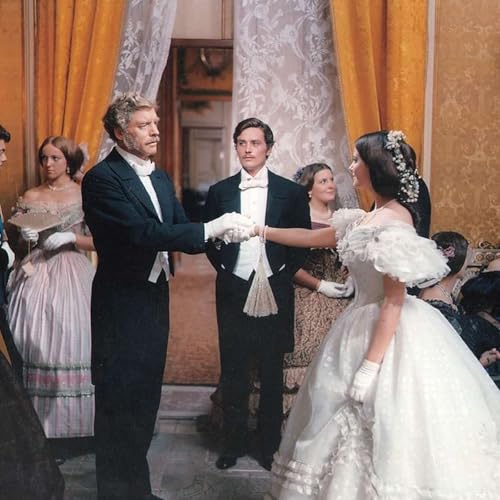
    Visconti has been seen in this season as the director of the searing, accusatory film of the interdependence of the industrial class with the Nazis in Germany, The Damned. But where did this European industrial class arise, when Europe was still saddled with an immense set of royalty that began with kings and queens and spread its fingers into every aspect of the lives in their respective nations or nation-states until almost 1920? How was the transfer of power and wealth from the royals to a burgeoning middle- and then upper-class of technocrats, industrialists and traders brought about? How did this unweighting of the royals and shift in power to common but now wealthy families buckle civil society under the strain? In the 1963 film, The Leopard, Visconti examines the shift in the sand in the quiet, almost dispassionate gaze of a Sicilian nobleman, who sees his royal station being slowly eroded by the forces of politics, but also by the forces of economics, as wealth passes from hands supposedly blessed by a lineage from God into the more clever, adept hands of a new line.


    Website and blog: www.thosewonderfulpeople.com
    IG: @thosewonderfulpeople
    Twitter: @FilmsInTheDark

    続きを読む 一部表示
    40 分
  • The Great Silence
    2025/03/18

    As with Django, Corbucci wrote the film with his brother Bruno, as well as Vittoriano Petrilli and Mario Amendola. He’d been deeply influenced by the recent assassinations of Che Guevara, Cuban revolutionary who had tried to spark a Communist overthrow of Bolivia, and the US’ Malcolm X, a one-time Nation of Islam leader converted to the Muslim faith and killed at a speaking engagement. As the end of the 60s approached, Corbucci felt that the era of progressive political action was dwindling, to be overtaken by fierce reactionary elements. The earlier activism seemed to him to be hurled backward in progress and time. As Alex Cox noted about Corbucci’s thoughts, “You could only take on the powerful and the wicked for a short while, it seemed, before they crushed you.” Corbucci set the film’s action in 1899 Utah just prior to the Great Blizzard, the winter scenes reflecting his feelings of pessimism, depression, and disgust. Another influence --- famed Italian actor Marcello Mastroianni had secretly wished to play a role in a Spaghetti but felt his poor English would interfere --- he suggested to Corbucci to pen a film of a mute protagonist. Corbucci adapted the idea into the film sans Marcello --- it would become the second Mud and Blood work, 1968’s The Great Silence, a word play on the bleakness of the winter setting and the mute anti-hero.


    Website and blog: www.thosewonderfulpeople.com
    IG: @thosewonderfulpeople
    Twitter: @FilmsInTheDark

    続きを読む 一部表示
    38 分
  • Django
    2025/02/18

    There’s a small set of seasons that lurk after the best of winter, but before spring is in the air. You’re emerging from the wonders of a White Christmas (TM) --- those beautiful, light, star-filled dustings of a snowfall, so picturesque. Then slogging into the wet, deep, and ongoing snowfalls that you shovel every day. And then --- worse! --- the melting of that semi-season into the wet, drippy, soggy next phase --- the season of mud. Both the slogging snow and mud seasons are drags on the spirit for those who live through them --- they possess an endless feel of oppression. Contrast this with the blazing sun and hot desert environments of, well, Westerns. Even in the most desperate of Western films, the atmosphere is usually sunny, with vistas of mesas and rock formations as far as the eye can see. Think John Ford Westerns as a prime example. It’s as if the West is centered in Monument Valley, Arizona --- everything farther west is California, and everything eastward is St. Louis. And 98% of American Westerns follow suit…


    Website and blog: www.thosewonderfulpeople.com
    IG: @thosewonderfulpeople
    Twitter: @FilmsInTheDark

    続きを読む 一部表示
    33 分