エピソード

  • Episode 10: Grand Gorillas: Meet the doctors mending the magnificent guardians of Africa’s rainforests
    2026/07/09

    Deep in Africa’s wild, rainforest-covered volcanic mountains is one of planet earth’s greatest conservation success stories. For the last forty years a group of dedicated veterinarians has brought one of our most iconic beasts, the mountain gorilla, back from the brink of extinction.

    In this episode you will meet Dr. Kirsten Gilardi, the former Executive Director (recently retired) and Chief Veterinary Officer of Gorilla Doctors. Based at the UC Davis School of Veterinary Medicine, she led this incredible international team for 16 years, who provide hands-on veterinary care to ill and injured mountain and Grauer's gorillas in Rwanda, Uganda, and the Democratic Republic of the Congo.

    Dr. Gilardi explains the sheer delight of visiting these gentle forest giants in their mountain homes, and what we can all learn from the successful conservation and preservation of our closest living relatives and the places they live.

    So grab a leafy green snack, make a comfy night nest and be delighted by this expedition with National Geographic writers Jeffrey Barbee and Laurel Neme as we explore a wilderness protected by some of the fiercest, and fragile, vegetarians the world has ever known.

    Get involved:

    Gorilla Doctors is the only organisation in the world providing hands-on veterinary care to wild mountain and grauers gorillas, and every donation directly funds the field teams who race into the forest when a gorilla is ill, injured, or caught in a snare.

    Give here: https://www.gorilladoctors.org/donations/

    Follow the work case by case on their blog, where the field vets write up real interventions from Rwanda, Uganda, and the DRC: https://www.gorilladoctors.org/category/blog/

    Learn more about the team, the science, and the One Health approach behind it all at the main site: https://www.gorilladoctors.org/

    Because these are our closest living relatives, keeping them healthy protects people and habitat too, and your support keeps the doctors on call 365 days a year.

    You can also back the wider effort to protect gorillas and their forests through the Dian Fossey Gorilla Fund, which continues the daily protection and research work Fossey began: https://gorillafund.org/

    And through the International Gorilla Conservation Programme, a coalition working across the Virunga and Bwindi landscapes to safeguard gorilla habitat and the communities who share it: https://igcp.org/

    The Wildlife Podcast is produced by Jeffrey Barbee and Laurel Neme.

    It is directed and edited by Jeffrey Barbee.

    Find out more on our websites: www.laurelneme.com and www.jeffreybarbee.com

    The podcast is supported by the US based nonprofit www.allianceearth.org

    Our theme music was produced just for our show by the amazing Joey Morra, check him out on his website at: www.joeymorra.com

    続きを読む 一部表示
    4 分
  • Episode 9: Saving seamounts, black smokers and the elusive… dark oxygen!
    2026/06/24

    In this week's episode we explore something deep, dark, and surprisingly full of life. Discover some hope in the depths of one of the most mysterious parts of our oceans in this episode with The Center for Biological Diversity's David Derrick.

    David is a lawyer whose career path diverged from a more staid legal practice into environmental protection when he moved to California and started to enjoy the outdoor ocean life. Now he is working on protecting the ocean depths and her denizens from exploitation.

    Deep sea mining is hard, dangerous and expensive, but these challenges aren't preventing dozens of companies, and the US government, from trying to dredge the ocean floor for financial gain. As the world looks down for more of the minerals and metals that are part of our transition away from the dirty and polluting oil business, we discover why it's critical that the bottom of Davy Jones' locker be left undisturbed.

    So join us and find out how the deep sea’s protectors like David are squaring up against this little-known problem, why this is the perfect time for collective action, and how you can get involved and become a deep sea ocean champion yourself.

    Get involved:

    Everyone’s voice counts! Sign the Greenpeace petition tostop deep sea mining before it starts:

    https://www.greenpeace.org/africa/en/act/stop-deep-sea-mining/

    Find out more about the the issues of deep sea mining at The Center for Biological Diversity’s dedicated deep sea mining page:

    https://www.biologicaldiversity.org/campaigns/deep-sea_mining/

    Check out the The Center for Biological Diversity’s latest April 2026 press release, and support the organisation today at this link:

    https://biologicaldiversity.org/support/

    Learn more about WHY deep sea ocean mining is a false resource promise from Justin Alger

    At The School of Social and Political Sciences at The University of Melbourne in Australia writing in the journal Nature:

    https://www.nature.com/articles/s44183-025-00127-4

    The Wildlife Podcast is produced by Jeffrey Barbee and Laurel Neme.

    It is directed and edited by Jeffrey Barbee.

    Find out more on our websites: www.laurelneme.com and www.jeffreybarbee.com

    The podcast is supported by the US based nonprofit www.allianceearth.org

    Our theme music was produced just for our show by the amazing Joey Morra, check him out on his website at: www.joeymorra.com

    続きを読む 一部表示
    51 分
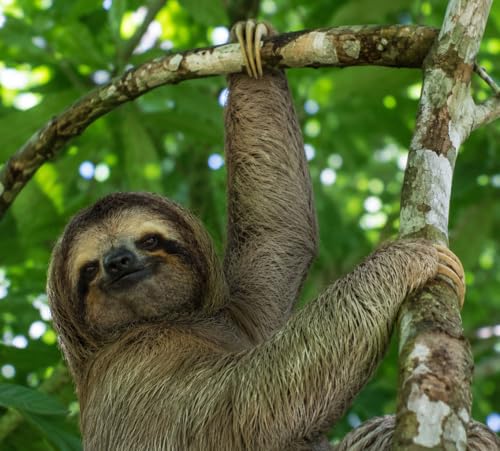
  • Episode 8 - The Everything Sloth Show
    2026/06/09

    Want to know why you should never wake a snoozing sloth for a selfie? Ever wonder what this cuddly-looking creature's quiet genius is? Hint hint- it has to do with poop!

    Adriana Aguilar never planned to run a wildlife sanctuary, but then love’s spark also ignited her passion for conservation. Today she and her husband Alvaro run Proyecto Asís, one of Costa Rica's most respected ethical wildlife sanctuaries, where they care for parrots, monkeys, kinkajous, raccoons, herons… and sloths!

    In this exciting episode about our slow moving arboreal cousins you will discover all sorts of sloth facts, and if you hang around long enough you may even discover how you can safely help them across the road.

    So slow down, grab a low-hanging snack and join us as we grapple with all sorts of fun, fascinating and critically important info about conservation in Costa Rica in general and sloths in particular. Discover how you can support sloths, help fight animal trafficking and be a part of ethical wildlife conservation, without ever getting off of your go-slow sofa.

    We guarantee you will get inspired by this incredible team as they drive forward environmental education and support the incredible biodiversity of Costa Rica. Want to help sloths and the wild forests they rely on for their home and food? As Adriana explains in this episode, everyone can be part of the solution, so here is your chance.

    How You Can Help

    • Visit or volunteer at Proyecto Asís: Book an ethical educational tour or a volunteer/Spanish-immersion program — your visit directly funds the rescue work. https://institutoasis.com/
    • Donate to Proyecto Asís: Support the animals and the community directly. https://institutoasis.com/donations/
    • Follow and share their stories: Facebook — https://www.facebook.com/volunteerprogramscostarica/
    • Report wildlife crime: If you witness illegal wildlife trade or captive animals while travelling in Costa Rica, report it. When in doubt, send the details to Proyecto Asís and they'll help file it.
    • Travel responsibly everywhere: Keep your distance, never feed or handle wild animals, and choose sanctuaries that put conservation first.

    The Wildlife Podcast is produced by Jeffrey Barbee and Laurel Neme. It is directed and edited by Jeffrey Barbee. Find out more on our websites: www.laurelneme.com and www.jeffreybarbee.com

    It is supported by the US based nonprofit, www.allianceearth.org

    Our theme music was produced just for our show by the amazing Joey Morra, check him out on his website at: www.joeymorra.com

    続きを読む 一部表示
    53 分
  • Episode 7: Kids dive deep into STEM -to save endangered whales
    2026/05/27

    In this exciting episode discover how 10 middle schoolers from St. Anne’s-Belfield School in Charlottesville, Virginia are helping save endangered North Atlantic right whales by developing and deploying their own patent-pending deep submersible camera to help prevent whale entanglements.

    These teenagers are now working with the US National Oceanic and Atmospheric Administration, NOAA, with their ground-breaking invention to help devise and test state of the art fishing gear that prevents these critically endangered cetaceans from becoming entangled in fishing buoys.

    Entanglement in fishing gear is a significant problem for North Atlantic right whales. Many have died from getting tangled in the vertical ropes that dangle from buoys on the surface to traps laying at the bottom of the ocean.

    With only about 370 individuals, the species cannot afford to lose more. To help, certain areas along the New England coast are closed to vertical line fishing during the whales' migration and feeding times. Yet that can be hard on people who depend on fishing for their livelihood.

    Over the last few years, NOAA and the fishing industry have been exploring new types of gear to prevent entanglements. Rather than have ropes to retrieve gear, these alternatives use an"on demand" ropeless system that involves inflation of a bag to bring up a trap or deployment of a coiled rope that stays inside the gear until needed.

    These systems fail sometimes, and the kid’s new underwater camera system is designed to help NOAA scientists pinpoint problems, and fix them.

    Find out more and get involved:

    You can learn about NOAA’s efforts to build, test and share on demand fishing gear here.

    Learn more about this critically endangered species and how scientists at the Aquarium’s Anderson Cabot Center for Ocean Life are working to protect right whales.

    Want to help? You can, by reporting a North Atlantic right whale sighting with the North Atlantic Right Whale Consortium (NARWC).

    Have some time or money to donate for North Atlantic right whales? You can do so here at The Conservation Law Foundation.

    The Wildlife Podcast is produced by Jeffrey Barbee and Laurel Neme. It is directed and edited by Jeffrey Barbee. Find out more on our websites: www.laurelneme.com and www.jeffreybarbee.com

    Our theme music was produced just for our show by the amazing Joey Morra, check him out on his website at: www.joeymorra.com

    続きを読む 一部表示
    59 分
  • Episode 6: The tip of the Tusk for African wildlife conservation
    2026/05/12

    The Wildlife Podcast Episode 6: The tip of the Tusk for African wildlife conservation

    Supporting rangers, protecting wildlife and driving community development across Africa’s most incredible landscapes, the non-profit organisation Tusk has been working for decades to protect some of the most diverse and critically important ecosystems on planet Earth.

    In this episode, join award-winning journalists Laurel Neme and Jeffrey Barbee as we talk to Tusk founder Charlie Mayhew and dive deep into how this small but incredibly impactful organization has been supporting communities who are the frontline protectors of Africa’s wildlife. We uncover how Tusk started, what its goals are, and how it has helped change the lives of hundreds of thousands of people across Africa, while also saving critically endangered species.

    From supporting wildlife rangers by providing insurance and critical skills training, to organizing one of Africa’s premier cross-country marathons, discover in this episode how one person’s passion created a continental conservation movement, and how you can be a part of it.

    Discover more about Tusk’s successes: https://tusk.org/our-news

    Donate to Tusk: https://tusk.org/support-us/join-tusks-patrons-circle/

    Tusk’s Website: https://tusk.org

    Our theme music was produced just for our show by the amazing Joey Morra, check him out on his website at:

    www.joeymorra.com

    続きを読む 一部表示
    56 分
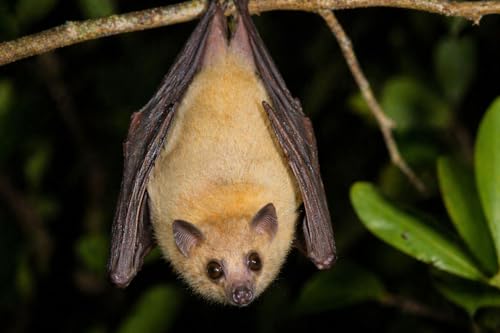
  • Episode 5: Furry, fabulous and fascinating bats!
    2026/04/22

    The Wildlife Podcast Episode 5: Furry, fabulous and fascinating bats!

    Did you know that bats may not only hold the key to a long life but also fruitful one? Or that they are one of the few mammals that can delay fertilization?

    Discover more about these impressive creatures and join award-winning journalists Laurel Neme and Jeffrey Barbee as we dive deep into the dusky mysteries of these elusive wild animals with one of the world’s most legendary bat researchers, Dr. Paul Racey.

    Paul Racey is the Regius Professor of Natural History emeritus at the University of Aberdeen and has dedicated his professional career to helping the world understand this incredible group of flying mammals. His more than six decades of groundbreaking research into bats have helped drive public policy and bat conservation efforts across the globe. And, as you will hear in this episode, from pest control to pollination - there is so much more to discover about bats!

    Wherever you are, you can be a part of bat conservation today.

    To start, check out the Bat Conservation Trust: https://www.bats.org.uk

    How to support bats in other places too:

    Bat Conservation International: https://www.batcon.org/

    BatLife Europe: https://www.batlife-europe.info/

    Bat Conservation Africa: https://www.batswithoutborders.org/

    AfricanBats: https://www.africanbats.org/

    AfriBats: https://www.afribats.org/

    Learn more about bats:

    IUCN SSC Bat Specialist Group: https://www.iucnbsg.org/

    North American Bat Monitoring Program: https://www.nabatmonitoring.org/

    Bats Without Borders: https://www.batswithoutborders.org/

    続きを読む 一部表示
    1 時間 2 分
  • Episode 4: Save the forest -save the raptors
    2026/04/08

    The Wildlife Podcast Episode 4: Save the forest -save the raptors!

    Discover how a groundbreaking new study on bird and forest ecology is delivering critical information about global forest health into the hands of policy-makers around the world.

    In this episode, award-winning journalists Laurel Neme and Jeffrey Barbee help sort the forest from the feathers with scientists Dr. Christopher O'Bryan, a conservation biologist at Maastricht University in the Netherlands, and Dr. Ralph Buij from Wageningen University in the Netherlands. Buij is also the Africa and Asia Conservation Director at The Peregrine Fund.

    The new study analyzed 369 forest-dependent raptor species using high resolution satellite data from 2001 to 2023. It has revealed previously unknown threats to these birds, but also illuminated critical ways to help successfully conserve them in the future.

    Check out the study: Rapid Global Deforestation Leaves Forest‐Dependent Raptors With Half of Their Suitable Habitat Remaining.

    Learn more about how you can help make a real difference to some of the most iconic birds in the world, wherever you live.

    You can support the Peregrine Fund:

    https://peregrinefund.org/

    Or volunteer at your local bird or wildlife sanctuary!

    Other exciting and vital ways to help raptors:

    https://parktrust.org/blog/how-you-can-help-save-birds-of-prey/

    Learn more about raptors here:

    https://peregrinefund.org/explore-raptors-species

    And here!

    https://raptor.umn.edu/about-raptors/learn-about-raptors

    Our theme music was produced just for our show by the amazing Joey Morra, check him out on his website at:

    www.joeymorra.com

    続きを読む 一部表示
    1 時間
  • Episode 3: Saving the Black-Footed Ferret’s little home on the prairie
    2026/03/25

    The WildLife Podcast Episode 3: Saving the Black-Footed Ferret’s little home on the prairie

    Delve deep into prairie secrets as we discover the startling connection between black-footed ferrets and prairie dogs and their importance for the preservation of the United State’s prairies.

    Did you know that more than a hundred different species rely on the North American prairie dog, and that it isn’t even a dog at all? Black-footed ferrets are one of them and are also the rarest mammals in North America, with only 300 left in the wild. They face a range of threats from habitat loss to fatal diseases, but there is hope!

    In this episode join Laurel Neme and Jeffrey Barbee as we work with this week’s conservation hero Chamois Andersen, Senior Representative for the Rockies and Plains Program for the non-profit Defenders of Wildlife.

    Because the black-footed ferret's survival is intertwined with the health of their main prey—prairie dogs—helping these carnivorous predators of the prairie also means focusing on the sustainability of prairie dog colonies, too.

    How can you help preserve prairie dogs and where you are?

    Get the toolkit here and get to work, there are all sorts of resources for kids and adults to support prairie dogs today!

    https://www.prairiedogcoalition.org/for-agencies-decision-makers

    Support and Donate to Defenders of Wildlife:

    https://defenders.org/

    Support The Prairie Dog Coalition:

    https://www.prairiedogcoalition.org/

    Why restore the prairie dogs' habitat? Learn more here:

    https://www.prairiedogcoalition.org/why-restore-prairie-dogs

    Read all about black-footed ferrets:

    https://defenders.org/wildlife/black-footed-ferret

    https://www.fws.gov/species/black-footed-ferret-mustela-nigripes

    https://www.blackfootedferret.org/

    https://wafwa.org/initiative-programs/black-footed-ferret/

    Even more information about our black-footed ferret friends in National Geographic:

    https://www.nationalgeographic.com/animals/mammals/facts/black-footed-ferret?loggedin=true&rnd=1769540942828

    Our theme music was produced just for our show by the amazing Joey Morra, check him out on his website at www.joeymorra.com

    続きを読む 一部表示
    55 分