エピソード

  • Why Sprinting Has Stalled — The Missing Neural System
    2026/04/12

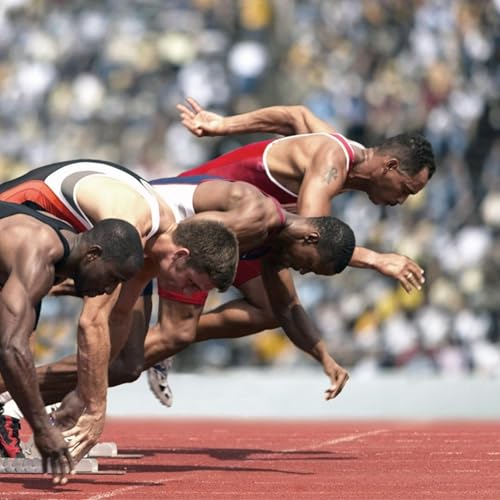
    Sprint performance has never been more refined.

    Biomechanics.
    Force production.
    Ground contact times.
    Technical models analysed to the smallest detail.

    And yet…

    we are no longer seeing the same progression in speed.

    In this episode of The Unseen Discipline Lab, Director Tim Taylor breaks down the real limitation in modern sprinting — and why the next world record will not come from better mechanics, more data, or more coaching courses.

    Because beyond a certain point, sprinting is no longer a mechanical problem.

    It becomes a neurological one.

    You’ll learn:

    • Why biomechanics has reached its functional ceiling
    • How the nervous system regulates maximum velocity
    • The concept of protective braking at top speed
    • Why athletes cannot access their true speed under pressure
    • Why coaching systems that ignore neural regulation will stall progress

    Because it does not matter how many coaching courses you attend…

    If neural engineering is not part of the system…

    performance will not move forward.

    続きを読む 一部表示
    20 分
  • Why Training Doesn’t Transfer to Competition — The Environment Problem
    2026/04/10

    You train well.

    Timing is clean.
    Movement feels natural.
    Execution is consistent.

    And then you compete.

    Something changes.

    The body feels different.
    Timing is slightly off.
    Movement becomes controlled instead of free.

    Nothing is technically wrong.

    But it is not the same.

    In this episode of The Unseen Discipline, Director Tim Taylor explains why performance often breaks down when it matters most — and why this is not a training issue.

    It is an environment problem.

    You’ll learn:

    • Why training and competition are neurologically different states
    • How consequence changes movement execution
    • Why repetition alone does not prepare you for performance
    • The role of exposure in stabilising performance under pressure
    • Why elite performers look the same in training and competition

    Because competition does not test your technique.

    It tests your access under consequence.

    続きを読む 一部表示
    20 分
  • Why You Tighten Under Pressure — The Protection Response
    2026/03/29

    You feel it before the moment.

    The shoulders rise.
    The breath changes.
    Movement becomes controlled instead of free.

    You tell yourself to relax.

    But it doesn’t work.

    In this episode of The Unseen Discipline, Director Tim Taylor explains why performers tighten under pressure — and why this is not a mistake, but a protective response from the nervous system.

    Because when consequence rises, the system does not try to maximise performance.

    It tries to reduce risk.

    You’ll learn:

    • Why tightening is a protective mechanism, not a failure
    • How consequence changes the way the body regulates movement
    • Why “just relax” is ineffective under pressure
    • The link between instability and muscular control
    • How elite performers remain open when it matters most

    Because you are not choosing to tighten.

    Your system is choosing to protect.

    続きを読む 一部表示
    14 分
  • Why You Collapse After a Breakthrough — The Instability Problem
    2026/03/29

    You reach a new level.

    A breakthrough performance.
    Everything aligns.
    Movement feels effortless.
    Timing appears without effort.

    And then…

    it disappears.

    Not completely.
    But enough to feel the loss.

    In this episode of The Unseen Discipline, Director Tim Taylor explains why performers often decline immediately after their best performance — and why this is not failure, but regulation.

    Because a breakthrough is not stability.

    It is access.

    You’ll learn:

    • Why your best performance often introduces instability
    • How the nervous system becomes more protective after success
    • The role of identity and consequence in post-breakthrough collapse
    • Why trying harder pushes the performance further away
    • How elite performers stabilise new levels instead of losing them

    Because you didn’t lose your best performance.

    You accessed a level your system is not yet ready to hold.

    続きを読む 一部表示
    34 分
  • The Sprint Ceiling — Why We’re Not Getting Faster
    2026/03/22

    Sprint performance has never been more refined.

    Biomechanics.
    Technique.
    Ground contact times.
    Force production.

    Everything has been analysed, measured, and optimised.

    And yet…

    we are no longer seeing the same progression in speed.

    In this episode of The Unseen Discipline Lab, Director Tim Taylor explores the real limitation in modern sprinting — the role of the nervous system in regulating maximum velocity.

    Because beyond a certain point, sprinting is no longer just a mechanical problem.

    It becomes a neurological one.

    You’ll learn:

    • Why biomechanics alone cannot continue to drive performance
    • How maximum velocity becomes an unstable neurological state
    • The concept of protective braking at top speed
    • Why athletes tighten as they approach their true limits
    • The real ceiling that exists beyond force and technique

    Because the next breakthrough in sprinting will not come from better mechanics alone.

    It will come from a system that allows more speed.

    続きを読む 一部表示
    13 分
  • Why You Can’t Repeat Your Best Performance — The Problem of Access
    2026/03/18

    You’ve done it once.

    Everything aligned.
    Everything felt effortless.

    And now you can’t get back there.

    This is not a talent problem.
    It is not a preparation problem.

    It is an access problem.

    In this episode, Coach Taylor explains why the nervous system restricts peak performance after breakthrough moments — and why the key to elite consistency is not reaching higher levels, but stabilising access to them.

    続きを読む 一部表示
    12 分
  • The Moment Before — The Hidden Second That Decides Performance
    2026/03/15

    Every performance has a moment most people never notice.

    It happens just before the movement begins.

    Just before the serve.
    Just before the vault take-off.
    Just before the dancer leaves the floor.
    Just before the sprinter settles in the blocks.

    In that instant, the nervous system makes a decision.

    Not consciously.

    Biologically.

    It decides whether the body will remain open and explosive — or narrow and protective.

    Most coaches focus on training the movement itself.

    But elite performance is often determined in the moment before the movement happens.

    In this episode of The Unseen Discipline, Director Tim Taylor explores the hidden neurological threshold that appears just before high-level performance and explains why the best performers in the world are able to stay open when consequence rises.

    You’ll learn:

    • Why the nervous system evaluates risk just before action
    • The hidden second where many performances are lost
    • Why over-effort often destroys timing
    • How elite performers maintain access under pressure
    • The role of neural permission in extreme performance

    Because long before the movement begins…

    the nervous system has already decided what will happen.

    続きを読む 一部表示
    12 分
  • 6.40 — The Most Violent Moment in Pole Vault
    2026/03/07

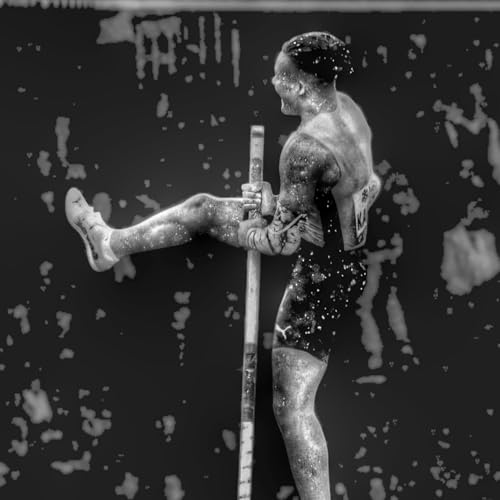
    Clearing 6.40 meters in the pole vault is not simply a physical achievement.

    It is a neurological event.

    At that height, the athlete is no longer dealing with strength, speed, or technique alone. The nervous system begins to register a different variable:

    Consequence.

    The system understands the violence of the moment — the speed of the run, the force of the take-off, the inversion above the box, and the margin for error.

    And when consequence rises beyond tolerance, the nervous system does something remarkable.

    It withdraws permission.

    In this episode of The Unseen Discipline, Director Tim Taylor explores why the world’s greatest vaulters must solve a problem that few coaches ever discuss — the neurological threshold that appears when human performance approaches extreme height.

    You’ll learn:

    • Why the final step in elite vaulting is one of the most violent movements in sport

    • How the nervous system begins to regulate risk above certain heights

    • Why strength and technique alone cannot solve the 6.40 barrier

    • The role of neural permission in extreme performance

    • Why only a handful of athletes in history have accessed this level

    Because at 6.40, the real opponent is not gravity.

    It is permission.


    Photo -Coach Taylor

    続きを読む 一部表示
    12 分