What if degraded land—once stripped of life, water, and biodiversity—could be transformed into a thriving, food-producing ecosystem within a decade?
In this deep-dive episode, we explore the blueprint for building regenerative villages from scratch. Starting with a striking real-world example from Brazil, where barren cattle land was restored into a hyper-productive ecosystem, we unpack the principles that make such transformations possible—without chemical inputs or industrial infrastructure.
This episode goes beyond conventional sustainability. Instead of aiming for “net zero,” we examine regeneration as a paradigm shift: human settlements that actively restore ecosystems, increase biodiversity, and improve water cycles. The conversation introduces the concept of becoming a net-positive force—where communities don’t just reduce harm but actively heal the land they inhabit.
We break down the foundational mindset required to build such systems, including the idea of the “story of place”—a deep understanding of a site’s ecological, geological, and cultural context before any development begins. This leads into a practical, structured methodology for bioregional design: understanding local ecosystems, activating available resources, weaving networks, and scaling implementation.
From there, we explore real-world applications. You’ll hear how architects in Germany transformed an abandoned structure by treating it not as waste, but as a resource—reusing materials and analyzing local soil composition using chromatography to inform construction decisions. This highlights a core principle of regenerative design: working with what already exists rather than importing external solutions.
The episode also connects multiple domains into a unified system:
- Regenerative agriculture and syntropic agroforestry
- Ecological building with local materials
- Decentralized energy systems and microgrids
- Community governance and local sovereignty
Whether you’re planning to build an intentional community, retrofit an existing property, or simply understand the future of human settlements, this episode offers a comprehensive systems-thinking approach to living in alignment with natural processes.
This is not just about sustainability—it’s about designing communities that make ecosystems stronger over time.


 23 分
23 分 15 分
15 分 23 分
23 分 21 分
21 分 24 分
24 分 26 分
26 分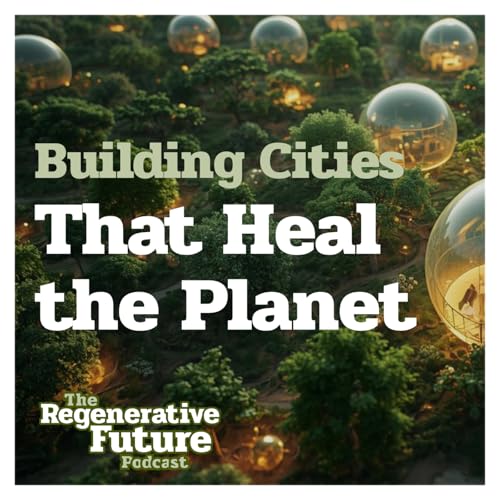 2026/03/1322 分
 22 分
22 分