エピソード

  • How to Stop the Pursue Withdraw Cycle Without Blame
    2026/02/24

    One of you moves toward the relationship to close the gap. The other moves away to reduce overwhelm or conflict. This is the pursue-withdraw cycle, and it is one of the most common and painful patterns in any relationship. If you have ever felt like you are chasing connection while your partner shuts down, you are not alone. This cycle does not mean your relationship is broken. It means your nervous systems are trying to protect you in opposing ways.

    When you are stuck in this loop, intimacy starts to feel like a threat to your sense of self. The pursuer often wonders if they are too much or if they even matter. The person who withdraws often feels like they can never do anything right. To break this cycle, you have to look beneath the surface of the conflict and dive into the deeper, unspoken wounds. You have to learn how to regulate your body so you can move from being adversaries to being teammates.

    In this episode of The RISE to Intimacy Podcast, I walk through why you fall into this dynamic and what is happening in your body when it triggers. I share four powerful, trauma-informed strategies to help you break the cycle for good. We talk about how to name the pattern out loud, how to speak from your fears instead of your defenses, and how to create repair rituals that stick. You can learn how to find your way back to each other without losing yourselves.

    1:47 – How opposing protective strategies can create a loop that neither partner intends

    3:49 – What makes high-functioning, high-achieving couples especially vulnerable to this cycle

    4:52 – Ways to regulate before you withdraw from or pursue your partner

    6:49 – How naming the pattern out loud causes the cycle to lose its power

    7:47 – The subtle difference between fighting about logistics and revealing emotional truth

    10:04 – Repair rituals you can create to reconnect after a cycle occurs


    Mentioned In How to Stop the Pursue Withdraw Cycle Without Blame

    Rise to Intimacy Free 30-Minute Consult

    Leave a rating and review

    続きを読む 一部表示
    14 分
  • Why People Pleasers Lose Desire and How to Reclaim It
    2026/02/17

    If you have ever felt like sex is just another chore, you are not alone. Many people find themselves saying "yes" simply because saying "no" feels too hard. This isn't a character flaw. It is a survival strategy that usually begins in childhood. When you grow up learning that love is conditional, you become an expert at abandoning your own needs to take care of everyone else. By the time you reach adulthood, sex can easily become an obligation fueled by pressure. It stops being an expression of your own pleasure.

    Reclaiming your desire requires unlearning these old patterns. It is impossible for desire to thrive when you are stuck in a survival response like "fawn" or "freeze". The truth is that your desire may not actually be low. It is more likely that your permission to feel desire is low. Healing comes when you stop performing for others and start reconnecting with your own inner world.

    In this episode of The RISE to Intimacy Podcast, I dive into the origin stories of people pleasing and how they quietly reshape your sexual energy. I walk through why pushing through sex to avoid conflict creates a cycle of withdrawal. I also share practical steps to help you notice your own internal cues. From challenging the guilt of setting boundaries to finding micro-moments of pleasure, we explore how to stop self-abandoning and start wanting again.

    1:37 – How childhood survival strategies quietly shape adult desire and sexual patterns

    3:30 – Why sex begins to feel like work when self-abandonment becomes a habit

    5:21 – The neurological states that block arousal and create shutdown

    6:22 – What the pursuer–withdrawer dynamic reveals about relational disconnection

    7:15 – How I help clients when this dynamic shows up in therapy

    10:22 – The most important thing for people pleasers to take away from this episode

    11:10 – Practical steps you can take starting today to rebuild your capacity for sexual desire

    Mentioned In Why People Pleasers Lose Desire and How to Reclaim It

    Rise to Intimacy Free 30-Minute Consult

    Leave a rating and review

    続きを読む 一部表示
    14 分
  • How the RISE Model Moves You from Roommates to Teammates
    2026/02/10

    Long-term couples rarely fall out of love overnight. Usually, they just fall into "logistics mode" where work, kids, and chores crowd out the space for connection. When life feels like an endless to-do list, intimacy starts to feel like just another chore. This shift into the "roommate phase" doesn't mean you are a failure. It is often a sign that your nervous system is overwhelmed and doesn't have the capacity for desire in this moment.

    I developed the RISE model based on a decade of experience as a therapist and my own journey of moving from performance pressure to true connection. By focusing on how we regulate, illuminate, strengthen, and empower, we can look beneath the surface of our patterns to restore safety and play. Rebuilding intimacy is not about perfect performance. It is about learning how to stay present in your body and choosing intentional connection one small habit at a time.

    In this episode of The RISE to Intimacy Podcast, I walk through four of the most common questions I hear in therapy to show you how the RISE model works. We explore why you might still feel attracted to a partner you don’t want to sleep with, how to bring back passion when things feel routine, and how to stop being "ships passing in the night" so you can start feeling like teammates again.

    1:57 – Why long-term couples feel like “roommates” and how to start reconnecting with your spouse

    6:46 – The internal battle that can silently switch off desire (even when you’re still attracted to the other person) and why most people never recognize it

    11:18 – An overlooked climate that is needed for desire to grow and shapes how the body responds to touch and closeness

    15:21 – A counterintuitive truth about passion that challenges everything we’ve been taught about spontaneity

    16:59 – Why you shouldn’t wait to go to couples therapy if you or your spouse has mentioned the idea of doing so

    21:21 – How to bring back passion and sex when everything feels routine or awkward

    30:17 – How to prevent drifting apart in a long-term relationship so you can continue growing together


    Mentioned In How the RISE Model Moves You from Roommates to Teammates

    Come As You Are and other books by Emily Nagoski

    Rise to Intimacy Free 30-Minute Consult

    Leave a rating and review

    続きを読む 一部表示
    36 分
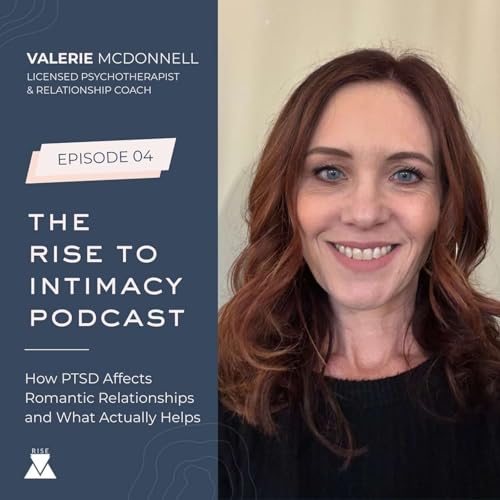
  • How PTSD Affects Romantic Relationships and What Actually Helps
    2026/02/03

    When difficult conversations with your partner feel overwhelming, when you need to resolve things right away or you need space to process, when a look or a tone shift sends your nervous system into overdrive, that's often PTSD showing up in your relationship. It doesn't mean you're broken or that you're the problem in the relationship.

    There's a learnable process for managing your symptoms so they don't manage you. You can find the moment between what triggers you and how you respond. You can stay connected to your partner even when your nervous system wants to fight, flee, or freeze.

    In this episode of The RISE to Intimacy, I'm walking through what happens in your body when you're triggered, why PTSD impacts romantic relationships the way it does, and the specific steps that help you notice and name emotions before they take over. I'm also sharing how my partner and I have learned to navigate this together. This is about taking ownership of your healing and learning practical regulation skills that actually work.

    1:45 – ​​How my PTSD symptoms show up in the context of romantic relationships

    4:16 – Why PTSD impacts romantic relationships (and a quick disclaimer before diving deeper)

    5:46 – Common PTSD triggers that cause the nervous system to go into survival mode

    7:40 – How learning to slow down internally can transform relationship conflict patterns

    9:49 – The difference between character flaws and nervous system survival responses

    13:09 – The moment between the stimulus and the response and how to find it

    14:35 – What it really means to “feel your feelings” without being consumed by them


    Mentioned In How PTSD Affects Romantic Relationships and What Actually Helps

    Rise to Intimacy Free 30-Minute Consult

    Leave a rating and review

    続きを読む 一部表示
    19 分
  • Fixing a Sexless Relationship Starts with Emotional Regulation
    2026/01/27

    When couples stop having sex, they usually assume it's about laziness, manipulation, or lack of attraction. But sexual disconnection is actually a signal that something deeper needs attention—usually safety, repair, and attunement. Your nervous system, emotional dysregulation, and unspoken resentment all play a part in creating sexless relationships.

    In this episode of The RISE to Intimacy, I walk through the critical difference between consent and coercion, avoidance and control, protection and rejection. I explain how unresolved emotional dysregulation keeps couples stuck in cycles of shutdown and escalation, and why communication alone isn't enough without the ability to stay present in your body.

    1:06 – ​​Why sexless relationships are about more than frequency

    3:43 – The subtle difference between withholding and self-protection

    6:53 – How safety (not desire) often determines sexual availability

    9:36 – The unseen role emotional dysregulation plays in disconnection

    12:18 – What must be restored before intimacy can return


    Mentioned In Fixing a Sexless Relationship Starts with Emotional Regulation

    Rise to Intimacy Free 30-Minute Consult

    Leave a rating and review

    続きを読む 一部表示
    19 分
  • What Actually Happens in Sex Therapy?
    2026/01/27

    When most people hear "sex therapy," they assume it's about technique or performance. It's not. Sex therapy is about understanding how your nervous system, past experiences, and attachment patterns show up in intimacy.

    For years, I only associated sex with pressure and duty. I sabotaged a relationship I cared about because my body was screaming no, and I had no idea how to restore safety after my own trauma. That experience is why I do this work, and why I never separate trauma from sexual healing.

    In this episode of The RISE to Intimacy, I walk you through what actually happens in a sex therapy session, who it's for, and why so many people struggle to stay present during physical intimacy. If you've ever felt disconnected from your body during sex, this episode will show you why healing starts with safety, not performance.

    1:26 – ​​What sex therapy actually looks like behind closed doors

    2:57 – Who sex therapy is for and the common issue of desire discrepancy

    4:08 – How my childhood trauma led to a career as a sex therapist

    5:22 – Why sex therapy and trauma therapy are connected

    6:25 – Example of how trauma can quietly reshape desire, safety, and connection

    7:41 – Reframe of sex as something that can heal, not harm


    Mentioned In What Actually Happens in Sex Therapy?

    Dr. Vicki Van Cleave, PSC

    Rise to Intimacy Free 30-Minute Consult

    Leave a rating and review

    続きを読む 一部表示
    10 分
  • Why Sex Feels Like Pressure Instead of Pleasure
    2026/01/21

    Sex is everywhere. Yet meaningful conversations about intimacy are still wrapped in silence, shame, and confusion. Low desire, erectile struggles, or difficulty with orgasm get framed as personal failures when they should be framed as messages from the body shaped by culture, conditioning, anxiety, and emotional overwhelm.

    In this premiere episode of The RISE to Intimacy Podcast, I invite you to gain a deeper understanding of what actually gets in the way of desire. Drawing on my decade of experience as a sex and couples therapist, I unpack how social expectations quietly disconnect us from our bodies, how performance anxiety hijacks pleasure, and why emotional regulation and communication are the missing foundations for intimacy.

    2:37 – A cultural myth that quietly shapes how desire shows up or shuts down in women

    5:42 – An example of how men also face societal conditioning during their childhood

    7:34 – The impact on romantic relationships between men and women as a result

    8:33 – How performance anxiety can sneak into the bedroom

    11:23 – How a lack of emotional regulation creates distance before sex even enters the picture

    12:25 – What rebuilding desire actually requires


    Mentioned In Why Sex Feels Like Pressure Instead of Pleasure

    Rise to Intimacy Free 30-Minute Consult

    Leave a rating and review


    続きを読む 一部表示
    15 分